Cart 0

Share
Table of Contents
What Affects Local SEO
If you run a business that serves a specific geographic area, understanding what affects local SEO is the difference between being found by nearby customers and getting buried by competitors. Local search engine optimization is the process of making your website and online presence visible for searches that include a location qualifier—like “plumber in Austin” or “best coffee shop near me.” Google, Bing, and other search engines use a distinct set of signals to determine which local businesses deserve top rankings in the map pack and organic results. These signals go far beyond generic SEO tactics and require a dedicated strategy that aligns with how people search for local services.
In this comprehensive guide, I will break down every major factor that influences local rankings, drawing on over twenty years of experience working with small businesses, multi-location brands, and agencies. You will learn exactly how to optimize your Google Business Profile, manage your online reputation, build location-specific citations, create content that speaks to your community, and ensure your technical foundation is solid for mobile users. By the end, you will have a complete roadmap to dominate local search results and attract more foot traffic, phone calls, and form submissions.
The goal is to give you actionable insights—not generic advice. We will cover proven strategies that have moved businesses from page three to the top three local results. Let’s start by addressing the single most important asset you control: your Google Business Profile.
Google Business Profile: Your Local SEO Command Center
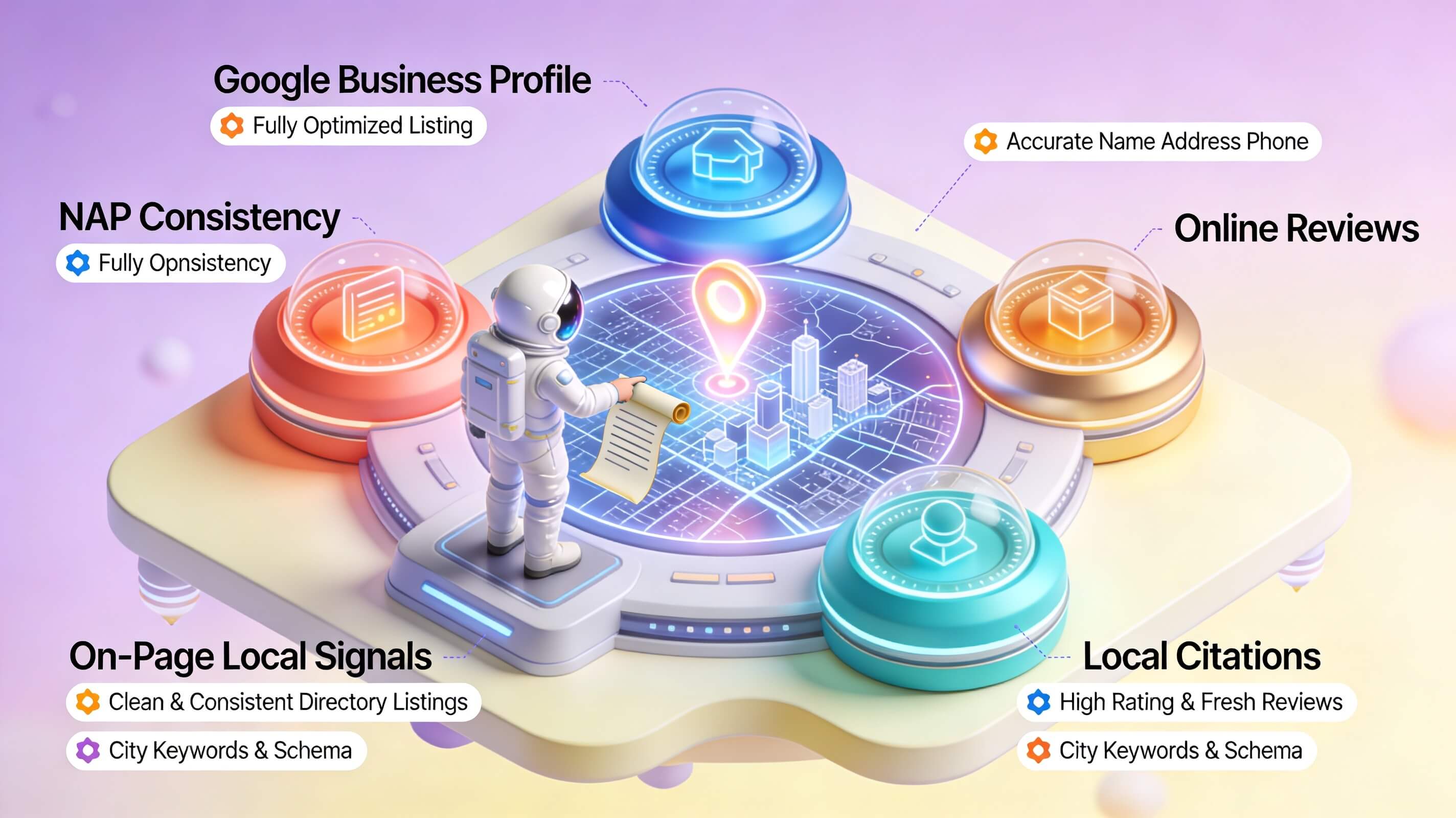
Your Google Business Profile (GBP) is the cornerstone of local visibility. When someone searches for a local service, Google pulls data directly from your GBP to populate the Local Pack, Knowledge Panel, and Google Maps. Without a fully optimized profile, you are effectively invisible for the most valuable search real estate on the planet.
Accurate Business Information is non‑negotiable. Your business name, address, and phone number (NAP) must match exactly what appears on your website and across all directories. Even a minor discrepancy—like using “St.” instead of “Street”—can confuse Google’s algorithm and hurt your chances of ranking. I have seen cases where a single misplaced digit in a phone number caused rankings to drop by several positions. Take the time to verify every detail and update it whenever something changes.
Category Selection is another lever that many business owners overlook. Google allows you to choose a primary category and several secondary categories. The primary category should be as specific as possible. If you own a pizza restaurant, choose “Pizza Restaurant” rather than just “Restaurant.” Then add secondary categories like “Italian Restaurant” or “Takeout Restaurant.” This tells Google exactly what you do and which queries to surface you for.
Customer Reviews and Photo Uploads directly impact engagement signals. Profiles with more recent, high‑quality photos receive 42% more requests for directions and 35% more click‑throughs to websites, according to a Google study. Encourage every happy customer to leave a review and upload a photo of their experience. Respond to all reviews—positive ones with gratitude, negative ones with professionalism and a solution. This activity signals to Google that your business is active and customer‑focused.
| Element | What to Do |
|---|---|
| Business Name | Use exact legal name; do not stuff keywords |
| Address | Match your website and all citations exactly |
| Phone Number | Use a local number, not a toll‑free line |
| Categories | Select the most specific primary category |
| Reviews | Ask for reviews and respond within 48 hours |
| Photos | Upload new photos weekly; show interior, exterior, and team |
| Posts | Share offers, events, and updates regularly |
Beyond the basics, use Google Business Profile posts to promote seasonal offers, announce new services, and answer common questions. Posting regularly keeps your profile fresh and can improve your visibility in the local finder. If you manage multiple locations, create a separate profile and page for each one, ensuring each has unique content and accurate NAP data.
NAP Consistency and Citations: The Trust Signals
NAP consistency is one of the oldest and most critical local ranking factors. When Google finds that your business name, address, and phone number are identical across hundreds of directories—Yelp, Yellow Pages, Facebook, Apple Maps, and niche industry sites—it builds trust that your business is legitimate and stable. Inconsistent data, on the other hand, makes Google doubt your existence and can tank your rankings.
Local citations are any online mention of your business on a third‑party platform. They include both structured directories (like a chamber of commerce website) and unstructured mentions (like a blog post that lists your business). Each citation acts as a vote of confidence. The more high‑quality, relevant citations you have, the stronger your local authority becomes.
Start by claiming and cleaning up your top tier directories: Google Business Profile, Bing Places, Yelp, Facebook, Apple Maps, and your local Better Business Bureau. Then expand to industry‑specific and regional directories. For example, a dentist should be listed on Healthgrades and Zocdoc, while a landscaper should be on HomeAdvisor and Angi. Use a tool like Moz Local or BrightLocal to audit your current citations and identify duplicates.
One common mistake is creating new listings before fixing existing ones. Duplicate listings—where your business appears twice with slightly different information—confuse both users and search engines. Always search for your exact business name plus city to find duplicates, then claim and merge them. Consistency across every listing is more powerful than simply having a large number of listings.
Schema markup also plays a role here. Adding LocalBusiness schema to your website gives search engines structured data about your NAP, business hours, and service area. While not a citation per se, it reinforces the information Google already has. I recommend implementing JSON‑LD schema on your contact page and location pages. Schema.org provides the exact code format needed.
On‑Page Optimization for Local Search Dominance
On‑page SEO is just as important for local searches as it is for national or global queries. But the approach shifts from generic keywords to location‑specific terms and signals. If your website doesn’t explicitly tell Google where you are and what you offer, you will struggle to rank locally, no matter how strong your GBP and citations are.
Location‑specific keywords should appear naturally throughout your site. Instead of optimizing for “veterinarian,” optimize for “veterinarian in Denver” or “Denver pet clinic.” Use these phrases in your title tags, headers, meta descriptions, image alt text, and body content. But avoid keyword stuffing—write for humans first. A good rule of thumb is to include the city and a primary keyword in the H1 and at least one H2, and mention the city twice more in the page body.
Meta tags need to be compelling and include location signals. Your title tag should follow the pattern: “Primary Keyword + City | Brand” or “City + Service + Brand.” For instance, “Plumber in Austin | Fast Fix Plumbing.” Meta descriptions should include a call to action and the city name again. Google may rewrite these, but they still influence click‑through rates.
Schema markup is not just for citations—it is an on‑page element that can generate rich snippets in search results. Add LocalBusiness schema with your address, phone, opening hours, and geo‑coordinates. If you have multiple locations, use a separate schema block for each place page. This structured data helps Google understand your business location precisely.
Beyond technical optimization, create dedicated location pages if you serve multiple neighborhoods or cities. Each page should have unique content—not just copy‑pasted text with a changed city name. Include photos of that specific location, customer reviews from that area, and directions. Google penalizes thin duplicate content, so invest time in making every location page valuable.
The Review Ecosystem: How Ratings Influence Local Rankings
Online reviews are arguably the second most powerful local ranking factor after GBP signals. Google considers both the quantity and quality of reviews. A business with 200 four‑star reviews will generally outrank a business with 20 four‑star reviews. But sentiment matters too—if your reviews are mostly negative, the algorithm may suppress your visibility.
Encouraging positive reviews should be a systematic process. After every successful service or purchase, send a follow‑up email or text with a direct link to your Google review page. Make it as easy as possible—do not ask customers to search for your profile. Some businesses use a QR code at the point of sale that opens the review form. Just be careful not to incentivize reviews with discounts or freebies in exchange for positive feedback, as that violates Google’s policies.
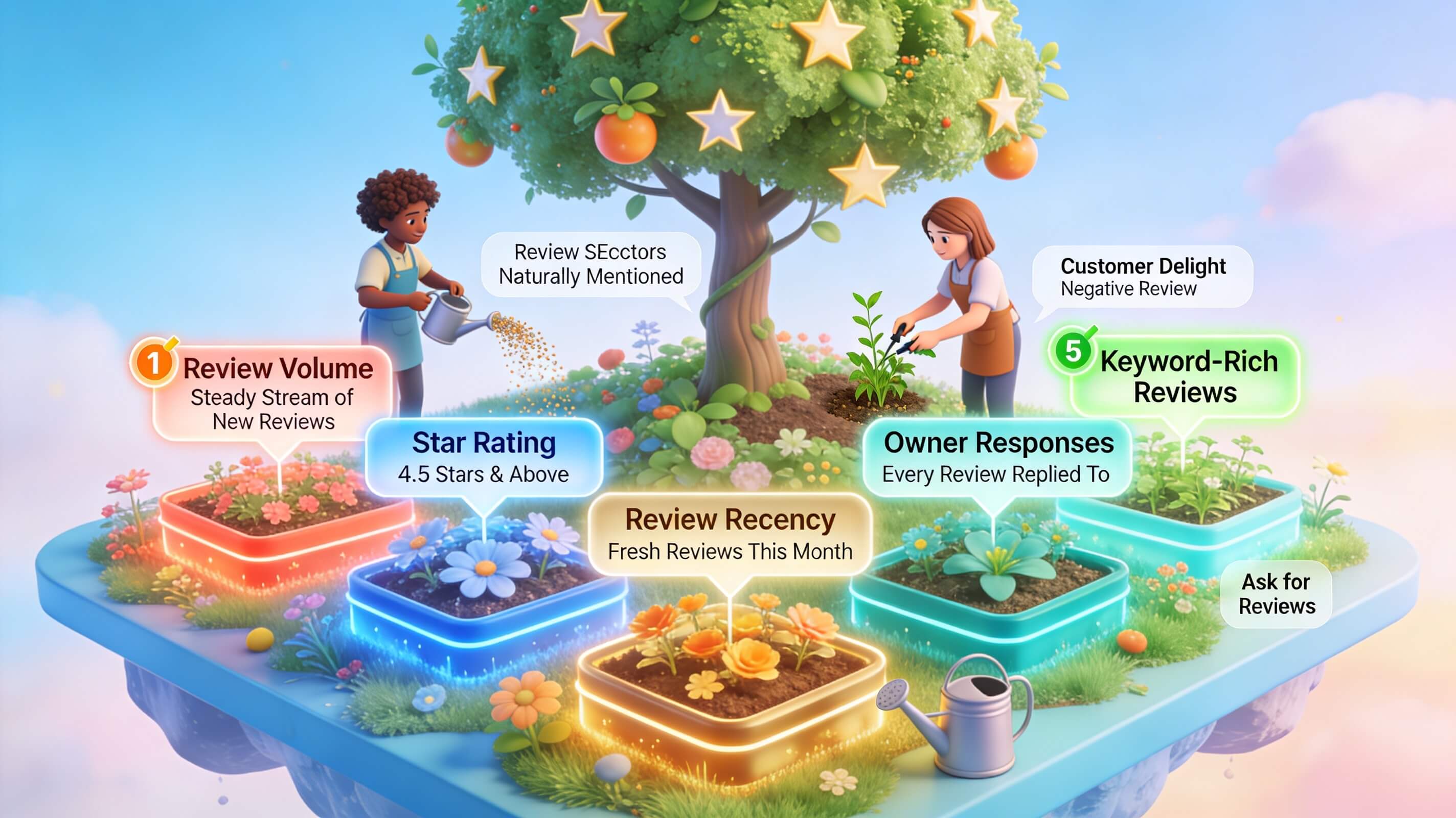
Responding to all reviews is non‑negotiable. When you respond to a negative review, do so calmly and offer to make things right. Other potential customers read these interactions. A thoughtful response can turn a negative experience into a demonstration of excellent customer service. For positive reviews, a simple “Thank you for your kind words” goes a long way. Engagement tells Google that your business is active and cares about its customers.
Monitor your reputation across multiple platforms—Google, Yelp, Facebook, and industry‑specific sites. Use a tool like BrightLocal or a simple spreadsheet to track where reviews appear. If you spot a fake or malicious review, you can flag it, but often it is better to bury it with a stream of genuine positive reviews.
Building Local Authority Through Strategic Link Acquisition
Backlinks remain a top ranking signal for all SEO, including local searches. But the type of links matters more than ever. For local SEO, links from other local businesses, community organizations, schools, newspapers, and local event pages carry disproportionate weight because they demonstrate geographic relevance.
Content marketing is the most sustainable way to earn local links. Create resources that serve your community—a guide to the best parks in your city, a map of local hiking trails, or an annual charity event recap. When these pages contain valuable information, other local websites will naturally link to them. I have seen a single well‑crafted “Best Neighborhoods for Families” guide attract links from the local chamber of commerce, real estate agents, and even the city’s tourism site.
Guest blogging on local news sites or industry blogs can also generate authoritative links. Reach out to the editor of your local paper or a well‑known community blogger and offer to write a piece relevant to their audience. For instance, a home inspector could contribute an article on “Five Things to Check Before Buying a Home in [City].” The author bio usually includes a link back to your website.
Sponsorships and partnerships are another reliable source of local backlinks. Sponsor a little league team, a 5K race, or a charity gala. In return, your business name and website will appear on the event’s website. These are often .org or .edu domains, which carry strong authority. Plus, they reinforce your local presence.
Finally, do not overlook local business directories that are curated by humans. Many cities have “Best of” lists published by local magazines or newspapers. If you can get listed there—even if it comes with a small fee—the link is usually high quality and provides relevant traffic.
Mobile Optimization and User Experience for Local Searches
Over 60% of all local searches happen on mobile devices, and the percentage is even higher for “near me” queries. If your website is slow, unresponsive, or difficult to navigate on a phone, you will lose both rankings and customers. Google uses mobile‑first indexing, meaning it primarily uses the mobile version of your site for ranking.
Responsive design is the minimum standard. Your site should automatically adjust to fit any screen size—phones, tablets, and desktops. Test your site on Google’s Mobile‑Friendly Test tool. If you see issues, work with a developer to fix them. Common problems include text that is too small to read without zooming, links that are too close together, and content that extends beyond the viewport.
Page speed is a ranking factor for all search results, but it is especially critical for local mobile users who are often on‑the‑go. According to Backlinko, the average first‑page result loads in under two seconds. Use Google’s PageSpeed Insights to identify what is slowing your site down—large images, unoptimized code, too many plugins—and fix them. Compress images, enable browser caching, and consider using a content delivery network (CDN).
User experience (UX) also impacts local SEO indirectly through engagement metrics like bounce rate and time on site. Make it easy for mobile users to find your phone number, address, and directions. Your click‑to‑call button should be prominent. Also ensure that forms are short and that contact information is visible without scrolling. A frustrating mobile experience drives users away and signals to Google that your site is not meeting user needs.
Local Social Media and Content Strategies
While social signals are not direct ranking factors, social media activity amplifies your local authority in several ways. An engaged social following can lead to more brand searches, more website visits, and more reviews—all of which influence local rankings indirectly. Additionally, your social media profiles themselves often appear in search results for your business name.
Location‑specific social profiles help you dominate the first page of Google for branded queries. Ensure that your Facebook, Instagram, LinkedIn, and X (Twitter) profiles all have consistent NAP information. Use the same profile photo and cover image across platforms to build brand recognition. On Facebook, fill out every field in the “About” section, including your service area and hours.
Geotagged content on Instagram and Facebook can increase visibility for users searching that location. When you post a photo of your storefront or a team event, tag the location. Also use local hashtags—like #[City]SmallBusiness or #[Neighborhood]Eats—to reach people browsing those tags. Encourage customers to tag your business when they visit; user‑generated content expands your reach organically.
Local content published on your website is a powerful tool for capturing long‑tail local searches. Write blog posts about local events, interviews with community leaders, or guides that highlight your involvement in the area. A lawyer could write “What to Do After a Car Accident in [City],” or a salon could create “The Best Hairstyles for [City] Weather.” These pages attract local readers and earn citations from other local sites.
Cross‑promotion with other local businesses on social media can introduce your brand to a new, relevant audience. Partner with a complementary business—like a real estate agent collaborating with a home stager—and share each other’s content. This builds community ties and generates social engagement that Google’s algorithm may notice.
Conclusion
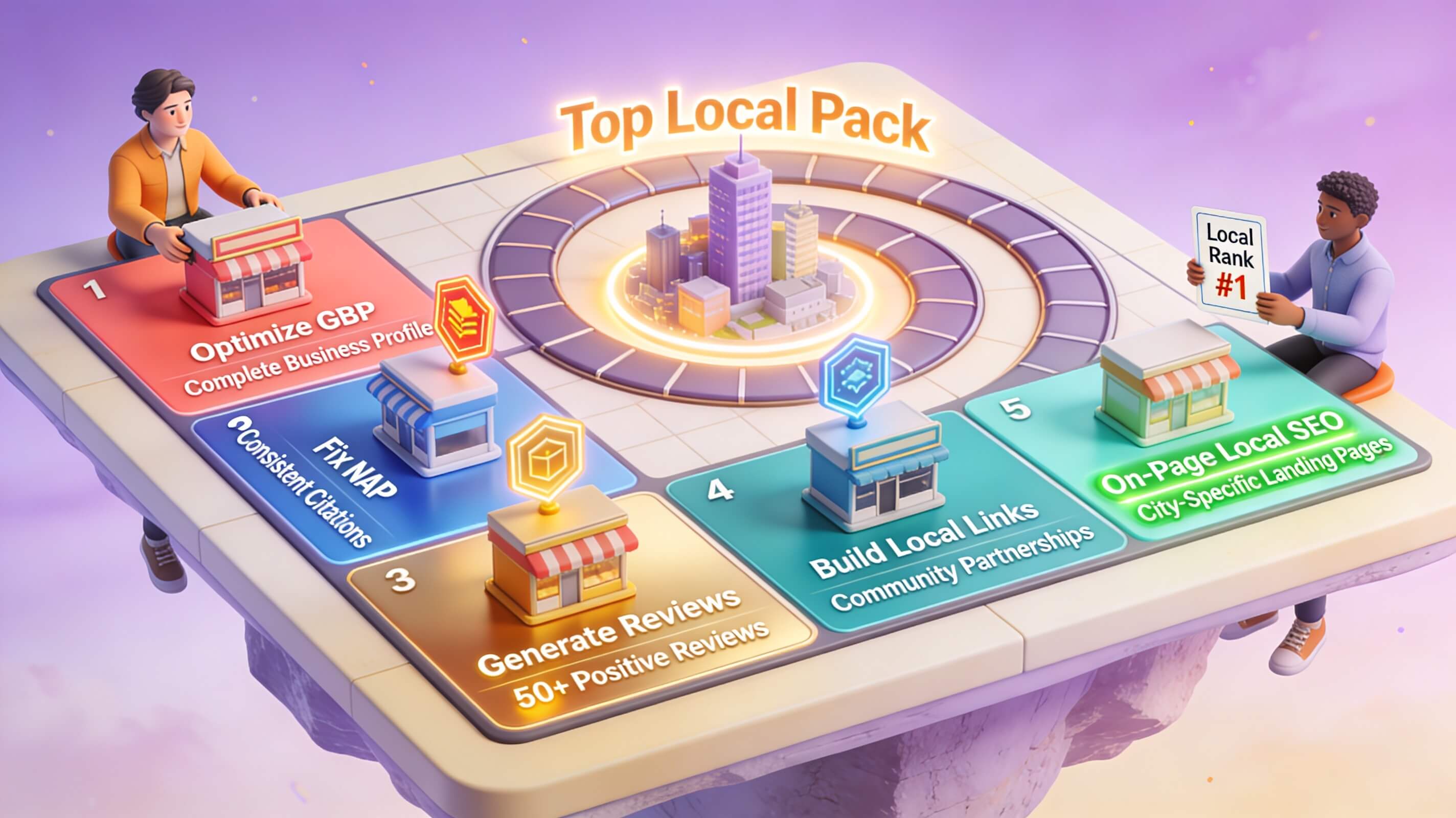
Local SEO is not a single tactic; it is a multifaceted strategy that requires attention to every signal search engines use to determine relevance and trust. We have covered the full spectrum—from your Google Business Profile and citation consistency to on‑page optimization, review management, link building, mobile experience, and social engagement. Each element contributes to the whole, and neglecting any one can leave a gap for competitors to exploit.
What affects local SEO most is the combination of accurate data, authoritative signals, and real community involvement. Businesses that invest in genuine relationships with their customers and local partners consistently outperform those that rely on shortcuts or one‑time optimizations. The algorithms continue to evolve, but the fundamentals remain grounded in providing a reliable, helpful presence for local searchers.
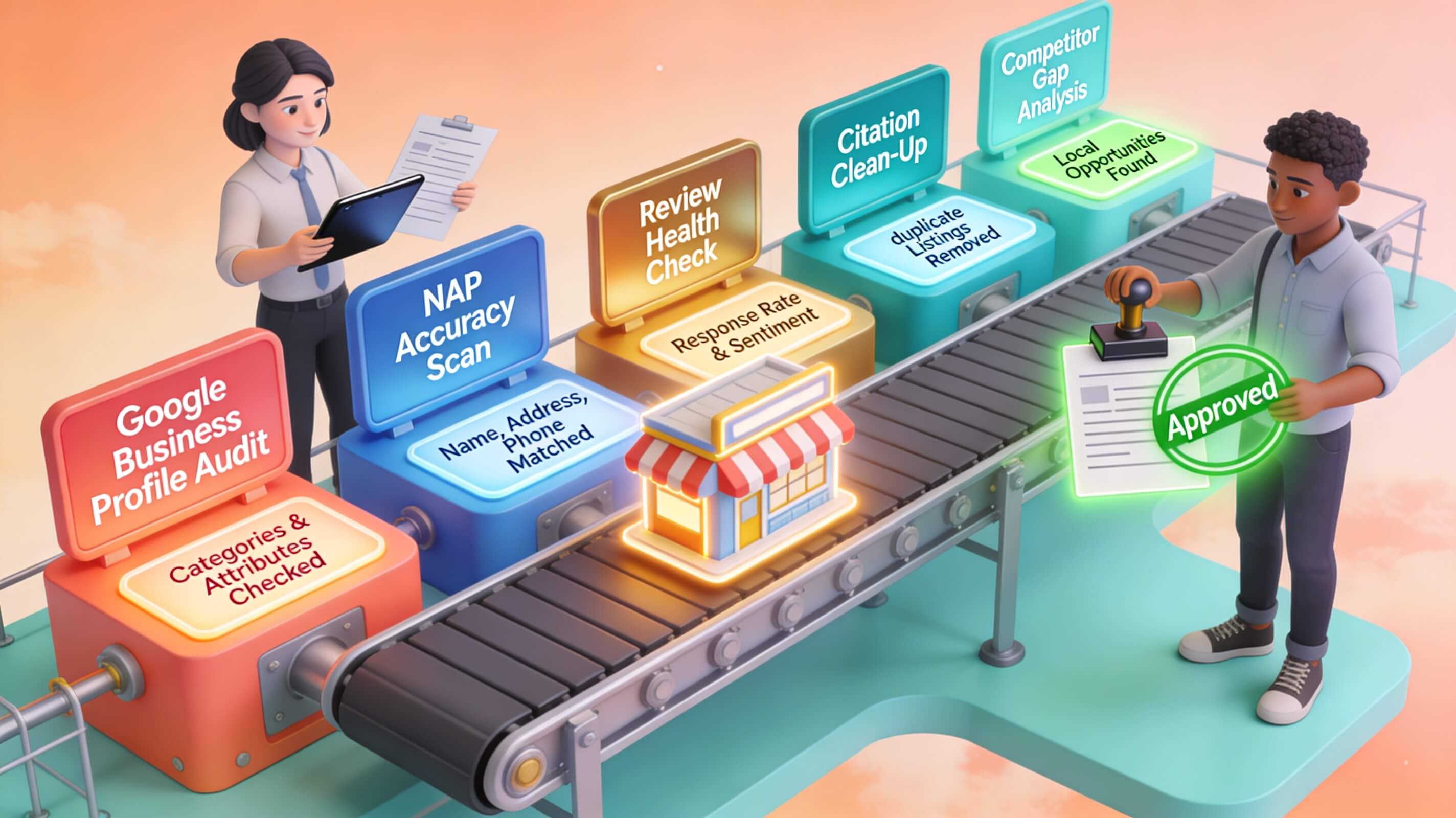
Now it is time to act. Start with a thorough audit of your current local presence: check your NAP consistency, review your GBP completeness, analyze your top competitors’ strategies, and identify the biggest gaps in your own. Implement the changes in order of impact—fix your Google profile first, then tackle citations, then optimize your site and review strategy. Within a few weeks, you should see measurable movement in your local rankings and an increase in inbound inquiries from nearby customers.
If you are serious about dominating local search and growing your business, do not let this information sit idle. Apply at least one tactic from each section today. For even faster results, consider partnering with an experienced local SEO professional who can diagnose technical issues and build a custom roadmap. The businesses that win locally are the ones that take consistent, intelligent action. Start now, and watch your local visibility transform.