
Cart 0

Share
Table of Contents
Hyperlocal Social Media Marketing: Navigating Localized Strategies
Hyperlocal social media marketing is the most direct path to turning your local business into a community staple. By targeting audiences within a specific geographic radius — often a few blocks or a single neighbourhood — you move beyond generic brand awareness and into genuine, high-intent engagement. When a potential customer searches for “coffee shop near me” or “emergency plumber in Oakville,” your brand can appear first if your hyperlocal social media strategy is dialed in. This isn’t just about posting location tags; it’s about crafting content that feels native to the local culture, understanding the rhythms of your town, and using platform algorithms to serve ads only to people within walking distance of your storefront. The result is a dramatically higher conversion rate: studies show that 78% of local mobile searches lead to an offline purchase within 24 hours (Google). For small business owners and marketing professionals alike, mastering hyperlocal social media marketing means you stop shouting into the void and start having real conversations with neighbours who are ready to buy. In this guide, I’ll show you the exact strategies I’ve used over two decades to help brick-and-mortar stores, service providers, and local franchises dominate their immediate markets. From understanding local audience psychology to choosing the right platform mix and measuring what matters, every section is designed to be actionable, not theoretical.
What Is Hyperlocal Social Media Marketing?
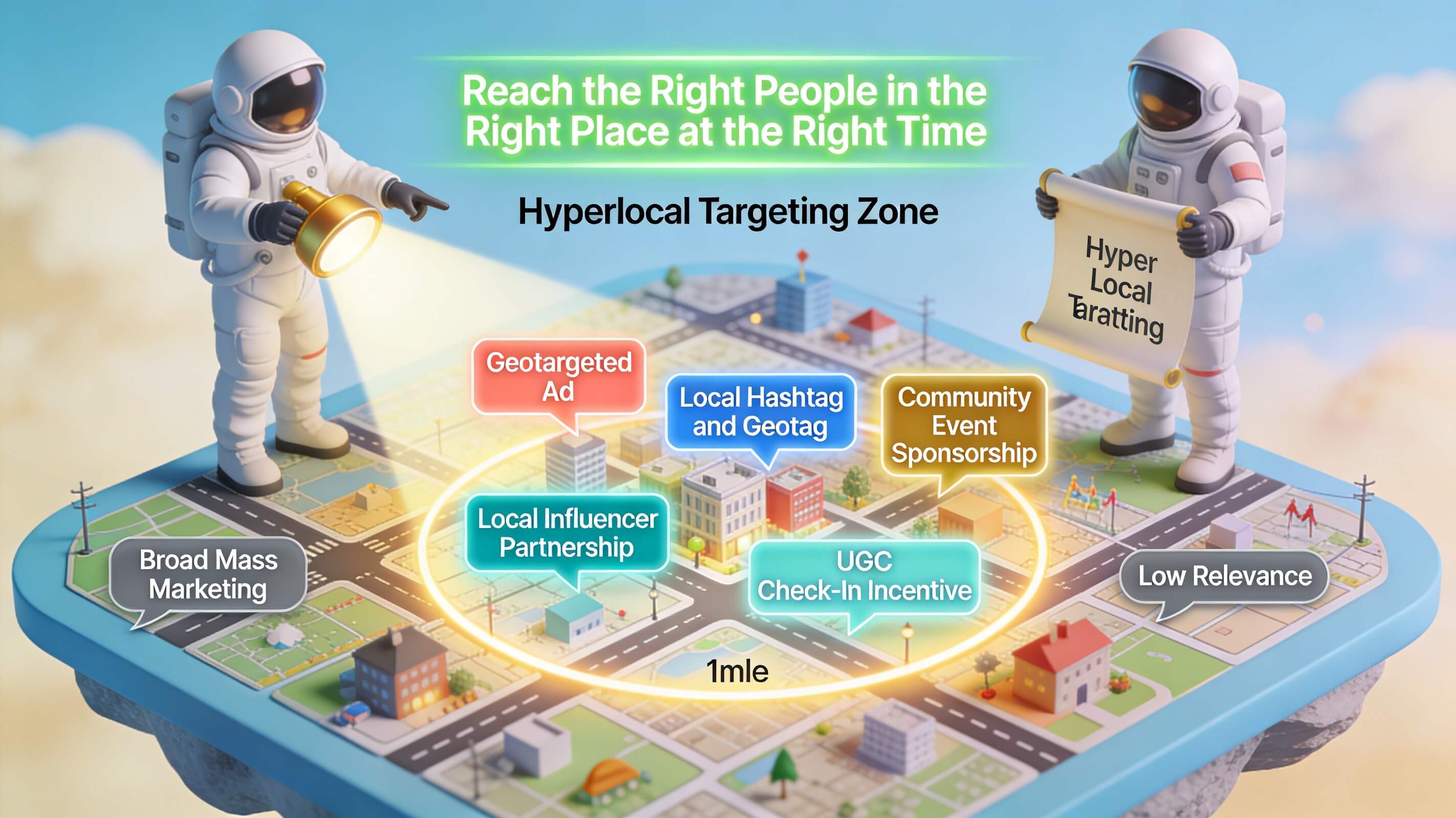
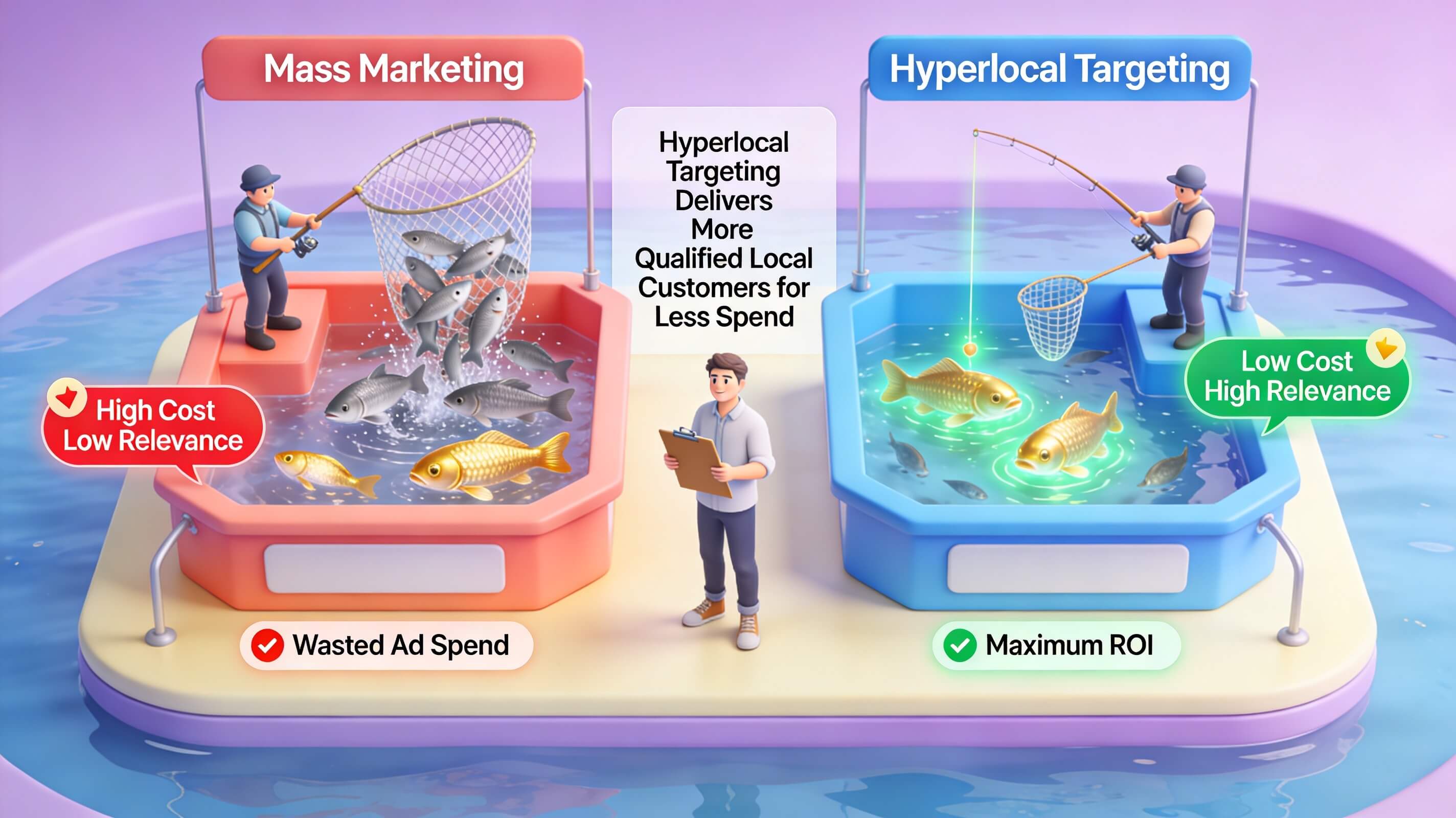
Hyperlocal social media marketing is a sub-discipline of digital marketing that focuses exclusively on reaching people within a defined geographical area — usually a city, suburb, or even a single ZIP code. Unlike broad social media campaigns that target by interest or demographic alone, hyperlocal strategies layer location data on top of behavioural signals to serve the most relevant content at the right time and place. For example, a pizza restaurant in Brooklyn can run Facebook ads that show only to users within 2 miles of its location who have previously engaged with food-related pages. This level of precision eliminates wasted impressions and dramatically improves return on ad spend.
The core principles are deceptively simple: know exactly who lives in your service area, understand what local events and trends matter to them, and craft messages that feel like they came from a neighbour, not a corporation. This approach builds trust faster than any national campaign because people inherently trust businesses that invest in their immediate community. Authenticity is non-negotiable — if your content feels generic or tone-deaf to local nuances, you’ll lose credibility quickly. But when done right, hyperlocal social media marketing transforms your brand from a faceless entity into a beloved local institution.
Why Hyperlocal Strategies Outperform Generic Social Media Marketing
Generic social media marketing often fails local businesses because it tries to please everyone. A clothing boutique in Austin shouldn’t use the same Instagram aesthetic as a chain store in Chicago. The local audience cares about unique local landmarks, weather patterns, school events, and regional slang. When you ignore those details, you become invisible. Hyperlocal social media marketing solves this by forcing you to focus on a small, high-quality audience that already has a reason to care about your business. The conversion rates from a well-executed hyperlocal campaign can be 2–3 times higher than a standard awareness campaign because the intent is already there. I’ve seen a local bakery in Portland grow its weekend foot traffic by 40% simply by running a hyperlocal Facebook ad campaign that targeted users within 1.5 miles who had previously visited competitor bakeries. The key is not just location targeting but layering on interest and behaviour signals.
Moreover, hyperlocal strategies align perfectly with how mobile users search today. Google reports that “near me” searches have grown by over 500% in the last few years, and 76% of people who search for something nearby visit a related business within a day. By combining local SEO with hyperlocal social media posts and ads, you create a multi-channel funnel that captures users at every stage of the buying journey. You’re not just posting content; you’re building a digital front door that opens automatically for the people who are most likely to walk through your physical door.
Developing a Hyperlocal Social Media Strategy That Actually Works
A successful hyperlocal social media strategy cannot be copied from a national template. It must be built from the ground up using three foundational pillars: deep audience knowledge, local trend tracking, and highly tailored content. Let me break each one down with the nuance they deserve.
Know Your Local Audience Inside Out
You cannot rely on generic buyer personas. You need to understand the specific neighbourhoods you serve — their median income, age distribution, family status, and even the types of local events they attend. Start by mining your existing customer data: look at your POS system for purchase patterns, run surveys with a small incentive, and analyse the comments on your current social posts. You should know whether your customers are morning commuters who need quick coffee or families who linger on weekends. Use Facebook Insights, Instagram Analytics, and even Google Trends filtered by geography to see what topics your local audience searches for. In one case, a hardware store in a college town discovered that their customers were overwhelmingly DIY students — so they shifted content from professional construction tips to easy dorm-room repairs. Their engagement jumped 300% in six weeks. The lesson: never assume you know your local customer. Measure, ask, and adapt.
Research Local Trends Like a Reporter
Set up Google Alerts for your city plus your industry keywords. Follow local news outlets, community Facebook groups, and neighbourhood-specific hashtags on Instagram. Attend town hall meetings or watch recordings to understand what issues matter most. For example, if a local park is being renovated, a nearby café could create a “Park Picnic” special and promote it with geotargeted ads showing the new playground equipment. When a major local event like a music festival or a farmer’s market happens, your hyperlocal social media content should join the conversation immediately. I always advise clients to keep a running document of local holidays, school calendars, and city council meetings — then map out content for each event. This consistency shows your audience that you’re not just a business; you’re an active participant in the community.
Tailor Every Piece of Content to the Community
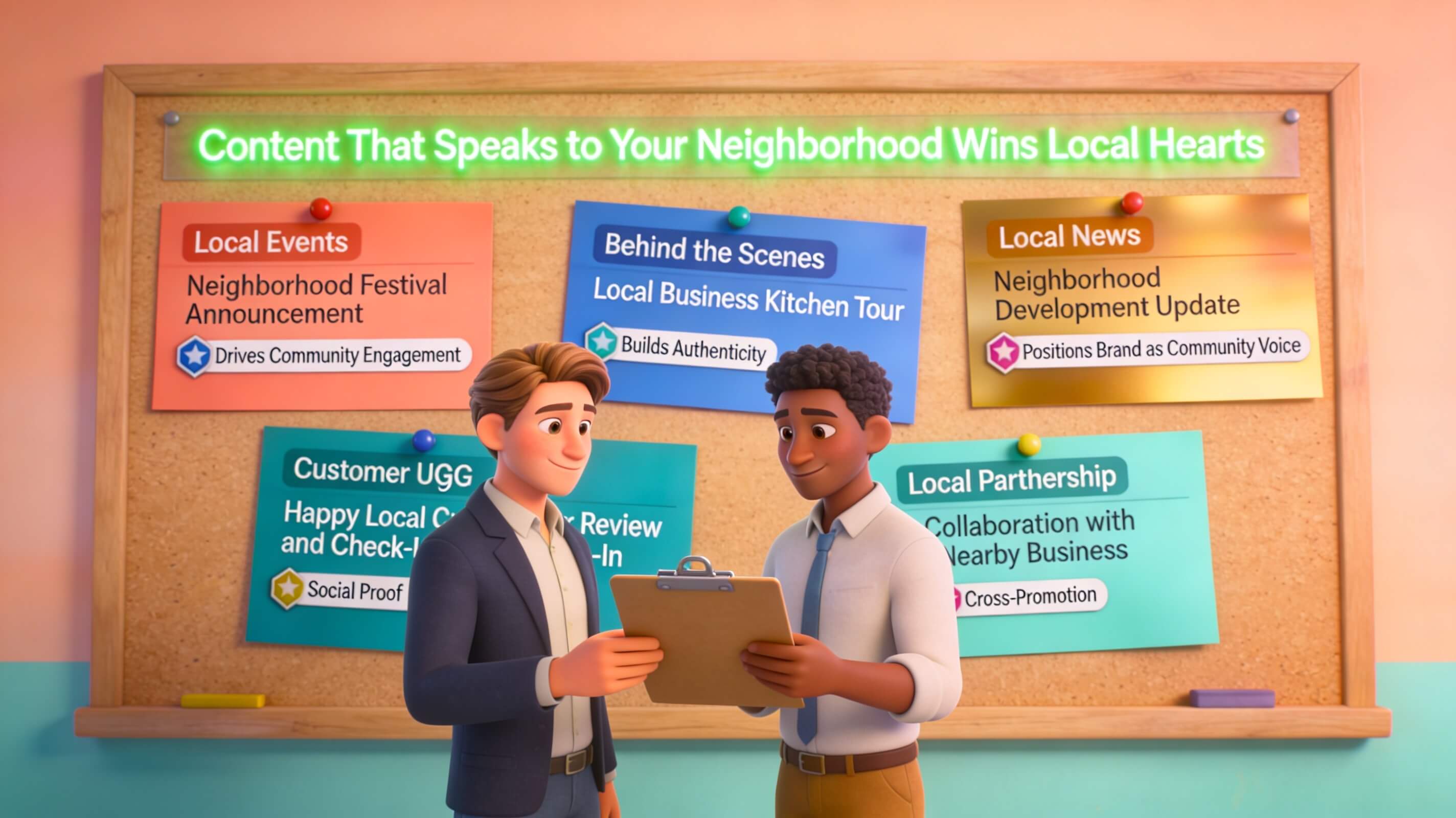
Once you know your audience and the local trends, you must create content that feels unmistakably local. Use photos of your team wearing local sports jerseys. Reference landmarks that only locals would know. Collaborate with a nearby influencer who has a hyperlocal following — not a national celebrity, but the person who runs the most popular neighbourhood food review page. User-generated content works brilliantly here: share a customer’s photo of their dog wearing your brand’s bandana at the local dog park. This not only provides social proof but also strengthens the bond between your brand and the community. Avoid over-polished stock photos; raw, authentic imagery performs significantly better in hyperlocal campaigns because it signals you are real and accessible.
Leveraging the Right Platforms for Hyperlocal Reach
Not all social platforms deliver equal hyperlocal results. Your choice depends on your industry, target demographic, and the type of content you create. Below is a comparison table to help you decide where to invest your time and budget.
| Platform | Best For | Key Hyperlocal Features | Ideal Use Case |
|---|---|---|---|
| Broad local reach, events, community building | Advanced geotargeting (down to 1 mile), local awareness ads, event pages | Promoting a grand opening or weekly specials to all nearby adults 18+ | |
| Visual storytelling, younger demographics, lifestyle brands | Location tags, story polls, local hashtags, shoppable posts | A bakery showing daily treats geotagged to the shop; followers tag friends | |
| Nextdoor | Neighbourhood-level trust, recommendations | Hyperlocal neighbourhood groups, business pages, paid local offers | A plumber or electrician offering a discount to verified neighbours |
| Google Business Profile | Local search visibility, reviews, maps | Posts that appear in local search results, Q&A, messaging | Posting weekly hours, seasonal offers, and replying to reviews |
In addition to social platforms, local online directories like Yelp and TripAdvisorhttps://en.wikipedia.org/wiki/Tripadvisor play a critical role. Ensure your business name, address, and phone number are consistent across all directories; this consistency signals trust to both users and search algorithms. Many businesses also benefit from hyperlocal advertising on community websites or through sponsored posts in local Facebook groups. The cost is often lower than national ad rates, and the targeting is far more precise.
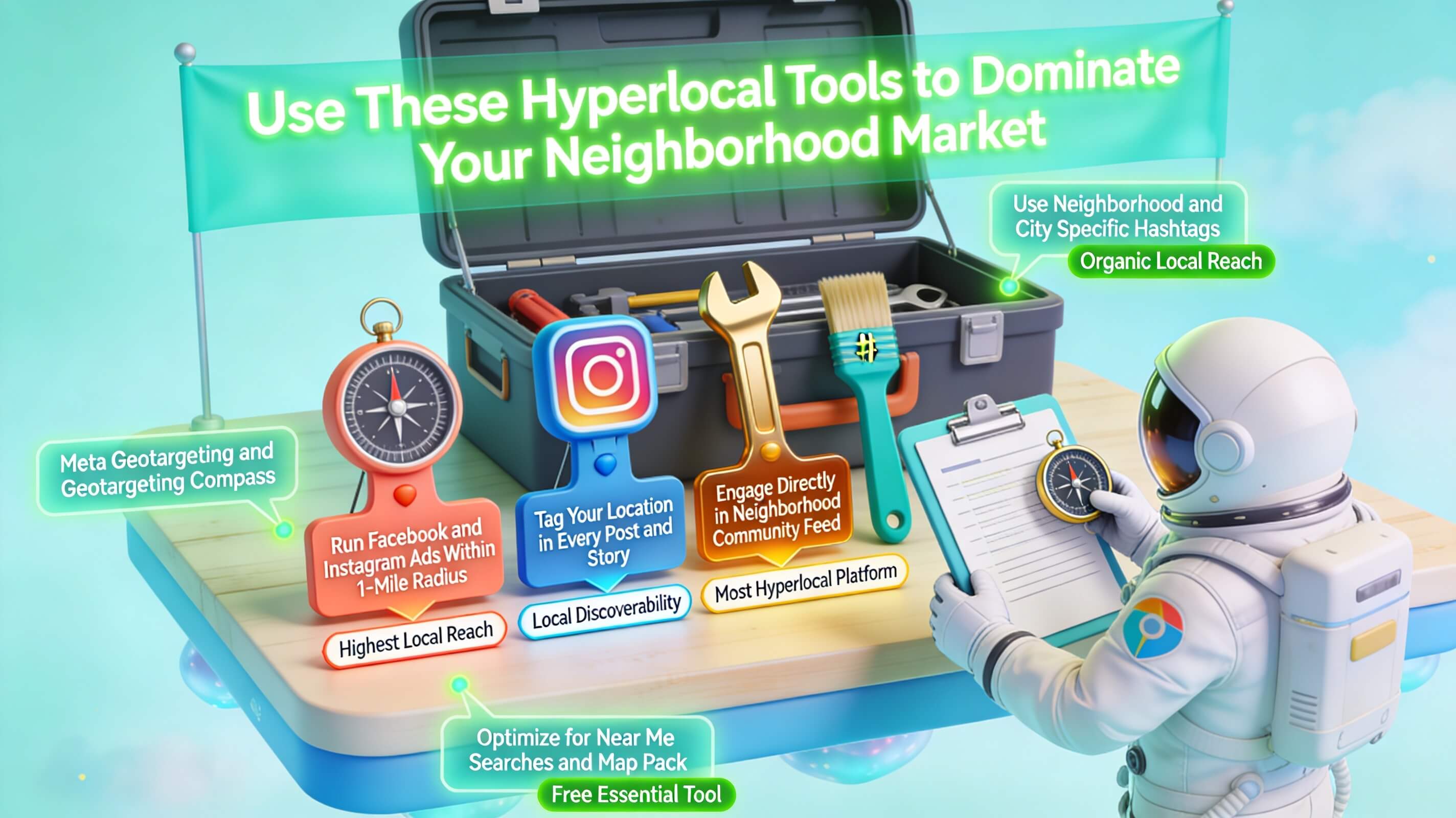
Another powerful tactic is location-based retargeting. Use Facebook’s custom audiences to create a list of people who visited your website or engaged with your page, then serve them ads only when they are within a specific radius of your store. This reminds them to visit when they are physically close, increasing the chance of an impulse purchase. I’ve seen this triple the in-store redemption rate of standard digital coupons.
Creating Authentic Content That Builds Community Trust
Authentic content is the lifeblood of hyperlocal social media marketing. But what does authenticity really look like in practice? It means showing the messy, human side of your business — your team laughing during a slow afternoon, a behind-the-scenes video of how you source ingredients, a thank-you note to a loyal customer. It also means not hiding negative feedback; instead, respond publicly and sincerely. When a local restaurant in my city received a complaint about wait times, the owner replied on Facebook with a genuine apology and a voucher for a free appetizer. The post went viral locally because people respected the honesty. That kind of trust cannot be bought; it must be earned through consistent, transparent communication.
User-generated content (UGC) is your secret weapon. Encourage customers to post photos with your product using a unique, local hashtag, then repost the best ones (with permission). This not only gives you free content but also makes your customers feel valued and seen. Partner with local complementary businesses — for example, a coffee shop might partner with a nearby bookstore for a joint giveaway. This cross-promotion expands your reach within the community without appearing self-promotional. The golden rule: every piece of content should answer the question, “Why does this matter to someone who lives within 5 miles of my store?”
Optimizing Social Media Profiles for Local Visibility
Your social media profiles are often the first touchpoint a potential local customer has with your brand. If they are incomplete or inconsistent, you lose trust immediately. Start by ensuring your profile name, bio, and description include local keywords naturally. For instance, if you run a pet grooming service in Austin, your Instagram bio could read: “Austin’s trusted pet grooming since 2010 | Mobile & in-salon | Serving Travis County.” This immediately signals relevance and location.
Enable location tags for every post and story. When possible, add a physical location to your Facebook page so that users can check in. Use geotargeting in your ad settings to serve content only to people in your service area. For local SEO, keep your Google Business Profile updated with accurate hours, high-quality photos, and regular posts. Respond to every review — positive or negative — within 24 hours. This active management signals to both Google and potential customers that you are a reliable, engaged local business. Also, claim your business on Nextdoor and Facebook Business Suite to access hyperlocal analytics that show you exactly where your audience lives and what they care about.
Measuring What Matters: Key Metrics and Tools for Hyperlocal Campaigns
Without measurement, hyperlocal social media marketing is guesswork. You need to track metrics that directly tie to local business goals. Ignore vanity metrics like total likes; focus on foot traffic attribution, coupon redemptions, and calls generated from social channels. Use Facebook’s local insights to see how many people clicked “Get Directions” or “Call Now.” Set up Google Analytics with goal tracking for actions like “Directions Request” or “Phone Call” from mobile devices.
Key metrics to monitor include:
- Engagement rate — especially from accounts within your target radius
- Local reach — how many people in your city saw your content
- Conversions — coupon downloads, event RSVPs, form submissions
- Click-through rate (CTR) to your website or landing page
Tools like Hootsuite, Sprout Social, and Facebook Business Suite offer built-in analytics that filter by location. For deeper insights, combine with Google Analytics and heat mapping tools like Hotjar to see where local visitors click on your site. I recommend a weekly 15-minute review where you compare this week’s local metrics to the previous month’s average. This rhythm helps you catch shifts in audience behaviour before they become problems. For example, if engagement from a particular neighbourhood drops, you can investigate whether a competitor opened nearby or if a local event changed traffic patterns.
One mini case study: A family-owned Italian restaurant in Chicago used Facebook’s local awareness ads and tracked redemptions via a unique promo code. In the first month, they saw 120 coupon uses, which directly translated to $4,200 in incremental revenue. By analysing the data, they discovered that most redemptions came from users within 1 mile who had previously liked a competitor’s page. They then doubled down on targeting that specific interest segment and saw a further 25% lift in redemptions. Without measurement, they would have missed that insight.
Overcoming Common Challenges in Hyperlocal Social Media Marketing
Even the best hyperlocal social media marketing strategy faces obstacles. The most frequent ones I encounter with clients are a lack of deep local customer understanding, difficulty producing authentic content consistently, and intense competition from national brands with bigger budgets. Let me address each with practical solutions.
Problem: Inadequate understanding of local customers. Many business owners assume they know their community because they live there, but a “feeling” isn’t data. Solution: Conduct a monthly survey using a free tool like Google Forms, offering a small discount code as an incentive. Ask open-ended questions like “What local event do you wish more businesses supported?” Then use those answers to guide your content calendar. Also, spend 30 minutes a week reading comments on your city’s subreddit or local Facebook group. This passive research reveals pain points and desires you never considered.
Problem: Difficulty creating a steady stream of authentic content. Solution: Rotate three content types: behind-the-scenes (BTS) photos, customer spotlights (with permission), and local event tie-ins. Batch create BTS content every Monday for a month. Use a simple smartphone camera — overproduction kills authenticity. If you run out of ideas, ask your staff what they notice about customers each day. One retail shop manager told me they saw customers struggling with a specific product display; they turned that into a short video tip that became their most-shared post.
Problem: Competition with national brands that have huge local ad budgets. Solution: Never try to outspend them. Out-local them. National brands cannot match the personal connection of a locally owned business that sponsors a little league team or attends a neighbourhood block party. If a national chain runs a 20% discount campaign, you respond with a story about how you source ingredients from a local farm. Leverage your local history and community involvement. Also, use negative targeting in your ads to exclude people who are outside your radius — national brands often target broadly, so your hyperlocal precision gives you the edge in relevance and cost-efficiency.
Conclusion
Hyperlocal social media marketing is not a trend; it is a fundamental shift in how businesses must connect with their immediate environment. The days of casting a wide net and hoping to catch local customers are over. Today, success belongs to those who understand that a single engaged neighbour is worth more than a thousand distant impressions. By implementing the strategies in this guide — knowing your local audience, creating authentic content, choosing the right platforms, optimising for local search, and measuring relentlessly — you will build a brand that is not just seen but trusted within your community.
The next step is action. Start small: pick one platform, one neighbourhood, and one local event to tie your content to for the next 30 days. Track the results meticulously. You will likely see a measurable lift in foot traffic, phone calls, or online local engagement within weeks. As you refine, you can expand to multiple platforms and more sophisticated ad targeting. Remember that the businesses that thrive in the next decade will be those that treat their local community not as a market to penetrate but as a family to serve. If you need expert guidance, our team specialises in building and executing hyperlocal social media strategies that deliver real, measurable growth. Let’s start a conversation about how we can help you dominate your local market.
Comments are closed.