
Cart 0

Share
Table of Contents
Local Search Citations: Enhancing Discoverability in Local Searches
If you run a local business and want more customers to find you online, local search citations are not optional — they are essential. A citation is any online mention of your business name, address, and phone number (NAP) on directories, social platforms, review sites, and local blogs. These digital references tell search engines like Google that your business is real, located where you say it is, and worthy of appearing in local search results. Without accurate citations, even the best website can remain invisible to nearby customers searching for your services. The core goal of this article is to show you exactly how citations work, why they matter for local discoverability, and how to build and manage them effectively. Whether you own a single location or multiple branches, mastering local citations directly impacts your ability to attract foot traffic, phone calls, and online bookings. Search engines rely on citation consistency as a trust signal — the more uniform your NAP data across the web, the higher your chances of ranking in the coveted local pack and Google Maps. This guide draws on two decades of hands-on experience in local SEO to deliver actionable, expert-level insights that go beyond surface-level advice.
Understanding Local Search Citations and Their Role
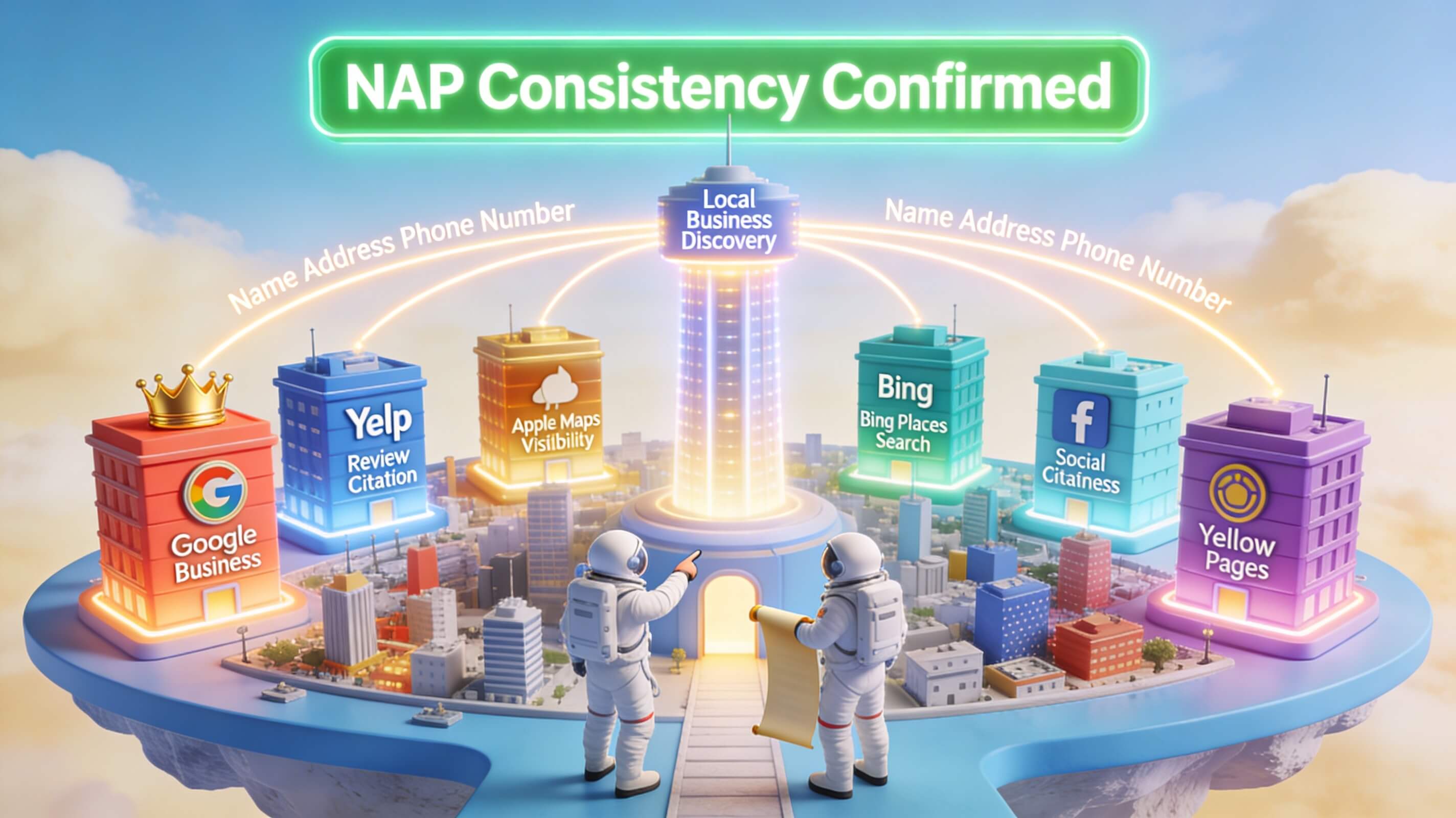
A local search citation is any digital reference to your business that includes your name, address, and phone number. Citations can appear on major directories like Yelp, industry-specific platforms like Zomato for restaurants, or even in blog posts mentioning your business. Their primary role is to verify your business’s existence and location to search engines. When Google sees consistent NAP data across dozens of trusted sources, it gains confidence that your business is legitimate and relevant to local searchers. This trust translates into better rankings for location-based queries. But citations do more than boost rankings — they also put your business directly in front of customers who are already searching on those platforms. A well-placed citation on a high-traffic directory can drive qualified leads without any additional advertising spend.
The relationship between citations and local SEO is not linear. Having more citations does not automatically guarantee higher rankings. Quality, relevance, and consistency matter far more than sheer quantity. A single citation on a high-authority, industry-relevant platform can outweigh dozens of low-quality listings on spammy directories. Moreover, citations support other local SEO signals such as online reviews, backlinks, and website authority. They form the foundational layer upon which your entire local search presence is built. Without accurate citations, review platforms may struggle to verify your business, and structured data markup may conflict with directory information, confusing search algorithms.
Structured vs Unstructured Citations: A Clear Distinction
Not all citations are created equal. Understanding the difference between structured and unstructured citations helps you prioritize your efforts and allocate resources wisely.
Structured citations appear on dedicated business listing platforms that use a predefined template. These directories — such as Google Business Profile, Yelp, Bing Places, and Facebook — ask you to fill in fields like business name, address, phone number, website, hours, and categories. Because the format is standardized, search engines can easily parse and compare the data. Structured citations are the most reliable for building trust with search algorithms because they present information in a predictable, machine-readable way. They also tend to attract high authority due to the reputation of the hosting platform.
Unstructured citations arise from organic mentions across the web — on news articles, blog posts, forum discussions, social media updates, or event pages. These mentions do not follow a template. They might include your business name in a sentence, your address in a paragraph, and your phone number in a sidebar. Unstructured citations are harder for search engines to parse consistently, but they can signal genuine community engagement and editorial endorsement. For example, a local newspaper article about a charity event your business sponsored may include your NAP naturally. Such mentions carry high credibility because they are earned, not submitted. However, they also pose a risk: if the writer misstates your address or uses a different phone number, that inconsistency can harm your local SEO.
Both types of citations are valuable, but you should pursue them differently. For structured citations, focus on accuracy and completeness on authoritative platforms. For unstructured citations, monitor the web for mentions and reach out to correct errors quickly. A balanced approach ensures your business appears reliably across all digital touchpoints.
Where Local Citations Appear and Why It Matters
Citations can appear on a wide range of platforms, and each platform serves a distinct purpose in your local SEO strategy. The most influential citation sources include:
- Major search engine platforms: Google Business Profile, Bing Places, Apple Maps — these are non-negotiable because they directly feed into search results and map applications.
- General business directories: Yelp, Yellow Pages, Foursquare — these have high domain authority and attract diverse traffic.
- Industry-specific directories: Zomato for restaurants, Avvo for lawyers, Healthgrades for doctors — these target users actively seeking your specific service.
- Local chambers of commerce and community sites: These often include member directories that act as citations and build local credibility.
- Review platforms: Trustpilot, Angi, HomeAdvisor — reviews themselves often contain citation data and influence rankings directly.
- Social media profiles: Facebook, Instagram, LinkedIn — even if not primarily directories, they display NAP information and are crawled by search engines.
- Data aggregators: Factual, Infogroup, Neustar — these distribute your data to hundreds of downstream directories, making them force multipliers.
Each platform contributes differently to your discoverability. Google Business Profile is the most powerful for local pack rankings, but Yelp may drive more phone calls for service businesses. Industry-specific directories attract highly qualified leads because users on those sites are already searching for your type of business. A common mistake is to list your business only on free directories, ignoring niche or paid options that offer better conversion rates. The key is to identify the citation sources your target customers actually use and prioritize those.
The Core Components of an Effective Citation
Every citation must contain three essential elements: your business name, address, and phone number. However, the effectiveness of a citation depends on four critical factors that go beyond basic data entry.
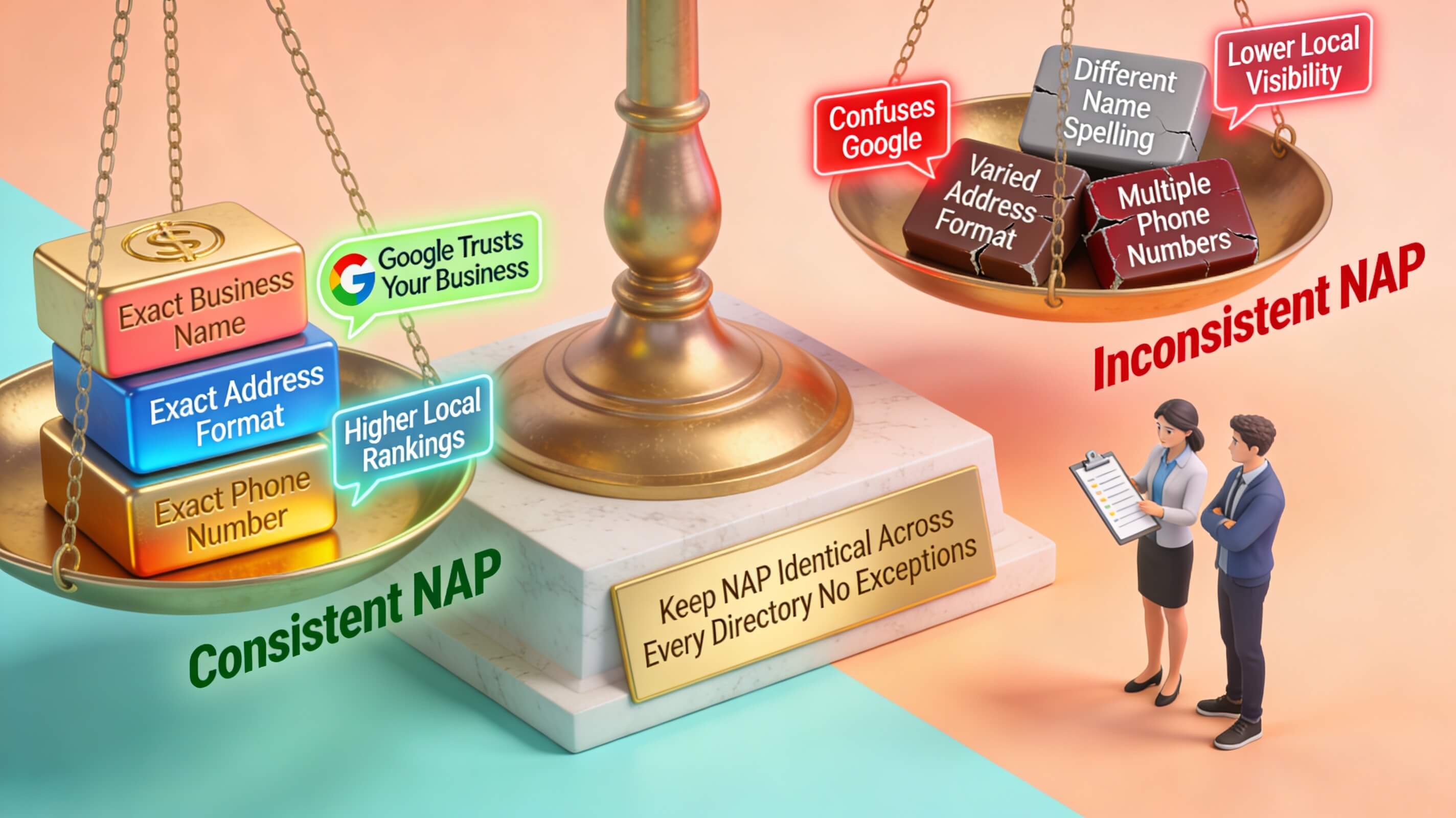
Accurate NAP information is the foundation. Even a single digit error in your phone number or a missing suite number in your address can confuse search engines and reduce trust. Inconsistent NAP data is one of the most common reasons local businesses fail to rank. For example, if you list “Suite 200” on Google but “Ste 200” on Yelp, the algorithm may treat these as two different locations. Manual audits or automated tools can help you catch and fix these discrepancies.
Consistent formatting matters as much as accuracy. Decide on standard formats for your address (Street vs. St., Suite vs. Ste., Road vs. Rd.) and phone number (with or without parentheses, hyphens, or country code) and apply them uniformly across every platform. This consistency signals to search engines that all mentions refer to the same entity. It also reduces friction for customers who might otherwise be confused by varying formats.
Relevant business categories ensure your citation appears for the right searches. Selecting the most specific category available — for example, “Italian Restaurant” instead of just “Restaurant” — helps search engines match your listing to relevant queries. Many directories allow multiple categories; choose those that accurately describe your primary and secondary offerings. Avoid generic or unrelated categories, as they can dilute your relevance.
Appropriate local citation sources amplify the impact of your efforts. A citation on a spammy, low-authority directory can hurt your credibility, while a citation on a trusted, locally relevant site boosts it. Focus on platforms that have editorial standards, moderate their listings, and are indexed by search engines. Quality always trumps quantity in citation building.
Building a Citation Strategy That Works
A strategic approach to citation building yields better results than randomly submitting your business to every directory you find. Follow these steps to create a sustainable and effective citation strategy.
Start with an audit of your existing citations. Use a tool like Moz Local or manually search for your business name plus your city to see where you already appear. Note any inconsistencies, duplicates, or missing listings. This baseline helps you prioritize fixes before adding new citations.
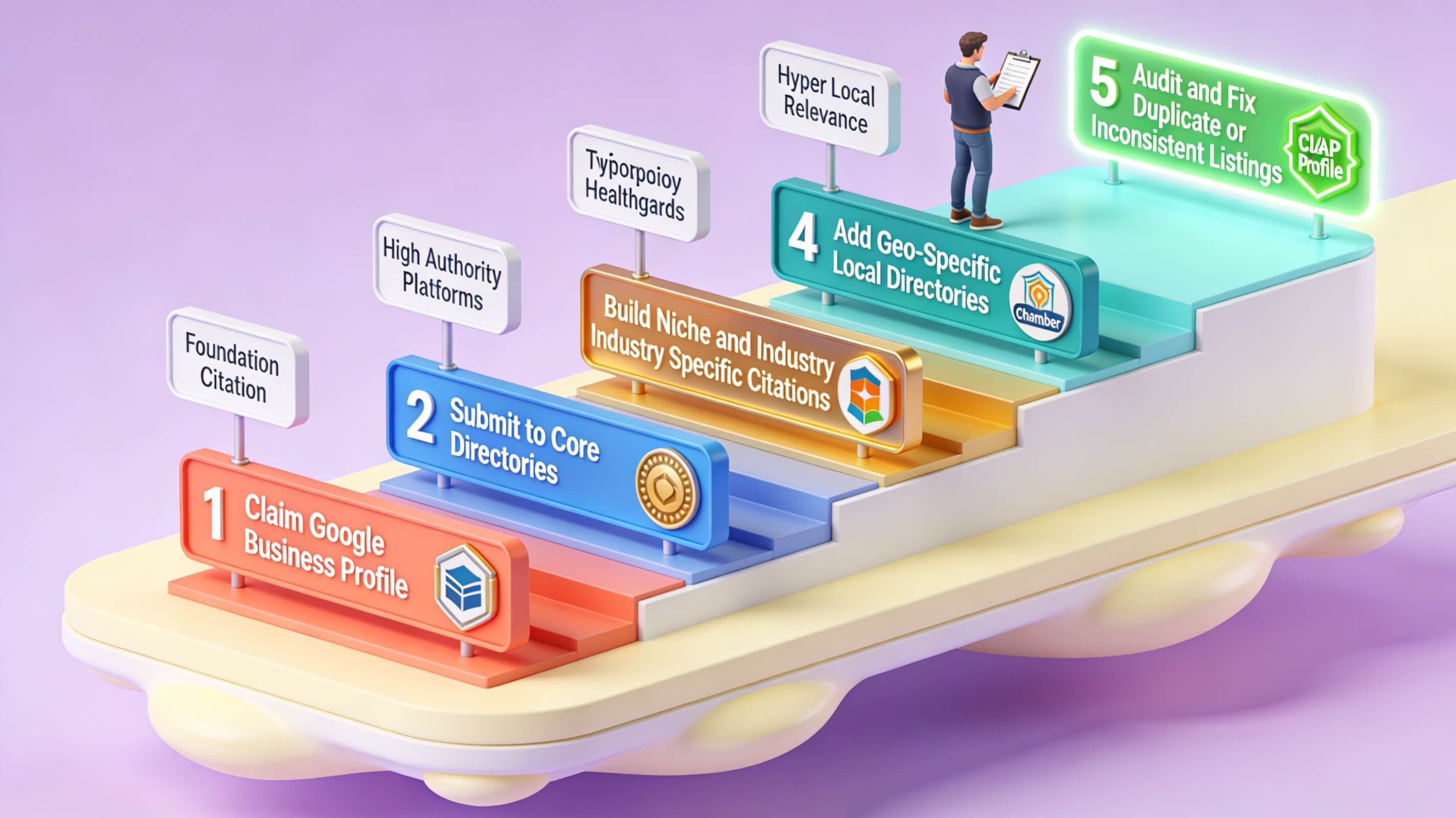
Prioritize high-impact platforms first. Claim and verify your Google Business Profile, Bing Places, and Apple Maps listings. These are the most visible and influential for local search. Next, add your business to Yelp, Facebook, and the top industry-specific directories for your niche. Finally, expand to local chambers of commerce, community sites, and data aggregators.
Maintain a master spreadsheet of all your citations. Include columns for platform name, URL, claimed status, NAP data, username/password, and date last verified. This living document prevents duplication and makes updates easier. When you change your address or phone number, update the master list first, then propagate changes systematically.
Monitor for new citation opportunities. As new directories and platforms emerge, evaluate their relevance and authority before adding your business. Set up alerts for your business name to catch unstructured citations and review them for accuracy. Proactive monitoring prevents small inconsistencies from snowballing into ranking problems.
Optimize your citations for search rankings by including relevant keywords in your business description and selecting appropriate categories. On platforms that allow additional fields, fill in every optional detail — hours, payment methods, services, photos — to create a complete and compelling listing. A fully optimized citation performs better in search results and converts more visitors into customers.
Citation Management Tools and Services
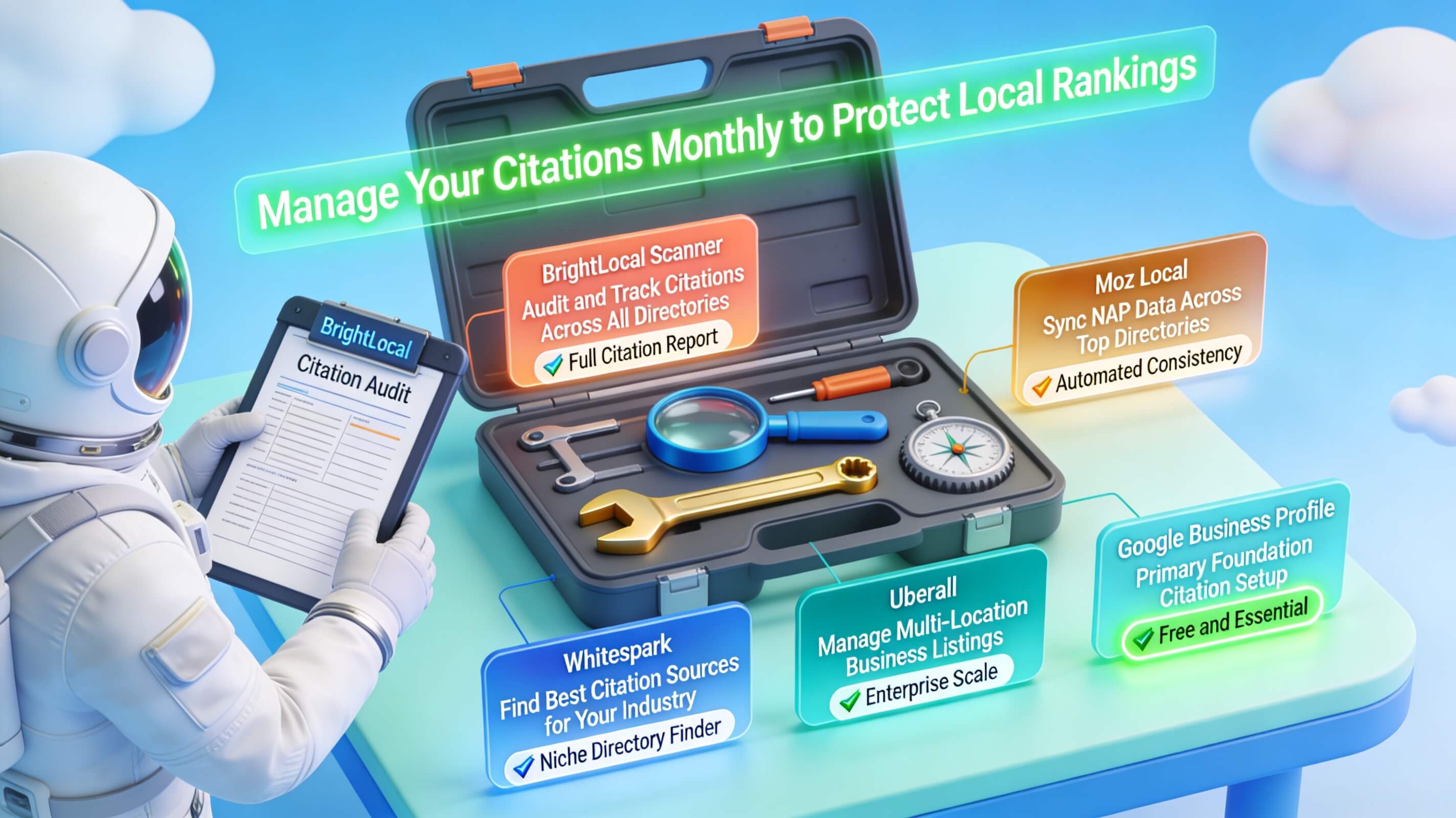
Manually managing citations across dozens of platforms is time-consuming and error-prone. Fortunately, several tools can automate and streamline the process. Choosing the right tool depends on your business size, budget, and technical comfort level.
| Tool | Key Features | Best For |
|---|---|---|
| BrightLocal | Citation building, audit, tracking, review management, local rank reporting | Agencies and multi-location businesses needing comprehensive reporting |
| Moz Local | Automated distribution to major directories, duplicate detection, listing sync | Small to medium businesses wanting hands-off management |
| Yext | Real-time updates across 100+ platforms, review response, analytics dashboard | Large enterprises requiring instant updates across networks |
| Whitespark | Citation finder, citation builder, local rank tracking, reputation management | Businesses focused on discovering new citation opportunities |
BrightLocal’s annual tracking report consistently shows that businesses using citation management tools maintain higher accuracy and rank better in local search. These tools not only save time but also reduce human error. However, no tool is perfect. Always review the data before submission and verify that your listings appear correctly after synchronization. A tool that pushes incorrect data to hundreds of directories can magnify problems quickly.
For businesses on a tight budget, start with free options: claim your Google Business Profile manually, use Google’s support resources for troubleshooting, and manually submit to a handful of high-priority directories. As your business grows, invest in a paid tool to scale your efforts without sacrificing accuracy.
Measuring Citation Impact on Local SEO
Building citations without measuring their impact is like driving without a map — you may move forward, but you don’t know if you’re heading in the right direction. Tracking the right metrics helps you refine your strategy and justify your investment.
Search engine rankings are the most direct outcome of effective citation management. Track your positions for primary and secondary keywords in your target geographic area before and after your citation campaign. Use a ranking tool to monitor the local pack, organic results, and map positions. A sustained improvement over 3–6 months indicates your citations are working.
Local citations analysis involves auditing your listings for accuracy, consistency, and completeness. Tools like Semrush Local can generate reports that highlight errors, duplicates, and missing data. Address these issues promptly because even minor errors can undermine your progress.
Google Business Profile insights provide granular data on how users find and interact with your listing. Metrics such as search views, map views, direction requests, phone calls, and website clicks correlate directly with citation visibility. An increase in these actions after you improve your citations suggests greater discoverability.
Website traffic from local sources is another key indicator. Use analytics to segment traffic by geographic region and referrer. Look for increases in organic traffic from local search queries and direct traffic that may result from users finding your NAP on directories. If your traffic rises while your competitors’ remains flat, your citation strategy is likely a contributing factor.
Conversion metrics — phone calls, form submissions, online bookings, in-store visits — should ultimately increase as your citation visibility improves. Track these with call tracking numbers, unique landing pages, or QR codes on listing photos. Connecting citations to revenue demonstrates their return on investment clearly.
Mobile Optimization and Citation Success
Over 60% of local searches now happen on mobile devices, and citations play a critical role in mobile discovery. When a user searches for “pizza near me” on their phone, Google pulls from its local index — which relies heavily on citation data — to deliver results. If your citations are inconsistent or incomplete, you risk missing that opportunity.
Mobile optimization for citations goes beyond responsive design. Ensure your website is mobile-friendly with fast loading times, but also pay attention to how your citation data appears on mobile screens. On directories, your phone number should be tappable, your address should link to maps, and your hours should be easy to read without zooming. These small details improve user experience and signal to search engines that you understand mobile behavior.
Include a click-to-call button on your Google Business Profile and on your website landing pages. Many mobile users call directly from search results without visiting your website. If your citation has an incorrect or missing phone number, those calls never happen. Similarly, ensure your address is correct for map navigation — a wrong address leads to frustrated customers and lost sales.
Mobile users also expect fast answers. Use structured data markup on your website to surface citation information in rich snippets. This can display your phone number, reviews, and hours directly in search results, making it easy for mobile users to take action without extra clicks. Citations optimized for mobile create a seamless path from search to purchase.
The Connection Between Reviews and Citations
Online reviews and citations are deeply interconnected. A citation without reviews looks incomplete, and reviews without accurate citation data can confuse search engines. Together, they form a powerful credibility signal that drives local search success.
Encourage customers to leave reviews on platforms where you have strong citations. A consistent stream of positive reviews on your Google Business Profile, Yelp, and industry-specific sites signals to search algorithms that your business is active, trusted, and worth promoting. Reviews also provide fresh content, which search engines favor. Each new review is an opportunity to appear in search results for terms related to that review.
Respond to all reviews — both positive and negative. A thoughtful response to a negative review shows potential customers that you care about service quality. It also adds text to your listing, which can help with keyword relevance. Review responses that mention specific products or services can indirectly boost your citation’s search visibility.
Use reviews in your marketing materials to build trust. Quote positive reviews on your website, share them on social media, and include them in email newsletters. When potential customers see recent, authentic reviews accompanying your citation, they are more likely to choose your business over a competitor with no reviews or outdated feedback.
Monitor review platforms regularly for new citations. Sometimes customers leave reviews on directories where you haven’t claimed your listing. These reviews create unstructured citations that link your business name, location, and reputation together. Claiming those listings and ensuring accurate NAP data turns unmanaged mentions into valuable assets.
Common Citation Mistakes to Avoid
Even experienced business owners make citation errors that undermine their local SEO. Recognizing these pitfalls can save you time, money, and ranking potential.
Creating duplicate listings is one of the most common mistakes. When you list your business multiple times on the same directory — perhaps one with “Main St” and another with “Main Street” — search engines see conflicting data and may penalize both. Always search for existing listings before creating new ones. Merge duplicates when you find them.
Using inconsistent business names confuses both algorithms and customers. If your legal name is “Smith’s Plumbing LLC” but you list as “Smith’s Plumbing” on some platforms and “Smith Plumbing Company” on others, you fragment your authority. Choose one exact business name and use it everywhere, including abbreviations, punctuation, and legal suffixes.
Ignoring niche directories in favor of only general ones leaves untapped potential. A restaurant that only lists on Yelp and Google misses diners searching on OpenTable or TripAdvisor. A lawyer who skips Avvo loses credibility with legal clients. Identify the top 3–5 niche directories for your industry and prioritize them alongside general platforms.
Neglecting data aggregators creates a weak foundation. Aggregators like Infogroup and Neustar feed your data to hundreds of downstream directories. If your information is wrong at the source, it propagates errors across the web. Submit accurate data to these aggregators first, then build outward.
Failing to update after changes is a silent killer. When you move locations or change phone numbers, every citation must be updated. A single old address in a directory can send customers to the wrong place and signal to Google that your business is no longer active. Create a change management process that includes notification of all citation platforms.
Conclusion
Local search citations are the backbone of discoverability in local searches. They verify your business’s existence, build trust with search engines, and put you in front of customers at the exact moment they are looking for your services. The effort required to build and maintain accurate, consistent citations pays dividends in higher rankings, more traffic, and increased revenue. From understanding the difference between structured and unstructured citations to choosing the right tools and measuring impact, every step matters. Businesses that invest in citation quality over quantity, monitor for errors, and integrate reviews into their strategy consistently outperform competitors who treat citations as a one-time task.
Start today by auditing your existing citations using Whitespark’s citation finder or a similar tool. Identify the top five errors in your listings and fix them this week. Then, expand to the most influential platforms for your industry. Remember, citation building is not a set-and-forget activity — it requires ongoing attention and refinement. But the businesses that commit to excellence in local SEO reap the rewards of being found, chosen, and trusted by their community.
If you need expert guidance to accelerate your local search results, consider partnering with a digital marketing agency that specializes in citation management and local SEO. The right partner can help you navigate the complexities of directory submissions, data aggregators, and review management, freeing you to focus on running your business. Your local customers are searching right now — make sure they find you first.