Cart 0


Share
Table of Contents
B2B Conversion Rate Optimization: Elevating Business-to-Business Success
Business-to-business platforms operate in a distinctly different environment from consumer-facing sites, and this reality demands a specialized approach to conversion rate optimization. In B2B markets, the sales cycle stretches over weeks or months, multiple stakeholders weigh in on purchasing decisions, and the average transaction value dwarfs typical consumer purchases. This complexity means that generic conversion tactics borrowed from B2C playbooks often fall short. B2B conversion rate optimization requires a deep understanding of how businesses evaluate solutions, what information they need at each stage, and how to build trust across an entire buying committee. When executed correctly, a robust CRO strategy can transform your website from a passive brochure into a revenue-generating engine that systematically moves prospects toward commitment. In this comprehensive guide, you will learn the specific challenges of optimizing for B2B audiences, the data-driven tactics that produce measurable results, and how to integrate these efforts into your broader marketing framework to maximize return on investment.
Understanding B2B Conversion Rate Optimization
B2B conversion rate optimization refers to the systematic process of increasing the percentage of website visitors who complete a desired action, whether that action involves submitting a demo request, downloading a white paper, signing up for a trial, or making a purchase. Unlike consumer markets where impulse decisions drive many conversions, B2B buyers proceed through a deliberate evaluation process that often involves researching multiple vendors, comparing feature sets, and seeking internal approval. This fundamental difference shapes every aspect of how you approach optimization.
The primary challenge in B2B CRO lies in addressing the needs of multiple decision-makers within a single organization. A technical buyer may care deeply about integration capabilities and security protocols, while a financial stakeholder focuses on total cost of ownership and projected ROI. Your conversion path must accommodate these diverse perspectives without overwhelming any single visitor. Additionally, B2B buyers prioritize risk reduction above all else. They need reassurance that your solution will deliver on its promises, which means your optimization strategy must emphasize credibility indicators such as case studies, third-party validations, and transparent pricing structures.
Unique Challenges and Opportunities for B2B Conversion Rate Optimization
| Challenges | Opportunities |
|---|---|
| Longer sales cycles requiring sustained engagement | Opportunity to build deep relationships through multiple touchpoints |
| Multiple decision-makers with conflicting priorities | Opportunity to create tailored messaging that addresses each stakeholder’s concerns |
| Focus on value and ROI rather than impulse buying | Opportunity to demonstrate quantifiable business outcomes through data |
| Higher customer acquisition costs | Opportunity to maximize lifetime value through effective lead nurturing |
| Complex product offerings requiring education | Opportunity to position your brand as a trusted authority in the space |
Effective B2B conversion rate optimization demands collaboration across marketing, sales, and customer success teams. When these departments align around a unified conversion strategy, the results amplify significantly. Optimizely defines CRO as a methodology for increasing the percentage of users who perform a desired action on a website, but in the B2B context, this definition extends to encompass the entire buyer journey, not just the final click.
Key Factors Impacting B2B Conversion Rates
Several foundational elements directly influence whether a B2B visitor converts or leaves your site. Understanding these factors allows you to prioritize improvements that yield the highest impact. Website design and user experience sit at the top of this list because they shape first impressions and determine how easily prospects can find the information they need. A cluttered layout, confusing navigation, or slow load times will send potential buyers to competitors before they ever evaluate your offering.
Copywriting and messaging must speak the language of your target industry. B2B buyers are sophisticated professionals who can spot generic marketing language instantly. Your copy should demonstrate genuine expertise in their challenges while using terminology that resonates with their daily reality. This means moving beyond surface-level benefits to articulate precisely how your solution alters their operational or financial outcomes.
Call-to-action strategies require careful consideration in B2B contexts. While a consumer site might push for immediate purchase, a B2B site should guide visitors toward high-value micro-conversions that indicate genuine interest. A request for a consultation or a detailed product demo signals far more intent than a simple newsletter signup. Trust and credibility represent perhaps the most critical factor of all. B2B buyers need to feel confident that your company will deliver on commitments, which means prominently featuring customer testimonials, industry certifications, and case studies that demonstrate measurable results.
Strategies for B2B Conversion Rate Optimization
Implementing effective B2B conversion rate optimization requires a structured approach that combines testing, personalization, and systematic relationship building. A/B testing serves as the backbone of any serious CRO program because it replaces guesswork with empirical evidence about what resonates with your audience. Instead of debating whether a longer form or a shorter form performs better, you can run controlled experiments that reveal the answer specific to your unique audience.
Personalization in B2B contexts goes beyond simply inserting a prospect’s name into an email. True personalization involves segmenting your audience based on firmographic data such as company size, industry vertical, and job function, then tailoring content and messaging accordingly. A chief technology officer evaluating your platform needs different information than a procurement manager comparing pricing models. When you deliver the right message to the right person at the right time, conversion rates climb significantly.
Lead nurturing transforms cold prospects into warm opportunities through sustained, value-driven communication. The most effective B2B nurturing programs use marketing automation to deliver relevant content based on each lead’s behavior and stage in the buying cycle. HubSpot emphasizes that lead nurturing focuses marketing and communication efforts on listening to prospects and understanding their needs to build meaningful relationships over time.
Analyzing B2B Website Conversion Optimization
Your website represents the central hub where most B2B conversion activity occurs, making its optimization a top priority. Landing page optimization deserves particular attention because these pages often serve as the entry point for paid campaigns and content marketing efforts. A poorly designed landing page can waste significant advertising spend by failing to convert interested visitors. Every landing page should communicate your unique value proposition within seconds, maintain visual consistency with your brand, load in under three seconds, and feature a single, unambiguous call to action.
Forms play a crucial role in B2B conversion rate optimization because they serve as the gate through which prospects enter your sales funnel. The common temptation to ask for excessive information upfront usually backfires. B2B buyers guard their contact details carefully, especially when they are still in the research phase. Keep initial forms brief, requesting only essential information such as name, email, and company. As trust develops through subsequent interactions, you can progressively ask for more detailed information.
Checkout processes in B2B contexts often involve complexities that consumer sites avoid, such as negotiating volume discounts, setting up recurring billing, or coordinating with procurement departments. Streamlining these flows without sacrificing necessary approvals requires thoughtful design. Implementing a progress indicator, offering multiple payment options including invoicing, and minimizing the number of required steps can significantly reduce abandonment rates. Baymard Institute reports that the average cart abandonment rate across e-commerce hovers around 70 percent, and B2B sites often face even higher drop-off rates due to their additional complexities.
Leveraging Data for B2B Conversion Rate Optimization
Data-driven decision making separates effective CRO programs from those that rely on intuition and guesswork. Analytics tools provide visibility into how visitors interact with your site, where they encounter friction, and which paths lead to conversions. By setting up robust tracking systems that capture both quantitative metrics and qualitative insights, you gain the information needed to make targeted improvements.
Segmenting your audience based on behavior and demographics enables personalized experiences that resonate more deeply with each visitor group. Rather than showing the same content to every site visitor, use data to identify which pages each segment views most frequently, then optimize those pages specifically for that audience. A/B testing becomes exponentially more valuable when you test variations tailored to specific segments rather than testing generic changes across your entire audience.
Customer data also informs lead nurturing efforts by revealing where each prospect stands in the buying cycle. A visitor who downloads three case studies in one session shows different intent than one who simply visits your pricing page. Use these behavioral signals to trigger appropriate follow-up communications. Sales data analysis provides another layer of insight by identifying patterns in closed deals. If you notice that customers who attend a live demo convert at three times the rate of those who do not, you can optimize your site to drive more demo registrations. NG Data explains that data-driven marketing enables organizations to orchestrate personalized customer experiences across multiple channels based on a unified view of customer behavior.
Nurturing B2B Leads for Higher Conversions
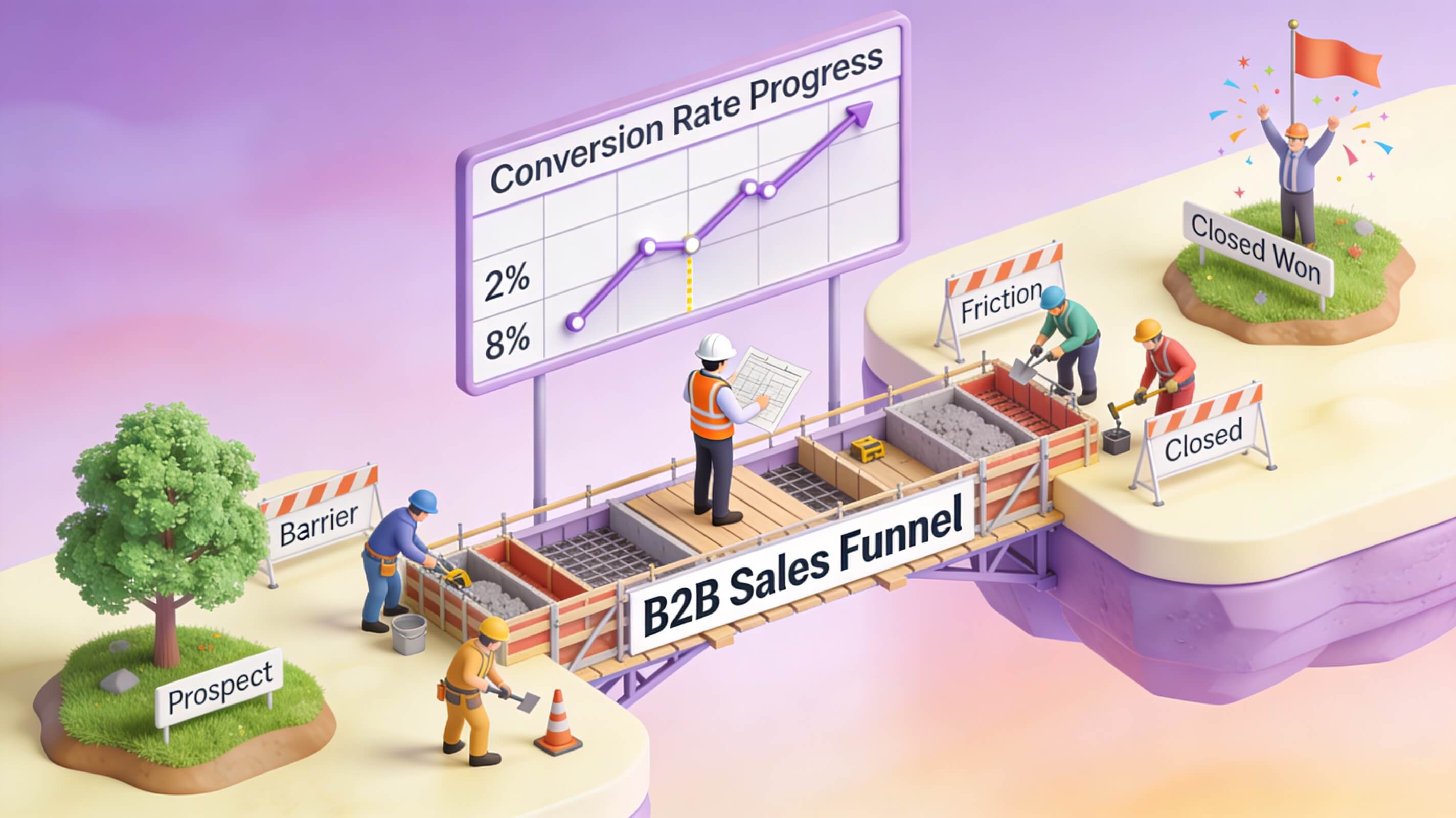
Lead nurturing represents one of the most powerful levers available for B2B conversion rate optimization. The long sales cycles typical in business-to-business markets mean that most prospects will not convert on their first visit to your site. Without a systematic nurturing process, these leads go cold and eventually choose a competitor who stayed top of mind.
Lead scoring assigns numerical values to different actions a prospect takes, allowing your team to prioritize outreach efforts toward the most engaged leads. A visitor who requests a pricing sheet and attends a webinar receives a higher score than one who merely reads a blog post. This system ensures that sales resources focus on prospects most likely to convert rather than chasing every name in the database. Establishing clear scoring criteria based on your historical conversion data makes this approach particularly effective.
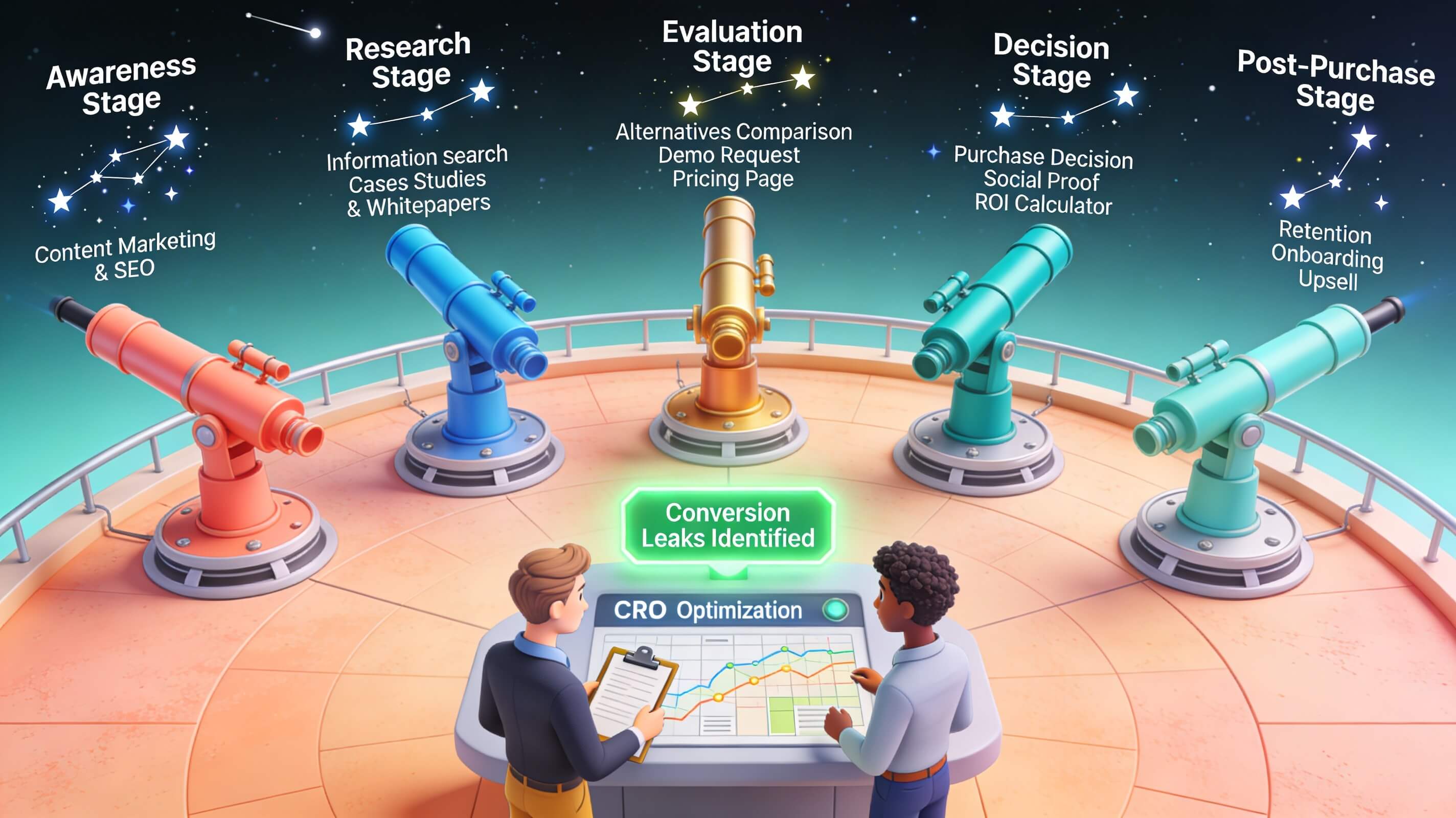
Email nurturing campaigns deliver targeted content that addresses each lead’s specific questions and objections at the right moment. A prospect who recently downloaded a white paper on industry trends might receive a follow-up email offering a case study that demonstrates how your solution addresses those trends. By mapping content to each stage of the buyer journey, you guide prospects naturally toward a purchase decision. The technology company market provides a useful mini case study in this approach. One SaaS provider struggling with trial-to-paid conversions implemented a five-email sequence triggered by specific user behaviors within the trial platform. Each email addressed a common point of friction, offered targeted assistance, and highlighted a feature relevant to that user’s usage patterns. The campaign produced a 50 percent increase in conversion rates from trial users and a 20 percent lift in overall revenue within three months.
Optimizing B2B Conversion Rates Through Personalization
Personalization has moved from a competitive advantage to an expectation among B2B buyers. When prospects visit your site, they expect content that reflects their industry, role, and stage of research. Generic messaging signals that you do not understand their business, which erodes trust and reduces conversion probability. Creating detailed buyer personas based on both demographic data and behavioral insights forms the foundation of effective personalization.
Dynamic content tools allow you to change elements of your website based on who is viewing it. A visitor from the healthcare industry might see case studies featuring hospitals and medical device companies, while a visitor from manufacturing sees examples from factory automation and supply chain optimization. This contextual relevance dramatically increases engagement and conversion rates because visitors immediately recognize that your solution applies to their specific situation.
Email personalization extends beyond inserting a first name in the subject line. Targeted campaigns can deliver different content offers based on previous interactions, recommend relevant resources based on what similar leads found valuable, and adjust messaging based on where a prospect falls in the buying cycle. However, personalization must be balanced with privacy considerations. B2B buyers are increasingly aware of how their data is used, and overtly aggressive personalization can feel invasive. Always obtain explicit consent for data collection and provide clear opt-out options. GDPR.eu outlines the data protection requirements that apply when handling personal information from European prospects.
Streamlining B2B Conversion Funnels
Conversion funnels in B2B contexts contain more stages and decision points than their B2C counterparts. Each additional step represents an opportunity for prospects to drop out, which means every stage must be optimized for maximum clarity and minimal friction. Focusing on user experience throughout the funnel yields compounding benefits as improvements at each stage reduce cumulative abandonment.
Implementing A/B testing across funnel stages reveals which specific elements drive the greatest improvement. Testing variations in headline copy, form layout, image selection, and button placement provides empirical data about what works best for your audience. The key is to test one variable at a time so that you can attribute any change in performance to a specific modification. Over time, these incremental improvements compound to produce substantial lifts in overall conversion rates.
Mobile optimization has become non-negotiable in B2B conversion rate optimization. Research consistently shows that a significant portion of B2B research now begins on mobile devices, even if the final purchase occurs through a desktop or direct sales interaction. A site that delivers a poor mobile experience risks losing prospects before they ever fully evaluate your offering. Responsive design, fast loading times, and touch-friendly form elements are minimum requirements for any serious B2B site. Think with Google reports that nearly 50 percent of B2B researchers use mobile devices during the research process, making mobile optimization a critical priority for conversion success.
Effective B2B Conversion Rate Measurement and Analytics
What cannot be measured cannot be improved, making analytics essential for B2B conversion rate optimization. Tracking conversion rates by channel reveals which marketing investments generate the highest return. Organic search traffic might convert at a higher rate than social media traffic, justifying increased investment in SEO efforts. Similarly, conversion rates by landing page highlight which pages most effectively move visitors toward action, providing guidance for optimizing underperforming pages.
Campaign-level analysis allows you to compare the effectiveness of different marketing initiatives. A webinar promotion campaign might drive more high-quality leads than a paid search campaign, suggesting that content marketing deserves a larger share of budget. User behavior analysis using tools like session recordings and heatmaps reveals exactly where visitors encounter confusion or frustration. Seeing that users consistently abandon a form at a specific field provides clear direction for improvement.
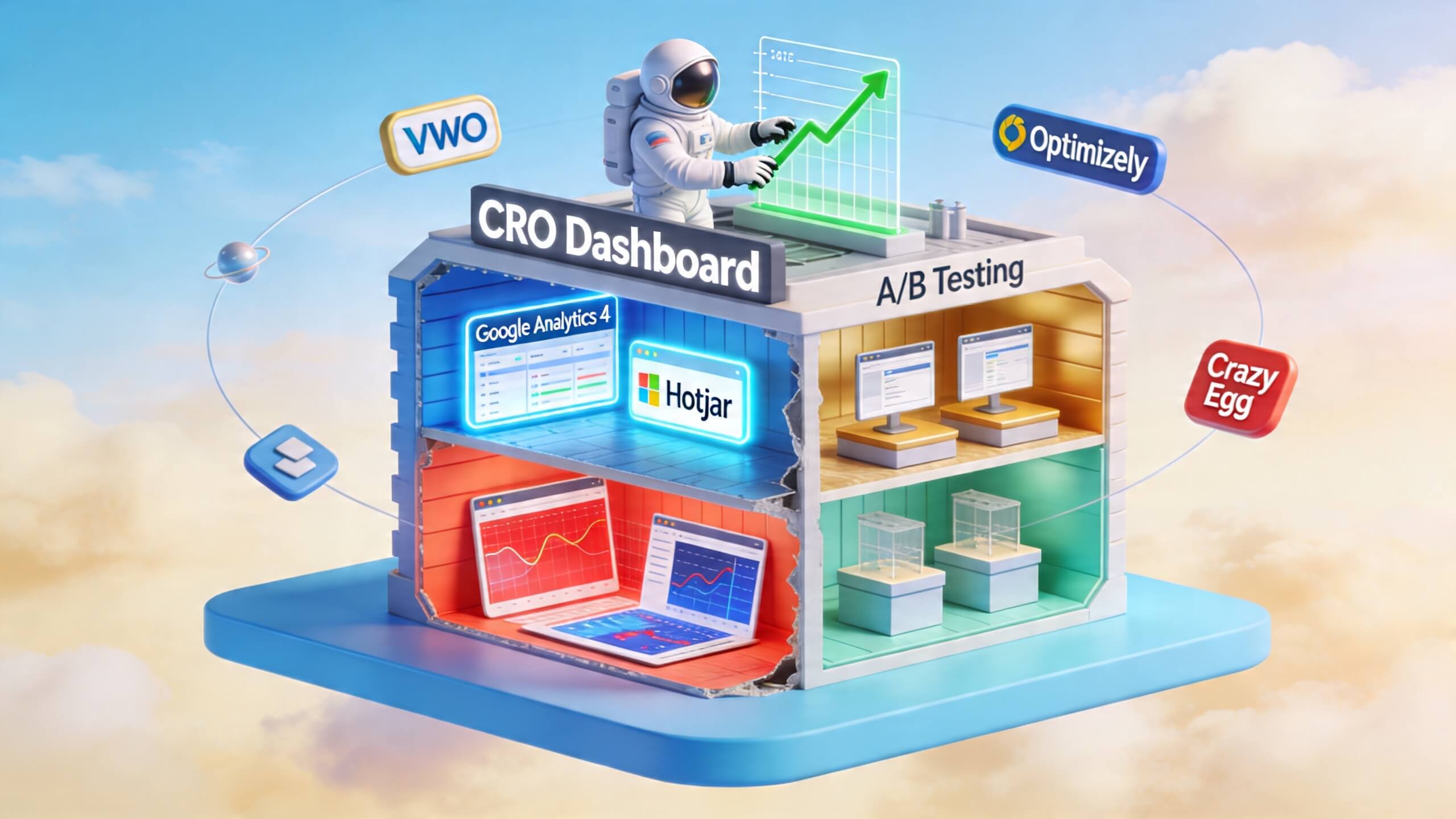
Funnel visualization tools map the drop-off points across your conversion path, showing where prospects exit at each stage. If 60 percent of visitors who reach your pricing page leave without taking action, that page becomes a priority for optimization. Combining quantitative data with qualitative insights from user testing creates a complete picture of your conversion performance. Hotjar offers heat mapping and session recording tools that provide visual insights into user behavior on your site.
Integrating B2B Conversion Rate Optimization into Your Marketing Strategy
Conversion rate optimization cannot function as an isolated activity. To achieve sustained results, CRO must be woven into your broader marketing strategy so that every campaign and channel supports the ultimate goal of moving prospects toward conversion. Developing a clear understanding of your audience provides the foundation for this integration. Detailed buyer personas inform everything from content creation to ad targeting to sales scripts, ensuring consistency across every touchpoint.

Combining CRO with paid advertising creates a powerful synergy. Rather than sending paid traffic to a generic homepage, create dedicated landing pages optimized specifically for each ad campaign. This alignment between the ad message and the landing page content dramatically improves quality scores and conversion rates. Email marketing and lead nurturing campaigns benefit from CRO principles as well, using A/B tested subject lines, personalized content recommendations, and optimized send times to maximize engagement.
Content marketing represents another area where CRO integration delivers significant value. Every piece of content you produce should serve a specific purpose in the conversion funnel, whether that involves attracting new visitors, educating prospects, or driving direct action. By optimizing content for search engines while simultaneously optimizing for conversion, you create assets that both attract traffic and convert it. Regular analysis of campaign performance allows you to identify what works and double down on those strategies, while eliminating tactics that fail to produce results.
Conclusion
B2B conversion rate optimization represents a systematic, data-driven approach to improving the performance of your business-to-business platform. Unlike consumer-focused optimization, B2B CRO must account for longer sales cycles, multiple decision-makers, and a greater emphasis on demonstrated value and risk reduction. The strategies outlined in this guide provide a comprehensive framework for addressing these unique challenges. By focusing on website design and user experience, crafting persuasive messaging that speaks to diverse stakeholders, and implementing proven tactics such as A/B testing, personalization, and lead nurturing, you can transform your digital presence into a reliable revenue engine.
The key to sustained success lies in continuous measurement and refinement. Conversion rate optimization is not a one-time project but an ongoing discipline that requires regular analysis, testing, and adjustment. As market conditions shift and buyer expectations evolve, your optimization strategies must adapt accordingly. Businesses that commit to this process consistently outperform competitors who treat CRO as an afterthought. To begin implementing these strategies today, start by auditing your current conversion funnel to identify the highest-impact opportunities for improvement. Test one change at a time, measure the results rigorously, and scale what works. Your bottom line will reflect the effort you invest in optimizing every stage of the buyer journey.