Cart 0

Share
Table of Contents
How to Get into Natural Language Processing
Natural language processing (NLP) stands at the most exciting intersection of artificial intelligence and human communication. If you are wondering how to get into natural language processing, the path is clearer today than ever before, yet it demands genuine dedication to mastering both computational thinking and linguistic nuance. This field has moved far beyond academic curiosity; it now powers virtual assistants, automated translation systems, sentiment analysis tools, and clinical decision support platforms that directly impact millions of lives daily. The core question is no longer whether NLP matters, but how quickly you can build the skills to contribute meaningfully. In my two decades working across computational linguistics and machine learning, I have watched this discipline evolve from rule-based systems that barely understood simple commands to transformer architectures that generate human-quality text. This guide reflects that experience. You will learn exactly what foundational knowledge matters, which programming skills to prioritize, what real-world applications demand your attention, and how to position yourself for long-term growth. Every year, hundreds of aspiring practitioners ask me the same question: where do I even start? The answer has changed dramatically since 2018, when pretrained language models began reshaping the entire paradigm. Today, you do not need to build everything from scratch. You do, however, need a clear understanding of tokenization, embeddings, sequence modeling, and evaluation metrics. You also need hands-on practice with real datasets, not just textbook exercises. This article walks you through each critical step, from building your mathematical foundation to deploying production-grade NLP systems. Whether you are a computer science student seeking specialization or a professional pivoting into AI, the roadmap that follows will save you months of wasted effort and point you toward the techniques, tools, and career strategies that actually move the needle.
Understanding What Natural Language Processing Actually Demands
Before diving into code or courses, you must grasp what NLP truly encompasses. Natural language processing is the branch of artificial intelligence that enables computers to understand, interpret, and generate human language in a way that is both meaningful and useful. It sits at the crossroads of computer science, artificial intelligence, and linguistics. When people ask me how to get into natural language processing, I always tell them to start by understanding the two major subfields: natural language understanding (NLU) and natural language generation (NLG). NLU focuses on teaching machines to comprehend text — extracting meaning, intent, and sentiment from raw words. NLG, by contrast, focuses on producing coherent, contextually appropriate language from structured data. Both subfields rely on the same foundational pipeline: tokenization, part-of-speech tagging, parsing, semantic analysis, and pragmatic interpretation. What many self-taught practitioners overlook is the importance of pragmatics — the study of how context influences meaning. A sentence like “I never said she stole my money” can have seven different meanings depending on which word you emphasize. Without understanding pragmatics, your NLP models will consistently miss the mark. The field also demands comfort with ambiguity. Human language is messy, filled with sarcasm, irony, idioms, and cultural references. No model will ever achieve perfect accuracy. The top practitioners embrace this uncertainty and build systems that gracefully handle edge cases. If you are serious about how to get into natural language processing, accept from day one that you will never stop learning. The landscape shifts every few months as new architectures, datasets, and evaluation benchmarks emerge.
Building the Mathematical and Linguistic Foundation
You cannot build robust NLP systems without a solid mathematical foundation. The three pillars you need are linear algebra, probability theory, and calculus. Linear algebra underpins word embeddings, attention mechanisms, and the matrix operations that drive every deep learning model. You should understand vectors, matrices, eigenvalues, and singular value decomposition at an intuitive level. Probability theory is equally essential because NLP models constantly deal with uncertainty — predicting the next word in a sequence, classifying sentiment, or identifying named entities all involve probabilistic reasoning. Bayes’ theorem, conditional probability, and Markov chains appear repeatedly across every major NLP technique. Calculus, particularly multivariate calculus and gradient-based optimization, is necessary for understanding how neural networks learn. You do not need to derive proofs from scratch, but you must know why gradient descent works and how backpropagation updates model weights. On the linguistics side, you need a working knowledge of syntax (sentence structure), semantics (meaning), morphology (word formation), and phonology (sound patterns, relevant for speech-related NLP). A common mistake I see in newcomers is skipping linguistics entirely. They jump straight to implementing BERT or GPT and wonder why their models fail on basic grammatical constructions. Study at least introductory linguistics. Understanding why “the dog chased the cat” and “the cat was chased by the dog” convey the same meaning despite different structures will make you a far better NLP engineer. When I mentor people on how to get into natural language processing, I recommend they spend at least six weeks building this dual foundation before writing a single line of NLP code. That investment pays compound dividends over years of practice.
Mastering NLP Programming with Python and Core Libraries
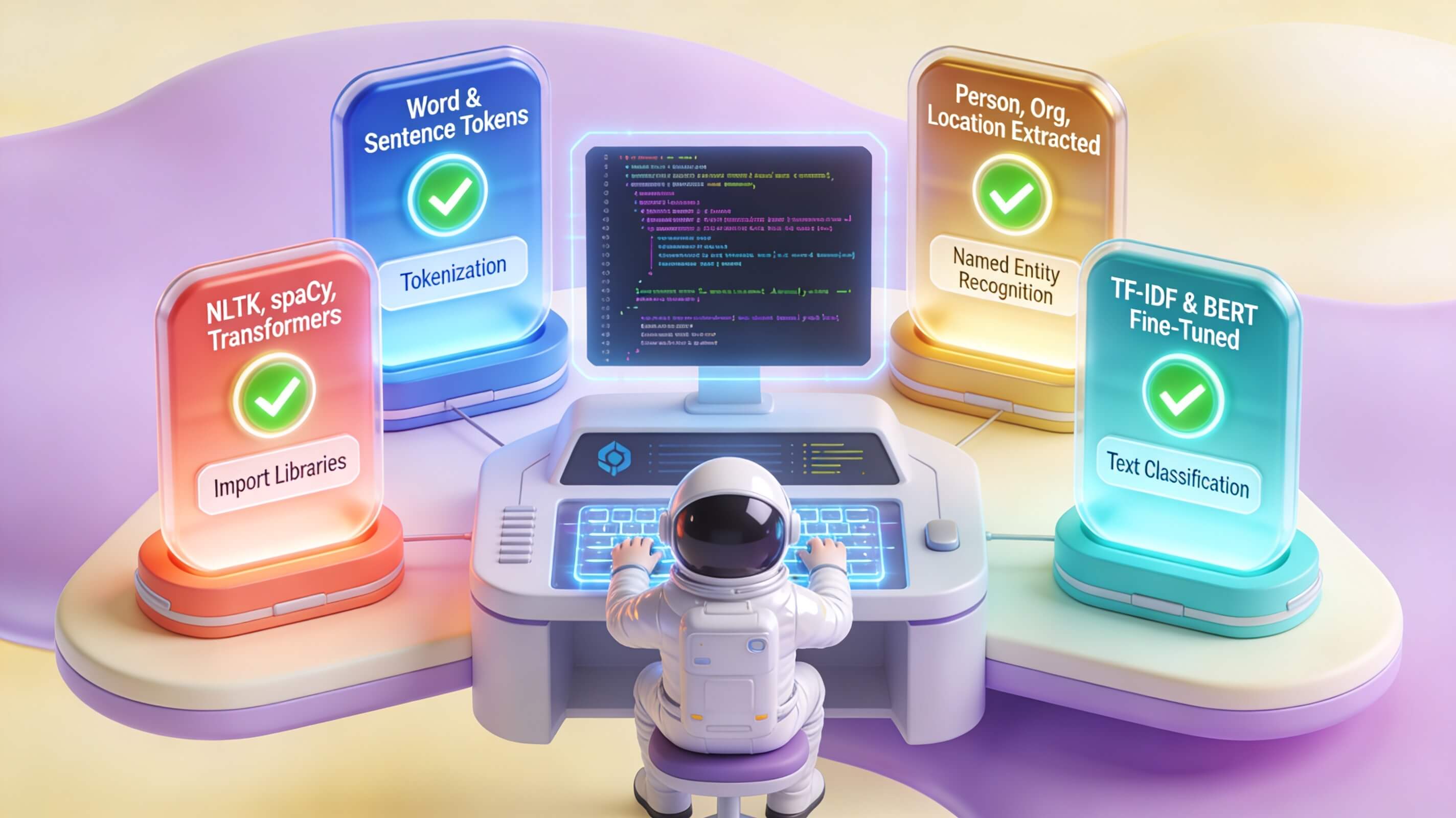
Python dominates the NLP ecosystem for good reason. Its readability, extensive library support, and massive community make it the default choice for both prototyping and production systems. If you do not already know Python, start there. Focus specifically on string manipulation, file I/O, list comprehensions, and working with libraries like NumPy and Pandas. These will be your daily tools. Once you are comfortable with Python, move directly into the NLP-specific ecosystem. The Natural Language Toolkit (NLTK) is the traditional starting point — it offers comprehensive coverage of tokenization, stemming, lemmatization, and corpus access. However, for production work, you will likely prefer spaCy, which is faster and more modern in its API design. spaCy also provides pretrained pipelines for multiple languages, making it easy to get started with named entity recognition, dependency parsing, and text classification. For deep learning–based NLP, the Hugging Face Transformers library has become the industry standard. It gives you access to thousands of pretrained models, including BERT, RoBERTa, T5, and GPT variants, all with a consistent API. Learning to use these libraries effectively is a significant part of how to get into natural language processing successfully. I recommend building at least five to ten small projects using each library before tackling more complex applications. A good progression is: start with NLTK for basic text processing, move to spaCy for pipeline-based tasks, then adopt Hugging Face for transformer models. Along the way, learn how to use regular expressions for pattern matching, and become comfortable with handling Unicode and different character encodings. Real-world text data is never clean. It arrives in different formats, encodings, and quality levels. Your ability to preprocess data efficiently will determine the ceiling of your model performance. Several universities offer Stanford CS224n, which is an excellent resource for bridging the gap between library usage and theoretical understanding.
Core NLP Techniques That Form Your Toolkit
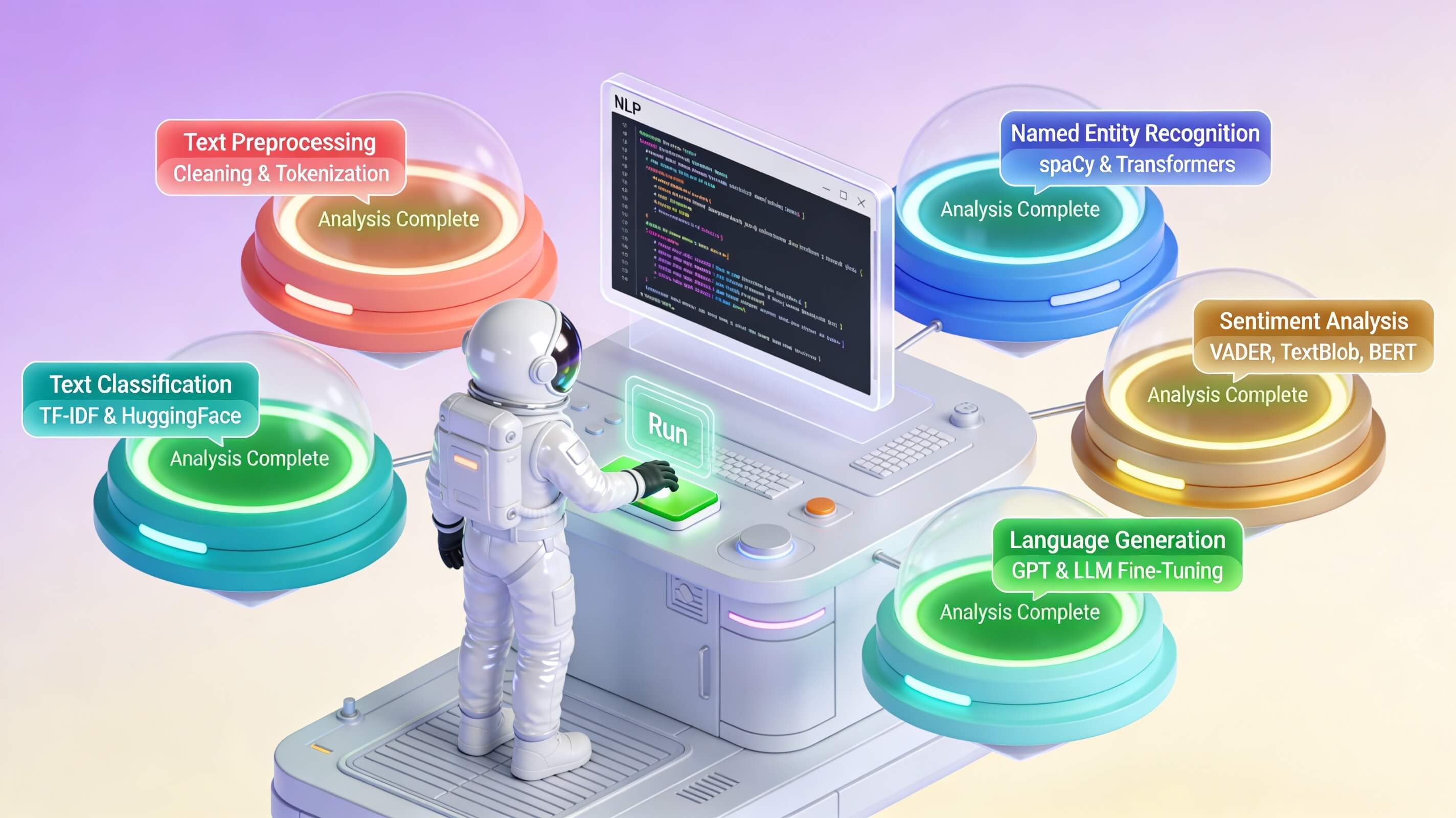
Every NLP practitioner must internalize a set of core techniques that reappear across virtually every project. These techniques form your operational toolkit, and mastering them is non-negotiable if you want to know how to get into natural language processing at a professional level. Tokenization is the simplest yet most consequential step — it breaks raw text into individual tokens, which can be words, subwords, or characters. The choice of tokenization strategy directly affects model quality. Word-level tokenization works for most applications but struggles with out-of-vocabulary words. Subword tokenization, as implemented by the Byte-Pair Encoding algorithm used in many transformer models, offers a better balance between coverage and vocabulary size. Part-of-speech tagging assigns grammatical categories to each token, providing critical syntactic information that downstream tasks can leverage. Named entity recognition (NER) identifies proper nouns and classifies them into categories like person, organization, location, or date. This technique is particularly valuable in industries like finance and healthcare, where extracting structured information from unstructured text drives decision-making. Sentiment analysis, probably the most commercially deployed NLP technique, classifies text as positive, negative, or neutral. Modern approaches go beyond simple ternary classification to detect nuanced emotions like frustration, joy, or surprise. Dependency parsing reveals the grammatical structure of a sentence by showing how words relate to one another. This is essential for question-answering systems and information extraction pipelines. Topic modeling, using algorithms like Latent Dirichlet Allocation (LDA), discovers latent themes across large document collections. It remains valuable for content recommendation systems and academic research. The following table summarizes these core techniques, their primary use cases, and the most common libraries for implementation:
| Technique | Primary Use Case | Recommended Library |
|---|---|---|
| Tokenization | Breaking text into tokens for downstream processing | NLTK, spaCy, Hugging Face Tokenizers |
| Part-of-Speech Tagging | Syntactic analysis, grammar correction | spaCy, NLTK |
| Named Entity Recognition | Information extraction from legal, medical, news text | spaCy, Stanford CoreNLP |
| Sentiment Analysis | Brand monitoring, customer feedback analysis | VADER, TextBlob, Hugging Face |
| Dependency Parsing | Question answering, relationship extraction | spaCy, Stanza |
| Topic Modeling | Content discovery, document clustering | Gensim, scikit-learn |
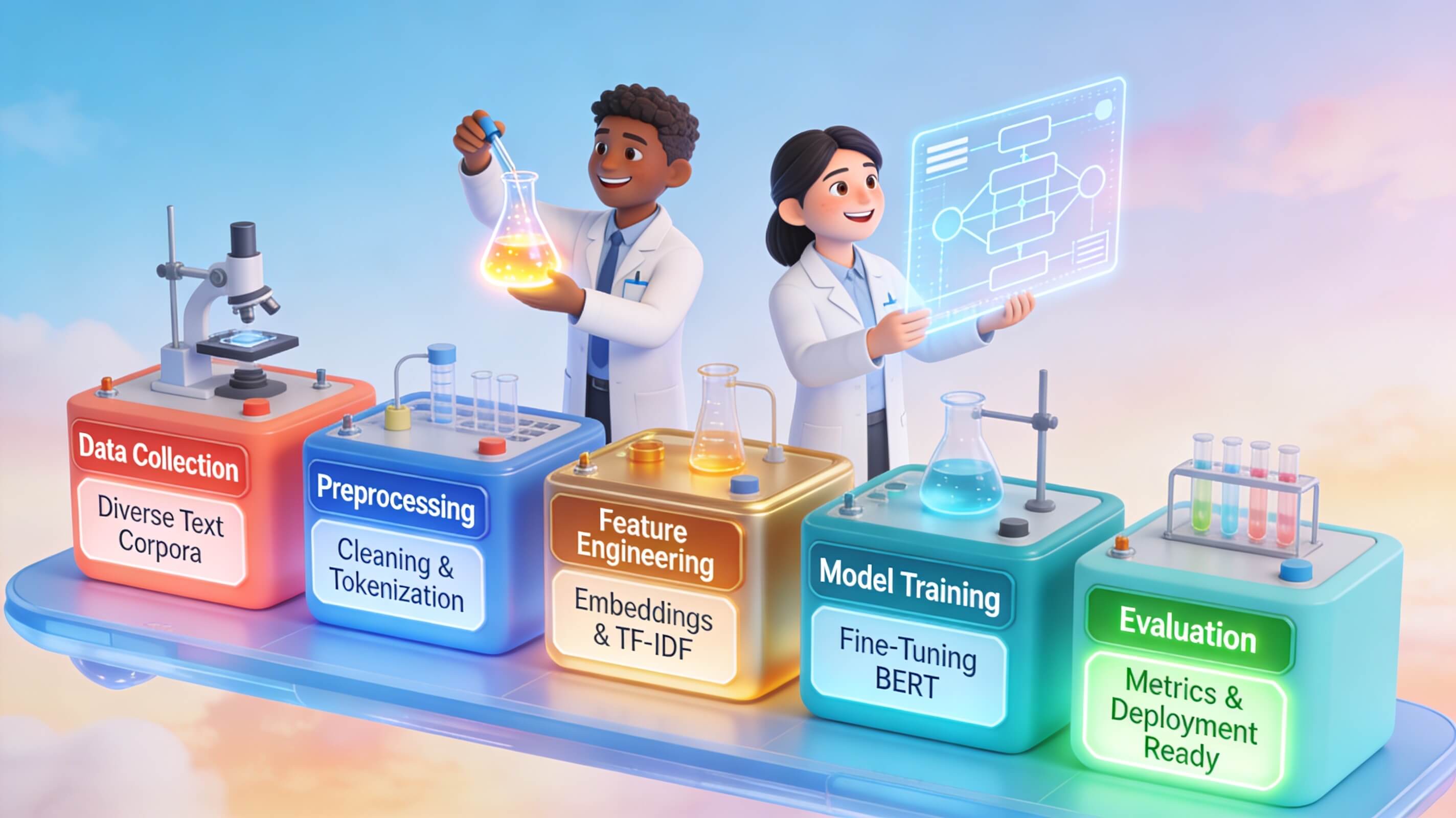
Each of these techniques has its own set of hyperparameters, evaluation metrics, and failure modes. I have seen many practitioners over-rely on default configurations and then struggle when their models underperform on specific datasets. The solution is to systematically experiment: vary the tokenizer, try different pretrained embedding approaches, and always validate against a held-out test set. Building this experimental habit early is one of the most overlooked aspects of how to get into natural language processing effectively. The ACL Anthology offers thousands of peer-reviewed papers where you can study how top researchers approach these techniques in different contexts.
Strategic Learning Pathways and Curated Resources
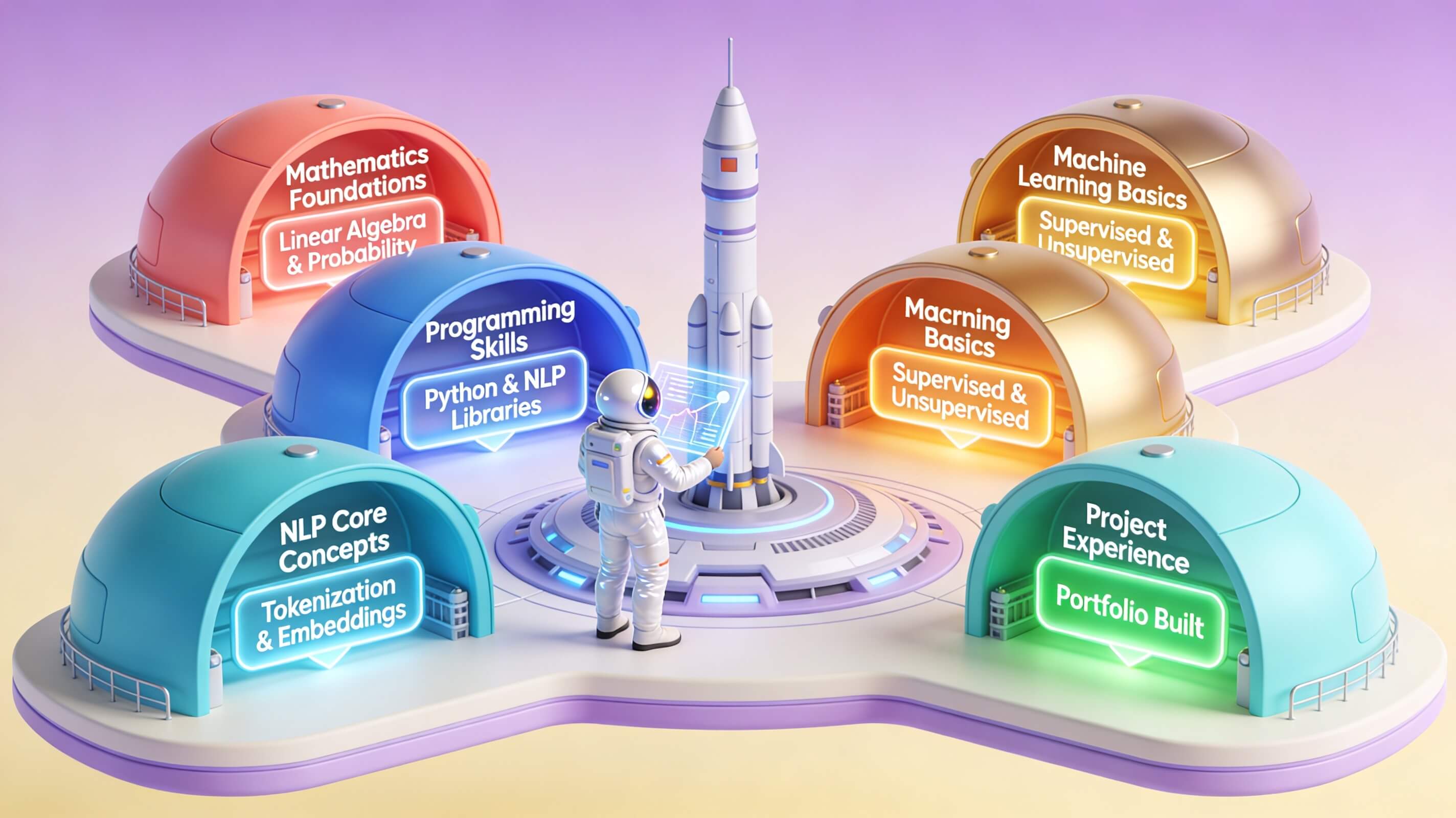
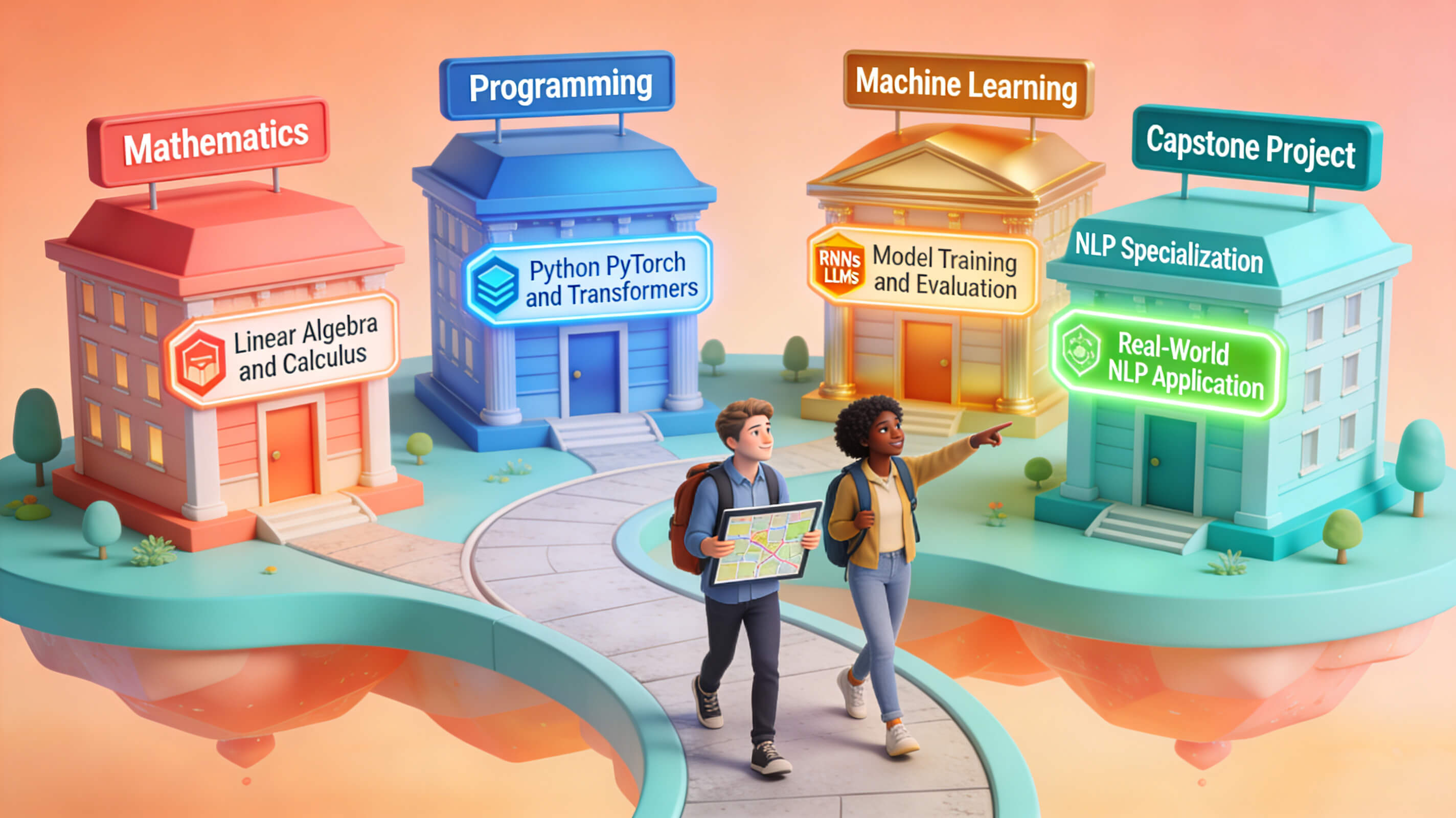
The sheer volume of available NLP learning material can be paralyzing. I frequently encounter students who spend more time choosing a course than actually studying. To simplify this, I recommend a structured three-phase approach that directly addresses how to get into natural language processing without getting lost in options. Phase one is foundational. Spend four to six weeks working through an introductory course like the deeplearning.ai Natural Language Processing Specialization, which covers classification, sequence models, and attention mechanisms. Complement this with the introductory chapters of the Jurafsky and Martin textbook “Speech and Language Processing,” which is available freely online. Phase two is applied. Dedicate eight to twelve weeks to building projects. Start with simple sentiment analysis on movie reviews, then move to named entity extraction from news articles, and finally build a basic chatbot using retrieval-based methods. Each project should teach you a new library or technique. Do not skip the debugging phase — the real learning happens when your model returns garbage and you have to figure out why. Phase three is specialization. By this point, you should know whether you prefer research, engineering, or product-focused roles. If research interests you, begin reading papers from conferences like ACL, EMNLP, and NAACL. If engineering is your path, focus on deployment workflows, API design, and model optimization. For product roles, study user needs and evaluation methodologies. I also highly recommend joining the Kaggle community, where you can practice on real-world datasets, see how top competitors approach problems, and even earn certifications. Kaggle competitions like the Jigsaw Toxic Comment Classification challenge or the Google Quest Q&A Labeling task offer excellent hands-on experience. Another underutilized resource is the NLP section of arXiv, where you can follow cutting-edge research weeks after it is published. Developing the habit of reading one paper per week will dramatically accelerate your growth once you have the fundamentals in place.
Advanced Architectures and Transformer Models
The transformer architecture, introduced in the seminal 2017 paper “Attention Is All You Need,” completely rewrote the rules of NLP. Before transformers, recurrent neural networks and LSTMs dominated sequence modeling, but they struggled with long-range dependencies and were computationally expensive to train at scale. Transformers solved both problems by replacing recurrence with a self-attention mechanism that can capture relationships between any two positions in a sequence regardless of distance. This innovation unlocked unprecedented performance across nearly every NLP benchmark. BERT (Bidirectional Encoder Representations from Transformers) showed that pretraining on large corpora with a masked language modeling objective allows a single model to be fine-tuned for multiple downstream tasks with minimal engineering effort. GPT (Generative Pretrained Transformer) demonstrated that autoregressive language models, trained simply to predict the next word, can generate coherent text, answer questions, translate languages, and even write code. The implications for anyone learning how to get into natural language processing are profound. You no longer need to train models from scratch. Instead, you load a pretrained model from Hugging Face, fine-tune it on your specific dataset, and achieve state-of-the-art results with a fraction of the compute resources. However, I must offer a caution. Many newcomers treat pretrained models as magic boxes and fail to understand what is happening under the hood. This creates a dangerous blind spot. You must understand attention mechanisms, position encodings, layer normalization, and the trade-offs between model size, inference speed, and accuracy. A practical example from my own experience: a client wanted to classify short customer support tickets into twenty categories. Using BERT-base gave them 94 percent accuracy but took 800 milliseconds per prediction. By switching to DistilBERT, a smaller and faster variant, they achieved 92 percent accuracy at 120 milliseconds per prediction — a better business outcome because the slight accuracy drop was outweighed by the latency improvement. These are the types of engineering decisions you will face constantly. The Hugging Face Model Hub is now the starting point for almost any project, but always benchmark multiple models on your specific data before committing.
Conclusion
Entering the field of natural language processing is both a challenging and deeply rewarding journey. As we’ve explored, it begins with a firm grasp of linguistic fundamentals—tokenization, stemming, lemmatization, and text normalization—before progressing to the statistical and neural models that power modern NLP. The example of choosing between BERT-base and DistilBERT for customer support ticket classification highlights the real-world trade-offs you will constantly evaluate: accuracy versus inference speed, model complexity versus deployment constraints. Platforms like the Hugging Face Model Hub have democratized access to state-of-the-art models, but success ultimately depends on rigorous benchmarking against your own data and business objectives.
Beyond the technical skills, understanding the broader industry landscape is essential. NLP is not a laboratory curiosity; it is actively transforming healthcare, finance, customer service, legal document review, and countless other domains. The ability to extract structured information from unstructured text—whether from clinical notes, support tickets, or social media—gives organizations powerful insights that drive decision-making and efficiency. As the field continues to evolve with large language models, multimodal approaches, and more efficient architectures, the opportunities for practitioners will only grow. Yet the core remains constant: a strong foundation in preprocessing, a pragmatic approach to model selection, and a clear focus on the problem you are solving, not just the latest technology.
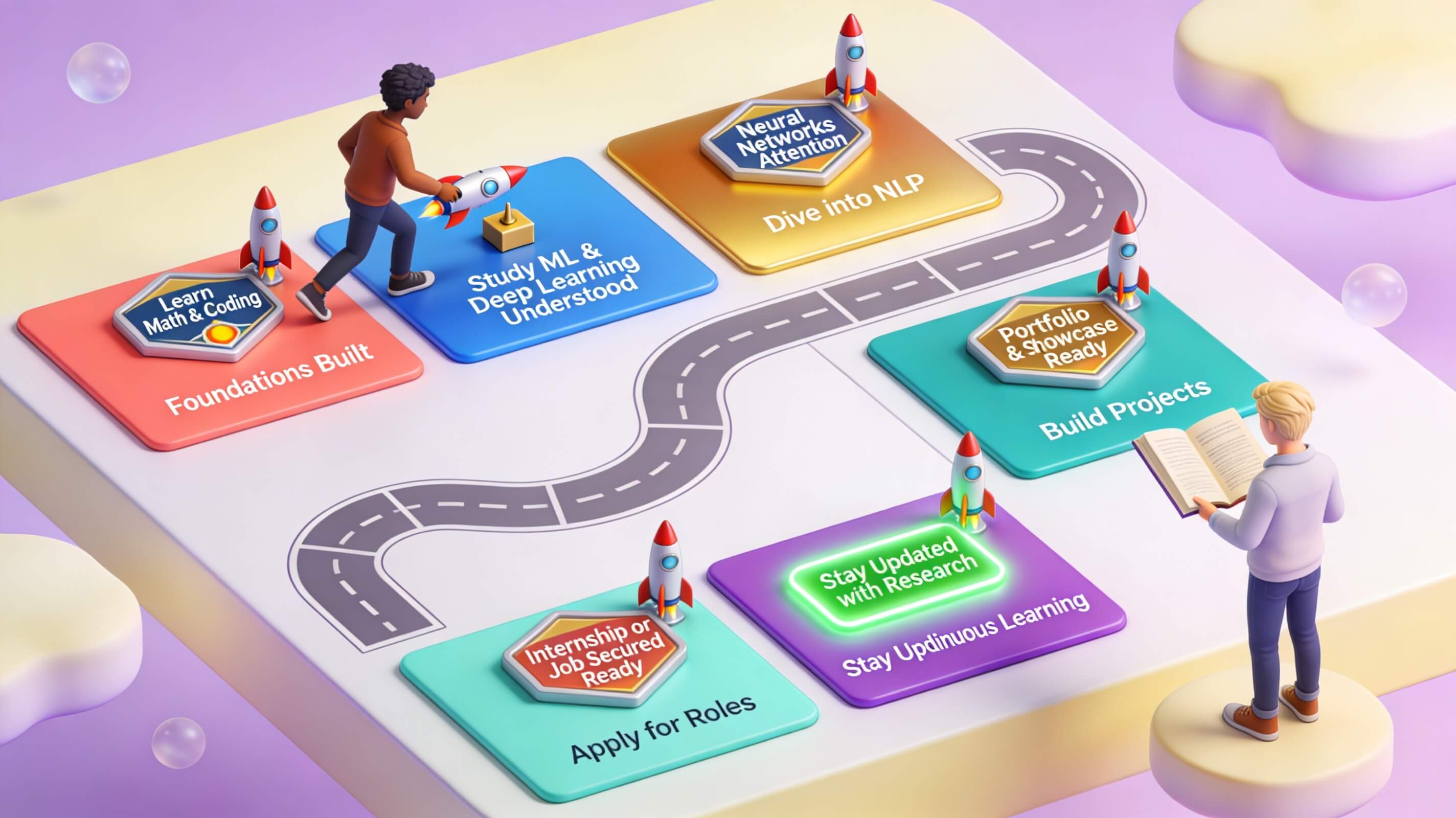
If you are serious about how to get into natural language processing, start small. Build a text classifier from scratch using scikit-learn and a bag-of-words representation. Then graduate to fine-tuning a pre-trained transformer on a public dataset. Work through your own projects, even simple ones like sentiment analysis on product reviews or named entity extraction from news articles. Each project will teach you the critical engineering decisions—handling imbalanced data, dealing with out-of-vocabulary words, optimizing inference pipelines—that separate textbook knowledge from production-ready solutions.
The most important closing thought is this: NLP is not a destination but a practice. The models will change, the benchmarks will shift, and the tools will evolve. What will stay with you is your ability to think critically about language, data, and the human needs that technology serves. Start where you are, use the resources available, and keep building. That is how you truly get into natural language processing—and how you make a meaningful impact with it.