
Cart 0


Share
The landscape of content creation is undergoing a seismic shift, driven not by human writers alone but by the sophisticated capabilities of Artificial Intelligence Natural Language Processing (AI NLP). This technology, which enables machines to understand, interpret, and generate human language, has moved from theoretical research to a core operational tool for marketers, publishers, and businesses worldwide. In 2024, leveraging AI NLP is no longer a futuristic advantage but a present-day necessity for scaling quality content, personalizing customer experiences, and extracting actionable intelligence from vast textual data. The primary value proposition lies in augmentation, not replacement. By automating repetitive linguistic tasks—from sentiment analysis of customer feedback to drafting initial content outlines—AI Natural Language Processing frees creative professionals to focus on strategy, nuance, and brand voice. This powerful synergy between human expertise and machine efficiency is redefining workflows, offering unprecedented speed and insight while introducing new imperatives around ethical use and quality control. Understanding its mechanisms and applications is critical for anyone aiming to produce impactful, scalable content in the modern digital ecosystem.
Table of Contents
The Foundational Mechanics of Modern AI NLP
To appreciate the revolution in content creation, one must first understand the engine behind it. At its heart, AI Natural Language Processing is an interdisciplinary field combining computational linguistics, machine learning, and deep learning to bridge the gap between human communication and computer understanding. Early systems were rigid, relying on hand-coded grammatical rules that faltered with ambiguity, slang, or context. The modern paradigm, powered by transformer-based architectures and models trained on colossal datasets, approaches language with remarkable flexibility. These systems don’t just parse words; they discern intent, sentiment, and relationships within a given context.
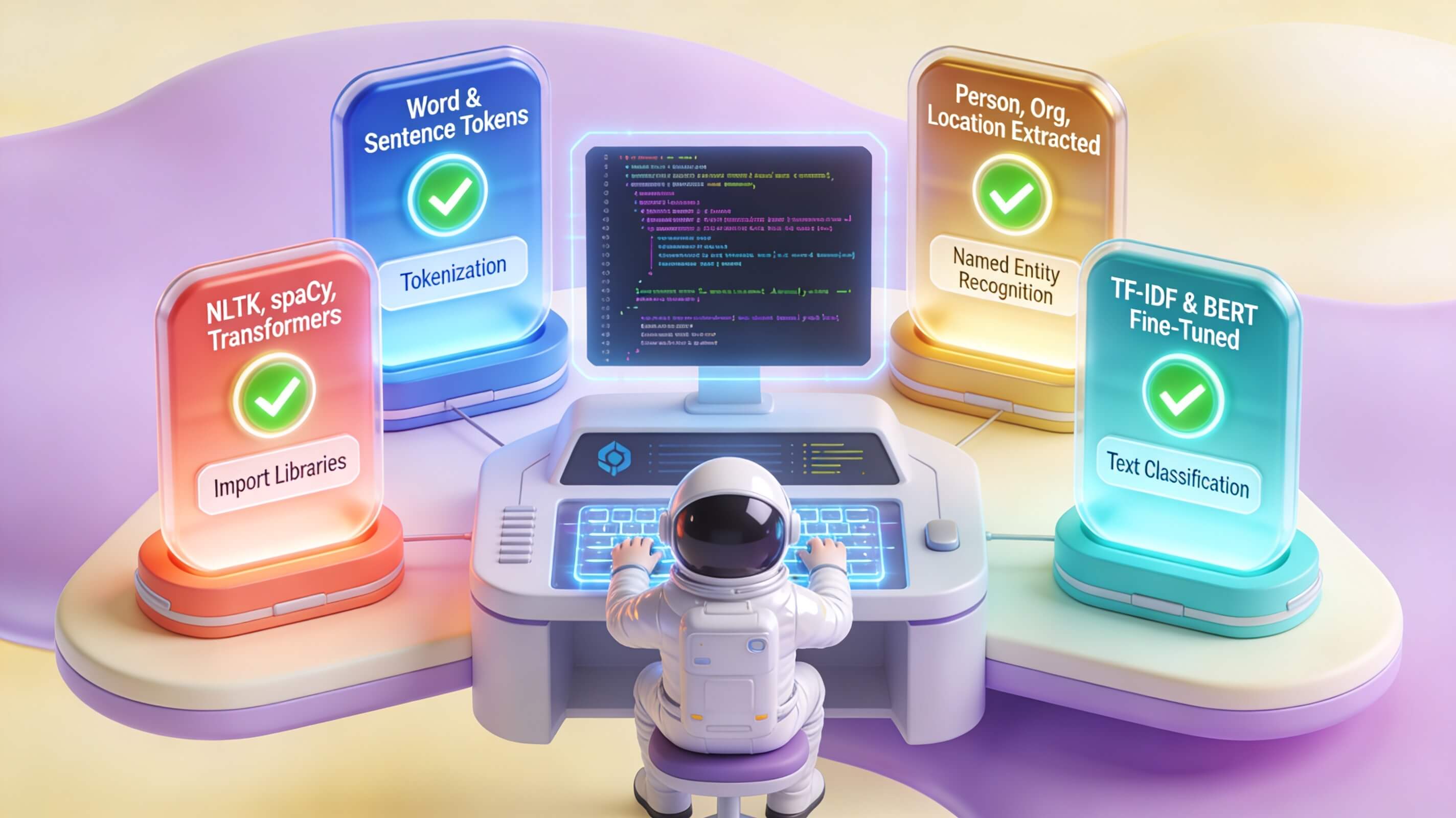
The practical workflow typically involves several layers. First, raw text undergoes tokenization, breaking it into manageable pieces (words, subwords). Next, syntactic analysis maps grammatical structure. The most transformative step is semantic and pragmatic analysis, where advanced models like those discussed in research from arXiv assess meaning, resolve ambiguities like the “apple” (fruit vs. company) example, and understand implied intent. This contextual awareness is what allows an AI NLP tool to not only summarize a technical report but also suggest a compelling headline for a blog post derived from it. For content teams, this means moving beyond simple keyword matching to a deeper, semantic understanding of topics and audience queries.
From Statistical Models to Contextual Intelligence
The leap from older statistical methods to today’s context-aware models cannot be overstated. Earlier bag-of-words approaches treated language as an unordered set, losing crucial sequence and relational data. The introduction of the transformer model, a breakthrough detailed in the seminal paper “Attention Is All You Need,” changed everything. By using self-attention mechanisms, these models can weigh the importance of different words in a sentence relative to each other, regardless of their positional distance. This allows for a nuanced comprehension of long-form content, understanding that the meaning of “it” in paragraph five depends on a subject introduced in paragraph one. This capability is foundational for sophisticated content tasks like maintaining narrative consistency in long articles or generating coherent multi-turn dialogue for chatbots.
Why Strategic Investment in AI NLP is Non-Negotiable
Forward-thinking businesses are allocating significant resources to AI Natural Language Processing because language is the primary interface for customer interaction, market intelligence, and internal knowledge management. The ROI manifests in several key areas: operational efficiency, enhanced customer insight, and competitive agility. Consider the volume of unstructured text data a typical organization generates—support tickets, social media comments, product reviews, internal documents, and competitor content. Manually analyzing this is impractical; AI NLP automates this analysis, transforming qualitative feedback into quantitative, actionable insights.
A retail brand, for instance, can deploy sentiment analysis and named entity recognition across thousands of reviews to pinpoint not just that customers are unhappy, but that a specific product feature (e.g., “battery life” on a gadget) is the recurring complaint. A B2B SaaS company can use intent classification to automatically route customer emails to the appropriate support specialist, slashing response times. According to tooling and frameworks available on platforms like Microsoft Azure AI Language, the most successful implementations adopt a human-in-the-loop model. The AI handles the heavy lifting of processing and pattern recognition, while human experts apply strategic judgment, verify outputs in high-stakes scenarios, and handle complex exceptions. This synergy reduces costs, accelerates turnaround, and ensures brand-safe, accurate communication.
Core AI NLP Techniques Powering Content Innovation
The revolutionary impact of AI Natural Language Processing on content is built upon a suite of specialized techniques. Each addresses a specific challenge in understanding or generating language, and together they form a powerful toolkit for creators.
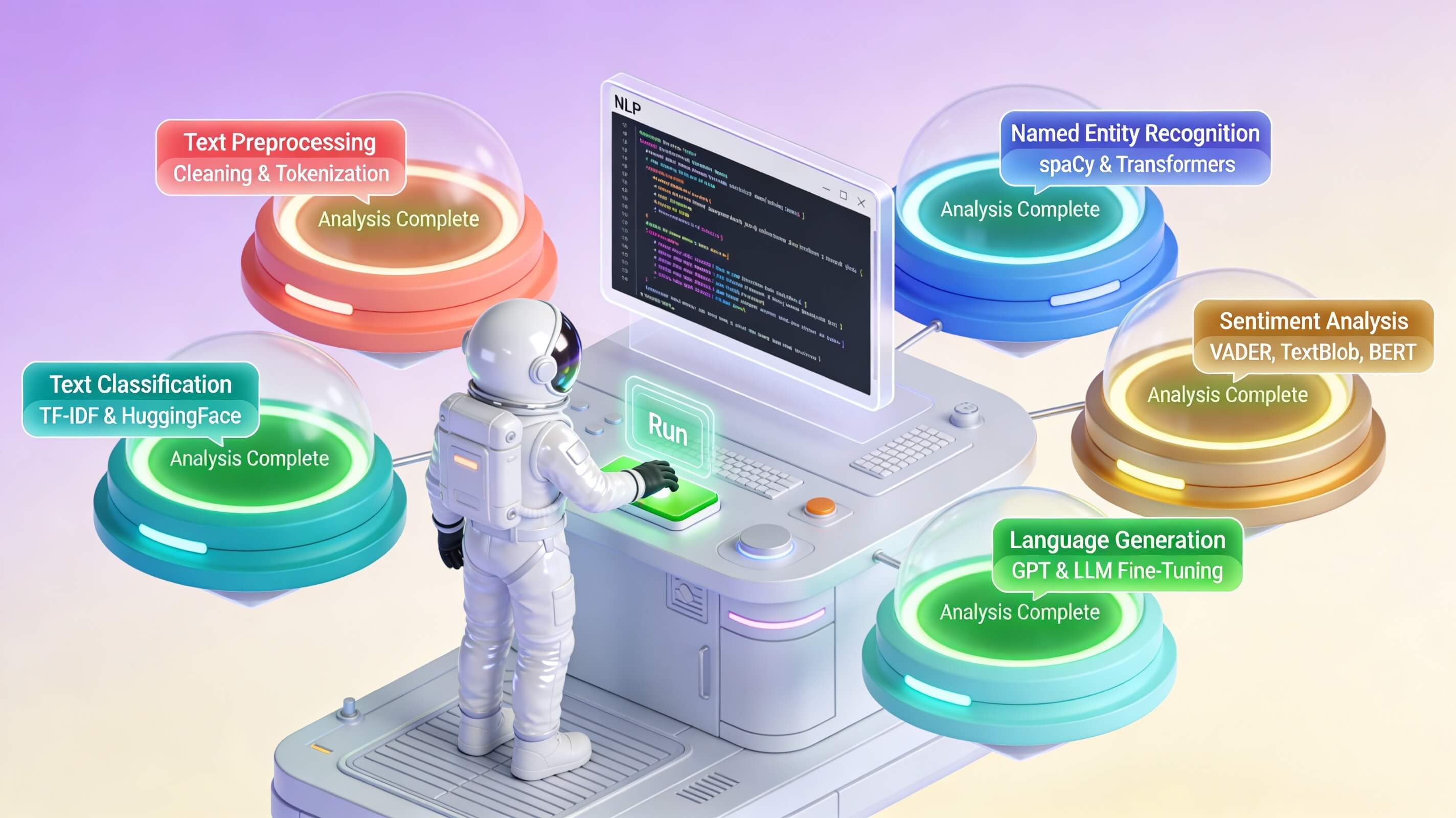
Sentiment Analysis: Gauging Audience Emotion
More than just classifying text as positive, negative, or neutral, advanced sentiment analysis can detect intensity, mixed emotions, and specific affective states like joy, frustration, or disappointment. For content creators, this is invaluable for brand monitoring and campaign analysis. After a product launch, AI NLP can scour social media and forums, providing a real-time pulse on public perception. This allows marketers to pivot messaging or address concerns proactively. However, challenges remain with sarcasm, cultural nuance, and implicit sentiment, necessitating expert review to avoid misinterpretation.
Named Entity Recognition (NER): Structuring Unstructured Data
NER systems identify and categorize key information units: people, organizations, locations, dates, monetary values, and more. In content operations, this automates metadata tagging, powers dynamic linking strategies, and enriches content for better SEO and internal search. For example, an AI can scan a news article, identify all mentioned companies and people, and automatically suggest relevant internal “deep dive” articles or external authoritative sources to link to, enhancing user experience and content depth.
Topic Modeling and Text Summarization
Topic modeling algorithms, such as Latent Dirichlet Allocation (LDA), uncover hidden thematic structures across large document collections. An editor can use this to audit a content library, identifying underserved topics or clustering existing articles into thematic pillars for a more coherent content strategy. Text summarization, both extractive (pulling key sentences) and abstractive (generating new concise sentences), is a game-changer for productivity. It enables the rapid creation of executive summaries from industry reports, condensation of webinar transcripts into blog posts, or generation of social media teasers from long-form articles, as seen in tools that leverage resources from Hugging Face models.
| AI NLP Technique | Primary Function | Content Creation Application |
|---|---|---|
| Sentiment Analysis | Classifies emotional tone & intent | Campaign feedback analysis, review monitoring, tone adjustment |
| Named Entity Recognition (NER) | Identifies & categorizes key info (people, places, orgs) | Auto-tagging, internal linking, fact-checking, metadata generation |
| Topic Modeling | Discovers latent themes across documents | Content gap analysis, editorial calendar planning, pillar clustering |
| Text Summarization | Condenses long text preserving key points | Creating briefs from reports, social snippets, webinar-to-article conversion |
| Intent Classification | Determines user goal from query/text | Chatbot routing, content personalization, SEO for user intent |
Transforming the Content Workflow: From Ideation to Distribution
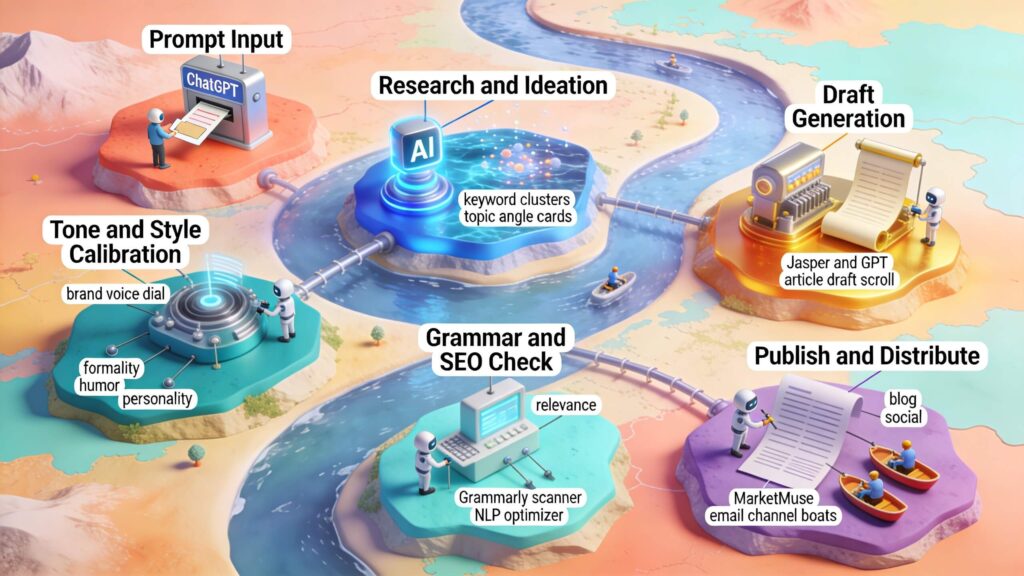
The integration of AI Natural Language Processing has re-engineered the traditional content lifecycle. Every stage, from initial research to final repurposing, can be enhanced with intelligent assistance, allowing teams to produce more high-quality work without linear increases in time or budget.
In the ideation and research phase, AI tools can analyze search trends, competitor content, and audience questions on forums like Reddit or Quora to suggest data-driven topics and subtopics. They can cluster semantically related keywords, moving SEO strategy beyond exact-match terms to concept-based clusters that align with how modern search engines, guided by Google’s Helpful Content System, understand user intent. During the drafting phase, AI can assist with creating outlines, suggesting factual expansions based on trusted sources, and even generating initial drafts for straightforward sections, all while adapting to a specified brand voice guide.
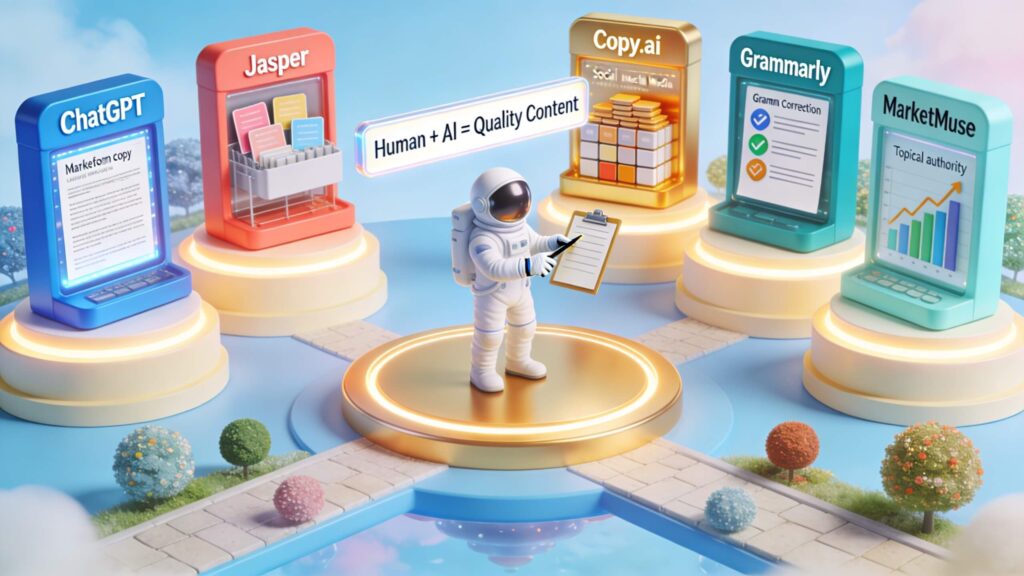
The editing and optimization phase sees some of the most powerful applications. AI NLP can check for readability, suggest more concise phrasing, ensure consistency in terminology, and optimize headlines for both engagement and SEO. Finally, for distribution and repurposing, AI can automatically generate multiple asset formats—turning a whitepaper into a series of LinkedIn posts, a podcast transcript into a newsletter, or a data report into an infographic script. This multiplies the reach and lifespan of core creative work. It’s crucial to remember, as emphasized by leading enterprise AI guides from IBM, that the AI is a collaborative tool. The final arbiter of quality, brand alignment, and strategic value must always be the human editor.

Enterprise Applications: AI NLP Across Sectors
The utility of AI Natural Language Processing extends far beyond marketing departments, proving transformative across verticals by making textual data actionable.
In customer support, intelligent chatbots powered by NLP handle routine inquiries, classify ticket urgency, and provide instant answers from knowledge bases, dramatically improving efficiency. In healthcare, NLP systems extract structured data from unstructured clinical notes, aiding in patient record management and research, though always with rigorous human oversight. The financial sector uses it for sentiment analysis of news and social media to inform trading algorithms, and to review mountains of regulatory filings and earnings call transcripts for risk assessment.
Media and publishing companies employ AI NLP for real-time transcription, automated tagging of article archives, and even generating first-pass summaries of breaking news. In e-commerce, analysis of product reviews and Q&A sections reveals precise customer pain points and desires, directly informing product development and merchandising. The legal industry leverages contract review tools that use NER and relationship extraction to identify clauses, obligations, and potential anomalies in seconds, a task that once took lawyers hours. These diverse applications, often developed with reference to benchmarks from institutions like NIST, demonstrate that AI Natural Language Processing is a general-purpose technology whose value increases with the volume and complexity of language data.
Navigating the Challenges and Ethical Imperatives
For all its power, AI Natural Language Processing is not a magic bullet. Significant technical and ethical challenges persist, and acknowledging them is a mark of mature, responsible implementation.
Technically, models still grapple with ambiguity, long-range context, and a lack of real-world reasoning. They can generate “hallucinations”—plausible-sounding but factually incorrect statements—which is catastrophic for trust in high-stakes content. Data bias is a critical ethical concern; models trained on historical internet data can perpetuate societal stereotypes in their outputs. Furthermore, the energy consumption required to train large models raises sustainability questions.
Ethical deployment demands a proactive framework. First, transparency and disclosure are paramount. Audiences should know when they are interacting with AI-generated content or summaries. Second, robust privacy protocols must govern any textual data processing, adhering to regulations and ensuring personal information is secured. Third, continuous bias auditing of model outputs is essential, as recommended by research from Stanford’s Institute for Human-Centered AI. Finally, clear human oversight gates must be established for any content affecting brand reputation, legal compliance, or sensitive topics. The FTC’s guidance on AI and privacy makes it clear that accountability cannot be automated away.
The Evolving Frontier: Trends Defining the Future of AI NLP
As we look beyond 2024, several converging trends will further amplify the capabilities and applications of AI Natural Language Processing in content creation and beyond.
Multimodal AI Systems are moving beyond text to integrate understanding of images, audio, and video within a single model. This will enable the automatic generation of rich media descriptions, the creation of video content from text scripts with appropriate visual cues, and more accessible content for all users. Advanced Personalization will evolve from basic demographic targeting to deep contextual personalization, where AI dynamically adjusts content tone, complexity, and examples based on a user’s real-time interaction history and inferred knowledge level, while respecting privacy boundaries.
A key technical shift is toward Retrieval-Augmented Generation (RAG). Instead of relying solely on a model’s static, pre-trained knowledge, RAG architectures allow the AI to query a designated, up-to-date knowledge base (like a company’s internal wiki or a curated data source) at the moment of response. This drastically reduces hallucinations and ensures content is grounded in verified, current information, a must for enterprise credibility. Furthermore, the rise of smaller, more efficient domain-specific models will allow businesses to fine-tune powerful AI for their unique jargon and use cases without the cost of massive foundational models. Resources from Google Cloud AI highlight this move towards specialized, efficient tools.
The future landscape will be defined by hybrid intelligence. The winning formula is not full automation, but a seamless partnership where AI Natural Language Processing manages data-heavy, repetitive, and scale-oriented tasks, and human creativity provides the strategic vision, emotional intelligence, and ethical judgment that machines lack. This is how brands will build durable audience trust and sustainable content advantage.
Conclusion
The integration of AI Natural Language Processing marks a fundamental evolution in content creation, shifting the focus from purely manual craftsmanship to strategic augmented intelligence. This technology has democratized the ability to analyze sentiment at scale, extract meaning from data chaos, and generate draft material with unprecedented speed. For businesses, it transforms language from a passive medium into an active, analyzable asset that drives customer insight, operational efficiency, and personalized engagement. However, the core lesson from the frontline is that the most significant gains are realized not by replacing human creators, but by empowering them. AI handles the computational heavy lifting—sorting, summarizing, and suggesting—while human experts provide the irreplaceable elements of nuanced judgment, brand storytelling, factual verification, and ethical oversight.
As we advance, the organizations that will thrive are those that build content engines on this collaborative model. They will implement AI Natural Language Processing with clear governance, continuous bias testing, and transparent audience communication. They will use it to deepen research, not shortcut it; to enhance originality, not dilute it. The revolution is here, and it is profoundly practical. It offers a clear path to creating more helpful, relevant, and authoritative content in a crowded digital space. If you’re ready to move beyond theory and strategically implement these powerful AI-driven content capabilities to build your brand’s authority and reach, let’s discuss a tailored plan to transform your content workflow.
Comments are closed.