
Cart 0

Share
Table of Contents
Predictive Data Analytics: Shaping the Future with Data Insights
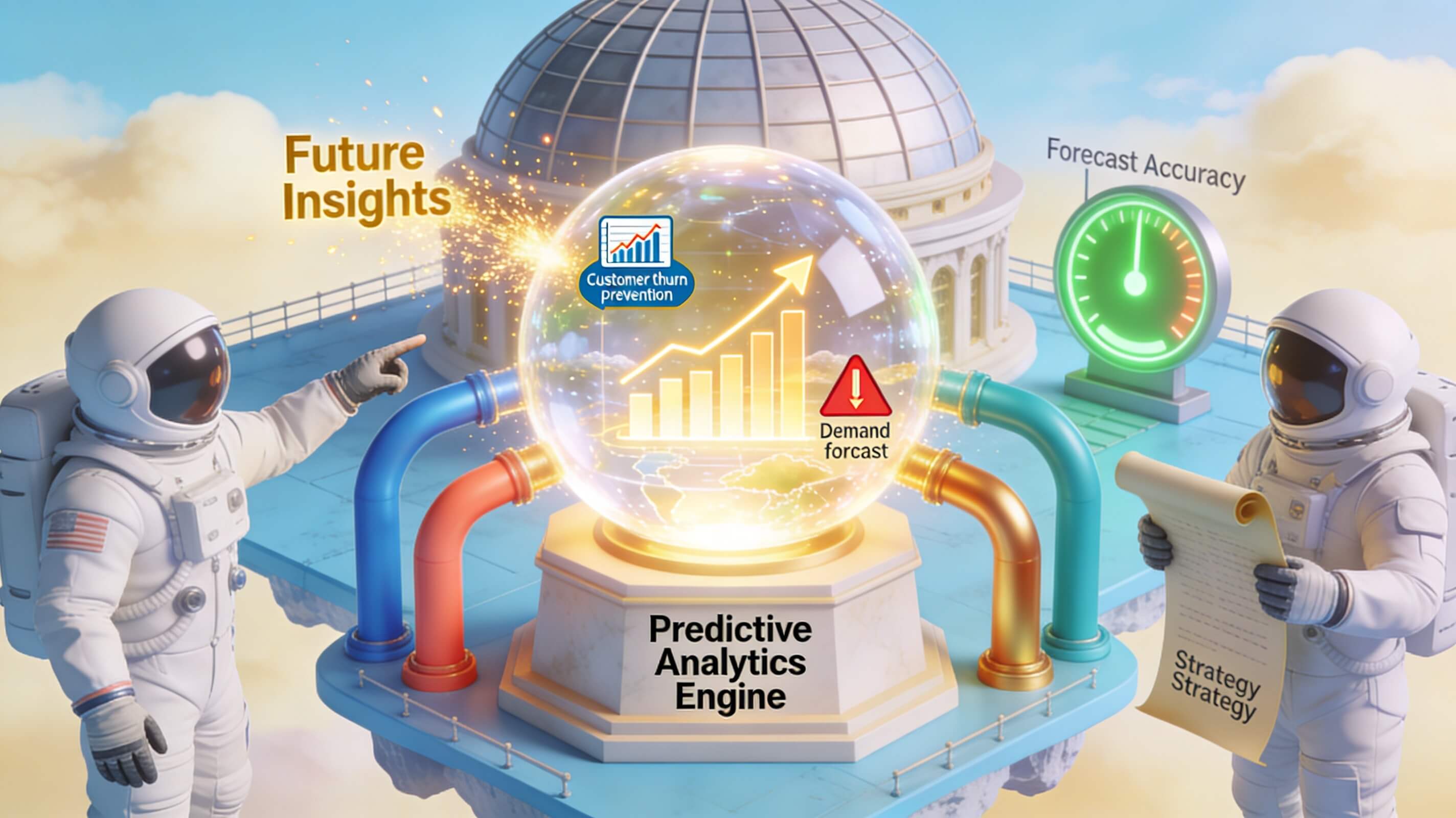
Predictive data analytics is no longer a futuristic concept reserved for tech giants — it is a practical, transformative discipline that organizations of all sizes must embrace to survive and thrive. At its core, predictive data analytics uses historical data, statistical algorithms, and machine learning techniques to identify the likelihood of future outcomes. The primary search intent behind this topic is straightforward: businesses want to know how to use data to forecast trends, reduce risk, and make smarter decisions. The answer lies in a structured approach that combines robust data infrastructure, skilled talent, and a clear strategic vision. When executed correctly, predictive data analytics does not just tell you what happened — it tells you what will happen, and more importantly, what you should do about it. This capability separates reactive organizations from proactive market leaders. In this comprehensive guide, we will dissect the core methodologies, strategic benefits, real-world applications, and implementation roadmaps that define modern predictive data analytics. Whether you are a seasoned executive or an analytics practitioner, the insights here will help you harness data to shape your organization’s future with confidence.
Understanding Predictive Data Analytics
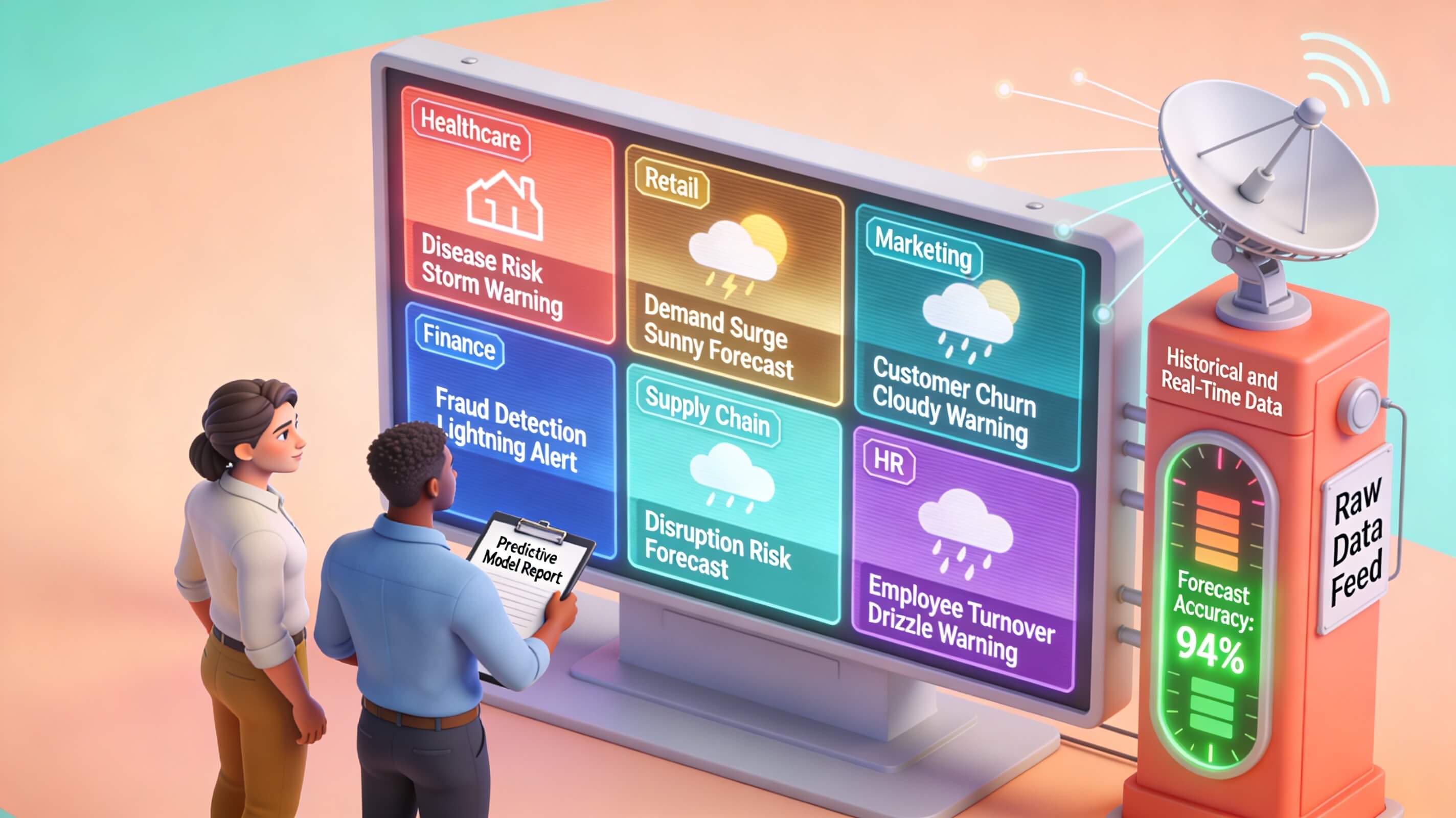
To leverage predictive data analytics effectively, you must first understand what it is and what it is not. Many confuse it with descriptive analytics, which simply summarizes past events, or prescriptive analytics, which recommends actions. Predictive data analytics sits squarely in between: it uses patterns from the past to estimate future probabilities. The discipline draws from statistics, data mining, artificial intelligence, and machine learning. Its methodologies include regression analysis, time series forecasting, classification models, and clustering algorithms. Each technique serves a distinct purpose depending on the business question being asked. For instance, a retailer might use classification to predict whether a customer will churn, while a financial institution uses regression to forecast loan default risk. The unifying element is that all these methods rely on high-quality, relevant historical data. Without clean data, even the most sophisticated algorithms will produce misleading results. This is why data governance and preprocessing are foundational to any predictive initiative. Organizations that invest upfront in understanding their data — its sources, quality, and limitations — set themselves up for long-term success with predictive data analytics.
Core Methodologies and Techniques
Several methodologies form the backbone of predictive data analytics. Understanding them allows you to choose the right tool for each business problem. Regression analysis is perhaps the most widely used technique. It models the relationship between a dependent variable and one or more independent variables. For example, a company might use linear regression to predict sales based on advertising spend, seasonality, and economic indicators. Decision trees offer a more intuitive, visual approach. They split data into branches based on feature values, making predictions easy to interpret. Random forests, an ensemble of decision trees, improve accuracy by reducing overfitting. Neural networks, inspired by the human brain, excel at recognizing complex, non-linear patterns in large datasets. They are especially powerful in image recognition, natural language processing, and advanced forecasting. Time series models, such as ARIMA and exponential smoothing, are designed specifically for data collected over time. They account for trends, seasonality, and cyclic patterns. Each technique has strengths and limitations. The key is to match the method to the data type, the business question, and the required level of interpretability. IBM’s overview provides an excellent deep dive into how these techniques complement each other in enterprise settings.
Choosing the Right Algorithm
Algorithm selection depends on several factors: the size and nature of your data, the complexity of relationships, the need for explainability, and computational resources. Linear models are fast and interpretable but struggle with non-linear data. Tree-based models handle both linear and non-linear relationships and offer feature importance metrics. Neural networks require more data and computing power but can capture extremely complex patterns. A practical approach is to start with simpler models and gradually increase complexity if performance plateaus. Cross-validation and hyperparameter tuning are essential to avoid overfitting and ensure generalization. KDnuggets regularly publishes practical comparisons of algorithms across industries. Remember: the best model is not always the most complex — it is the one that delivers reliable, actionable predictions for your specific context.
Unlocking the Power of Predictive Modeling
Predictive modeling translates raw data into forward-looking intelligence. When applied strategically, it does more than forecast — it enables proactive decision-making. Consider a logistics company that uses predictive modeling to anticipate shipment delays. By analyzing historical weather patterns, traffic data, and carrier performance, the model flags high-risk routes before departure. The operations team can then reroute shipments, notify customers, and avoid costly penalties. This is predictive modeling in action: turning abstract data into concrete operational improvements. The process involves several stages: data collection, data cleaning, feature engineering, model training, evaluation, and deployment. Each stage requires rigor. Feature engineering, in particular, often determines the ceiling of model performance. Creating meaningful predictors — such as day-of-week indicators, rolling averages, or interaction terms — can dramatically improve accuracy. Model evaluation should go beyond simple accuracy metrics. Precision, recall, ROC-AUC, and root mean squared error provide a more complete picture of model performance, especially when dealing with imbalanced datasets. Gartner’s research emphasizes that organizations often underestimate the importance of model monitoring after deployment. Models degrade over time as data distributions shift. Continuous monitoring and retraining are essential to maintain predictive power.
Forecasting Trends and Gaining Competitive Advantage
Forecasting is where predictive data analytics delivers its most visible return. Businesses that can anticipate market shifts, customer behavior changes, and operational bottlenecks gain a decisive edge. For example, a fashion retailer using predictive analytics to forecast seasonal trends can stock inventory weeks ahead of competitors, capturing demand while others play catch-up. The ability to spot emerging trends early requires more than just algorithms — it demands a culture of curiosity and experimentation. Organizations that encourage teams to ask “what if?” questions and test hypotheses with data are better positioned to uncover hidden patterns. Predictive models also help businesses allocate resources more efficiently. A marketing team can use customer lifetime value predictions to focus ad spend on high-value segments. A supply chain manager can use demand forecasts to optimize inventory levels, reducing both stockouts and excess holding costs. Forbes Business Council highlights that companies using predictive analytics are twice as likely to report above-average revenue growth compared to peers who do not. This is not coincidental — it is the direct result of making better, faster decisions based on data rather than intuition.

Strategic Benefits Across the Organization
The strategic benefits of predictive data analytics extend far beyond the analytics department. When embedded across functions, it transforms how an organization operates. Below is a comparison of how different departments leverage predictive insights:
| Department | Predictive Application | Measurable Impact |
|---|---|---|
| Marketing | Customer churn prediction, lead scoring | 30% increase in campaign ROI |
| Sales | Deal probability forecasting | 20% faster close times |
| Supply Chain | Demand forecasting, inventory optimization | 25% reduction in stockouts |
| Finance | Credit risk modeling, fraud detection | 40% decrease in false positives |
| HR | Employee turnover prediction | 15% reduction in attrition |
These numbers are not hypothetical — they come from documented implementations across industries. The common thread is that predictive data analytics enables each function to shift from reactive problem-solving to proactive opportunity capture. In marketing, predictive lead scoring helps sales teams prioritize prospects most likely to convert. In supply chain, demand forecasts reduce waste and improve customer satisfaction. In finance, fraud detection models save millions by identifying suspicious transactions in real time. The cumulative effect is a more agile, resilient organization that can respond to market changes with speed and precision. McKinsey’s research on the data-driven enterprise underscores that firms integrating predictive analytics into core processes outperform peers on profitability by 20% or more.
Real-World Applications and Case Studies
Examining real-world implementations illustrates the tangible value of predictive data analytics. Amazon’s recommendation engine is one of the most cited examples. The company uses collaborative filtering and deep learning to predict what customers will want next. This personalization drives an estimated 35% of total sales. Netflix operates on a similar principle, predicting viewer preferences to suggest content that keeps subscribers engaged. Its predictive models analyze viewing history, time of day, device type, and even pause patterns to refine recommendations. Walmart applies predictive analytics to inventory management. By analyzing historical sales data, weather forecasts, and local events, the retailer predicts demand at individual store levels. This has reduced stockouts by 30% and improved inventory turnover. In healthcare, predictive models identify patients at risk of readmission, allowing hospitals to intervene early and improve outcomes while reducing costs. Financial institutions use predictive analytics for credit scoring, fraud detection, and algorithmic trading. MIT Sloan Management Review has documented how these applications create measurable competitive advantages. What all these examples share is a commitment to embedding predictive insights into operational workflows — not just generating reports, but automating responses based on predictions. This is the difference between insight and action.
Overcoming Implementation Challenges
Despite its promise, implementing predictive data analytics is not without obstacles. Data quality remains the most common and persistent challenge. Incomplete, inconsistent, or outdated data leads to unreliable predictions. Organizations must invest in data cleansing, validation, and enrichment processes. Establishing clear data governance policies — including ownership, access controls, and quality standards — is essential. Another significant challenge is model interpretability. Complex models like neural networks and ensemble methods are powerful but often opaque. Business stakeholders may distrust predictions they cannot understand. This is where techniques like SHAP (SHapley Additive exPlanations) and LIME (Local Interpretable Model-agnostic Explanations) add value by explaining individual predictions in human-readable terms. Model drift is another concern. Data distributions change over time, causing model performance to degrade. Continuous monitoring and retraining cycles are necessary to maintain accuracy. Privacy and security risks also require attention. Predictive models trained on sensitive customer data must comply with regulations like GDPR and CCPA. Data anonymization and differential privacy techniques can help mitigate risks. Deloitte’s analysis outlines how leading organizations address these hurdles systematically. The key takeaway is that challenges are solvable — but only with deliberate planning, investment, and cross-functional collaboration.
Ethical Considerations in Predictive Data Analytics
As predictive data analytics becomes more pervasive, ethical considerations demand attention. Models can inadvertently perpetuate or amplify existing biases present in training data. For example, a hiring model trained on historical data from a company with a homogeneous workforce may unfairly disadvantage qualified candidates from underrepresented groups. Predictive policing algorithms have been criticized for reinforcing systemic biases in law enforcement. These outcomes are not inevitable — they result from insufficient attention to fairness during model development. Organizations must implement fairness audits, test for disparate impact across demographic groups, and ensure transparency in how predictions are made and used. Informed consent is another ethical pillar. Individuals have a right to know when and how their data is being used for predictive purposes. Clear privacy policies and opt-out mechanisms are minimum requirements. Additionally, predictive models should not be used in ways that deny individuals agency or recourse. If a model predicts a person is unlikely to repay a loan, they should have the opportunity to appeal or provide additional context. The Harvard Business Review offers a thorough framework for building ethical predictive analytics practices. Responsible implementation is not just a legal obligation — it is a competitive differentiator that builds trust with customers, employees, and regulators.
Implementing Predictive Data Analytics in Your Organization
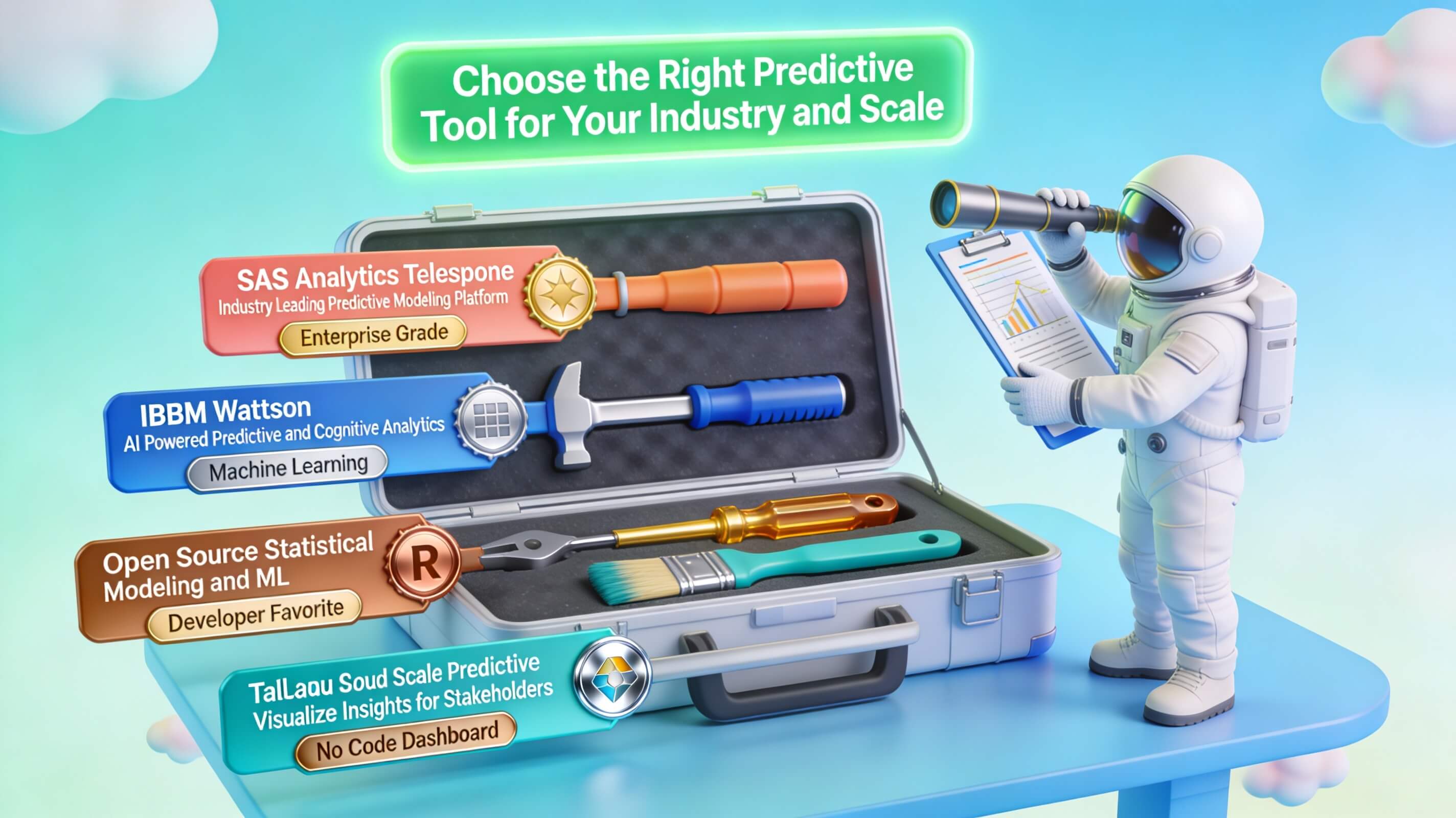
Implementing predictive data analytics requires a structured, phased approach. Rushing into model building without proper foundations leads to wasted resources and disappointing results. The first step is to define clear business objectives. What specific decisions do you want to improve? What outcomes are most valuable? Align these objectives with measurable metrics so success can be tracked. The second step is building the right infrastructure. This includes data storage, processing platforms, and analytics tools. Cloud-based solutions like AWS SageMaker, Google Vertex AI, and Azure Machine Learning offer scalable, cost-effective options. The third step is ensuring data quality. Invest in data cleaning pipelines, establish data governance policies, and create a single source of truth for critical metrics. The fourth step is fostering a data-driven culture. This means training teams to ask data-informed questions, rewarding experimentation, and embedding analytic thinking into decision processes. Leaders must model this behavior by insisting on data evidence before major decisions. The fifth step is leveraging expertise. Predictive analytics is a specialized skill. Building internal capability through training is valuable, but partnering with external experts can accelerate progress. Accenture’s implementation guide emphasizes that starting with a focused pilot project — targeting one high-impact business question — allows organizations to demonstrate value, learn lessons, and build momentum before scaling. Following this roadmap reduces risk and increases the likelihood of long-term success with predictive data analytics.
Conclusion
Predictive data analytics is not a passing trend — it is a fundamental shift in how organizations navigate uncertainty and make decisions. Throughout this article, we have explored the methodologies that power predictions, the strategic benefits that justify investment, the real-world applications that prove value, and the challenges that require careful management. The organizations that will lead in the coming decade are those that treat data not as a byproduct of operations but as a strategic asset to be analyzed, modeled, and acted upon. The path forward requires commitment: to data quality, to ethical practices, to continuous learning, and to embedding predictive insights into every core process. But the rewards — increased efficiency, faster innovation, better customer experiences, and sustainable competitive advantage — are substantial. Now is the time to move beyond asking “what happened?” and start asking “what will happen next?” and “what should we do about it?” If your organization is ready to turn data into foresight, start with one well-defined use case, build the right team and infrastructure, and scale from there. The future belongs to those who can predict it — and act on those predictions with confidence. AtCore Web Digital, we specialize in helping businesses implement data-driven strategies that drive measurable growth. Reach out today to explore how predictive data analytics can transform your organization’s decision-making and unlock new opportunities in an increasingly competitive landscape.
Comments are closed.