Cart 0

Share
Table of Contents
Data Analytics Companies: Exploring Leaders in Data Analysis
In a world where data is the new oil, partnering with the right data analytics companies can mean the difference between thriving and merely surviving. These specialized organizations transform raw, unstructured data into actionable intelligence, enabling businesses to make precise decisions, uncover hidden opportunities, and stay ahead of competitors. But with hundreds of firms claiming expertise, how do you identify the true leaders? This article cuts through the noise to provide an authoritative guide to the top data analytics firms, covering what they do, which ones dominate the market, and exactly how to choose a partner that aligns with your organization’s unique goals. Whether you are a startup founder, a seasoned analyst, or a C-suite executive, you will gain the insights needed to leverage big data effectively. The best data analytics companies don’t just process numbers; they build strategic frameworks that drive revenue, optimize operations, and create exceptional customer experiences. Let’s explore the landscape and uncover the firms that are setting the standard for data-driven innovation.
What Are Data Analytics Companies?
Data analytics companies are organizations that specialize in collecting, processing, analyzing, and interpreting vast amounts of data to help businesses extract meaningful insights. They go beyond simple reporting—they employ advanced techniques such as machine learning, predictive modeling, natural language processing, and statistical analysis to identify patterns that would otherwise remain invisible. These companies work with diverse data sources: transactional records, social media feeds, IoT sensor streams, customer interactions, and more. The ultimate goal is to enable evidence-based decision-making at every level of an enterprise.
Contrary to common perception, data analytics firms are not all the same. Some focus exclusively on consulting and strategy, helping executives define a data roadmap. Others are technology-focused, offering robust platforms for visualization and automation. A third category provides end-to-end managed services, handling everything from data engineering to dashboard creation. Understanding these distinctions is critical because the right fit depends on your internal capabilities and specific challenges. For instance, a company with a mature IT department might only need an analytics platform, while a manufacturer with legacy systems may require a full-service partner to clean and integrate data first.
The market for data analytics continues to expand rapidly. According to Gartner, global spending on analytics and business intelligence is projected to exceed $250 billion by 2025. This growth is fueled by the recognition that data-driven organizations outperform peers on profitability, productivity, and customer retention. The top data analytics firms are those that not only keep pace with technological shifts but also deliver tangible business outcomes—reducing costs, increasing revenue, and mitigating risks.
Core Services of Leading Data Analytics Firms
The services offered by top data analytics companies span the entire data lifecycle. While every firm tailors its offerings, the most common and impactful services fall into several categories. Understanding these capabilities helps you pinpoint exactly what your organization needs.
Data Mining and Pattern Discovery
Data mining is the foundation of advanced analytics. Using statistical algorithms and machine learning, analysts sift through terabytes of raw data to uncover correlations, anomalies, and trends. For example, a retail chain might discover that customers who buy diapers are also likely to purchase beer on Fridays—a classic insight that drives cross-promotional strategies. This service is particularly valuable when you have large, noisy datasets and need to surface hidden relationships without a predefined hypothesis.
Predictive Analytics and Forecasting
Predictive analytics uses historical data to anticipate future outcomes. Top data analytics firms build sophisticated models that forecast customer churn, inventory demand, equipment failure, or market fluctuations. A manufacturer client once partnered with a leading firm to predict machine breakdowns 48 hours in advance, reducing unplanned downtime by 40%. This capability moves businesses from reactive to proactive, saving millions in lost productivity.
Data Visualization and Business Intelligence
Raw numbers mean little without context. Effective visualization transforms complex analyses into interactive dashboards and reports that executives can understand at a glance. Firms like Tableau and Microsoft Power BI have become household names in this space, but the best analytics companies go further by embedding narrative and contextual commentary into their visualizations. They design self-service portals that allow non-technical users to explore data on their own, fostering a data-literate culture.
Data Management and Governance
Before any analysis can happen, data must be accurate, consistent, and secure. Leading firms offer data management services including integration from disparate sources (CRM, ERP, web analytics), cleansing to remove duplicates and errors, and governance frameworks that comply with regulations like GDPR and CCPA. A 2022 study by McKinsey found that poor data quality costs organizations an average of 15% of annual revenue. The best data analytics companies treat data quality as a non-negotiable baseline.
How Top Data Analytics Companies Leverage Big Data for Business Decisions
Big data—characterized by volume, velocity, variety, and veracity—presents both opportunity and challenge. Leading big data analytics companies are masters at taming this complexity. They employ distributed computing frameworks (like Apache Spark) to process petabytes of information in minutes, and they use machine learning algorithms that improve over time as more data feeds in.
Consider the impact on marketing. A top data analytics firm can combine CRM data, website clickstreams, social media sentiments, and purchase history to build a 360-degree customer view. This enables hyper-personalized campaigns that boost conversion rates by 20% or more. In supply chain, real-time data from sensors and weather feeds allows companies to reroute shipments proactively, cutting logistics costs by up to 15%.
One standout example involves a national healthcare network. They partnered with a leading analytics firm to aggregate patient records, lab results, and readmission data. The predictive models identified high-risk patients before complications arose, reducing hospital readmissions by 25% and saving millions in penalties. This demonstrates that the true value of big data analytics lies not in the volume of data but in the precision of the decisions it supports.
Leading Data Analytics Companies: Key Players and Their Strengths
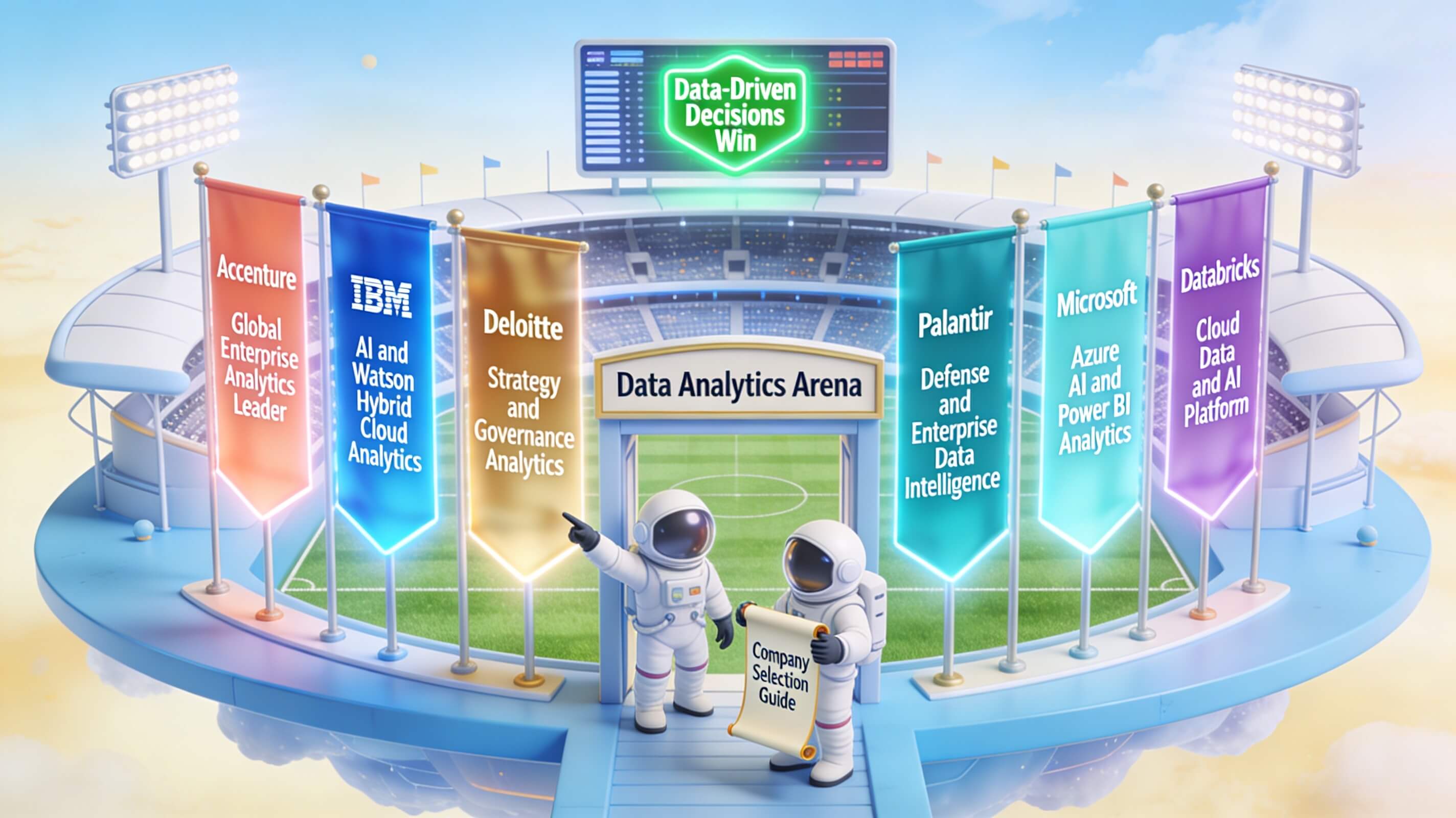
The market for data analytics is crowded, but a handful of firms consistently dominate due to their technology, expertise, and scale. Below is a comparison table highlighting the top five companies that define the industry.
| Company | Key Strengths | Best For |
|---|---|---|
| IBM | AI-powered analytics (Watson), deep industry experience, robust data governance | Large enterprises with complex regulatory needs |
| Deloitte | Strategic consulting, end-to-end transformation, deep industry knowledge | Executives seeking data-driven strategy overhaul |
| Accenture | Innovation labs, cloud-native analytics, strong AI and automation capabilities | Organizations pursuing digital transformation at scale |
| Microsoft | Integrated cloud ecosystem (Azure, Power BI, AI), ease of use and scalability | Mid-market to enterprise teams already in Microsoft stack |
| SAS | Advanced analytics and statistical modeling, proven predictive algorithms | Data science teams needing heavy statistical firepower |
These firms invest heavily in R&D. For example, IBM continues to evolve its Watson platform with natural language generation, enabling executives to ask questions in plain English. SAS remains the gold standard for industries like pharmaceuticals and finance where interpretability and precision are paramount. When selecting among these giants, prioritize alignment with your industry vertical and technology roadmap.
Data Analytics Consulting vs. Service Providers vs. Solutions Providers
A common point of confusion is the terminology used to categorize data analytics companies. Three distinct models exist, each serving different needs:
Data analytics consulting firms focus on strategy. They assess your current data maturity, identify gaps, and design a multi-year roadmap. They rarely implement technology or handle day-to-day operations; instead, they advise on which tools to adopt, how to structure teams, and which metrics matter most. This is ideal for organizations that have strong internal team capabilities but need an external perspective.
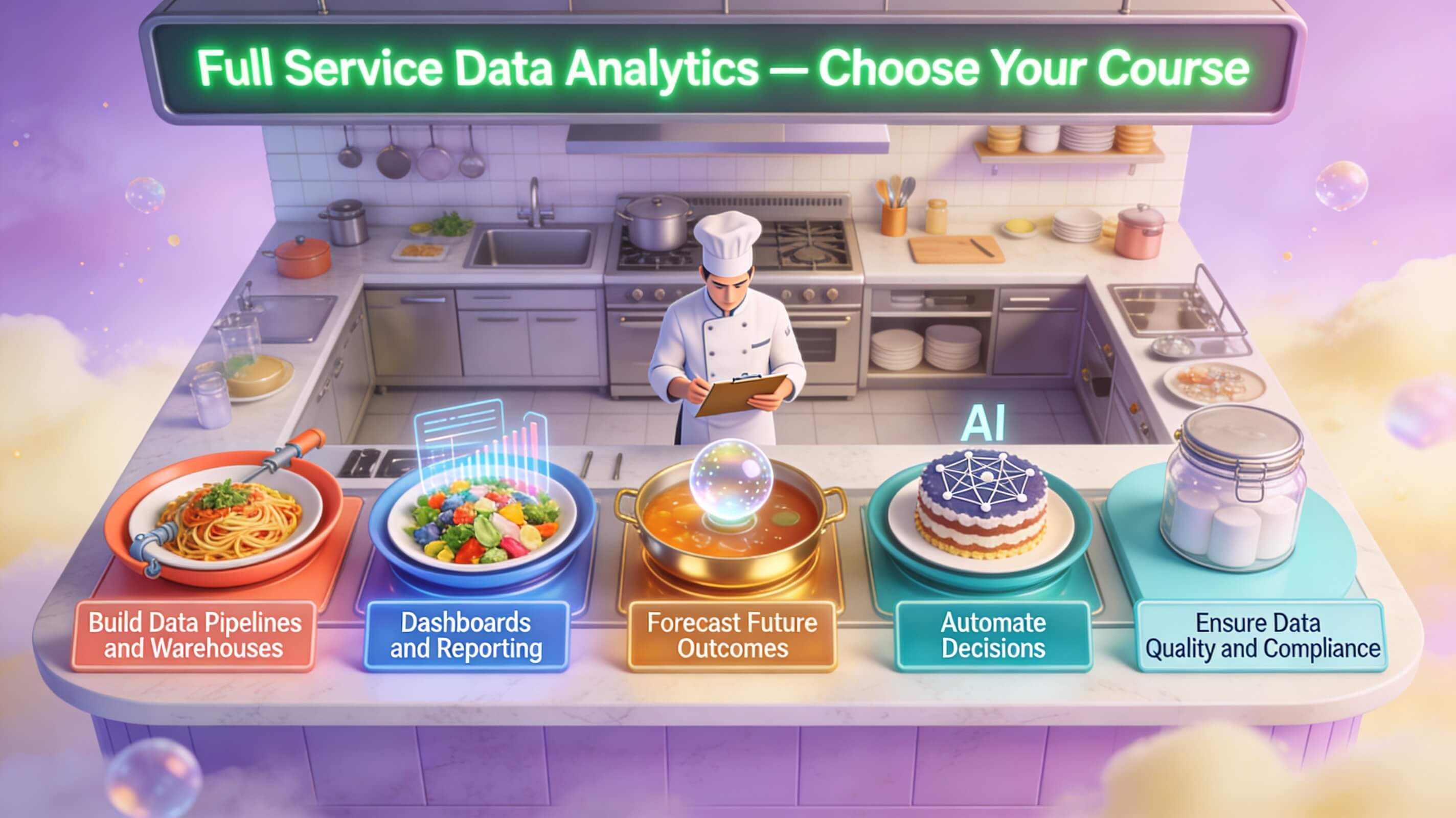
Data analytics service providers emphasize execution. They take responsibility for the operational aspects—data engineering, model building, dashboard creation, and ongoing monitoring. They are measured on outcomes like time-to-insight and accuracy of predictions. This model suits companies that lack specialized talent or want to accelerate analytics adoption without hiring a full data science team.
Data analytics solutions providers offer proprietary platforms or software-as-a-service (SaaS) tools. Examples include Tableau, Microsoft Power BI, and Qlik. These companies provide the technology stack but expect the client to have some internal skills to configure and deploy the tools. Hybrid models exist where a solutions provider also offers consulting and managed services, blurring the lines.
Knowing which type you need saves time and money. A common mistake is hiring a consulting firm to do hands-on work, leading to friction and scope creep. Conversely, expecting a solutions provider to transform your data culture without strategic guidance often results in shelfware.
Choosing the Right Data Analytics Partner
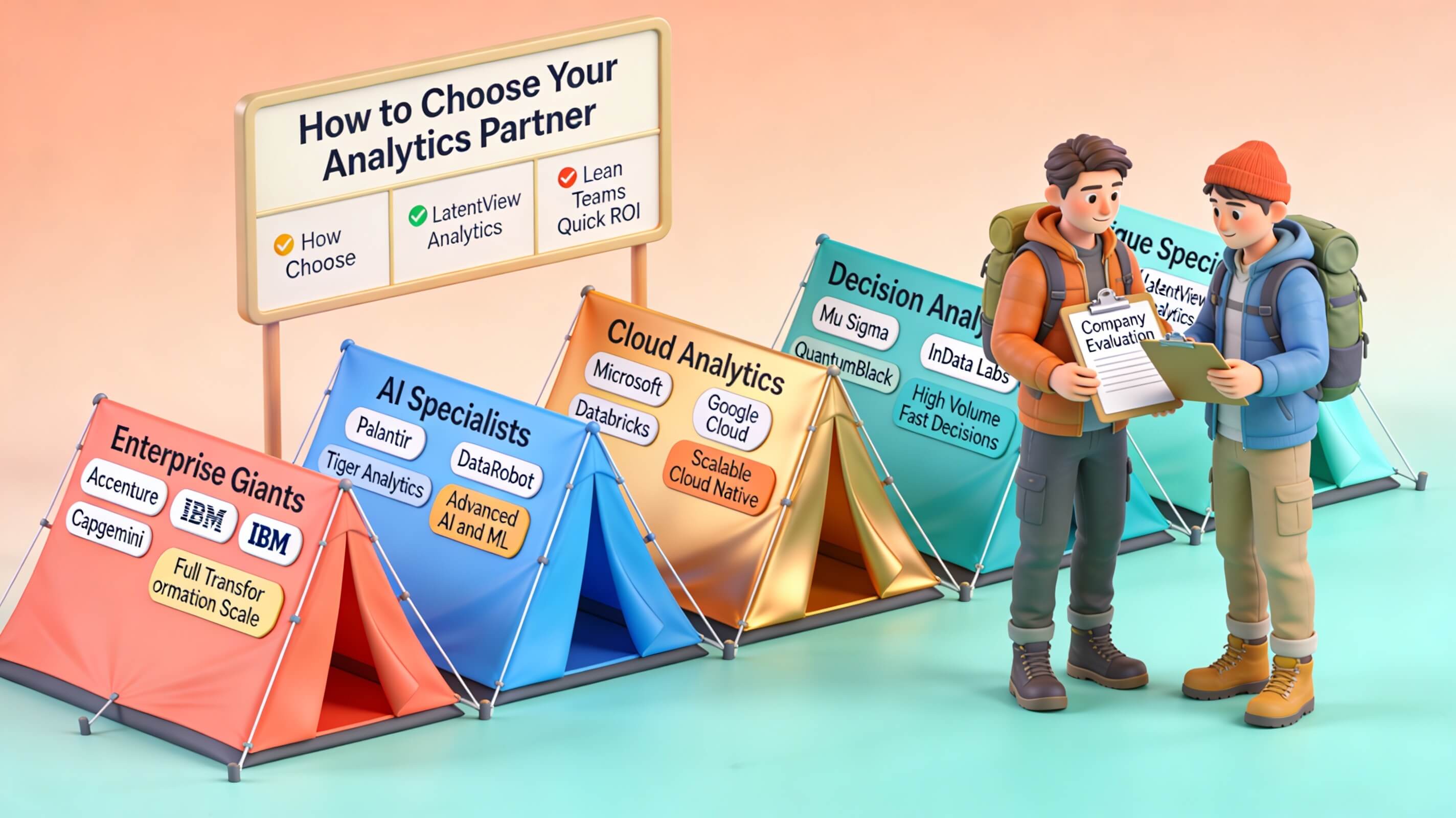
Selecting the ideal partner among the many data analytics firms requires a systematic evaluation. Here are the critical criteria:
Domain expertise: Look for companies with a proven track record in your specific industry—healthcare, retail, finance, or manufacturing. They will already understand regulatory constraints, typical data sources, and key performance indicators relevant to your sector. For instance, a firm that specializes in retail will know how to handle seasonality, SKU-level data, and customer lifetime value models.
Technology architecture compatibility: Assess whether the partner’s preferred tech stack integrates smoothly with your existing infrastructure. If you are heavily invested in AWS, a partner that primarily uses Google Cloud may introduce unnecessary complexity. Also consider scalability: the solution must grow with your data volume and user base.
Data security and compliance: Given rising cyber threats and stricter privacy laws, your partner must demonstrate robust security protocols. Ask about SOC 2 compliance, encryption practices, and data residency options. A slip in data governance can lead to costly fines and reputational damage.
Cultural fit and communication: The best analytics projects fail if stakeholders don’t trust the results. Your partner should prioritize transparency, explain methodologies in plain language, and involve your team throughout the process. Avoid firms that treat analytics as a black box—if you can’t understand how they derived a prediction, you cannot act on it confidently.
Finally, request case studies with measurable outcomes. A leading firm should be able to show how they increased revenue by X%, reduced costs by Y%, or improved customer satisfaction scores. Numbers don’t lie. A partner that meets all these criteria will become a strategic asset, not just a vendor.
Benefits of Partnering with Data Analytics Companies
The advantages of engaging top data analytics companies extend far beyond basic reporting. Let’s explore the major benefits in detail.
Improved Decision-Making: With access to real-time dashboards and predictive models, leaders can move from gut-feel intuition to evidence-based strategy. A financial services firm that adopted a partner’s analytics platform reduced loan default rates by 35% by scoring applicants more accurately.
Enhanced Operational Efficiency: Data analytics firms identify bottlenecks and inefficiencies that humans overlook. For example, a logistics company used machine learning to optimize delivery routes, saving 2 million liters of fuel annually. Automation of manual data tasks also frees up employee time for higher-value work.
Better Customer Experiences: By analyzing customer behavior, sentiment, and feedback, analytics companies enable hyper-personalization. A telecom client deployed churn prediction models and proactively offered retention offers, increasing customer loyalty by 20% and reducing acquisition costs.
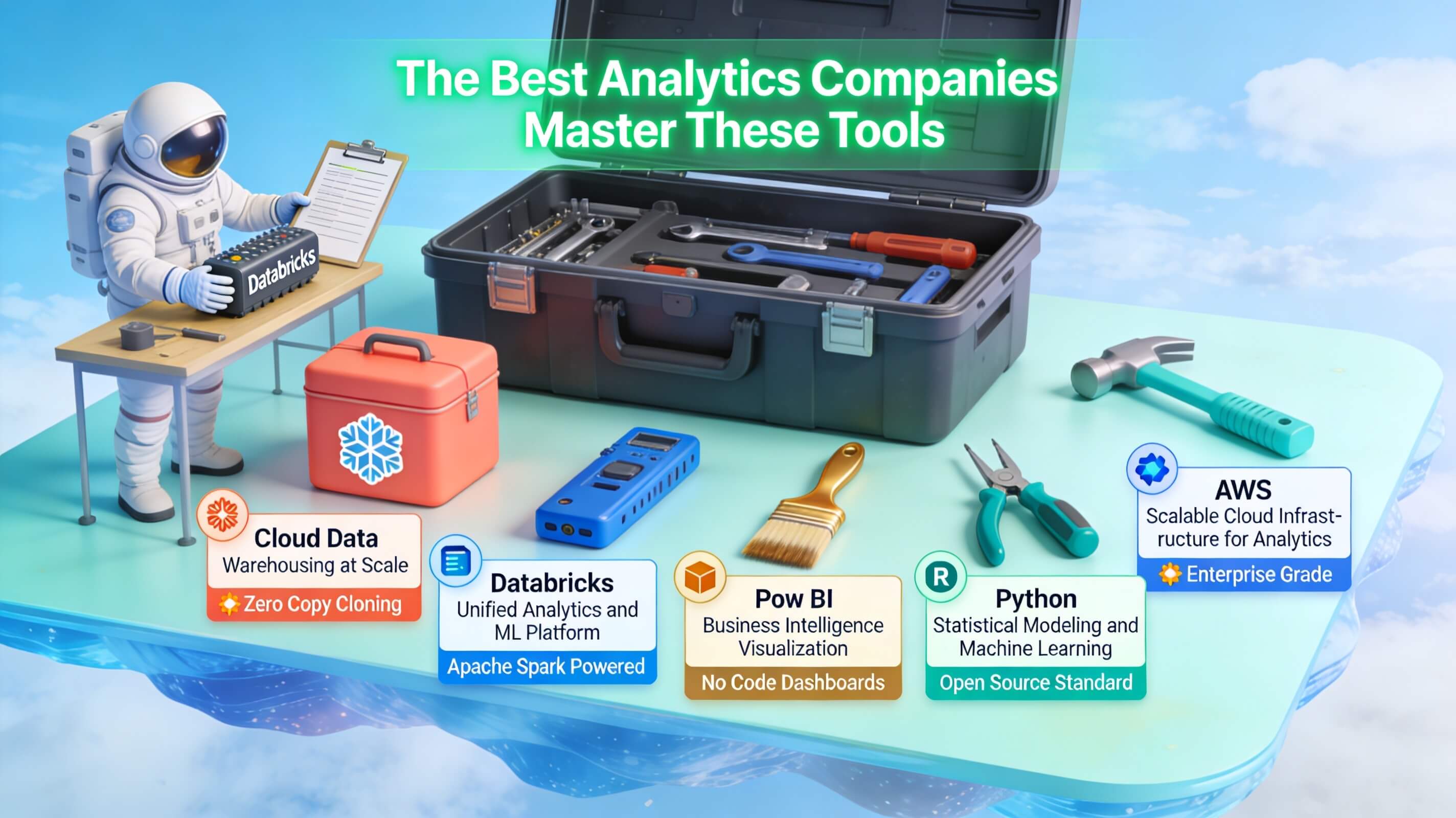
Competitive Advantage: In fast-moving markets, speed matters. Top firms help you spot trends before competitors, adjust pricing dynamically, and tailor products to emerging needs. The ability to act on data within minutes rather than weeks becomes a formidable moat.
Partnering with a top data analytics firm is not merely an expense; it is a strategic investment that compounds over time. As your data culture matures, insights become more accurate and actionable, creating a virtuous cycle of improvement.
Conclusion
The era of data-driven decision-making is no longer optional. Organizations that fail to leverage insights from their data risk falling behind more agile competitors. By collaborating with the best data analytics companies, you gain access to advanced technology, deep expertise, and proven methodologies that amplify your existing efforts. The true leaders in data analysis—like IBM, Deloitte, Accenture, Microsoft, and SAS—offer tailored solutions that drive measurable outcomes across industries.
To maximize returns, invest time in selecting a partner that matches your industry, technology stack, and culture. Evaluate their case studies, verify their security protocols, and ensure their approach aligns with your strategic vision. The effort will pay dividends in faster, better decisions, streamlined operations, and superior customer experiences. If your organization is ready to unlock the full potential of its data, the next step is straightforward: conduct a thorough assessment of your current analytics maturity and then reach out to a trusted partner for a no-obligation discovery conversation. The insights you uncover today will shape the success of tomorrow. Take action now—your data is waiting.