
Cart 0

Share
Table of Contents
Google Local Citations: Boosting Local Business Visibility
If your local business isn’t showing up when nearby customers search for your services, you are leaving money on the table. Google Local Citations are the single most underutilized lever in local search optimization. A local citation is any online mention of your business’s name, address, and phone number—commonly referred to as NAP—on external websites such as directories, review platforms, social networks, and industry-specific databases. These citations act as digital footnotes that confirm to Google that your business is legitimate, physically present, and relevant to local queries. Without a foundation of accurate, consistent citations spread across authoritative sources, your local search rankings will remain stuck, no matter how polished your website is. The search intent behind this article is clear: business owners and marketers want a practical, battle-tested strategy for building citations that actually improve local visibility and drive foot traffic or calls. I have spent over two decades in digital marketing, and I can tell you that citation building remains one of the highest-ROI activities for local SEO, provided it is done correctly. In this guide, you will learn exactly what Google Local Citations are, how they influence rankings, the precise steps to build and manage them, and how to measure their impact. I will also share original insights and data-backed best practices that most agencies either overlook or complicate. By the end, you will have a complete playbook for turning local citations into a reliable customer acquisition channel.
What Exactly Are Google Local Citations?
A Google Local Citation is simply a digital reference to your business that includes your name, street address, and phone number. It can live on a major directory like Yelp, a niche industry site, a local chamber of commerce page, or even a social media profile. The critical point is that Google’s algorithm treats each citation as a vote of confidence. When the search engine sees the same NAP information repeated consistently across dozens of reputable sources, it gains confidence that your business is real, stable, and worth showing to users performing local searches. Conversely, if your NAP data is scattered, inconsistent, or riddled with duplicates, Google’s confidence erodes, and your rankings suffer accordingly.
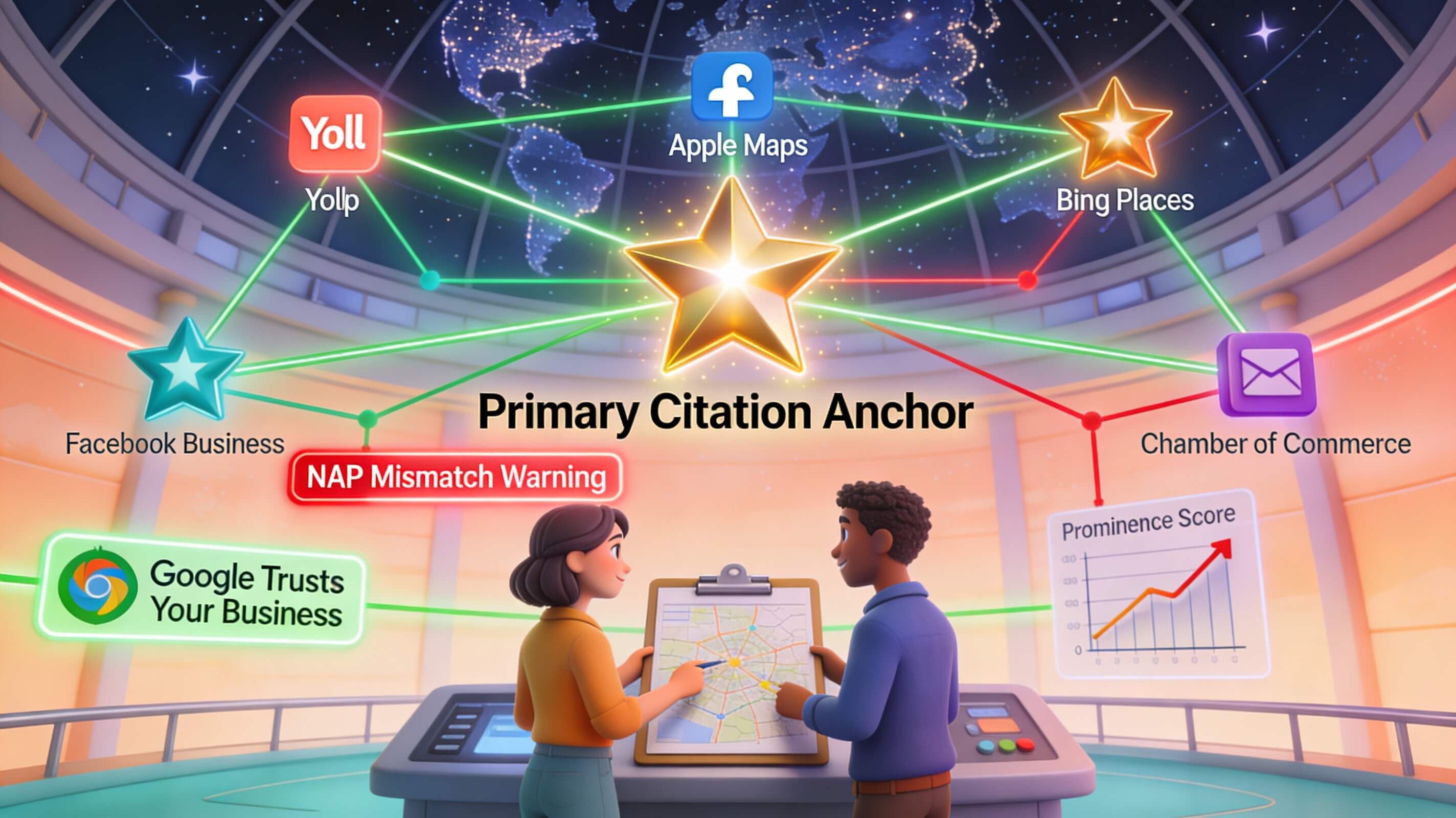
Citations fall into two broad categories. Structured citations appear on dedicated business listing platforms where fields for name, address, phone, category, and description are predefined. Unstructured citations occur when your business is mentioned organically in blog posts, news articles, or event pages without a formal listing format. Both types carry weight, but structured citations on high-authority directories tend to deliver the most reliable ranking signals. It is also worth understanding that citations are distinct from backlinks. A backlink is a clickable link pointing to your website, whereas a citation is a mention of your contact details. Both are important for local SEO, but they serve different functions in the algorithm. Google’s own guidelines for representing your business online emphasize that consistent NAP information across the web is a primary trust signal for local search quality.
Many business owners mistakenly believe that simply having a Google Business Profile is enough. While that profile is indeed the most important single citation, it is far from sufficient. Google’s local search ecosystem draws on data from hundreds of third-party sources to verify and contextualize your business. If your NAP details on Google Business Profile say one thing, but your Yelp page, Facebook page, and a local directory all show slightly different versions, Google detects that inconsistency and may downgrade your visibility. So think of citations not as a check-the-box task but as a distributed reputation system. Every consistent mention strengthens your local authority, and every error undermines it. In the following sections, I will break down exactly how this dynamic plays out in the ranking algorithm and what you can do to tilt the odds in your favor.
Why Google Local Citations Determine Your Local Search Success
The relationship between citations and rankings is not theoretical; it is well documented by both industry studies and search engine patents. For example, a comprehensive analysis by BrightLocal found that businesses with more high-quality citations consistently outrank competitors with fewer or lower-quality citations in local pack results. The core reason is that Google needs to validate your business location and legitimacy before it can confidently serve your listing to searchers. Citations provide that validation. When your business appears on authoritative, geographically relevant directories, it sends a clear signal that you are an established entity within that community. This is especially critical for industries like home services, healthcare, legal, and retail, where trust is a prerequisite for customer action.
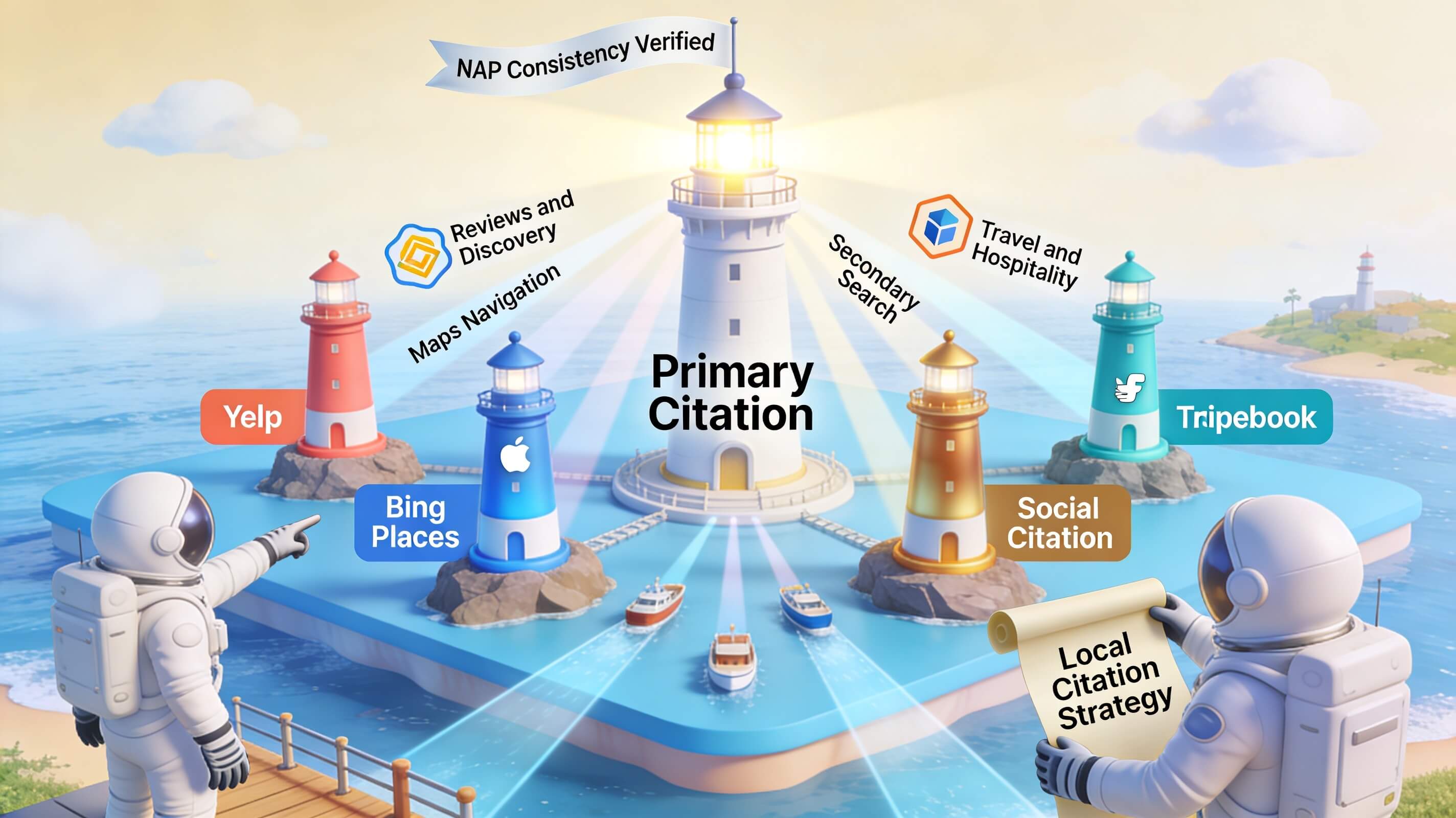
It is also important to understand the concept of citation velocity. If you have zero citations and suddenly create dozens overnight, that unnatural spike can trigger a spam flag. The ideal approach is steady, organic growth. Start with the major platforms—Google Business Profile, Yelp, Facebook, Apple Maps, Bing Places—then expand to industry-specific and local directories over time. I have seen businesses jump from page three to page one of local results simply by methodically building 30 to 50 consistent citations over a three-month period. The key variable was not just quantity but quality. Citations from locally relevant sources, such as a city’s official tourism site or a local business association, carried disproportionately more weight than generic national directories.
Another factor that many guides ignore is the interplay between citations and the Google Knowledge Panel. The Knowledge Panel pulls data from multiple sources, including Wikipedia, Wikidata, and authoritative citations. If your citation profile is strong, Google can assemble a rich, accurate Knowledge Panel that includes your address, hours, reviews, and even photos. This panel is the most prominent real estate on a search results page for branded queries, and it drives both trust and click-through rates. Therefore, investing in citations is not just about ranking for competitive terms; it is about owning your brand’s narrative in search. As we move into the practical side of building your citation profile, keep in mind that each listing you create or optimize is a brick in the foundation of your local search presence.
Building a Citation Profile That Actually Moves the Needle
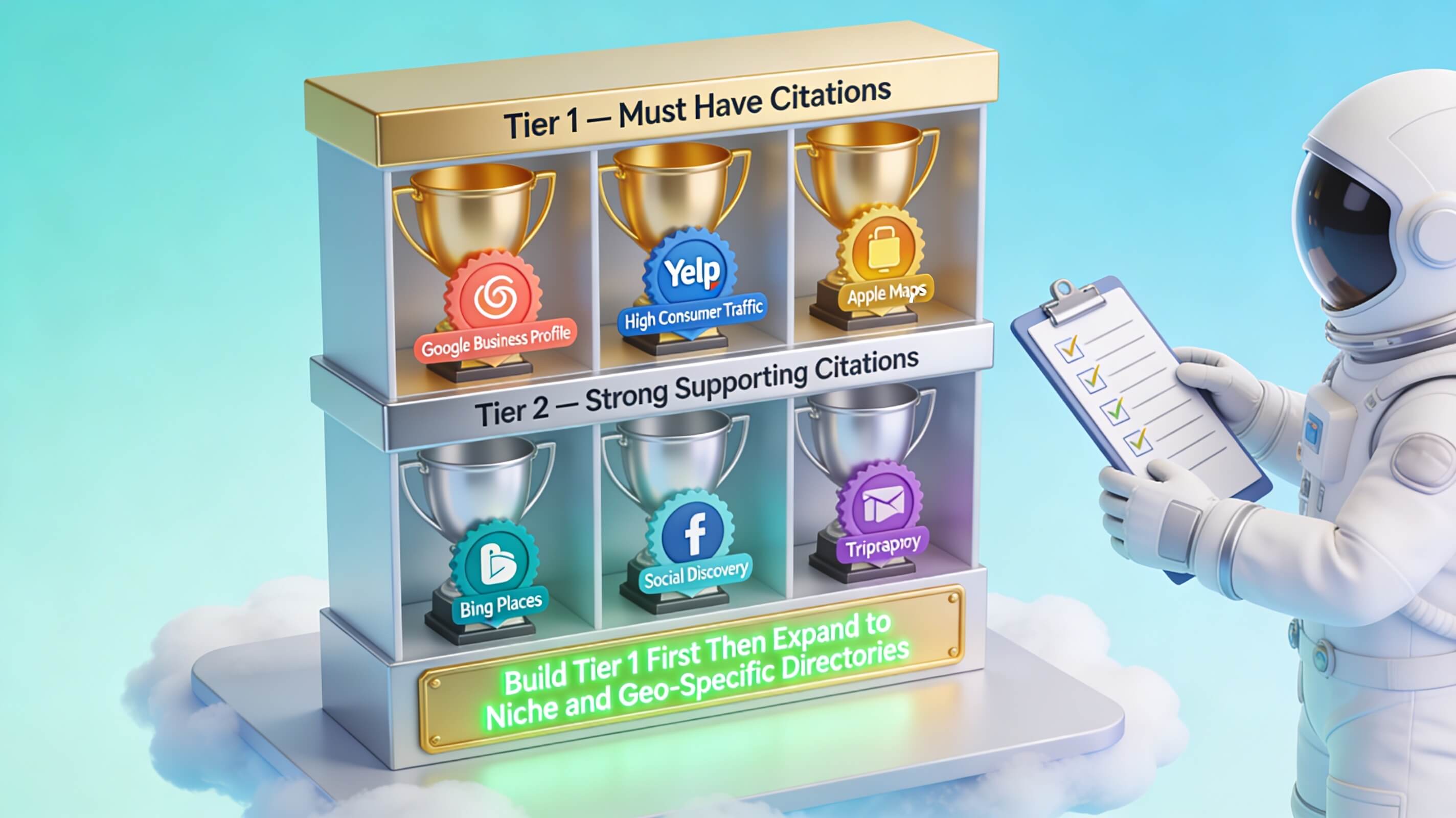
Effective citation building is not about blasting your NAP across every directory you can find. That approach leads to duplicates, inconsistencies, and wasted effort. Instead, you need a strategic, tiered approach. Start by auditing your existing citations. Use a tool like Moz Local or Whitespark to discover where your business is already listed and identify any NAP errors or duplicates. I recommend running this audit at least once quarter because directory data changes frequently. Once you have a clean baseline, prioritize the directories that matter most for your industry and geography. Table 1 below provides a structured framework for prioritizing citation sources based on authority, relevance, and reach.
| Tier | Directory Type | Examples | Priority Order |
|---|---|---|---|
| 1 | Core Major Platforms | Google Business Profile, Yelp, Facebook, Apple Maps, Bing Places | Build first and maintain monthly |
| 2 | Industry-Specific Directories | Avvo (legal), Healthgrades (medical), Houzz (home services) | Build second, adjust as niche evolves |
| 3 | Local & Regional Directories | Chamber of commerce, city tourism sites, local business associations | Build third, focus on geographic relevance |
| 4 | Data Aggregators | Infogroup, Neustar Localeze, Factual | Claim and correct data; these feed downstream directories |
Prioritizing High-Authority Directories
Not all directories are created equal. A citation on a high-authority site like the Better Business Bureau or a major industry hub carries significantly more ranking influence than a citation on a low-traffic, spammy directory. Before you invest time in any platform, check its domain authority and its relevance to your location. A directory that is specific to your city and industry will outperform a generic national directory in local search. For example, a plumber in Austin will benefit more from being listed on the Austin chapter of the Better Business Bureau and a local home services directory than from appearing on a generic business listing site with no geographic focus. Use free tools like the MozBar or Ahrefs to assess domain authority, but also use your judgment about the directory’s actual usage by local consumers.
Optimizing Each Listing for Maximum Impact
Once you have identified your target directories, you need to optimize each listing, not just paste your NAP. Many directories allow you to add a business description, categories, hours of operation, payment methods, photos, and links to your website and social profiles. Fill out every relevant field completely. A listing with a detailed description, multiple high-quality photos, and accurate hours will not only rank better but also convert more searchers into customers. Additionally, make sure your primary category is as specific as possible. For instance, if you are a dental practice, choose “General Dentist” or “Cosmetic Dentist” rather than the generic “Doctor.” This specificity helps Google match your listing to the most relevant queries. I also recommend including your service area if you operate a service-area business without a single physical location. Many business owners overlook this and end up missing out on valuable geographic targeting opportunities.
The Non-Negotiable Rule of NAP Consistency
Consistency is the single most important attribute of a healthy citation profile. If your business is listed as “Bob’s Plumbing, Inc.” on one directory, “Bob’s Plumbing” on another, and “Bob’s Plumbing and Heating” on a third, Google receives conflicting signals. This inconsistency can cause your rankings to stall or even drop because the algorithm struggles to determine which version of your business is correct. The standard rule is to use the exact same business name, street address, and phone number across every single citation. Do not abbreviate “Street” as “St.” on one listing and “Street” on another. Do not use a local phone number on some listings and a toll-free number on others. Consistency must be absolute. This is not an area where approximation is acceptable.
If your business has moved or changed phone numbers, updating every citation is non-negotiable. I have worked with clients who lost significant local traffic simply because their old address remained on several directories after a move. The fix is tedious but straightforward: create a master spreadsheet of all your listings, update each one manually or through a management tool, and then verify the changes. For businesses with more than twenty locations, a centralized management tool like Semrush Local or Moz Local can automate much of the distribution and monitoring. However, for a single-location business, manual management is often sufficient and gives you more control over the details. Just be disciplined about checking your citations quarterly. Small errors creep in over time, especially when directories import data from third-party sources.
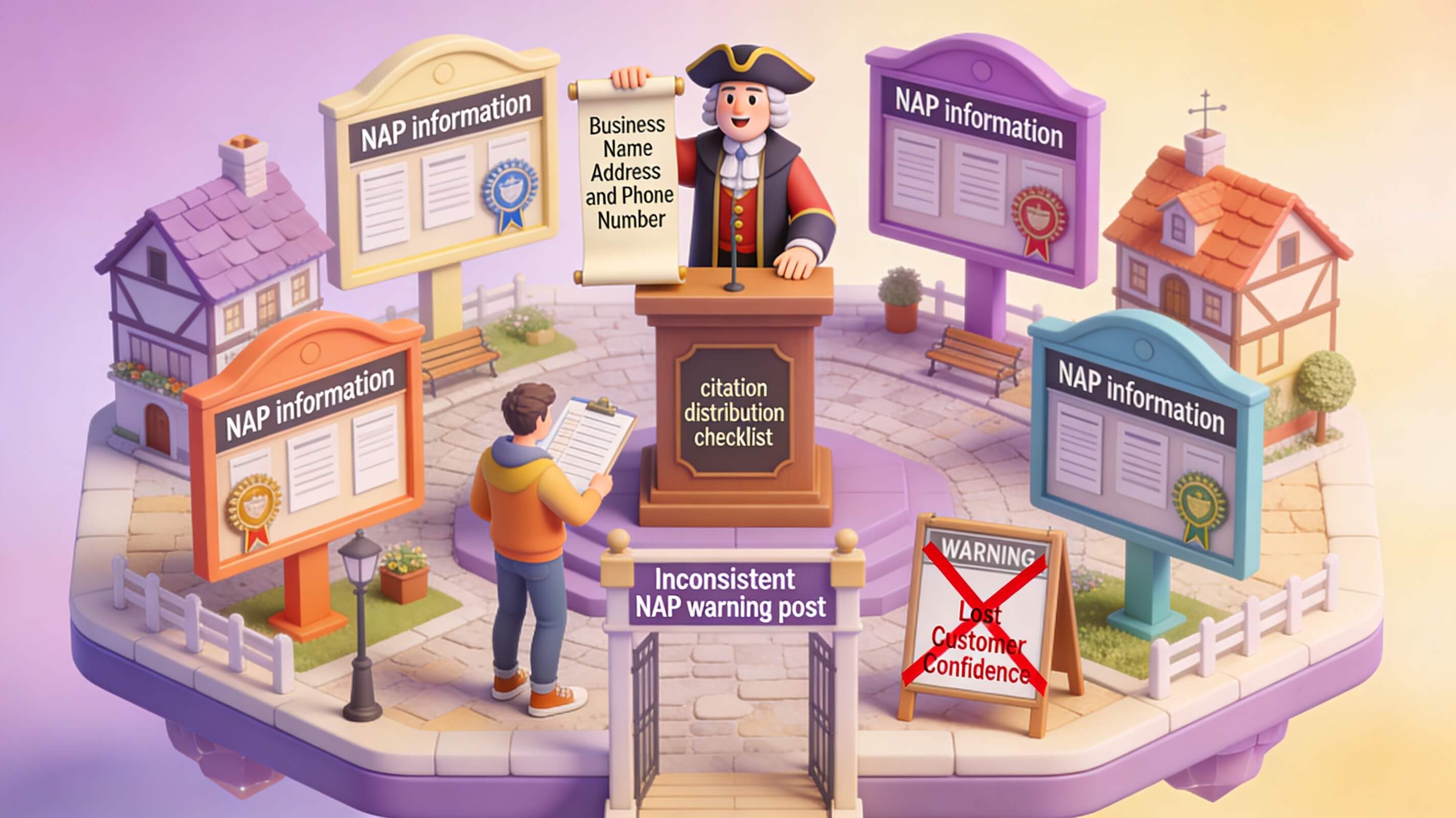
Another aspect of consistency that is frequently ignored is the formatting of your phone number. Choose one format, such as (512) 555-0199, and use it everywhere. The same goes for your address—write “Suite 200” consistently, not sometimes as “Ste. 200” or “Suite 200.” These micro-consistencies might seem trivial, but Google’s algorithm parses them with precision. In my experience, cleaning up NAP inconsistencies alone has resulted in ranking improvements of two to three positions for competitive local terms. That is the kind of gain that directly translates into more calls and customers.
How Reviews Amplify the Power of Your Local Citations
Citations and reviews are not separate entities; they work together to form a complete local search signal. A citation tells Google that your business exists and where it is located. A review tells Google and potential customers about the quality of your service. When you have both—consistent citations plus a steady stream of positive reviews—your local rankings benefit from a compound effect. Google’s local algorithm factors in review quantity, velocity, and sentiment. Listings with fresh, authentic reviews tend to rank higher than those with stale or no reviews, all else being equal. Therefore, your citation strategy should include a deliberate plan for generating and managing reviews on the directories that matter most to your business.
Encouraging reviews starts with asking at the right moment. After a successful transaction or service visit, send a follow-up email or text with a direct link to your Google Business Profile review page. Make it as easy as possible for the customer. The same principle applies to other platforms like Yelp or Facebook, though be aware that Yelp’s algorithm is sensitive to solicitation. I advise clients to focus primarily on Google reviews because of their direct impact on local pack rankings and the Knowledge Panel. However, do not ignore industry-specific review sites. A law firm benefits greatly from reviews on Avvo, and a medical practice from reviews on Healthgrades. These niche platforms not only influence rankings but also serve as decision-making resources for potential clients.
Responding to reviews is equally important. Thank reviewers for positive feedback and address negative reviews professionally and promptly. Google’s guidelines indicate that responsive business owners are rewarded with better visibility. Moreover, a well-handled negative review can actually build trust, because it shows that the business cares about customer satisfaction. From a citation perspective, each review you receive on a directory adds fresh content to that listing, which signals activity and relevance to the algorithm. So the reviews themselves become part of your citation ecosystem. Nurture that ecosystem actively, and it will pay dividends in both rankings and revenue.
Monitoring and Managing Your Citation Ecosystem at Scale
Citation management is not a set-and-forget activity. Directories change their data import sources, businesses get duplicated in aggregator databases, and your own information may change. A proactive monitoring system is essential. At a minimum, conduct a full citation audit every three months. If your business experiences a major change like a move, a rebrand, or a phone number change, perform an immediate audit and update every listing. Tools like Whitespark and BrightLocal offer citation audit services that scan hundreds of directories and flag inconsistencies. These tools save hours of manual work and provide a centralized dashboard where you can track your citation health score over time.
Duplicate listings are a persistent problem. They occur when a directory creates a second listing for your business, often because of a data import error or a well-meaning but incorrect user submission. Duplicates dilute your citation equity and confuse search engines. When you find a duplicate, go through the directory’s claim or support process to merge or remove it. For major platforms like Yelp and Google, you can claim ownership of the duplicate and request a merger. For smaller directories, you may need to contact support directly. Keep a log of all duplicate removal actions so you can track your progress and avoid repeating the same steps.
Another important aspect is monitoring for incorrect information on third-party data aggregators like Infogroup, Neustar Localeze, and Factual. These aggregators feed data to hundreds of downstream directories, so an error at the source can create inconsistencies across the entire web. Most aggregators allow you to claim and correct your listing for free. Take the time to do this. I have seen cases where fixing an address error on a single aggregator resolved dozens of listing errors downstream. It is one of the highest-leverage activities in citation management. Finally, keep an eye on new directory opportunities as they emerge. The local search landscape evolves, and being among the first to claim your listing on a rising directory can provide a competitive edge.
Measuring the Success of Your Local Citation Strategy
You cannot improve what you do not measure. Tracking the performance of your citation efforts is essential for understanding what works and where to invest further. The most direct metric is your local search ranking for target keywords. Use Google Search Console and rank-tracking tools like Ahrefs to monitor your positions in local pack results. Set a baseline before you begin your citation campaign, then track movement monthly. Ranking improvements typically start appearing within four to eight weeks of citation building, especially if you are targeting high-authority directories.
Citation consistency is another key metric. Tools like Moz Local and BrightLocal provide consistency scores that show the percentage of your listings that are error-free. A score below 90 percent indicates that you have cleanup work to do. Aim for 100 percent accuracy. Citation volume, meaning the total number of unique, accurate citations pointing to your business, also matters. Track this number over time and set goals for quarterly growth. A reasonable target for a single-location business is ten to fifteen new quality citations per quarter, but adjust based on your industry and location density.
Finally, tie your citation efforts to business outcomes. Use unique tracking phone numbers or landing page URLs on your citations to measure the leads and sales that originate from directory listings. Google Analytics can show traffic coming from directory referral sources. Monitor your review volume and sentiment as part of your citation dashboard. In my practice, I have seen a direct correlation between improved citation consistency and increased organic calls and form submissions. When you can demonstrate that citations are driving real business results, it becomes easier to justify the time and resources required to maintain them. Data-driven citation management is not just good practice; it gives you the confidence to scale what works and fix what does not.
Conclusion
Google Local Citations are not a fleeting SEO tactic. They are a foundational component of local search visibility that directly impacts how often your business appears in local results, how much trust Google places in your listing, and how easily potential customers can find and contact you. Throughout this article, I have laid out a comprehensive, no-fluff approach to building, managing, and measuring citations. From understanding the anatomy of a citation and the critical importance of NAP consistency to leveraging reviews and monitoring your ecosystem at scale, every step is designed to produce tangible ranking gains and business growth. The businesses that invest in quality citations consistently—not as a one-time project but as an ongoing discipline—are the ones that dominate their local markets.
If you are ready to stop leaving local visibility to chance, start with a thorough audit of your current citation profile. Identify every listing, flag every inconsistency, and correct them methodically. Then expand your reach into industry-specific and local directories, optimize each listing completely, and build a system for ongoing monitoring. The work is detailed, but the payoff is compounded over time. Higher rankings, more trust, more foot traffic, and more revenue are all within reach when you treat citations as a strategic asset rather than a chore.