Cart 0

Share
Table of Contents
Data Analytics Services: Leveraging Professional Data Analysis
If your organization is serious about driving measurable growth, you must stop treating data as a byproduct of operations and start treating it as a strategic asset. That is exactly where professional data analytics services become indispensable. In today’s hyper-competitive landscape, raw data alone offers little value. What matters is the ability to extract actionable insights that inform every critical business decision. Whether you are a startup founder or a seasoned executive, the question is no longer whether to invest in data analytics, but rather how to leverage it for maximum impact. This article provides a comprehensive, expert-level guide to understanding and implementing data analytics services, covering everything from big data analytics and business intelligence to predictive modeling and data visualization. You will learn not only the foundational principles but also practical strategies for integrating these services into your decision-making frameworks. By the end, you will have a clear roadmap for transforming your organization into a data-driven powerhouse that consistently outpaces the competition. Let us begin by understanding the core components of professional data analysis and why they matter more than ever.
The Core of Professional Data Analytics: What It Really Means
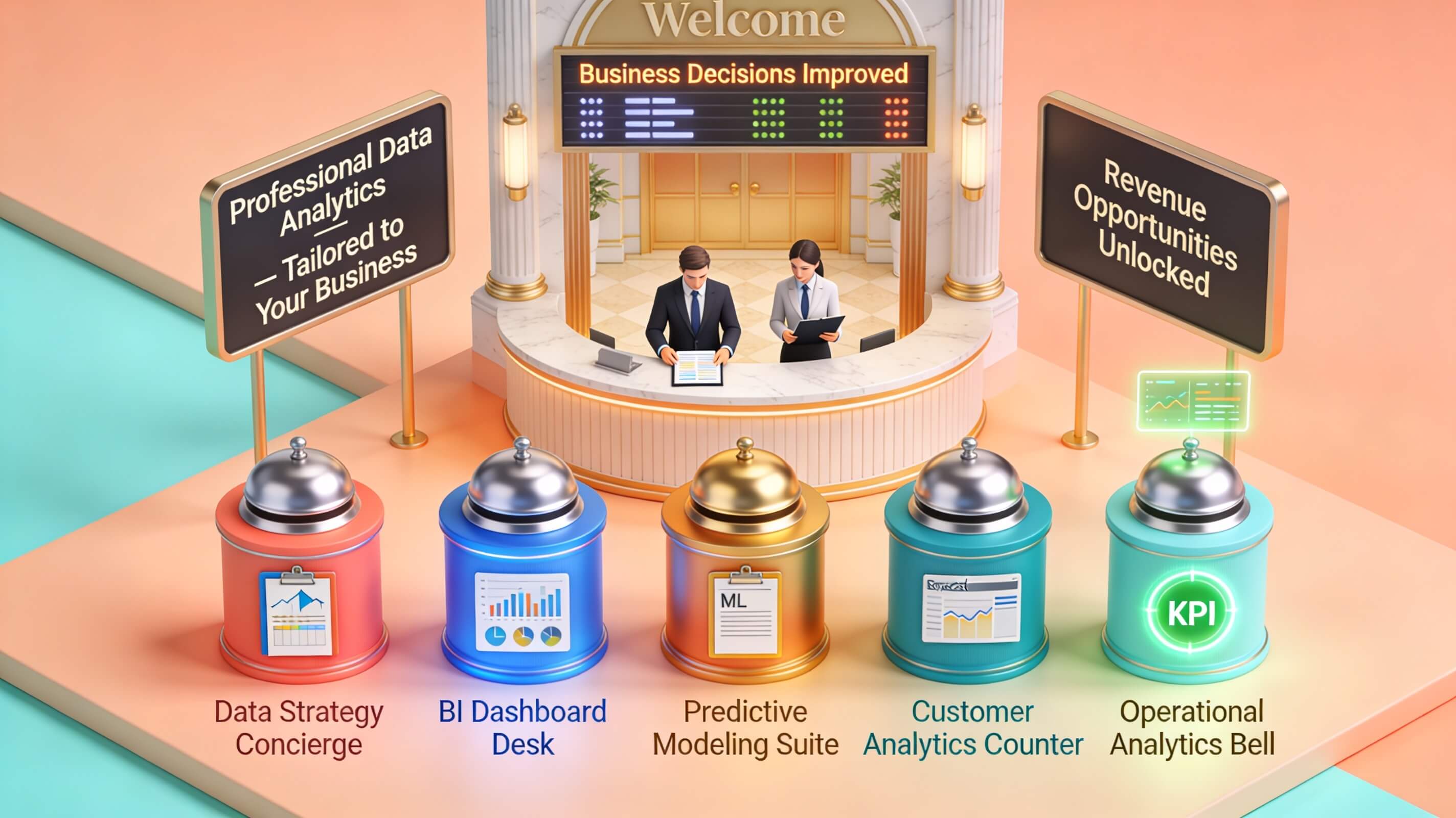
Data analytics services encompass a broad range of techniques and technologies designed to process, clean, model, and interpret data with the goal of discovering useful information and supporting decision-making. At its most fundamental level, professional data analysis transforms chaotic, unstructured information into structured, meaningful narratives. This process involves multiple disciplines, including statistics, machine learning, database management, and domain expertise. When executed correctly, data analytics services allow organizations to move from reactive, intuition-based decisions to proactive, evidence-based strategies. The true power lies not in the volume of data collected, but in the quality of the questions asked and the rigor of the analytical methods applied. Seasoned professionals understand that garbage in equals garbage out; thus, data governance, quality assurance, and ethical considerations form the bedrock of any successful analytics initiative. Furthermore, modern data analytics services are increasingly cloud-based, scalable, and accessible to businesses of all sizes, democratizing insights that were once reserved for enterprise-level corporations with massive IT budgets.
Key Components of Professional Data Analysis
| Service Component | Primary Function | Business Value |
|---|---|---|
| Big Data Analytics | Processing vast, complex datasets to identify patterns | Uncovers hidden correlations and trends |
| Business Intelligence (BI) | Reporting, dashboards, and performance monitoring | Enables real-time operational visibility |
| Predictive Analytics | Forecasting future outcomes using historical data | Reduces risk and identifies opportunities |
| Data Mining | Discovering unknown patterns through algorithmic exploration | Reveals customer segments and behavioral insights |
| Data Visualization | Transforming numbers into intuitive graphical formats | Speeds up comprehension and stakeholder buy-in |
| Data Reporting | Automating the generation of standardized reports | Saves time and ensures consistency |
Big Data Analytics: Beyond the Buzzword
Many companies claim to use big data analytics, but few genuinely harness its full potential. True big data analytics goes beyond simply storing terabytes of information in a data lake. It involves sophisticated processing frameworks like Apache Spark and Hadoop, coupled with advanced machine learning algorithms that can sift through petabytes of structured and unstructured data. For example, a global e-commerce retailer might use big data analytics to analyze clickstream data, purchase histories, social media sentiment, and real-time inventory levels simultaneously. This integration allows for dynamic pricing models, personalized product recommendations, and demand forecasting with remarkable accuracy. According to a Gartner report, organizations that effectively leverage big data analytics are three times more likely to report significant revenue growth compared to their peers. However, the technical complexity and resource requirements mean that most businesses benefit from partnering with specialized data analytics service providers who bring the necessary infrastructure, talent, and best practices to the table.
Transforming Raw Data into Strategic Gold
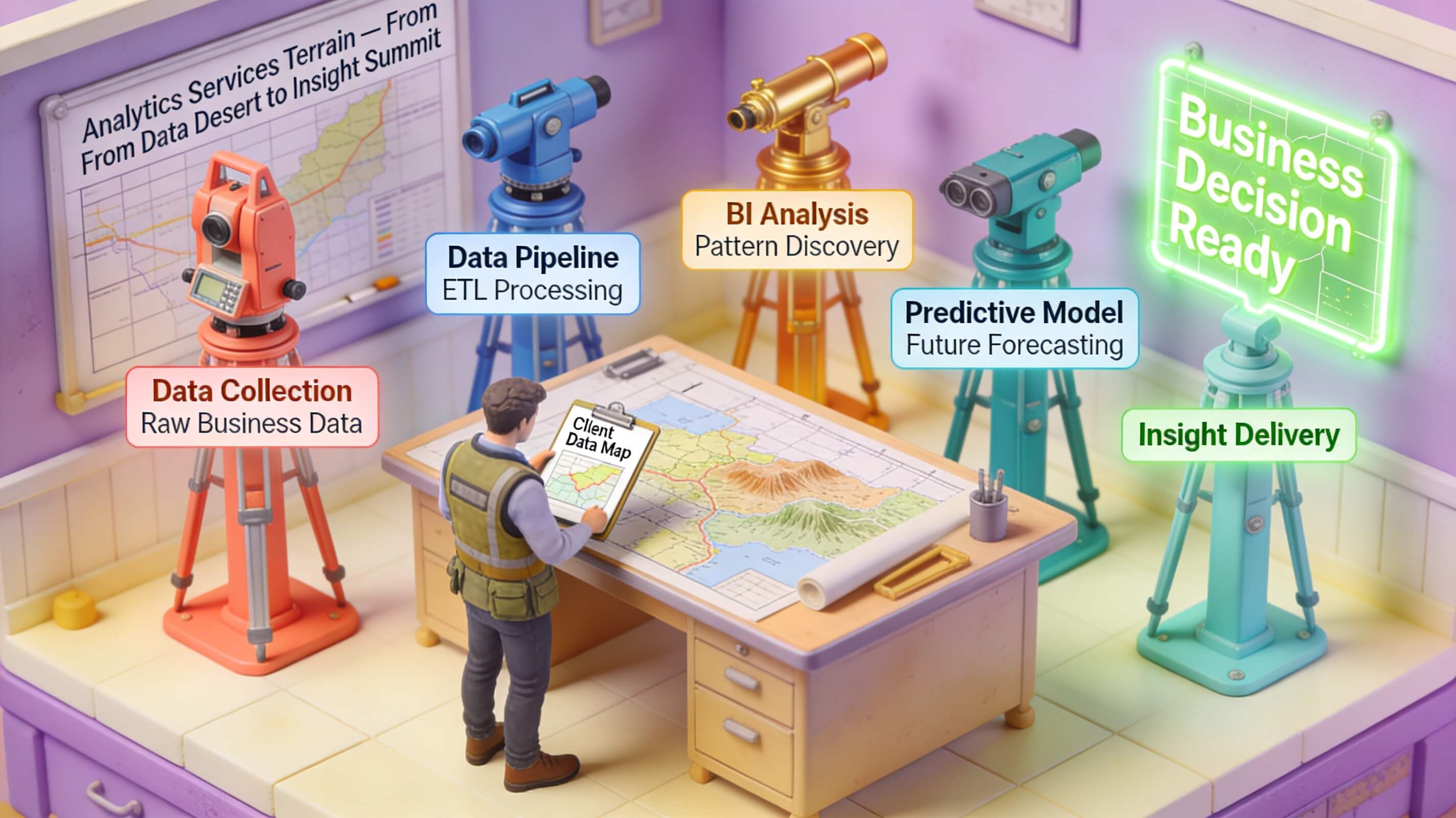
The journey from raw data to strategic gold begins with data ingestion and cleaning. Professional data analytics services employ data engineers who design pipelines to collect data from disparate sources—CRM systems, ERP platforms, social media APIs, IoT sensors, and more. Once ingested, the data undergoes rigorous cleaning to remove duplicates, correct errors, and handle missing values. This step is tedious but absolutely critical. A study by Harvard Business Review found that 47% of newly created data records contain at least one critical error that can lead to flawed analysis. After cleaning, exploratory data analysis (EDA) is performed to understand distributions, correlations, and outliers. This phase often reveals surprising insights: a mid-sized manufacturer might discover that a seemingly minor product defect is actually rooted in a specific supplier’s batch, not the production line. From there, advanced analytical models—regression, clustering, classification, time-series forecasting—are applied iteratively. The output is then packaged into dashboards and reports that decision-makers can act upon immediately. This entire workflow, when managed by experts, ensures that your organization makes decisions based on truth, not assumptions.
Business Intelligence Services: Your Operational Command Center
Business intelligence (BI) services serve as the operational command center for data-driven organizations. Unlike advanced analytics that focuses on prediction and discovery, BI is primarily concerned with descriptive analytics: what happened, when, and how often. Modern BI platforms like Tableau, Power BI, and Looker integrate directly with your existing databases and applications to provide real-time dashboards that track key performance indicators (KPIs). For instance, a logistics company can monitor fleet fuel efficiency, delivery time variances, and customer satisfaction scores on a single screen. When a metric deviates from the target, automated alerts can be triggered, enabling swift corrective action. The best BI services go beyond static reports; they offer interactive drill-down capabilities that allow users to explore data at granular levels. A regional sales manager, for example, can start with overall quarterly revenue, then drill into specific product categories, then individual sales representatives, and finally individual transactions. This level of accessibility transforms BI from a tool for analysts into a strategic asset for every department. McKinsey research shows that companies that invest in integrated BI solutions see a 20–30% improvement in operational efficiency on average.
Elevating Decision-Making Velocity
The true value of business intelligence services lies not just in the data they present, but in the speed with which they deliver it. In fast-moving markets, decision velocity is a competitive differentiator. A retailer that realizes a specific SKU is underperforming within hours, rather than weeks, can adjust pricing, launch a promotion, or shift inventory allocation before the problem escalates. BI services also democratize data access, reducing dependency on IT departments for routine reporting. Self-service analytics empowers marketing, finance, and operations teams to answer their own questions without writing a single SQL query. However, this freedom must be balanced with governance. Professional data analytics services implement role-based access controls, data lineage tracking, and standardized metric definitions to ensure that everyone is working from the same single source of truth. Without these safeguards, the risk of conflicting reports and misaligned strategies increases dramatically. Therefore, a robust BI implementation is not just about software; it is about establishing a disciplined data culture where accuracy and timeliness are non-negotiable.
Predictive Analytics: Seeing the Future with Clarity
Predictive analytics is where data analytics services shift from hindsight to foresight. By applying statistical algorithms and machine learning models to historical data, businesses can forecast future events with a measurable degree of confidence. Use cases span nearly every industry: a bank predicts loan default probabilities, a healthcare provider forecasts patient readmission risks, a manufacturer anticipates equipment maintenance needs, and a retailer projects seasonal demand fluctuations. The most effective predictive models are built on clean, comprehensive historical data and are continuously retrained to adapt to changing conditions. For example, a leading subscription-based streaming service uses predictive analytics to estimate churn probability for each user. When a user’s engagement metrics drop below a certain threshold, an automated workflow triggers a personalized retention offer—such as a free month or exclusive content recommendation—before the user cancels. This proactive approach has been shown to reduce churn by up to 25% in some implementations. Forrester notes that organizations using predictive analytics are 2.5 times more likely to report being market leaders in their segments.
From Prediction to Prescription
While predictive analytics answers the question “what will happen?” the next frontier is prescriptive analytics, which answers “what should we do about it?” Prescriptive models use optimization algorithms and simulation techniques to recommend specific actions that will produce the most favorable outcomes. For instance, a logistics company’s predictive model might forecast that a major storm will disrupt delivery routes in a specific region. A prescriptive model would then recommend alternative routing, suggest reallocating inventory to unaffected warehouses, and even calculate the cost-benefit trade-offs of different response strategies. Integrating predictive and prescriptive analytics into your data analytics services portfolio transforms your organization from a passive observer of trends into an active architect of its own destiny. However, this requires a sophisticated technical stack and a team that understands both the mathematical underpinnings and the business context. Many enterprises find that partnering with specialized analytics providers accelerates this journey, reducing the time to value from months to weeks.
Data Mining and Hidden Patterns
Data mining is often described as the treasure hunt within data analytics services. It involves using automated algorithms to explore large datasets and discover patterns, correlations, and anomalies that would be impossible to detect manually. Common data mining techniques include association rule learning (market basket analysis), clustering (segmenting customers), and anomaly detection (identifying fraudulent transactions). Consider a retail chain that uses data mining to analyze point-of-sale data. The algorithm might reveal that customers who purchase organic pasta are 80% more likely to also buy imported olive oil and artisanal cheese. This insight can drive cross-selling strategies, shelf placement decisions, and targeted email campaigns. In the insurance industry, data mining is instrumental in fraud detection. By analyzing claims data for unusual patterns—such as claims filed shortly after policy inception or a high frequency of small claims—insurers can flag suspicious activities for investigation. IBM reports that some companies have reduced fraud losses by up to 40% after implementing comprehensive data mining solutions. The key to successful data mining is having a clear business question in mind before diving into the data, as undirected exploration can lead to spurious correlations that waste time and resources.
Data Visualization and Reporting: Making Insights Stick
No matter how brilliant the analysis, if the results cannot be communicated effectively, they are useless. Data visualization services bridge this gap by converting complex numerical outputs into intuitive charts, graphs, heat maps, and interactive dashboards. The human brain processes visual information 60,000 times faster than text, according to research published in the Journal of Visual Communication. Therefore, investing in professional visualization is not a luxury—it is a necessity for ensuring that stakeholders grasp the significance of the data quickly. Best practices include using appropriate chart types for the data (e.g., line charts for trends, bar charts for comparisons, scatter plots for relationships), maintaining consistent color schemes, and designing dashboards that tell a story rather than simply displaying numbers. Equally important is data reporting, which automates the generation and distribution of periodic reports. A well-designed reporting service ensures that every Monday morning, the executive team receives a concise PDF or emailed dashboard summarizing the previous week’s performance against targets. This removes the friction of manual data collection and allows leaders to spend their time on analysis and action rather than data wrangling.
Maximizing the Impact of Visualization
To truly maximize the impact of visualization and reporting, your data analytics services should include a feedback loop. The goal is not just to create pretty pictures, but to drive behavior change. For example, a call center manager might see a dashboard showing average handle time trending upward. The visualization should allow them to drill into individual agent performance, identify outliers, and then implement targeted coaching. Without this interactivity, the dashboard becomes a passive report. Additionally, modern visualization tools support real-time data feeds, which is critical for operational use cases like monitoring server uptime or tracking social media sentiment during a product launch. When selecting a data visualization service, prioritize tools that offer strong integration capabilities with your existing data sources, robust security features, and the flexibility to create custom views for different user groups. Remember, the ultimate measure of success is whether the visualizations lead to faster, better decisions across the organization.
Building a Data-Driven Culture: From Strategy to Habit
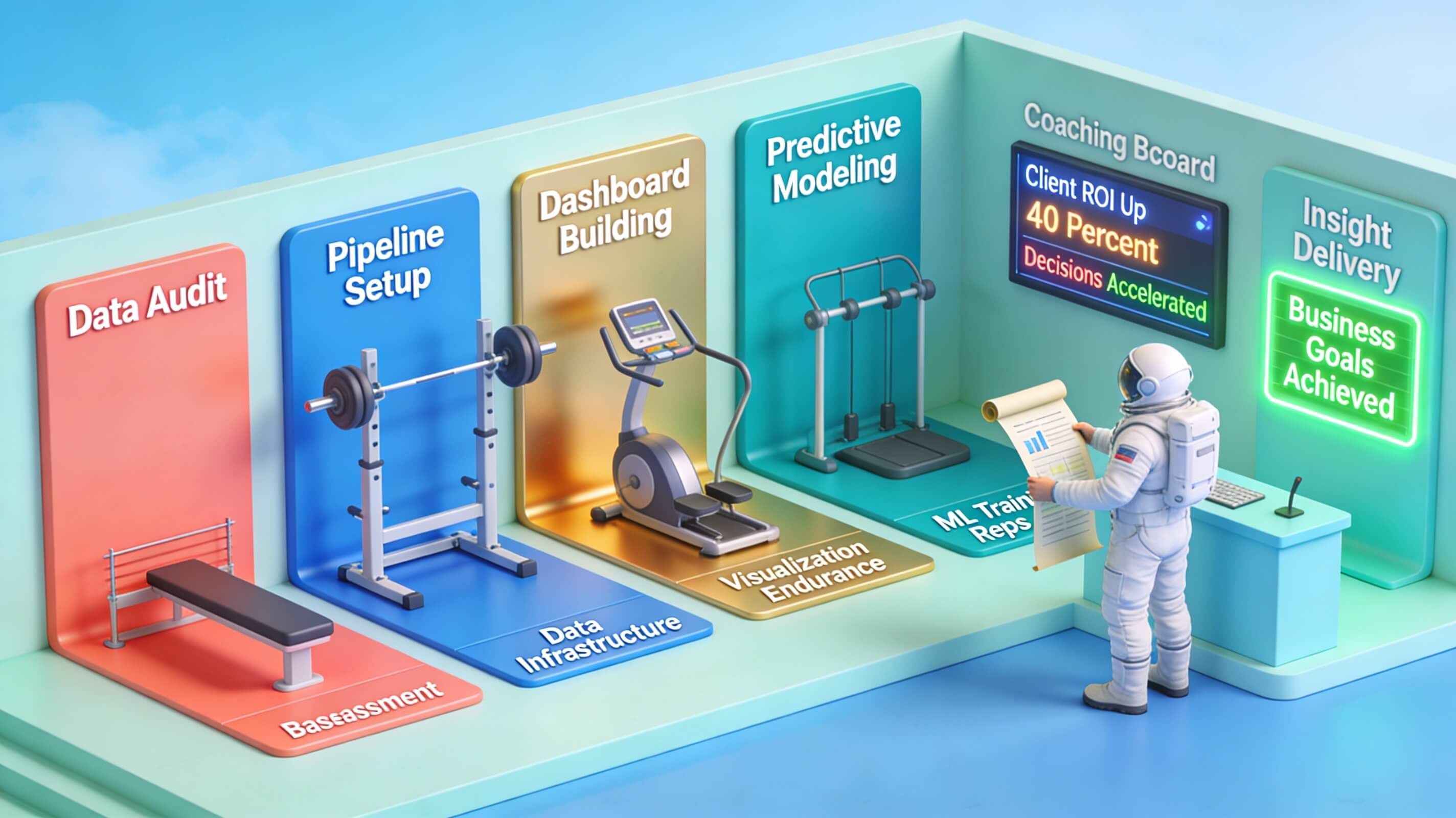
Implementing data analytics services is only half the battle. The other half is cultivating a data-driven culture where employees at all levels embrace evidence-based decision-making. This requires leadership commitment, clear communication of the “why” behind data initiatives, and investment in training. According to a study by Deloitte, organizations with strong data cultures are three times more likely to report exceeding their business goals. However, building such a culture takes time and deliberate effort. Start by identifying a few high-impact use cases where data can deliver quick wins—for example, using analytics to optimize a specific marketing campaign or reduce inventory carrying costs. Publicize these successes broadly. Next, invest in data literacy programs that teach non-technical employees how to interpret charts, understand statistical concepts, and ask better questions. Finally, ensure that your data infrastructure is accessible and user-friendly. If employees have to jump through hoops to get the data they need, they will revert to gut feelings. Professional data analytics services can help by providing self-service tools, governance frameworks, and ongoing support.
Realizing Strategic Growth: Practical Roadmap
To realize strategic growth with data analytics services, follow this practical roadmap. First, conduct a data maturity assessment to understand your current capabilities and gaps. Second, define clear business objectives that align with your overall strategy—for example, “reduce customer churn by 15% within six months” or “improve supply chain forecast accuracy to 90%.” Third, select the right mix of data analysis solutions: big data analytics for volume, BI for visibility, predictive analytics for foresight, and data mining for discovery. Fourth, implement in iterative phases rather than a big bang. Start with a pilot project that addresses a specific pain point. Measure results, learn from mistakes, and expand. Fifth, invest in change management. Even the most sophisticated technology will fail if people resist using it. Provide training, communicate wins, and celebrate data-driven victories. Finally, continuously monitor and refine. The competitive advantage comes not from a one-time analytics project, but from a sustained commitment to learning and improvement. When executed correctly, this roadmap transforms data from a cost center into a profit generator.
Conclusion
In a world awash with data, the difference between success and stagnation is the ability to extract and act on meaningful insights. Professional data analytics services are no longer optional—they are the engine that powers informed decision-making, operational efficiency, and strategic growth. From big data analytics that uncovers hidden patterns to business intelligence that provides real-time visibility, from predictive models that forecast the future to data visualization that makes insights actionable, each component plays a critical role in building a truly data-driven enterprise. The path forward requires commitment, investment, and a willingness to embrace change. Organizations that treat data as a strategic asset and partner with expert analysts will consistently outmaneuver those that rely on intuition alone. If you are ready to stop guessing and start knowing, the time to act is now. Explore how professional data analytics services can be tailored to your unique business challenges and begin your journey toward sustained, data-powered success today. Your next breakthrough is hidden in the data—let expert analysis bring it to light.