Cart 0

Share
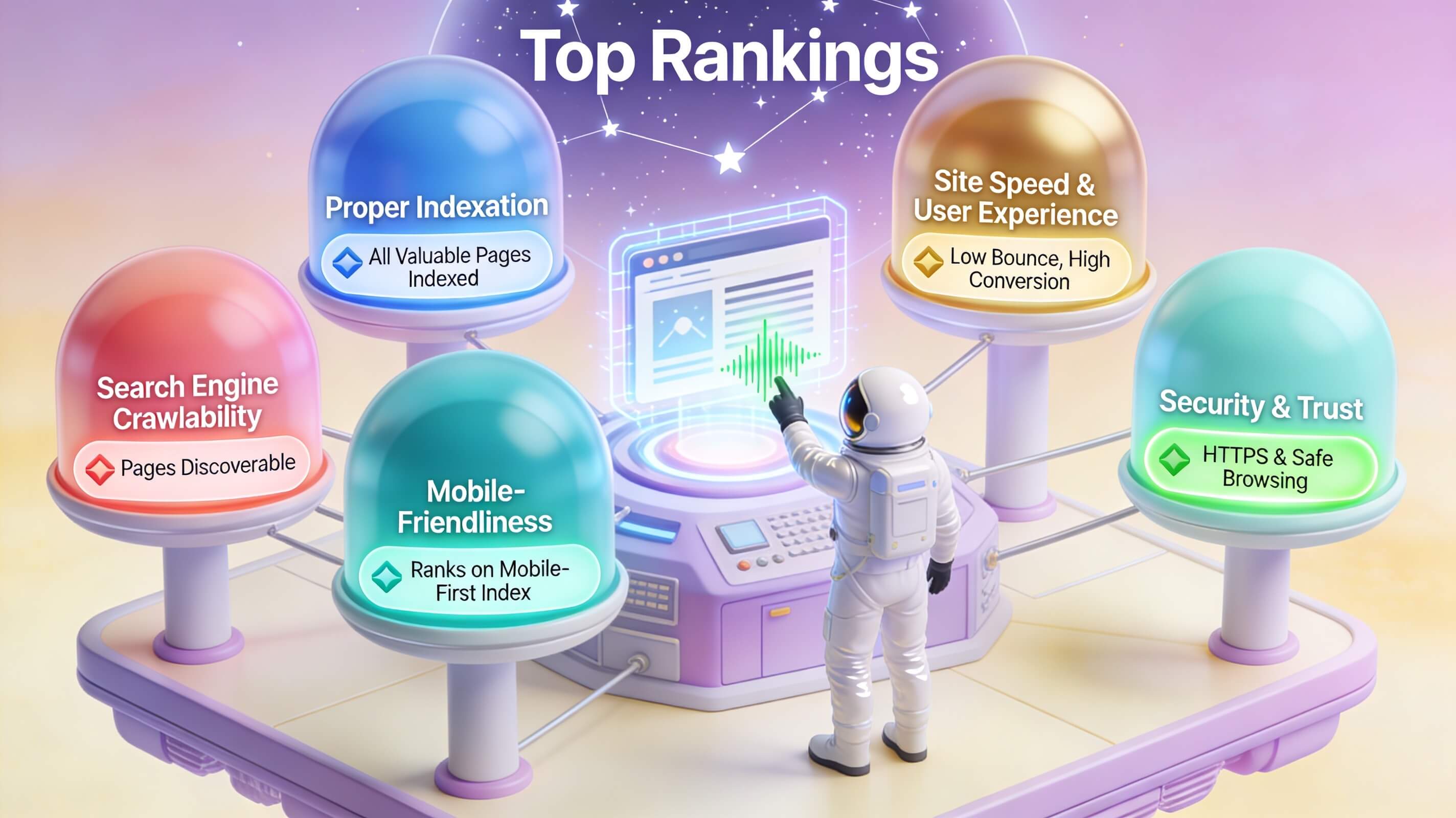
In today’s search ecosystem, where algorithms are powered by sophisticated machine learning and user expectations for speed and relevance are higher than ever, mastering advanced technical SEO is the definitive differentiator between a website that merely exists and one that dominates its niche. This discipline moves far beyond basic meta tags and keyword placement, delving into the intricate architecture and invisible signals that dictate how search engines crawl, interpret, and ultimately rank your digital presence. It’s the critical framework that ensures your valuable content is discoverable, understandable, and deliverable in the format both bots and users demand. For businesses aiming to secure sustainable organic growth, a robust technical SEO strategy is non-negotiable; it’s the high-performance engine under the hood of your content marketing efforts, directly influencing rankings, user experience, and revenue. This guide will navigate the complex landscape of advanced technical SEO, providing the expert-level insights needed to build a technically flawless, future-proof website.
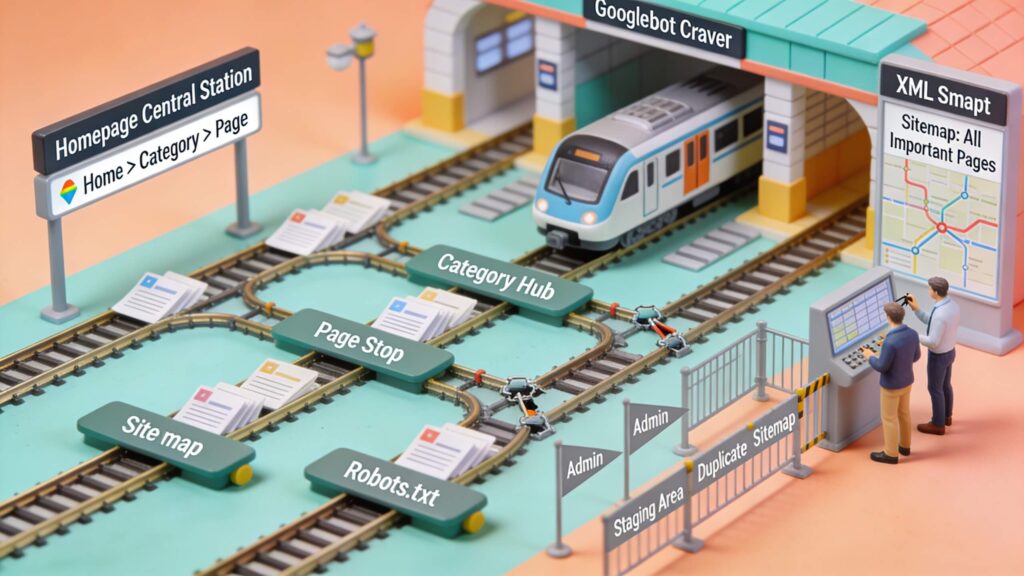
Table of Contents
Laying the Unshakeable Foundation: Core On-Page Elements
Every skyscraper needs a deep, reinforced foundation, and in the world of advanced technical SEO, that foundation is built with meticulous on-page optimization. This isn’t about keyword stuffing; it’s about creating a crystal-clear semantic map for search engines. It begins with the quintessential elements: title tags and meta descriptions. Your title tag is your primary value proposition in the SERPs; it must be compelling, contain your primary keyword naturally, and accurately reflect the page’s content. Think of it as a headline that must work for both algorithms and human curiosity. Meta descriptions, while not a direct ranking factor, significantly impact click-through rates. They are your ad copy—concise, benefit-driven summaries that invite the click.
Equally critical is your URL structure. A clean, logical URL like /advanced-technical-seo/guide/ is inherently more understandable than a parameter-heavy string of numbers and symbols. It aids user navigation and gives search engines an immediate contextual clue. Then comes the content hierarchy established through heading tags. A single, powerful H1 should anchor the page’s topic, with H2 and H3 tags organizing subtopics into a coherent, scannable structure. This isn’t just for aesthetics; it helps search engines understand the relative importance and relationship between concepts on the page, directly supporting topical authority.
Internal linking within this framework is your site’s circulatory system. Strategic links with descriptive anchor text distribute PageRank (link equity) to important deeper pages, guide users on a journey, and solidify your site’s information architecture for crawlers. A common failure in advanced technical SEO is creating “orphan pages”—valuable content with no internal links pointing to it, making it nearly invisible to both users and search engine bots. Every piece of content should be integrated into your site’s link graph.
Beyond Keywords: Semantic Depth and Entity Recognition
The era of exact-match dominance is over. Search engines like Google now use natural language processing and entity recognition to understand topics holistically. Your content must demonstrate expertise, authoritativeness, and trustworthiness (E-E-A-T) by covering a subject with depth. This means naturally incorporating related terms, synonyms, and answering the latent questions users have. Tools like Google’s own Natural Language API can provide insights into how entities within your text are perceived. The goal is to create a comprehensive resource that leaves no user question unanswered, thereby satisfying search intent completely and signaling supreme quality to algorithms.
Architecting for Crawl Efficiency and Indexation Control
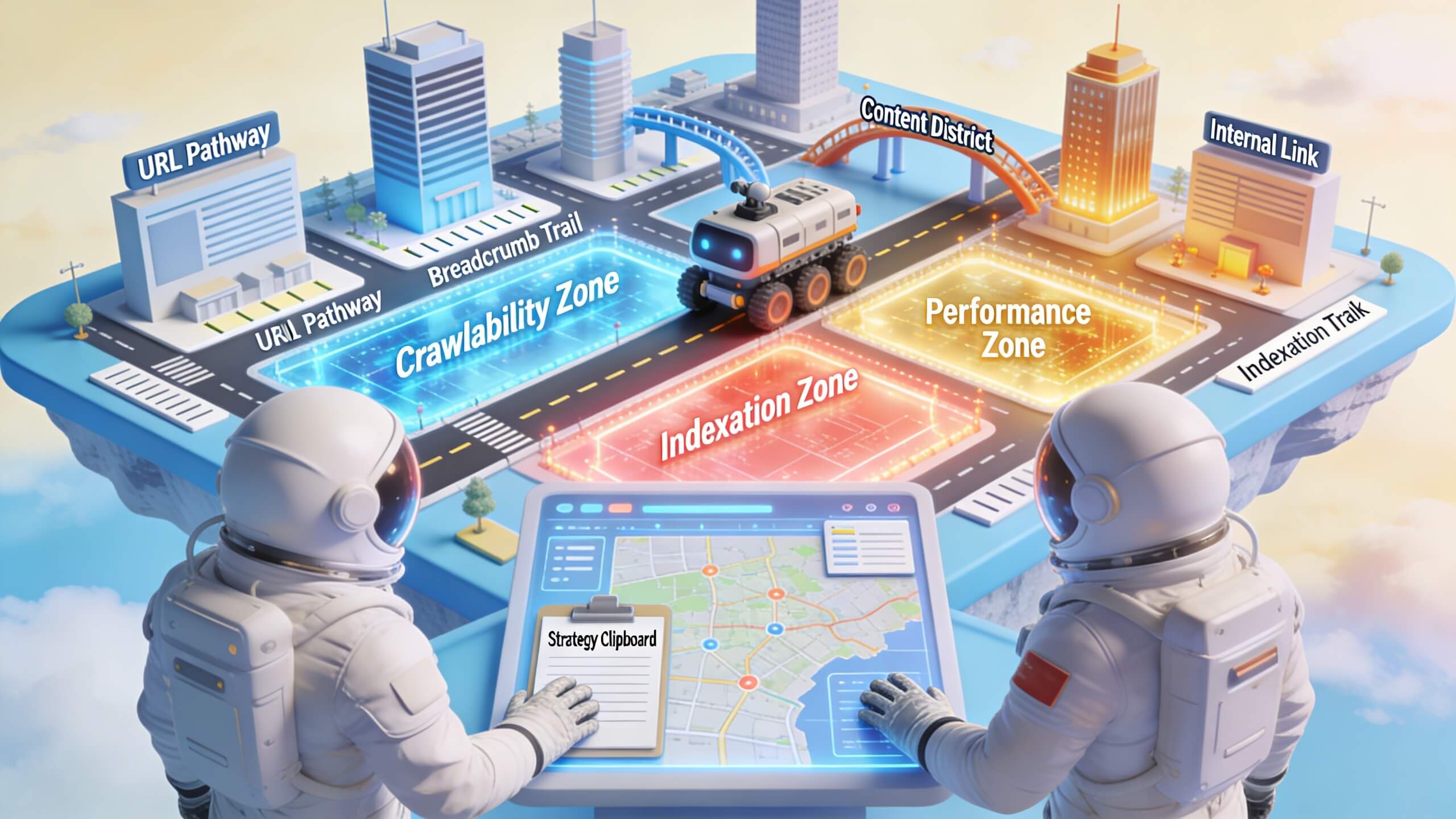
A website’s architecture is its blueprint, and in advanced technical SEO, a flawed blueprint leads to crawl budget waste and indexing inefficiencies. Crawl budget refers to the number of pages a search engine bot will crawl on your site within a given timeframe. For large sites with thousands or millions of URLs, poor architecture means bots spend time crawling low-value pages (like filtered views, session IDs, or admin pages) while your cornerstone content goes undiscovered.
A logical, shallow architecture is paramount. Key content should be accessible within three clicks from the homepage. Utilize a pyramid or hub-and-spoke model. For e-commerce, this means: Homepage > Category > Subcategory > Product. For content sites, it involves pillar pages linked to cluster content. Your navigation must be intuitive and built with HTML links—crawlers still struggle with JavaScript-dependent menus. An XML sitemap is a necessary guide, but it is a supplement to strong internal linking, not a replacement. Furthermore, your robots.txt file must be meticulously configured. A single misdirected “Disallow:” command can block critical sections of your site from being crawled, a catastrophic error that can take months to detect and recover from.
| Architecture Issue | Impact on Crawl Efficiency | Advanced Technical SEO Fix |
|---|---|---|
| Orphaned Pages | Pages never discovered, zero chance to rank. | Audit site with crawling tools; build internal links from relevant hub pages. |
| Infinite Parameter Spaces (e.g., sort/filter URLs) | Bots waste budget on duplicate or thin content. | Use rel=”canonical” to original page, or block parameters via robots.txt. |
| Redirect Chains (Page A > B > C) | Slows crawling, dilutes link equity passing. | Implement direct redirects (A > C) during migrations. |
| Poor Internal Link Distribution | Authority pools on homepage, deep pages starved. | Implement contextual, topic-based linking in body content. |
Mastering Indexability and Canonicalization
Crawlability gets a page seen, but indexability determines if it enters the search engine’s library. This is a core tenet of advanced technical SEO. Common indexability barriers include rogue “noindex” meta tags, faulty canonical tags, and HTTP status code errors. A page returning a 5xx server error is not indexable; neither is a page blocked by a “noindex” directive you may have forgotten about.
The canonical tag (rel=”canonical”) is one of the most powerful yet misused tools. It tells search engines, “Among several similar pages, this is the master version.” It’s essential for handling duplicate content from printer-friendly pages, session IDs, or HTTP vs. HTTPS versions. However, canonical signals must be consistent. If you canonicalize Page B to Page A, but all your internal links point to Page B, you send mixed messages. Search engines may ignore your canonical tag, leading to indexation of the wrong page. Similarly, during site migrations, 301 redirects must map old URLs directly to their most relevant new counterparts. Chains of redirects create unnecessary hops, slowing down crawlers and weakening the signal of the redirect.
Duplicate content itself is rarely penalized, but it fragments ranking signals. If you have five near-identical product pages for the same item in different colors, they may compete against each other, preventing any single page from achieving its full ranking potential. The advanced technical SEO approach is consolidation—using canonical tags or, better yet, creating a single, comprehensive product page with variant options.

The Undeniable Business Impact of Page Speed
Page speed has evolved from a “nice-to-have” to a critical business metric, deeply embedded in Google’s ranking algorithms through Core Web Vitals. This suite of user-centric metrics measures real-world experience: how fast the main content loads (Largest Contentful Paint – LCP), how quickly the page becomes interactive (Interaction to Next Paint – INP), and how stable the layout is as it loads (Cumulative Layout Shift – CLS). Poor performance here directly harms rankings, but the user impact is even more severe. Data from web.dev consistently shows that even a 100-millisecond delay can reduce conversion rates by up to 7%.
Advanced technical SEO requires moving beyond synthetic lab tests (like Lighthouse) to analyze real user monitoring (RUM) data. A page might load instantly on a fiber connection but flounder on a 4G mobile network. Common culprits include unoptimized images (serving massive PNGs instead of modern WebP or AVIF formats), render-blocking JavaScript and CSS, inefficient third-party scripts, and underpowered hosting infrastructure. The fix is a collaborative effort: compressing assets, implementing lazy loading, deferring non-critical JS, leveraging browser caching, and considering a Content Delivery Network (CDN) for global audiences. Speed optimization is never a one-off project; it’s an ongoing discipline of measurement and refinement.
The Mobile-First Imperative: Beyond Responsive Design
Google’s mobile-first indexing means the mobile version of your site is the primary version used for ranking. Therefore, advanced technical SEO mandates a mobile-first approach in both design and development. Merely having a responsive template is the baseline. You must audit to ensure the mobile version contains the exact same primary content, structured data, and metadata as the desktop version. Hiding content behind “read more” tabs or removing key sections for mobile can severely limit your rankings.
Mobile user experience is paramount. Google’s page experience signals evaluate factors like tap-target size (are buttons too close together?), intrusive interstitials (do pop-ups block content?), and safe browsing (is the page free of malware?). A site that is difficult to navigate on a touchscreen will suffer from high bounce rates, sending negative engagement signals to search engines. Testing on real mobile devices, not just emulators, is crucial. Tools like Google’s PageSpeed Insights provide actionable diagnostics for mobile performance bottlenecks. In essence, your mobile site isn’t a scaled-down companion; it is your main website.
Unlocking Rich Results with Structured Data
Structured data, implemented via schema.org vocabulary, is the language you use to speak directly to search engines in a way they explicitly understand. It’s a cornerstone of advanced technical SEO for enhancing how your pages appear in search results. By marking up entities like products, articles, FAQs, events, and local businesses, you become eligible for rich results—those enhanced listings with stars, prices, FAQs, and other visual features that dramatically increase click-through rates.
The preferred implementation method is JSON-LD, a script block placed in the page’sthat doesn’t interfere with the visible HTML. For example, product schema can communicate price, availability, and review ratings directly to the SERP. Article schema can help your content appear in Google News or Top Stories carousels. However, precision is critical. Inaccurate or misleading markup (like marking up a 3-star review as 5-star) can lead to penalties or the removal of rich result eligibility. Always validate your markup using Google’s Rich Results Test tool. Schema should be a truthful enhancement of your visible content, not a deceptive layer on top of it.
Integrating Technical SEO with Content Strategy
The most common failure in digital marketing is the siloing of content creation and technical execution. In advanced technical SEO, the two are inseparable. A brilliant, authoritative article is worthless if it’s an orphan page, loads in 8 seconds, or lacks proper semantic markup. Your content strategy must be built upon a technically sound architecture.
The topic cluster model perfectly illustrates this synergy. A pillar page (e.g., “Advanced Technical SEO Guide”) establishes broad authority on a subject. Cluster content (e.g., “Canonicalization Guide,” “Core Web Vitals Deep Dive”) addresses specific subtopics. These are all interlinked, creating a semantic network that search engines map, understanding the depth and breadth of your expertise. This structure not only boosts rankings for competitive terms but also creates a superior user journey. Furthermore, technical audits should inform content decisions. Identifying keyword cannibalization—where multiple pages on your site compete for the same query—allows you to consolidate or differentiate content, strengthening your overall domain authority for that topic.
Data-Driven Decisions: Analytics and Log File Analysis
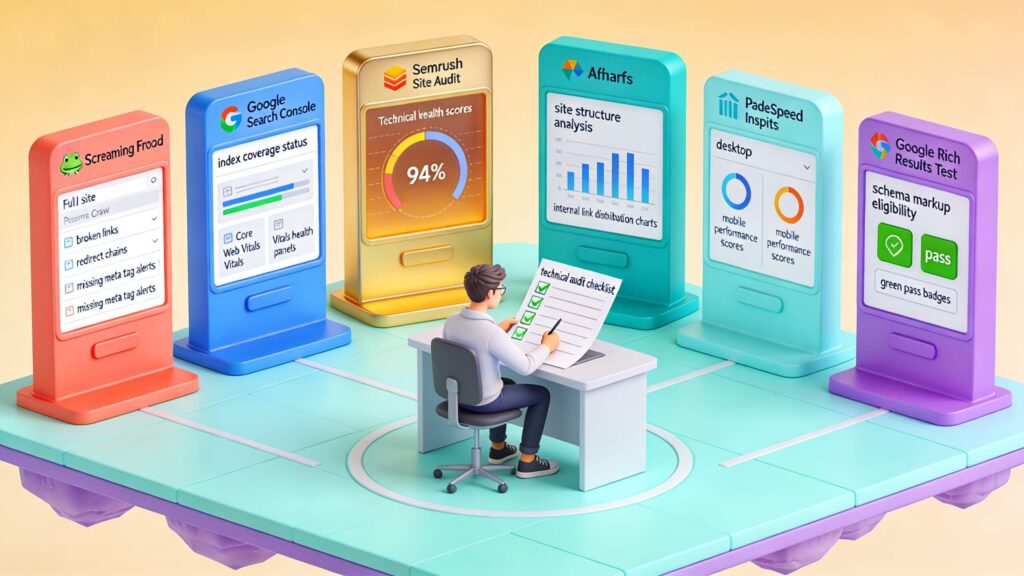
Gut feelings have no place in advanced technical SEO. Every action must be guided by data. While Google Search Console and Google Analytics 4 provide surface-level insights—index coverage, query impressions, user engagement—the true goldmine for large-scale sites is server log file analysis. Logs show you exactly which URLs search engine bots are crawling, how often, and when they encounter errors. This reveals crawl budget waste invisible to other tools: perhaps Googlebot is obsessively crawling your low-priority tag archives 10,000 times a month while only crawling your new product pages once.
By integrating log data with business metrics, you can make high-impact decisions. For instance, you might discover that improving the load time of your top-converting category page (identified via analytics) is a higher priority than publishing new blog content. Advanced practitioners use tools like Screaming Frog’s Log File Analyzer to correlate crawl behavior with SEO performance, creating a feedback loop of diagnosis, implementation, and measurement.
Future-Proofing: Adapting to Search Evolution
The landscape of search is perpetually shifting. From the rise of AI-powered overviews and SGE (Search Generative Experience) to the growing importance of video and voice search, an advanced technical SEO strategy must be built on adaptability. The core principle remains: a technically clean, fast, and clearly structured website is the best preparation for any algorithmic change. Google’s AI models, like MUM and BERT, rely on high-quality signals from your site’s infrastructure to understand context and intent.
Emerging trends to monitor include the increasing sophistication of JavaScript rendering (ensure your critical content is discoverable without requiring heavy JS execution), the nuances of international SEO and hreflang implementation, and the optimization for multimodal search (where search returns a blend of text, image, and video). Staying informed through authoritative sources like Search Engine Land and official Google developer blogs is essential. The goal isn’t to chase every new feature, but to maintain a resilient, standards-compliant foundation that can quickly adapt to new opportunities, ensuring your site remains visible no matter how the SERPs evolve.
Conclusion
Advanced technical SEO is the indispensable engineering discipline of the digital marketing world. It transforms a website from a static brochure into a dynamic, high-performance asset capable of commanding organic visibility and driving meaningful business results. This journey is not about chasing quick wins or manipulating algorithms, but about building an unshakable foundation of crawl efficiency, blazing speed, mobile excellence, and semantic clarity. It’s the work that ensures your valuable content is not just published, but properly discovered, interpreted, and delivered in an experience that meets the exacting standards of both modern search engines and discerning users.
The most successful organizations treat advanced technical SEO not as a periodic audit, but as an integral part of their development lifecycle and content strategy. It requires a commitment to continuous monitoring—using data from log files, analytics, and search console to identify friction points—and a willingness to collaborate across development, design, and content teams. The payoff is a competitive moat: a site that earns trust from users and search engines alike, adapts resiliently to algorithm updates, and converts organic traffic with higher efficiency. In an online environment where mediocrity is invisible, technical excellence is your beacon. If your goal is sustainable, scalable growth, the path forward is clear: invest deeply in mastering the technical landscape, because this is where true organic dominance is built.
Ready to move beyond basic fixes and engineer a website that’s built to rank? Our team of veteran technical SEO specialists provides the deep audit, strategic implementation, and ongoing partnership needed to transform your site’s foundation. Contact us today for a comprehensive technical analysis and let’s build your competitive advantage.