
Cart 0

Share
Table of Contents
User Experience Consultant: Expert Guidance for Optimal Digital Interaction
Every digital product lives or dies by its user experience. In two decades of consulting, I have watched promising applications collapse under the weight of poor navigation, confusing workflows, and interfaces designed for stakeholders rather than actual users. A user experience consultant brings the authority of deep research, the objectivity of an outsider, and the strategic foresight to prevent these expensive failures. This role extends far beyond wireframing or improving a button color. It is about aligning business objectives with human psychology to create digital interactions that feel effortless, build trust, and drive measurable outcomes. Whether you are launching a new platform or redesigning an existing one, the guidance of a seasoned consultant can mean the difference between a product users struggle with and one they love. This article provides a comprehensive, expert-level examination of what a user experience consultant does, how they deliver value, and how to determine if engaging one is the right strategic move for your organization. We will explore methodologies, return on investment, common pitfalls, and the specific qualities that separate a true expert from someone simply executing tasks. The digital marketplace is crowded, and attention is scarce. Your users will not tolerate friction. They will simply leave. Understanding the depth and breadth of user experience consulting is the first step toward building products that thrive.
What Exactly Does a User Experience Consultant Do?
A user experience consultant is a strategic partner, not a production designer. While a typical UX designer might focus on executing individual screens or components, a consultant looks at the entire ecosystem. They analyze how a product fits into the user’s life, how it interacts with other tools, and where the emotional highs and lows occur within the journey. This begins with a rigorous discovery phase. I spend significant time understanding the business model, target demographics, competitive landscape, and technical constraints. From there, I design a research plan tailored to uncover the most critical insights. This might involve stakeholder interviews, competitive audits, analytics analysis, and user interviews. The goal is to identify the gaps between what the business thinks users need and what users actually struggle with.
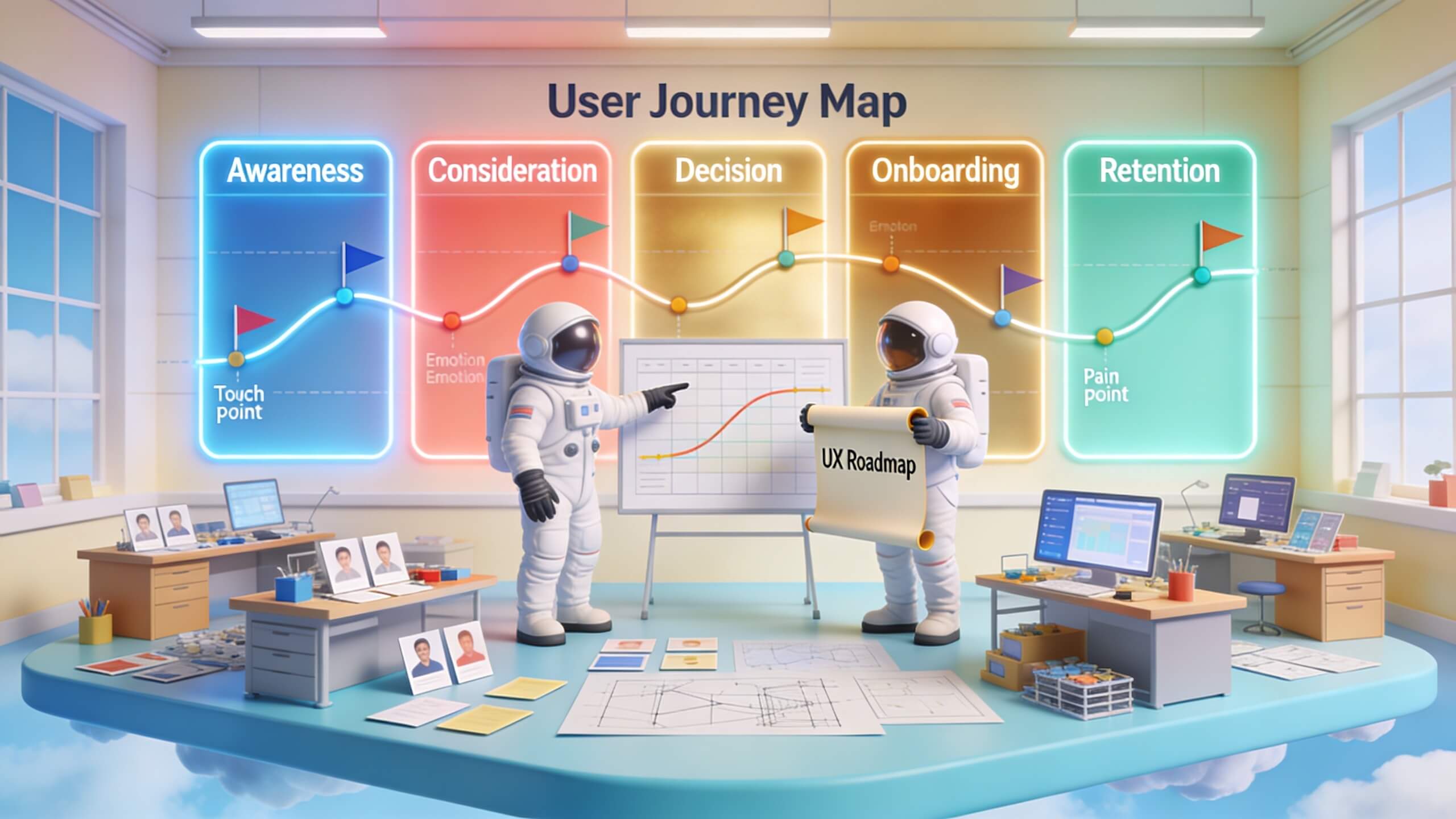
Once the research phase yields its insights, the consultant synthesizes this information into actionable frameworks. User personas, journey maps, and problem statements become the foundation of every decision. These artifacts ensure that everyone, from the CEO to the lead developer, aligns on the same user-centered vision. The consultant then guides the team through ideation and prototyping, always testing assumptions against real user feedback. A key differentiator of a high-level consultant is the ability to push back on feature requests that do not serve the core user need. I have often had to tell a board that their priority feature will degrade the experience and hurt retention. This level of objective, evidence-based advocacy is exactly why companies hire expert guidance. A consultant provides clarity in complexity, ensuring that every sprint leads to a more intuitive and effective product.
The Strategic Value of a Consultant Versus an In-House Designer
Many organizations wonder whether they should build an in-house team or engage a consultant. The answer is not binary; both models have distinct advantages. However, the strategic value a user experience consultant brings is often irreplaceable for critical phases of a project. An internal designer lives inside the company culture. They understand internal politics, long-standing legacy systems, and office dynamics. This can be a double-edged sword. Internal teams develop blind spots. They become accustomed to convoluted workarounds and assume users will adapt because they have been forced to for years. A consultant walks in with fresh eyes. They see the friction points immediately because they are viewing the product from the perspective of a new user, which is exactly your target audience.
| Factor | In-House Designer | User Experience Consultant |
|---|---|---|
| Objectivity | Susceptible to internal bias and politics. | Provides unbiased, data-driven recommendations. |
| Specialized Expertise | Generalist skills to handle daily tasks. | Deep niche expertise across industries and platforms. |
| Strategic Vision | Often focused on execution and delivery. | Focuses on long-term product strategy and ROI. |
| Cost Structure | Fixed salary plus benefits and overhead. | Project-based or retainer, scalable to need. |
| Accountability | May be spread thin across multiple projects. | Held strictly accountable for project outcomes. |
Furthermore, a consultant brings a breadth of experience that is difficult to replicate internally. I have worked across fintech, healthcare, ecommerce, and industrial software. Each industry has unique patterns and regulatory constraints. This cross-pollination of ideas is invaluable. A pattern that works beautifully in one domain can be adapted to solve a stubborn problem in another. Consultants are also highly motivated to deliver results quickly. Their reputation depends on measurable improvements. This pressure often leads to more efficient workflows and faster time-to-value than a stretched in-house team might achieve, especially when an internal group lacks the authority to enforce sweeping changes. Engaging a user experience consultant is not a reflection of a failing internal team. It is a strategic move to inject expert-level insight and drive transformative change without the long-term commitment of a full-time hire.
Key Methodologies Used by Top User Experience Consultants
Experience is nothing without a rigorous methodology. Over the years, I have refined a set of core practices that consistently yield actionable insights. The process always starts with a heuristic evaluation. This is a systematic inspection of a user interface based on established usability principles, such as Jakob Nielsen’s ten heuristics. I walk through the product with a critical eye, noting violations like inconsistent terminology, lack of user control, or poor error handling. This provides an immediate list of issues that directly impact usability. Following the heuristic evaluation, I recommend a series of moderated usability tests. There is no substitute for watching a real user attempt to complete a task. Their verbalized thoughts, facial expressions, and hesitation reveal truths that no analytic dashboard can capture. These sessions are recorded and analyzed to identify high-frequency failure points.
Another critical methodology is card sorting and tree testing for information architecture validation. I have seen massive enterprises bury critical features under confusing nomenclature. By having users organize content into categories that make sense to them, we derive an intuitive navigation structure. Analytics review forms the third pillar of the methodology. I dig deep into user flows, drop-off rates, and funnel analysis. Data from platforms like Google Analytics or Hotjar tells a crucial part of the story. I look for pages with high exit rates, forms where users stall, and patterns of rage clicks. Combining this quantitative data with qualitative insights from user interviews creates a complete picture. A consultant does not just rely on one source. They triangulate data from multiple angles to ensure recommendations are robust. This methodological rigor separates genuine expertise from guesswork.
How a UX Consultant Optimizes the Conversion Funnel
Conversion is the ultimate proof of good user experience. A user experience consultant directly impacts the bottom line by optimizing every stage of the conversion funnel, from initial awareness to final action. The top of the funnel often suffers from a value proposition problem. Users land on a page and cannot quickly understand what the product does or why it matters. I work on crafting clear, benefit-driven headlines and subheadings that immediately answer the user’s primary question: “What is in it for me?” This reduces bounce rates and buys time to build interest. As users move deeper into the funnel, friction becomes the enemy. Complex forms, unclear calls to action, and unnecessary steps cause abandonment.
I recall a project with a financial services client where their loan application process had a 78% drop-off rate. The form was long, asked for duplicate information, and provided no progress indicator. By simplifying the form to only essential fields, adding inline validation, and showing a clear progress bar, we reduced drop-offs by 43% within two months. The revenue impact was significant. The key insight was reducing cognitive load. Every extra field or confusing instruction forces the user to think, and thinking creates friction. A consultant applies principles of choice architecture to guide users smoothly toward conversion. This includes strategic placement of trust signals, clear privacy reassurances, and visual hierarchy that draws the eye to the primary action. An optimized funnel is not just about aesthetics. It is a carefully engineered path that respects the user’s time and intelligence while driving measurable business outcomes. Without expert guidance, companies often make the mistake of optimizing for internal reporting rather than actual user behavior, a pitfall easily avoided with the right consultation.
The Critical Role of Information Architecture in User Experience
Information architecture is the structural design of shared information environments. It is the foundation upon which all user experience is built. A user experience consultant understands that even the most beautiful interface fails if users cannot find what they are looking for. Poor IA leads to overwhelmed users, increased support tickets, and abandoned tasks. I start every engagement that involves content-heavy platforms by performing a content inventory and audit. This reveals redundancy, outdated information, and gaps in coverage. From there, I design a logical taxonomy that mirrors the user’s mental model. This involves a process called card sorting, where representative users group topics into categories they find intuitive. The results often surprise stakeholders. Internal teams are deeply familiar with their own jargon and internal organization structure. Users operate with completely different assumptions.
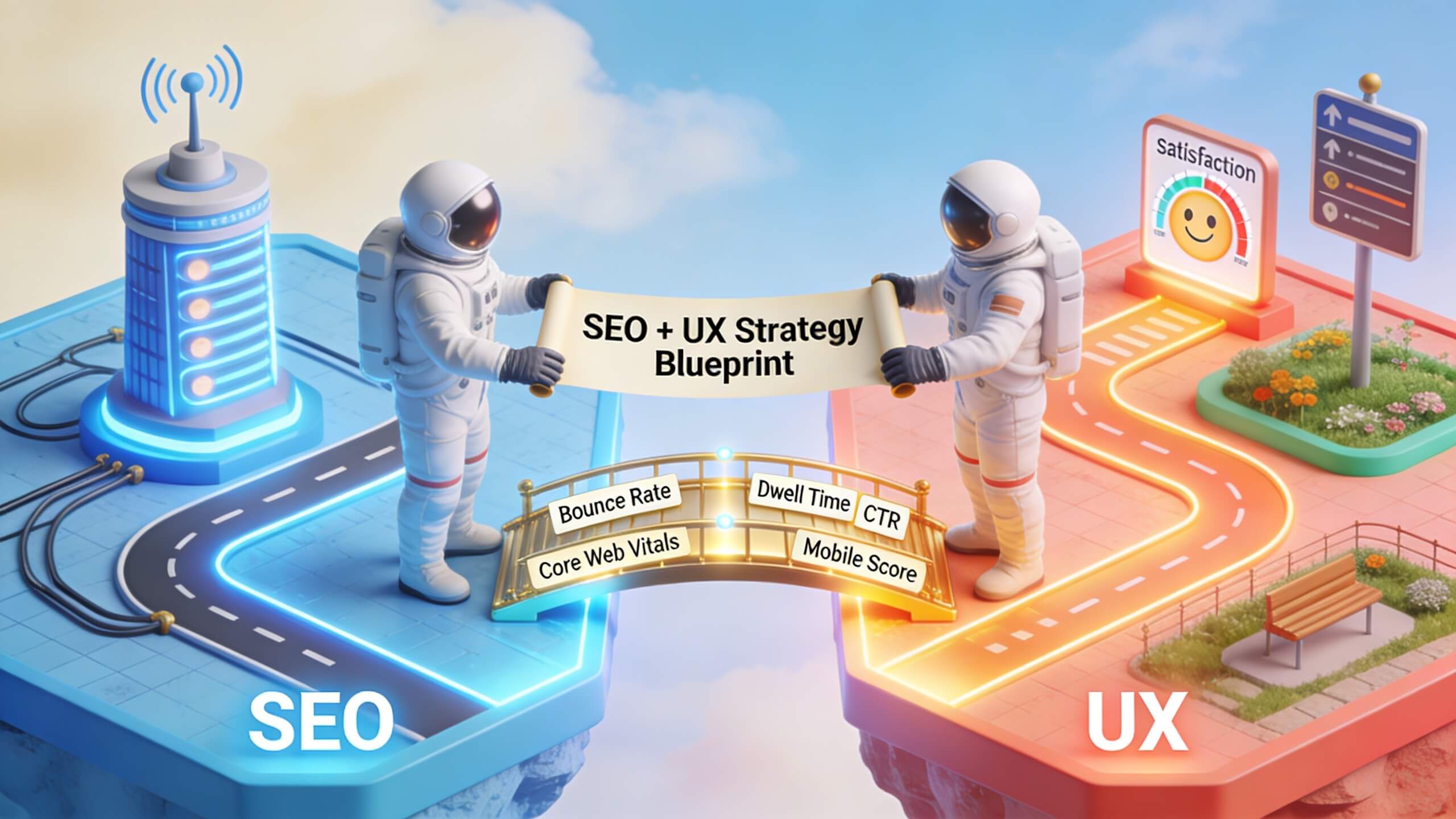
The outcome of a strong IA is improved findability and learnability. Users can intuitively navigate the system without needing a tutorial. This is particularly critical for SaaS platforms and large ecommerce sites. For example, a B2B software client I consulted for had buried their reporting tools under three levels of menus. Users assumed the features did not exist. After restructuring the navigation based on task frequency and user priorities, reported satisfaction with “ease of finding information” jumped by 35%. A consultant also ensures that the IA supports SEO best practices. A well-structured site with clear hierarchy and descriptive labeling performs better in search results. This is a powerful synergy between UX and organic growth. When IA is done correctly, users accomplish their goals faster, support teams handle fewer basic questions, and the business generates more revenue from its digital assets.
Conclusion
A user experience consultant is far more than a usability expert; they are a strategic partner who bridges the gap between business objectives and human behavior. As we have explored, their value extends across the entire lifecycle of a digital product—from early research and information architecture to accessibility compliance and iterative testing. The consultant’s ability to see a product through the user’s eyes, unclouded by internal assumptions, is what drives measurable improvement in satisfaction, efficiency, and revenue.
The core contributions we’ve examined—structured information architecture, rigorous research methodologies, and inclusive design—are not isolated tasks. They form a cohesive system. A well-organized IA ensures users find what they need without frustration, directly reducing support costs and increasing conversion rates. Accessibility mandates, such as WCAG compliance, not only protect organizations from legal risk but also open doors to a broader audience, often improving the experience for every user in the process. Meanwhile, continuous usability testing and iterative refinement keep the digital experience aligned with evolving user expectations.
The return on investment for an experienced consultant is clear. Companies that invest in expert UX guidance see faster time-to-market, lower development rework costs, higher customer retention, and stronger brand loyalty. A consultant does not simply fix a navigation menu or adjust a button color; they embed a user-centered mindset into the organization’s culture. They provide frameworks, documentation, and training that enable internal teams to sustain good practices long after the engagement ends.
Ultimately, the role of the user experience consultant is to humanize technology. In a digital landscape cluttered with complex features and competing priorities, the goal is always to make the interaction feel effortless, intuitive, and even delightful. Whether you are launching a new product or revitalizing an existing platform, bringing in a consultant is an investment in clarity. The best digital experiences are invisible—they work so well that users never stop to think about them. That is the hallmark of expert guidance, and that is the promise a skilled UX consultant delivers. By placing the user at the center, you don’t just improve a product; you build trust, and trust is the foundation of every lasting digital relationship.
Comments are closed.