
Cart 0


Share
Table of Contents
Keyword Strategy: The Blueprint for SEO Dominance
A successful keyword strategy is not a list of terms you hope to rank for. It is the foundational intelligence system that connects your content to the exact moment a user needs what you offer. In the current search landscape, where Google processes over 8.5 billion searches daily, guessing which phrases matter is a recipe for invisibility. A strategic approach to keywords requires understanding user intent, competitive dynamics, and the semantic relationships between concepts. This is the difference between a website that generates leads and one that collects dust. Over two decades of refining SEO campaigns have taught me that the most effective keyword strategies are built on three pillars: exhaustive research, intent-based categorization, and continuous optimization. Without this structure, even the most well-funded campaigns fail to capture qualified traffic. This guide will walk you through the exact frameworks I use to build keyword strategies that drive real business outcomes—from initial research to ongoing refinement.
The Foundational Pillar: Mastering Keyword Research
Keyword research is the cartography of the digital world. It maps the language your potential customers use onto the content your website offers. This process goes far beyond plugging a few seed terms into a tool and copying the output. True keyword research involves discovering the exact phrases, questions, and semantic clusters your audience employs during their decision-making journey. The goal is to find the intersection of relevance (what your business offers), authority (what you can realistically rank for), and commercial intent (what drives revenue). This foundational work informs every subsequent action—from site architecture to content creation to link building. Without it, you are navigating blind.
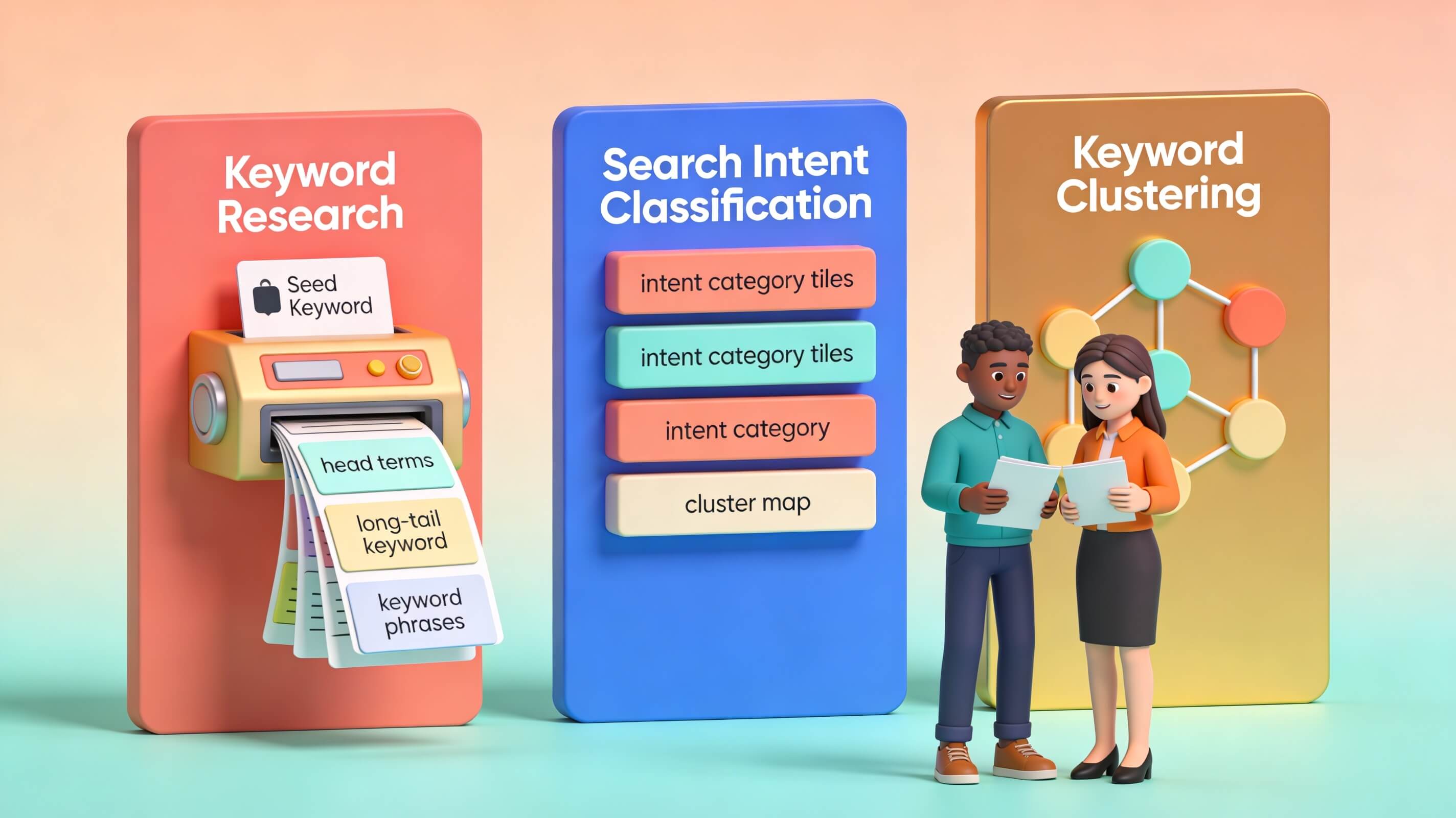
Modern keyword research tools like Ahrefs and Moz Keyword Explorer have transformed how we approach this task. They provide click-through rate estimates, SERP feature data, and keyword difficulty scores that allow you to prioritize terms with the best opportunity. But tools are only as good as the strategy behind them. The most effective researchers start by analyzing their own Google Search Console data—these are the real queries real users typed to find your site. Then, they expand outward using competitor gap analysis and topic clustering. This layered approach ensures you are not just chasing volume but capturing the terms that matter most to your business objectives.
Moving Beyond Volume: The Intent Imperative
For years, keyword strategy was dominated by volume and competition metrics. If a term had high search volume and low difficulty, it was a target. This simplistic model has been rendered obsolete by Google’s sophisticated understanding of user intent. The search engine now evaluates the why behind every query. Your keyword strategy must categorize every term by its underlying intent: informational (seeking knowledge), navigational (looking for a specific site), commercial (researching products or brands), and transactional (ready to purchase). Misaligning content with intent is the single most common reason pages fail to rank, regardless of how many times the keyword appears in the copy.
For example, targeting “best running shoes for flat feet” requires a completely different content approach than “how to tie running shoes.” The first is a commercial investigation query—users want comparisons, reviews, and buying guides. The second is purely informational—users want step-by-step instructions. Creating a product page for the informational query or a blog post for the commercial query will almost certainly fail. Tools like SEMrush now provide intent classifications directly in their keyword database, which should be a primary filter in your research process. I recommend sorting your keyword list by intent first, then by volume and difficulty within each category. This ensures your content creation aligns perfectly with what the searcher actually wants.
The Strategic Power of Long-Tail Keywords
Short-head keywords like “marketing software” attract broad attention, but they are fiercely competitive and vague in intent. The true engine of a sustainable keyword strategy is the long-tail keyword. These are longer, more specific phrases—such as “email marketing software for small e-commerce businesses under $50 per month”—that individually have low search volume but collectively account for the majority of all search traffic. According to data from Search Engine Land, long-tail queries make up over 70% of all web searches. Their power lies in specificity: they reveal clear user intent, face significantly less competition, and boast substantially higher conversion rates.
A robust keyword strategy systematically targets a portfolio of long-tail variations. This approach builds topical authority over time. When you create comprehensive content around dozens of long-tail queries within a specific niche, search engines begin to recognize your site as an authoritative resource on that broader topic. Eventually, this authority empowers you to compete for more generic, high-value terms. For instance, a site that publishes 50 detailed articles on various aspects of “email marketing for e-commerce” will naturally start ranking for the broader term “email marketing.” This is the compounding effect of long-tail strategy—it starts small but builds momentum that short-head targeting cannot match.
From Analysis to Action: Optimizing for Your Target Keywords
With a vetted list of keywords categorized by intent and priority, the next phase is strategic implementation. This is where many campaigns falter, treating optimization as a simple plug-and-play exercise. True optimization is a holistic practice that considers both search engine understanding and user experience. It involves keyword placement, semantic context, and technical alignment.
Strategic Keyword Placement and Semantic Context
Keyword placement remains important, but its execution has evolved significantly. The classic practice of ensuring a keyword appears in the title tag, URL, H1, and first paragraph is still a valid baseline signal. However, the critical advancement is building semantic context. Search engines evaluate the comprehensive thematic relevance of a page, not just the presence of exact-match phrases. This means supporting your primary target keyword with a rich network of related terms, synonyms, and conceptually linked phrases. For a page targeting “kitchen compost bin,” you should naturally incorporate terms like “food waste,” “countertop compost,” “odor control,” “biodegradable,” and “indoor composting.” This creates a dense semantic field that assures search engines of your content’s depth and relevance.
Google’s “People also ask” boxes and “Related searches” at the bottom of SERPs are invaluable for uncovering this contextual vocabulary. I also recommend using AnswerThePublic to discover question-based variations that can be woven into your content naturally. The goal is not to stuff keywords but to write comprehensively about the topic, covering every angle a user might explore. This approach satisfies both search engine algorithms and human readers, who will find your content more useful and authoritative.
Featured Snippet Optimization: Claiming Position Zero
A key component of a modern keyword strategy is targeting featured snippets—those concise answers that appear above organic search results in what is often called “position zero.” Winning a featured snippet can dramatically increase visibility and click-through rates, often doubling organic traffic from that query. To optimize for snippets, identify question-based keywords in your list—those beginning with “how,” “what,” “why,” “when,” or “where.” Structure your content to provide a clear, direct answer immediately following the question, often in a paragraph, bulleted list, or table.
For paragraph snippets, keep the answer under 50-60 words and ensure it is authoritative and sourced from the surrounding content. For list snippets, use clear bullet points or numbered steps. For table snippets, present data in a structured HTML table. Use header tags (H2, H3) to frame the question exactly as the user asked it. Research from Search Engine Journal indicates that pages already ranking in the top 10 have a higher chance of winning snippets, so prioritize this optimization for your best-performing content first.
| Keyword Type | Primary Intent | Competition Level | Strategic Content Format |
|---|---|---|---|
| Short-Head (e.g., “SEO”) | Mixed / Informational | Very High | Pillar Page, Definitive Guide |
| Mid-Tail (e.g., “local SEO services”) | Commercial | High | Service Pages, Comparison Guides |
| Long-Tail (e.g., “SEO agency for plumbers in Chicago”) | Transactional | Low to Medium | Location-Specific Landing Pages, Case Studies |
| Question-Based (e.g., “how does SEO work?”) | Informational | Variable | Blog Posts, FAQ Sections, Video Scripts |
Architecting Your Site for Keyword Success
Your website’s structure is the skeleton that supports your entire keyword strategy. A logical, intuitive architecture not only enhances user experience but also allows search engines to efficiently crawl and understand your topical authority. This involves creating a clear hierarchy where broad pillar pages (targeting core head terms) act as hubs, linking down to more specific cluster content (targeting long-tail variations). This internal linking strategy distributes page authority throughout your site and explicitly signals to search engines how your content is thematically related.

For example, a pillar page on “Content Marketing” should link to cluster posts on “blog post ideas,” “content calendar templates,” and “measuring content ROI.” Each cluster post should then link back to the pillar page, creating a dense network of topical relevance. This structure comprehensively covers a topic, making your site a more authoritative destination in the eyes of both users and algorithms. I have seen sites double their organic traffic simply by reorganizing existing content into this hub-and-spoke model, without creating a single new article. The key is to map your keyword clusters to specific sections of your site before you start writing, ensuring every piece of content has a clear home and a defined relationship to other pages.
The Crucial Role of Continuous Monitoring and Refinement
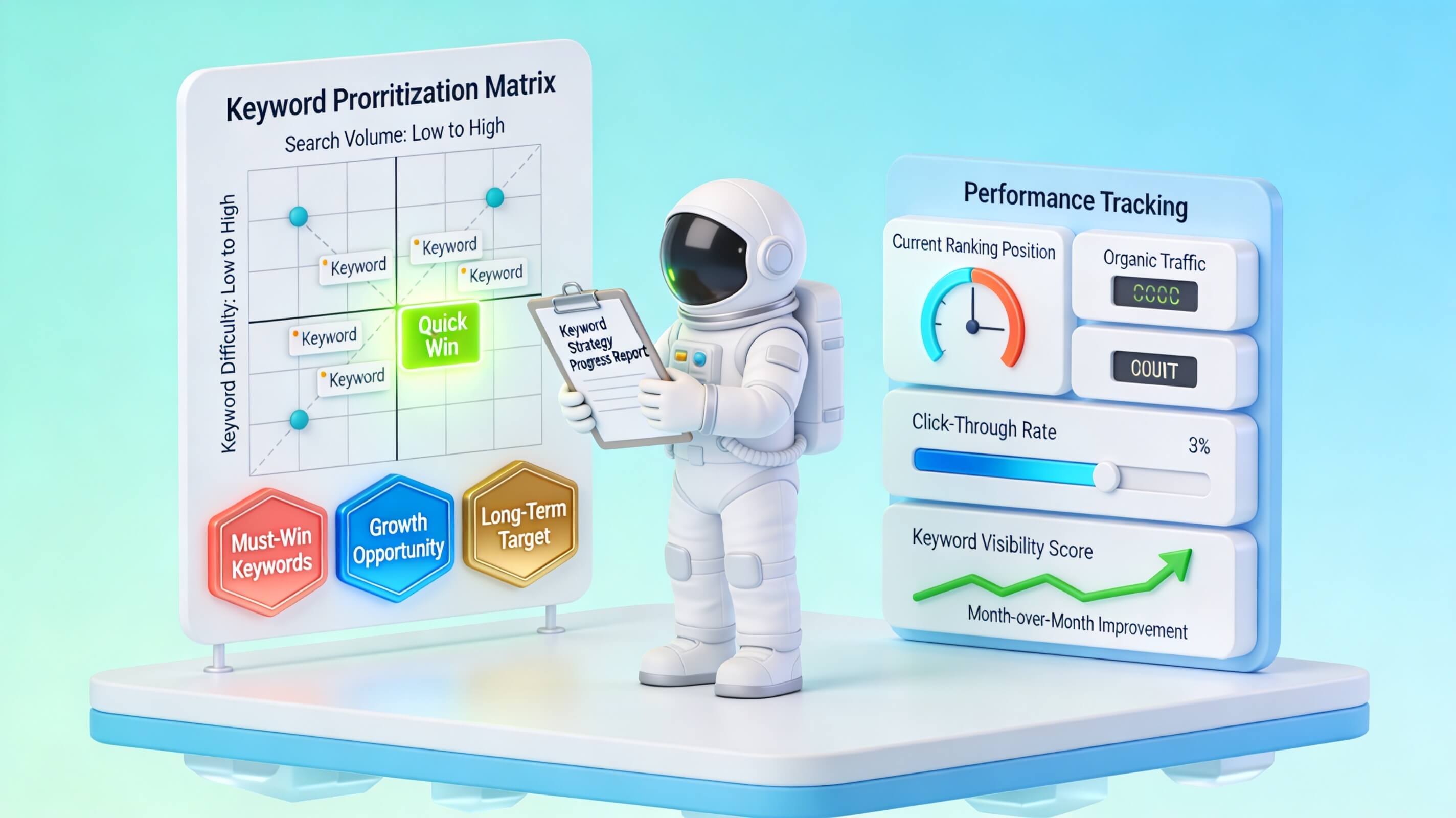
A keyword strategy is not a “set it and forget it” document. It is a living system that requires constant monitoring and agile adjustment. Search trends shift, new competitors emerge, and algorithms update. Regularly tracking performance through platforms like Google Search Console and Google Analytics is essential. Focus on metrics beyond just ranking position: look at click-through rates (CTR), organic traffic trends, and, most importantly, conversion rates per keyword group. If a high-ranking keyword drives traffic but no conversions, its intent may be misaligned with your page’s offer. Conversely, a keyword on page two with a high conversion rate is a prime candidate for optimization to boost its rank.
I recommend conducting a keyword performance audit every 90 days. During this audit, identify keywords that have dropped in position, keywords that have gained new competitors, and new search queries appearing in your performance data. Use this information to update existing content, create new pages for emerging topics, and prune pages that are no longer relevant. This data-driven refinement cycle is what separates static campaigns from dynamic, growth-oriented SEO. In one case, a client saw a 40% increase in organic leads simply by updating the title tags and meta descriptions for their top 20 performing pages based on CTR data from Search Console. Small adjustments, guided by real data, compound into significant results over time.
Competitive Keyword Analysis: Learning from the Landscape
Understanding your own keywords is only half the battle. A sophisticated keyword strategy requires deep analysis of your competitors’ successes and gaps. Use competitive analysis tools to reverse-engineer their keyword portfolios: which terms are driving their organic traffic? What content formats are earning them backlinks? More importantly, identify “keyword gaps”—valuable terms they are ranking for that you are not—and “content gaps”—topics they cover poorly that represent an opportunity for you to create superior, more comprehensive content. This is not about copying your competitors; it is about strategically identifying uncontested spaces where you can establish authority.
Tools like SEMrush’s Gap Analysis feature are purpose-built for this task. Run a domain comparison between your site and your top three competitors. The tool will show you keywords that all three competitors rank for but you do not—these are high-priority targets. It will also show keywords where you rank but they do not—these are your competitive advantages that you should double down on. I have used this technique to uncover entire content categories that competitors had completely neglected. For example, a B2B software client discovered that none of their competitors had created content around “implementation timelines,” a keyword with high commercial intent. By creating a comprehensive guide on this topic, they captured a significant share of buyers in the decision stage of the funnel.
Integrating Keywords into a Holistic SEO Ecosystem
For a keyword strategy to deliver maximum ROI, it must be seamlessly integrated with other SEO disciplines. Keywords guide on-page SEO, but they also inform your technical SEO audits (ensuring pages targeting key terms are crawlable and indexable) and your backlink profile (acquiring links with relevant anchor text to supporting pages). Furthermore, your keyword research should fuel content marketing, paid search campaigns, and even product development. When your keyword strategy acts as the central intelligence for all customer-facing initiatives, you create a unified and powerful market presence that consistently reinforces your authority.
For instance, if your keyword research reveals that “AI writing tools for marketers” is a high-volume, high-intent term, this insight should ripple across your organization. Your content team creates a pillar page on the topic. Your paid search team runs ads targeting the same term. Your product team considers adding features that align with what users are searching for. Your PR team pitches stories to journalists covering AI writing trends. This cross-functional alignment ensures that every department is working toward the same strategic goals, amplifying your overall market presence. The keyword strategy is not just an SEO document—it is a business intelligence asset that drives decision-making across the entire organization.
Advanced Tactics: Leveraging User-Generated Data and Entities
Beyond traditional tools, forward-thinking strategists tap into user-generated data. Analyze real search queries from your Google Search Console performance reports—these are the unfiltered, long-tail phrases real users employ to find your site. This data is gold because it reflects actual user behavior, not estimated search volumes. I have discovered entire keyword clusters by examining the “queries” report in Search Console that no keyword research tool had surfaced. Additionally, the rise of semantic search and Google’s Knowledge Graph means understanding entity optimization is becoming critical.
Entities are concepts or things—people, places, objects, ideas—that are uniquely identifiable. Search engines seek to understand the relationships between entities to deliver more relevant results. By structuring your content to clearly define key entities and their connections—using schema markup and natural language—you help search engines better comprehend and therefore rank your content for a wider array of related queries. For example, a page about “content marketing” should define relationships to entities like “blogging,” “SEO,” “social media marketing,” and “email marketing.” Using schema markup like Article and BreadcrumbList enhances how search engines interpret these connections. Research from Google’s official documentation shows that schema markup can enhance rich result eligibility and click-through rates by up to 30%.
Navigating the Pitfalls: Avoiding Common Keyword Strategy Errors
Even with the best intentions, common pitfalls can derail a keyword strategy. The most prevalent is keyword cannibalization, where multiple pages on your own site target the same or highly similar primary keywords, causing them to compete against each other in search results and diluting their ranking potential. I have seen sites where three different blog posts all target “how to start a blog,” resulting in none of them ranking in the top 10. Regular site audits are necessary to identify and consolidate or differentiate cannibalized content. Use a tool like Screaming Frog to crawl your site and identify pages with duplicate or overlapping title tags and meta descriptions.
Another critical error is ignoring local search nuance for brick-and-mortar businesses. Failing to optimize for “near me” queries and local business schema is a massive missed opportunity. Google reports that “near me” searches have grown by over 200% in recent years. Ensure your Google Business Profile is fully optimized and that your site includes location-specific landing pages with local keywords. Finally, neglecting mobile-specific search behavior—which often involves more voice search and question-based queries—can leave a significant portion of traffic on the table. Voice searches are typically longer and more conversational, so your keyword strategy should include natural language phrases like “what is the best Italian restaurant near me open now” rather than just “Italian restaurant.”
Conclusion
Crafting a truly successful keyword strategy is a deliberate and ongoing journey that blends analytical rigor with creative insight. It begins with deep, intent-focused research, evolves through strategic on-page and architectural implementation, and is perfected via continuous data-driven refinement. The ultimate goal is not just to rank for a list of terms, but to systematically build topical authority, fulfill user intent at every stage of the journey, and create a website that search engines recognize as the definitive resource in your space. This approach transforms your keyword strategy from a tactical SEO task into a core business intelligence function that drives predictable, scalable organic growth.
The landscape of search is constantly shifting, but the principles outlined here remain constant: understand your audience, align your content with their intent, build a structure that supports your strategy, and never stop optimizing based on real data. If you are ready to move beyond guesswork and implement a keyword strategy engineered for dominance, our team of seasoned experts can conduct a comprehensive audit and build a customized roadmap for your business. Contact us today for a consultation and start converting search intent into measurable business results.