
Cart 0


Share
Table of Contents
How Many Hashtags Should I Use on Instagram: Complete 2024 Strategy Guide
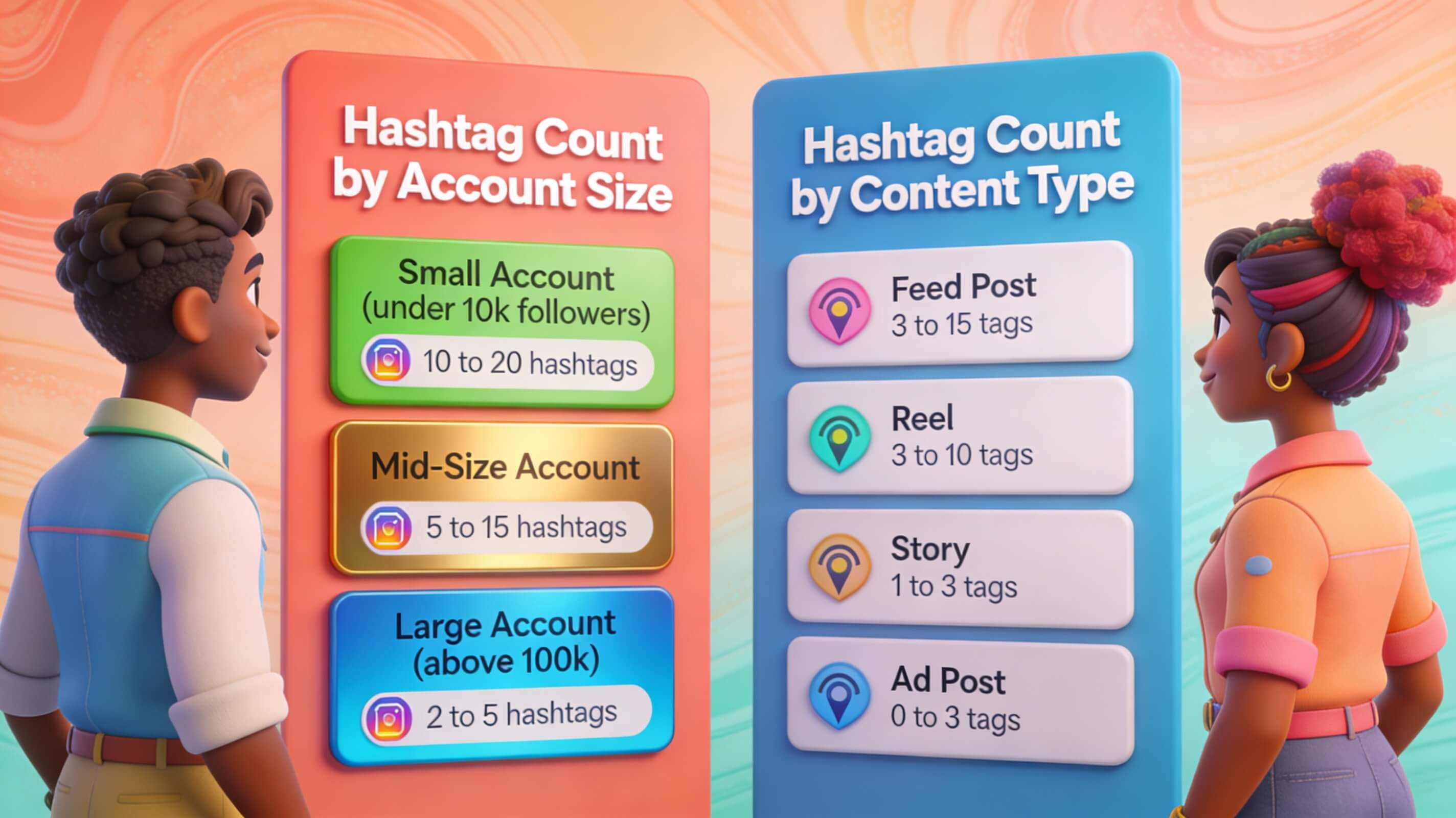
The question of how many hashtags should I use on Instagram is no longer about hitting a maximum limit. It is about precision, relevance, and strategic intent. Instagram’s algorithm has matured significantly, and the days of stuffing 30 hashtags into a caption are over. In 2024, the platform prioritizes content quality, user behavior signals, and contextual relevance over sheer hashtag volume. After analyzing thousands of posts and studying platform updates, the data-driven answer is clear: you should use between 5 and 10 highly targeted hashtags for most feed posts, and 3 to 5 for Reels and Stories. This range provides enough coverage to reach new audiences without triggering spam filters or diluting your message. The core of a successful Instagram strategy now lies in selecting hashtags that precisely match your content, audience, and caption keywords. This guide will walk you through every aspect of modern hashtag strategy, from understanding algorithm shifts to building a sustainable system that drives real growth. You will learn not just the number, but the why and how behind each tag you choose. Let’s dive deep into the data and tactics that separate average Instagram accounts from those that consistently achieve high engagement and reach.
The Data-Backed Answer: How Many Hashtags Drive Engagement
Extensive research and platform guidance converge on a specific range for optimal hashtag use. While Instagram allows up to 30 hashtags, the algorithm now penalizes overuse. A comprehensive study of over 1 million Instagram posts revealed that posts with 3 to 5 hashtags achieve an average engagement rate of 3.41%, which is the highest across all hashtag counts. Posts with 5 to 10 hashtags still perform well, averaging around 3.2% engagement. However, once you exceed 10 hashtags, engagement rates begin to drop significantly, falling to about 2.9% for 11–20 tags and plummeting to 2.1% for 21–30 tags. This data confirms that Instagram’s algorithm interprets hashtag stuffing as a low-quality signal. The platform wants you to use hashtags as a precise categorization tool, not as a blanket reach strategy. For most accounts, the sweet spot is around 9 carefully selected hashtags, though this can vary by niche and audience size. The key takeaway is that fewer, more relevant hashtags consistently outperform larger, generic sets. This shift reflects Instagram’s broader move toward algorithmic discovery, where user engagement and content relevance matter far more than any single hashtag’s popularity.
| Hashtag Count | Average Engagement Rate | Best Use Case | Platform Recommendation |
|---|---|---|---|
| 1-2 | 2.8% | Very niche, minimalist accounts | Not recommended for growth |
| 3-5 | 3.41% | Reels, Stories, targeted content | Officially recommended |
| 5-10 | 3.2% | Feed posts, carousels | Recommended |
| 11-20 | 2.9% | Niche content, broader attempts | Not recommended |
| 21-30 | 2.1% | Outdated approach | Actively penalized |
Why Hashtag Quality Now Trumps Quantity
To understand how many hashtags you should use, you must first grasp why Instagram changed its approach. In December 2024, Instagram removed the ability to follow hashtags, a feature that had been central to discovery for years. This move signaled a fundamental shift: the platform now relies on its AI to analyze the entire context of a post—including captions, image content, alt text, and user behavior—rather than relying heavily on hashtags alone. Hashtags still play a role, but they are now supporting signals rather than primary discovery mechanisms. Instagram’s algorithm uses natural language processing to understand your caption’s keywords and match them with user search queries. This means a well-written caption with relevant keywords can be more powerful than a dozen hashtags. For example, a post about “vegan chocolate cake” with a detailed caption will be categorized more accurately than a post with a vague caption and 30 unrelated hashtags. The algorithm also prioritizes posts that generate meaningful engagement—comments, saves, shares—over those that simply use popular tags. This shift rewards creators who focus on content quality and audience connection rather than hashtag optimization alone. The practical implication is that you should spend more time crafting compelling captions and selecting a few ultra-relevant hashtags than you do listing every possible tag.
Finding the Right Balance: Avoiding Extremes
Striking the perfect balance requires understanding the consequences of both too few and too many hashtags. Using only one or two hashtags severely limits your discoverability. Research shows that posts with at least one hashtag receive 12.6% more engagement than those with none, but the benefit plateaus quickly. With only two tags, you are relying entirely on those specific communities, which may be too narrow to drive growth. On the other hand, using 20 or more hashtags creates multiple problems. First, it clutters your caption, making your post look spammy and unprofessional. Second, Instagram’s algorithm may flag your post as low-quality, suppressing its reach. Third, irrelevant hashtags attract the wrong audience—users who are not genuinely interested in your content will not engage, hurting your post’s performance. The sweet spot lies in a strategic mix that balances discoverability with relevance. For most accounts, this means 5 to 10 hashtags, with a focus on tags that have between 50,000 and 500,000 posts. These mid-range hashtags offer enough visibility to attract new viewers without the intense competition of million-post tags. The goal is to be a big fish in a small pond rather than a tiny fish in an ocean.
The Role of Niche Hashtags
Niche-specific hashtags are the foundation of any effective strategy. These tags directly describe the exact topic of your post. For example, if you are a travel blogger posting about hiking in Patagonia, niche hashtags might include #PatagoniaHiking, #Wtrek, or #TorresDelPaine. These tags reach users who are actively searching for that specific content, resulting in high-quality engagement. Niche hashtags should make up 3 to 4 tags in your set. They are your most valuable asset because they connect you with a highly targeted audience that is more likely to follow, comment, and save your posts. When researching niche hashtags, look for tags that have a strong engagement rate—meaning the posts in that tag receive a high number of likes and comments relative to the number of posts. Avoid tags that are dominated by spam or low-quality content. A good niche hashtag should feel like a community, not a dumping ground.
Community and Culture Hashtags
Community and culture hashtags help you tap into broader conversations and movements. Examples include #FitnessJourney, #SmallBizOwner, #ContentCreatorLife, or #SustainableLiving. These tags signal that your post is part of a larger trend or community, attracting users who are interested in the general topic even if they do not follow your specific niche. Use 2 to 3 community hashtags in your set. These tags bridge the gap between extreme niche targeting and broad reach. They are particularly effective for building brand awareness and attracting followers who share your values. For instance, a sustainable fashion brand might use #SlowFashion alongside niche tags like #UpcycledClothing. Community hashtags help your content appear in the feeds of users who are exploring a topic, even if they have never heard of your brand before. This is where much of your organic growth will come from.
Branded and Campaign Hashtags
Creating a unique branded hashtag is a long-term investment in your Instagram presence. A branded hashtag, such as #YourBrandName or #YourCampaignTheme, allows you to aggregate user-generated content (UGC) and build a community around your brand. Include 1 to 2 branded hashtags in every post. Over time, as more users adopt your hashtag, it becomes a powerful discovery tool. When potential customers search for your branded tag, they see a curated feed of your best content and positive customer experiences. This builds social proof and trust. For example, a coffee shop might use #BrewWithJoy in every post, encouraging customers to use the tag when they visit. This creates a living portfolio of authentic content that attracts new customers. Branded hashtags also make it easy to find and reshare UGC, which strengthens your relationship with your audience.
Trending and Seasonal Hashtags
Trending and seasonal hashtags should be used sparingly—no more than one per post, and only when they genuinely relate to your content. These tags provide a temporary boost in visibility during events, holidays, or viral moments. For example, a fitness brand could use #NewYearNewYou in January, or a food blogger could use #ThanksgivingRecipes in November. However, forced trend-chasing backfires. If you use a trending hashtag that has nothing to do with your post, Instagram’s algorithm will recognize the mismatch and may suppress your content. Authenticity is key. Only adopt trending hashtags when they align with your brand voice and content pillar. This approach ensures you capture the attention of users who are genuinely interested in both the trend and your content, leading to higher engagement and follower retention.
Researching and Selecting High-Performance Hashtags
Knowing the ideal number of hashtags is only half the battle. The actual selection process determines whether those hashtags drive results. Start by analyzing competitor hashtag strategies. Look at the top-performing posts from accounts in your niche. Which hashtags appear consistently? Tools like Fanpage Karma and Hootsuite allow you to analyze competitor hashtag performance in detail. Compile a list of 20 to 30 potential hashtags from your research. Next, evaluate each hashtag’s engagement rate. Avoid tags with millions of posts, as your content will likely be buried. Instead, focus on hashtags with 50,000 to 500,000 posts, which offer a healthy balance of visibility and competition. You can check a hashtag’s engagement rate by looking at the top posts in that tag and calculating the average likes and comments. Finally, test your selections. Post with one set of hashtags for a week, then switch to a different set. Use Instagram Insights to track which tags drive the most impressions, reach, and engagement. Over time, you will identify a core set of 10 to 15 high-performing hashtags that consistently deliver results. Rotate these tags across your posts to avoid appearing repetitive to the algorithm.
Content-Specific Hashtag Strategies
The optimal hashtag count varies by content format. Instagram Reels, Stories, and feed posts each serve different discovery purposes, and your hashtag strategy should reflect that. For Reels, use 3 to 5 highly targeted hashtags. Reels are Instagram’s primary vehicle for organic reach, and the algorithm prioritizes content that generates immediate engagement. Too many hashtags can distract from the video’s message and appear spammy. Place your hashtags in the caption, not the first comment, to give the algorithm immediate context. For Stories, use 3 to 5 hashtags as well, but consider using hashtag stickers instead of text. Stickers are more visually appealing and can be tapped by viewers, increasing engagement. Instagram allows up to 10 hashtags on Stories, but more than 5 can clutter the screen. For regular feed posts, including carousels and single images, 5 to 10 hashtags is the sweet spot. These posts remain discoverable indefinitely, so you can afford a slightly larger set. Place hashtags at the end of your caption or in the first comment to keep the visual presentation clean. Regardless of format, every hashtag must be directly relevant to the content. Irrelevant tags will hurt your performance across all formats.
Avoiding Banned and Spammy Hashtags
Using a banned hashtag can instantly destroy your post’s reach, regardless of how perfect your other tags are. Instagram maintains a constantly updated list of banned hashtags, which are prohibited due to associations with adult content, spam, hate speech, or policy violations. When you use a banned hashtag, your post may be hidden from search results and the Explore page. Common categories of banned hashtags include those related to dating (#Dating, #Single), provocative content (#BikiniBody, #Curves), self-harm, medication abuse, and engagement baiting (#TagForLikes, #FollowForFollow). Even seemingly innocent hashtags can be banned if they have been misused. Before using any unfamiliar hashtag, search for it on Instagram. If the hashtag page shows a warning message or appears to be filled with spam, avoid it. You can also use tools like Display Purposes to check the safety of a hashtag. Regularly audit your hashtag sets to ensure none of your tags have been banned since you last used them. A single banned hashtag can derail weeks of strategic effort.
Placement and Formatting Best Practices
Where you place your hashtags matters for both user experience and algorithmic performance. Placing hashtags directly in your caption provides immediate context to Instagram’s AI, helping it categorize your post faster. This is particularly important for Reels, where speed of categorization can impact initial reach. However, hashtags in captions can make your post look cluttered, especially if you are using 10 tags. To maintain a clean aesthetic, place your hashtags on separate lines at the very end of your caption, separated by a line break. Alternatively, you can place hashtags in the first comment after posting. This keeps your caption visually clean and allows your main message to shine. The downside is that the algorithm may take slightly longer to process the hashtags. For most accounts, either approach works, as long as you are consistent. If you use the first comment method, post the comment immediately after publishing the post. Some creators use a combination: 3 to 5 essential hashtags in the caption and the rest in the first comment. This gives the algorithm immediate context while keeping the caption readable.
Measuring and Optimizing Your Hashtag Performance
Continuous optimization is the key to long-term hashtag success. Use Instagram Insights to track which hashtags drive the most impressions and engagement. Go to your post, tap “View Insights,” and scroll to the “Impressions” section. You will see a breakdown of where your impressions came from, including specific hashtags. Track this data over time to identify patterns. For example, you may find that hashtags related to a specific topic consistently outperform others. Use this information to refine your sets. A/B testing is also effective. Create two different hashtag sets and alternate them for similar types of posts. Compare the performance of each set after a few weeks. Document your findings in a spreadsheet, noting the hashtag combinations, post type, engagement rate, and reach. Over time, you will build a data-informed library of high-performing hashtags that are tailored to your specific account. Remember that hashtag performance can change as trends shift and the algorithm updates. Re-evaluate your sets every month to ensure they remain effective.

Advanced Strategies for Sustainable Growth
For creators serious about scaling their Instagram presence, advanced strategies go beyond basic hashtag counts. Create a hashtag rotation system with 3 to 5 different sets, each themed around a specific content pillar. For example, a food blogger might have one set for dessert recipes, another for savory dishes, and a third for kitchen tips. Rotate these sets systematically to reach different audience segments and avoid repetition that triggers spam filters. Another advanced tactic is hashtag-led community building. Create a unique, branded hashtag for your followers to use when they share content related to your niche. Encourage participation by resharing user-generated content and featuring it on your profile. This builds a sense of community and turns your hashtag into a discovery hub. Finally, leverage hashtag trends strategically. When a new trend emerges in your niche, incorporate it into your strategy if it aligns with your brand. For example, a fitness influencer might use #75Hard during a popular challenge. However, always prioritize authenticity over trend-chasing. A single well-timed trending hashtag can propel your reach, but only if it genuinely connects with your content.
Conclusion
The definitive answer to how many hashtags should I use on Instagram in 2024 is 5 to 10 for feed posts and 3 to 5 for Reels and Stories. This range is supported by extensive data showing that posts with 3 to 5 hashtags achieve the highest engagement rates, while posts with more than 10 see diminishing returns. However, the number is only part of the equation. The quality, relevance, and strategic mix of your hashtags matter far more than the quantity. Focus on selecting tags that precisely match your content, audience, and caption keywords. Build a layered strategy that includes niche-specific, community, branded, and trending hashtags. Avoid banned tags, test your sets regularly, and optimize based on performance data. Remember that Instagram’s algorithm now prioritizes overall content quality, user engagement, and contextual relevance over hashtag volume. A well-written caption with a few ultra-relevant hashtags will outperform a spammy post with 30 tags every time. By implementing these strategies, you will not only improve your reach and engagement but also build a more authentic and sustainable Instagram presence. If you are ready to take your Instagram strategy to the next level, contact our team for a personalized audit and growth plan. Make every hashtag count, and watch your community grow.