Cart 0

Share
Table of Contents
Pros and Cons of Social Media
Social media has become an inseparable part of modern life, reshaping how we communicate, consume information, and build relationships. Billions of people log into platforms like Facebook, Instagram, LinkedIn, and TikTok daily, making social media one of the most influential forces of our time. Understanding the pros and cons of social media is essential for anyone who wants to use these tools wisely, whether for personal connection, professional growth, or business marketing. The advantages and disadvantages of social media are deeply intertwined, and a balanced perspective can help you maximize benefits while minimizing harm. In this comprehensive guide, we will explore the key pros and cons of social media across multiple dimensions—from communication and education to mental health and privacy. By the end, you will have a clear framework for making informed decisions about your digital habits. Social media is neither all good nor all bad; its impact depends entirely on how we engage with it. Let’s dive into the complex landscape of social media, weighing its powerful benefits against equally serious risks, so you can navigate this digital world with confidence and intentionality.

Research from Pew Research shows that 7 out of 10 U.S. adults use Facebook, and usage patterns continue to evolve. The key is not to abandon social media but to adopt strategies that amplify its positives and contain its negatives. This article provides a thorough analysis, drawing on expert insights and data, to help you master your social media experience.
The Advantages of Social Media
Social media offers a range of transformative benefits that enhance personal and professional life. Let’s examine the core advantages in detail, moving beyond superficial summaries to understand the real mechanisms at play.
Enhanced Communication and Global Connection
Perhaps the most obvious benefit of social media is its ability to connect people across vast distances. Real-time messaging, video calls, and group chats allow you to maintain close ties with family and friends regardless of geography. For example, grandparents can watch grandchildren grow through daily photo updates, and colleagues on different continents can collaborate seamlessly on projects. This persistent connectivity fosters a sense of belonging and reduces feelings of isolation, especially for those living far from loved ones. Moreover, social media enables instant crisis communication—during natural disasters or emergencies, platforms become vital channels for sharing safety updates and coordinating aid. The pros and cons of social media become evident here: while the connection is powerful, it can also lead to an expectation of constant availability, blurring boundaries between work and rest.
Information Sharing and News Distribution
Social media has democratized information sharing. Anyone with an internet connection can broadcast news, opinions, and educational content to a global audience. This has given rise to citizen journalism, where ordinary people document events as they unfold, often providing perspectives missing from mainstream media. Platforms like Twitter and Reddit serve as real-time news feeds, offering updates faster than traditional outlets. However, this same openness creates a major downside: misinformation spreads just as quickly. The advantages and disadvantages of social media are starkly visible in the information ecosystem. A 2023 study by MIT found that false news on social media spreads six times faster than the truth. Therefore, while social media empowers access to diverse viewpoints, it also demands critical thinking and media literacy skills to separate fact from fiction. Learn more about information quality from the Columbia Journalism Review.
Professional Networking and Career Opportunities
LinkedIn, Twitter, and industry-specific groups have revolutionized professional networking. Instead of relying solely on cold emails or career fairs, professionals can now showcase their expertise, connect with recruiters, and join conversations with thought leaders. Building a personal brand on social media can open doors to speaking engagements, consulting gigs, and job offers. For job seekers, social platforms provide access to hidden job markets—positions that are never advertised publicly. Recruiters increasingly use social media to vet candidates, making a positive online presence a career asset. The benefits of social media for career advancement are well-documented: a CareerBuilder survey found that 70% of employers use social media to screen applicants. But there’s a flip side: a poorly managed profile can also disqualify you. This duality reinforces why understanding the pros and cons of social media is critical for anyone serious about their career trajectory.
Educational Opportunities and Skill Development
Social media has emerged as a powerful educational tool. YouTube alone hosts millions of free tutorials on everything from coding to cooking. Twitter threads by professors and experts distill complex topics into digestible insights. Instagram and Pinterest offer visual learning for design, art, and science. Educational institutions also leverage platforms to share lectures, host live Q&As, and create learning communities. The advantages of social media in education include low-cost access, flexibility, and the ability to learn at your own pace. For instance, a student in a remote village can now access lectures from Harvard professors via YouTube. However, distractions are a constant battle—the same algorithm that shows educational content also serves viral cat videos. Balancing educational use with entertainment requires intentionality. The role of social media in education is a double-edged sword, but when used wisely, it can supplement formal learning significantly.
The Drawbacks of Social Media
While the benefits are compelling, the cons of social media demand equal attention. Ignoring these pitfalls can lead to serious personal and societal harm. Below we explore the most significant downsides, supported by data and expert perspectives.
Privacy Risks and Data Exploitation
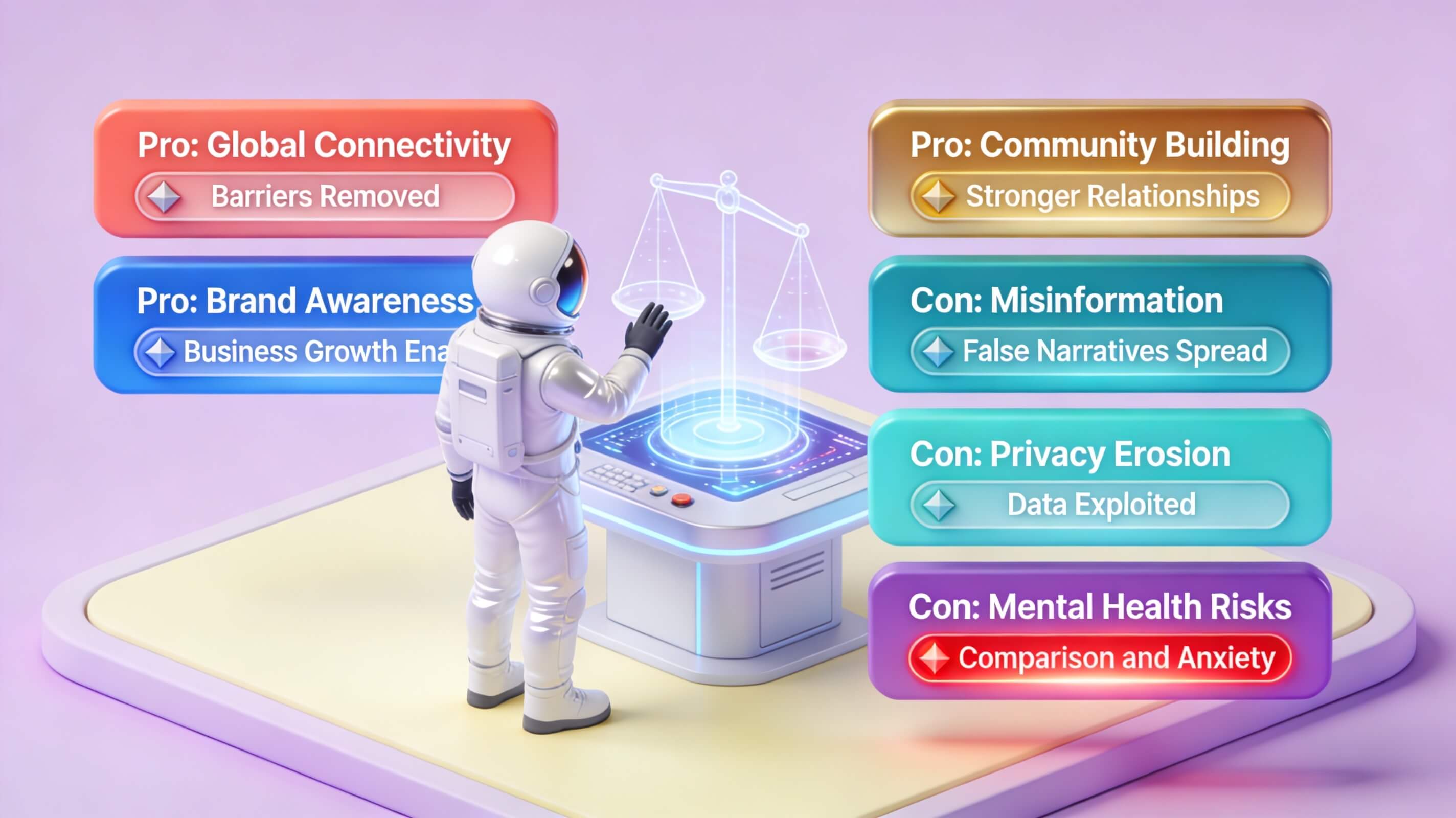
One of the most pressing disadvantages of social media is the erosion of privacy. Platforms collect enormous amounts of personal data—location, browsing habits, political views, relationship status—often without users fully understanding how it is used. Data breaches, like the Cambridge Analytica scandal, exposed how personal information can be weaponized for political manipulation. Even without breaches, platforms monetize user data through targeted advertising, raising ethical questions about consent and exploitation. The cons of social media in privacy are not just hypothetical; they affect real lives. Identity theft, stalking, and doxxing are direct consequences of oversharing. Protecting your privacy requires constant vigilance: adjusting settings, limiting what you post, and being wary of third-party apps. The Electronic Frontier Foundation offers detailed guidance on social media privacy that every user should review.
Addiction and Mental Health Concerns
Social media platforms are designed to be addictive. Features like infinite scroll, notifications, and algorithmic recommendations trigger dopamine releases, encouraging compulsive checking. Studies link heavy social media use to increased rates of anxiety, depression, loneliness, and poor body image. The constant comparison with curated “highlight reels” of others’ lives fosters feelings of inadequacy. A report from the American Psychological Association found that adolescents who spend more than three hours per day on social media are at higher risk for mental health problems. The pros and cons of social media are especially pronounced here: while social media can provide connection and support groups for those with mental health issues, it can also exacerbate symptoms. Recognizing the signs of social media addiction—neglecting real-life responsibilities, feeling anxious without access, losing track of time—is the first step toward healthier usage. Setting time limits, turning off notifications, and scheduling digital detoxes are practical strategies to mitigate harm.
Negative Impact on Real-World Relationships
Ironically, a tool designed to connect can also damage relationships. Social media introduces dynamics of jealousy, misunderstanding, and superficiality. Couples may argue over likes and comments, or feel neglected when their partner is glued to a screen. The influence of social media on relationships is complex: it can strengthen bonds across long distances but weaken intimacy when used excessively in close proximity. Furthermore, online interactions often replace deeper face-to-face conversations, leading to a sense of being “alone together.” Cyberbullying is another dark side—anonymous attacks can destroy friendships and reputations. The drawbacks of social media in relationships are rooted in the medium’s limitations: text lacks tone, and curated profiles hide reality. To counter this, experts recommend establishing digital boundaries with loved ones, such as phone-free dinner times and honest conversations about social media’s role in the relationship.
Comparing the Pros and Cons of Social Media: A Quick Overview
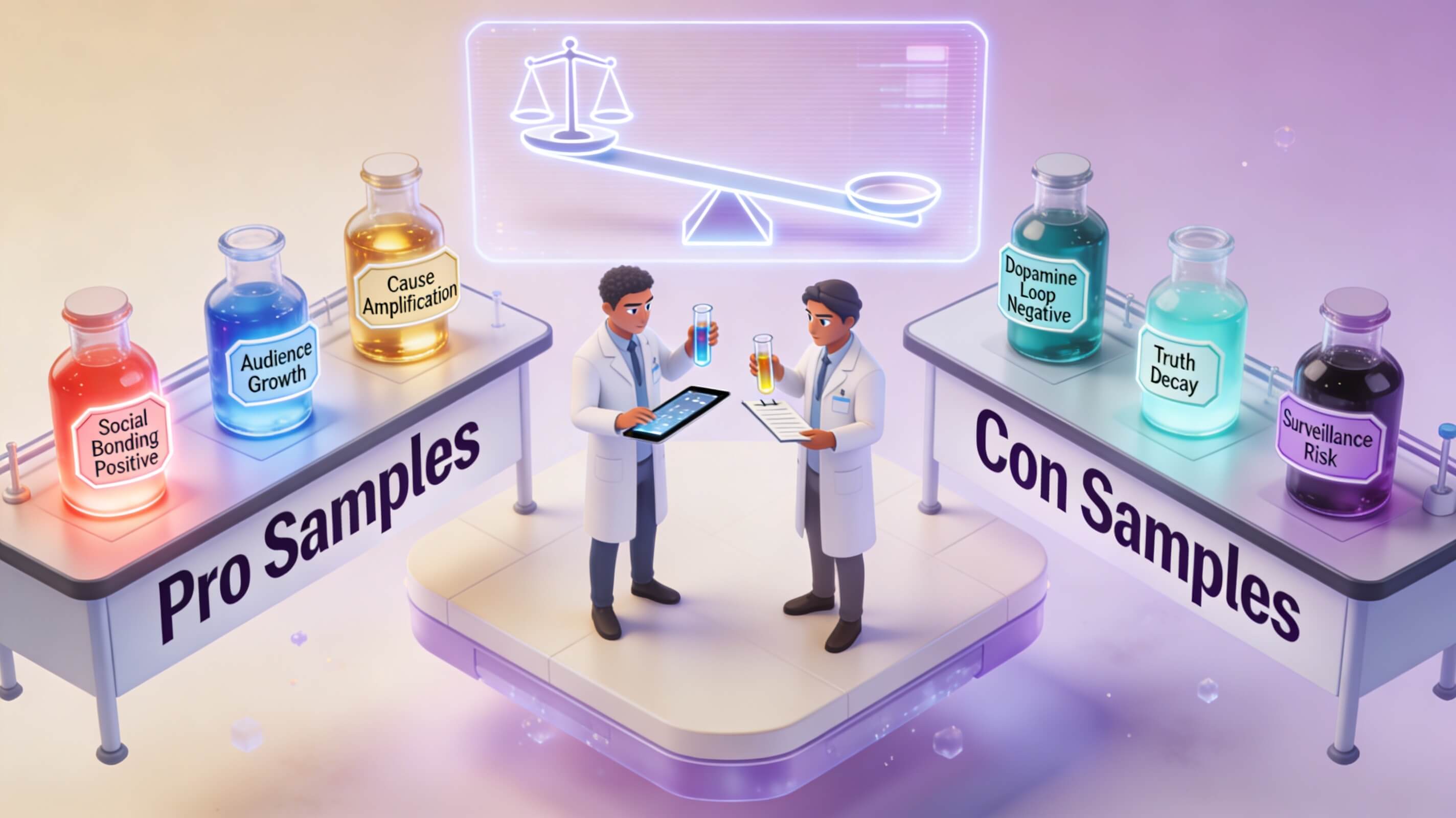
To help you visualize the balance, the table below summarizes the key pros and cons of social media across major life domains. Use this as a reference when evaluating your own usage.
| Dimension | Advantages | Disadvantages |
|---|---|---|
| Communication | Instant global connectivity; supports long-distance relationships; enables group coordination. | Can replace deep conversations; fosters misunderstandings due to lack of non-verbal cues; encourages constant availability pressure. |
| Information | Rapid news dissemination; diverse perspectives; access to expert content for free. | Misinformation spreads fast; echo chambers reinforce biases; information overload leads to anxiety. |
| Career | Networks opportunities; personal brand building; access to job listings and industry insights. | Reputation damage from inappropriate posts; time sink if not managed; privacy risks for job seekers. |
| Mental Health | Support communities; awareness resources; platform for self-expression. | Addiction patterns; comparison-induced depression; cyberbullying; sleep disruption. |
| Education | Free tutorials; expert Q&As; collaborative learning environments. | Distractions; unreliable sources; privacy concerns for students. |
The Role of Social Media in Shaping Modern Culture
Social media does not just reflect culture—it actively shapes it. From viral challenges that raise money for charity to political movements like #MeToo, platforms amplify voices and accelerate change. Influencer culture, which originated on social media, has created a new economy where individuals can monetize their personal brand. The benefits of influencer marketing for businesses are clear: micro-influencers often achieve higher engagement rates than traditional ads, and authentic endorsements build trust. However, the drawbacks of influencer culture include promoting materialism, unrealistic lifestyles, and sometimes fraudulent products. Social media also influences how we perceive beauty, success, and normalcy. The impact of social media on culture is profound, and understanding it requires examining both the positive mobilizations (like fundraising for disasters) and negative consequences (like the spread of dangerous challenges). A balanced view recognizes that social media is a mirror that can distort as much as it reflects.
Social Media and Digital Well-Being
Digital well-being refers to the healthy balance between online and offline life. Achieving it requires intentional effort, as the default design of social media pulls us toward overconsumption. The positive impacts of social media on digital well-being include access to mindfulness resources, support groups for addiction recovery, and tools for tracking screen time. Many platforms now offer features like “Take a Break” reminders and usage dashboards. On the other hand, the negative impacts of social media on digital well-being are pervasive: constant notifications fragment attention, blue light disrupts sleep, and the fear of missing out (FOMO) causes stress. Strategies for maintaining a healthy relationship include: scheduling specific times for checking social media, turning off all notifications except from essential contacts, unfollowing accounts that trigger envy or negativity, and substituting screen time with offline hobbies. A digital detox—even for 24 hours—can reset your relationship with technology. The key is not to abstain completely but to use social media on your own terms, not the platform’s.
Conclusion
After weighing the pros and cons of social media, one thing becomes clear: there is no one-size-fits-all verdict. Social media is a tool—powerful, versatile, and deeply human. Its effect on your life depends on how you choose to wield it. The advantages and disadvantages of social media are not fixed; they shift based on your habits, intentions, and awareness. For businesses and digital marketers, the potential to reach targeted audiences and build communities is enormous. But success requires navigating the same pitfalls—privacy, addiction, burnout—that affect individual users. The most effective approach is to treat social media as a resource to be managed, not a habit to be mindlessly indulged. Start by auditing your current usage: which platforms genuinely add value to your life, and which drain your time or mental energy? Then set clear boundaries: designate tech-free zones, use social media scheduler tools to limit spontaneous browsing, and regularly evaluate your mental state after using each platform. By embracing the benefits while actively mitigating the risks, you can transform social media from a source of distraction into a powerful ally for communication, learning, and growth. Your digital well-being is in your hands—take control today. If you are a business owner looking to leverage social media strategically, consider working with experts who understand both the upside and the pitfalls. The goal is not to maximize screen time, but to maximize value per minute spent online.
Remember, the pros and cons of social media coexist. The smartest users are not those who quit social media, but those who use it with intention, awareness, and a healthy dose of skepticism. Start your journey toward a more balanced digital life now.