Cart 0

Share
Table of Contents
Monitor Backlinks: Keeping a Watchful Eye on Your Digital Presence
Every link pointing to your website is a vote of confidence in the eyes of search engines—but not every vote is cast in good faith. Spam links, manipulative link schemes, and the slow decay of previously valuable backlinks can quietly undermine months of SEO progress if you are not paying attention. To monitor backlinks effectively is to maintain active, intelligent oversight of one of the most consequential signals in your website’s entire search ranking profile. According to the comprehensive backlink monitoring framework from Vazoola’s beginner’s guide to backlink monitoring for SEO success, effective backlink monitoring involves identifying new and lost links, assessing link quality continuously, detecting spammy backlinks before they trigger algorithmic penalties, and comparing your link profile against competitors to uncover strategic opportunities. Whether you are managing an established domain with thousands of referring links or building authority for a newer site, the ability to track, analyze, and act on your backlink data is a non-negotiable component of any competitive SEO strategy in 2025.
This guide covers everything you need to know about how to monitor backlinks effectively: why it matters, what tools to use, how to evaluate link quality, how to handle toxic links, how to leverage competitor backlink intelligence, and how to build a comprehensive ongoing backlink strategy that protects and grows your website’s authority over time.
Why Monitor Backlinks? The Strategic Case for Active Link Oversight
Backlinks remain one of the three most powerful ranking factors in Google’s algorithm, alongside content quality and user experience signals. A strong, diverse profile of high-authority backlinks from relevant websites signals to search engines that your content is trustworthy, authoritative, and worth surfacing prominently in search results. But the inverse is equally powerful and significantly more dangerous: a profile contaminated with spammy, manipulative, or low-quality links can trigger algorithmic filters or manual penalties that suppress your rankings for months, even if those links were placed without your knowledge or involvement.
The need to monitor backlinks is not simply about protecting against harm—it is also about capturing opportunity. New backlinks from high-authority domains can signal a meaningful boost in ranking potential before you would otherwise notice it in your analytics. Tracking competitor backlinks reveals the link-building strategies that are working for your direct rivals, including the specific publications, directories, and content formats generating their most valuable links. Lost backlinks—from pages that have been deleted, redirected, or had your link removed—represent ranking authority that can often be recovered through targeted outreach if caught quickly. As the technical SEO analysis from GrackerAI’s mastering backlink analysis guide details, scheduling routine backlink audits at least monthly—combined with real-time alerts for new and lost links—is the minimum monitoring cadence required to stay ahead of both threats and opportunities in a competitive search landscape.
| Monitoring Goal | What You’re Watching For | Why It Matters |
|---|---|---|
| Toxic link detection | Spammy, irrelevant, or manipulative links pointing to your site | Prevents algorithmic penalties and manual ranking suppressions |
| Authority building | New high-DA backlinks from reputable, relevant domains | Confirms that link-building outreach and content is working |
| Lost link recovery | Previously active backlinks that have disappeared or broken | Allows targeted outreach to recover ranking authority |
| Competitor intelligence | New links your competitors are earning and from which domains | Reveals link-building opportunities and strategic gaps |
| Negative SEO defense | Sudden spikes in low-quality links from unrelated or harmful domains | Detects competitor sabotage attempts before they impact rankings |
| Anchor text distribution | Over-optimization of exact-match anchor text across your link profile | Avoids Penguin-related over-optimization penalties |

Understanding Backlink Quality: What Makes a Link Valuable
Before you can effectively monitor backlinks and make meaningful decisions about your link profile, you need a clear framework for distinguishing high-quality links from low-quality or harmful ones. Not all backlinks are equal, and the difference between a link that meaningfully boosts your authority and one that actively damages it comes down to several measurable dimensions.
Domain and Page Authority
The authority of the linking website is the most fundamental quality signal. A backlink from a major news publication, a government website, or a highly respected industry resource carries far more ranking weight than a link from a newly created website with no traffic or established credibility. Tools measure this authority through metrics like Moz’s Domain Authority (DA), Ahrefs’ Domain Rating (DR), and Semrush’s Authority Score—each calculated using different methodologies but all designed to quantify the relative strength of a website’s link equity. As the SEO impact framework from Hello Darwin’s complete guide to how backlinks influence SEO explains, links from authoritative domains pass significantly more ranking power than those from low-authority sources—and links from sites that consistently link to other high-quality, relevant resources are treated as particularly strong signals of editorial credibility by search algorithms.
Relevance and Topical Alignment
A link from a highly authoritative website in an unrelated industry carries less SEO value than a link from a moderately authoritative website in your own niche. Topical relevance signals to search engines that your content is being recognized and endorsed by the legitimate authoritative voices within your field—a more meaningful endorsement than a link from an unrelated domain, however powerful. When evaluating your backlink profile, prioritize links from websites that cover topics closely related to your industry, serve audiences similar to your target customer, and produce content at a comparable or higher quality level to your own.
Anchor Text Distribution
The anchor text—the visible, clickable words used in a hyperlink—provides search engines with additional context about the content being linked to. A natural backlink profile includes a diverse distribution of anchor text types: branded anchors using your company name, naked URL anchors, generic anchors like “click here” or “learn more,” partial match anchors that include related phrases, and exact match anchors that use your precise target keyword. A profile dominated by exact-match keyword anchors—particularly if that concentration emerged suddenly—sends an over-optimization signal that Google’s Penguin algorithm is specifically designed to detect and penalize. Monitoring your anchor text distribution over time ensures that your link-building activities produce a natural-looking profile that accumulates authority without triggering algorithmic filters.
Link Placement Context
Where on a page a link appears and what surrounds it also influences its value. A link embedded naturally within the body text of a relevant, well-written editorial article is treated as a genuine editorial endorsement. A link buried in a footer, stuffed into a sidebar widget, or surrounded by dozens of other outbound links on a low-quality directory page delivers far less value—and in some cases, links from pages that exist primarily to sell or exchange links can actively harm your profile. Evaluating the placement context of your most significant backlinks helps you identify which links are genuinely contributing to your authority and which may be creating risk.
Identifying and Managing Toxic Backlinks
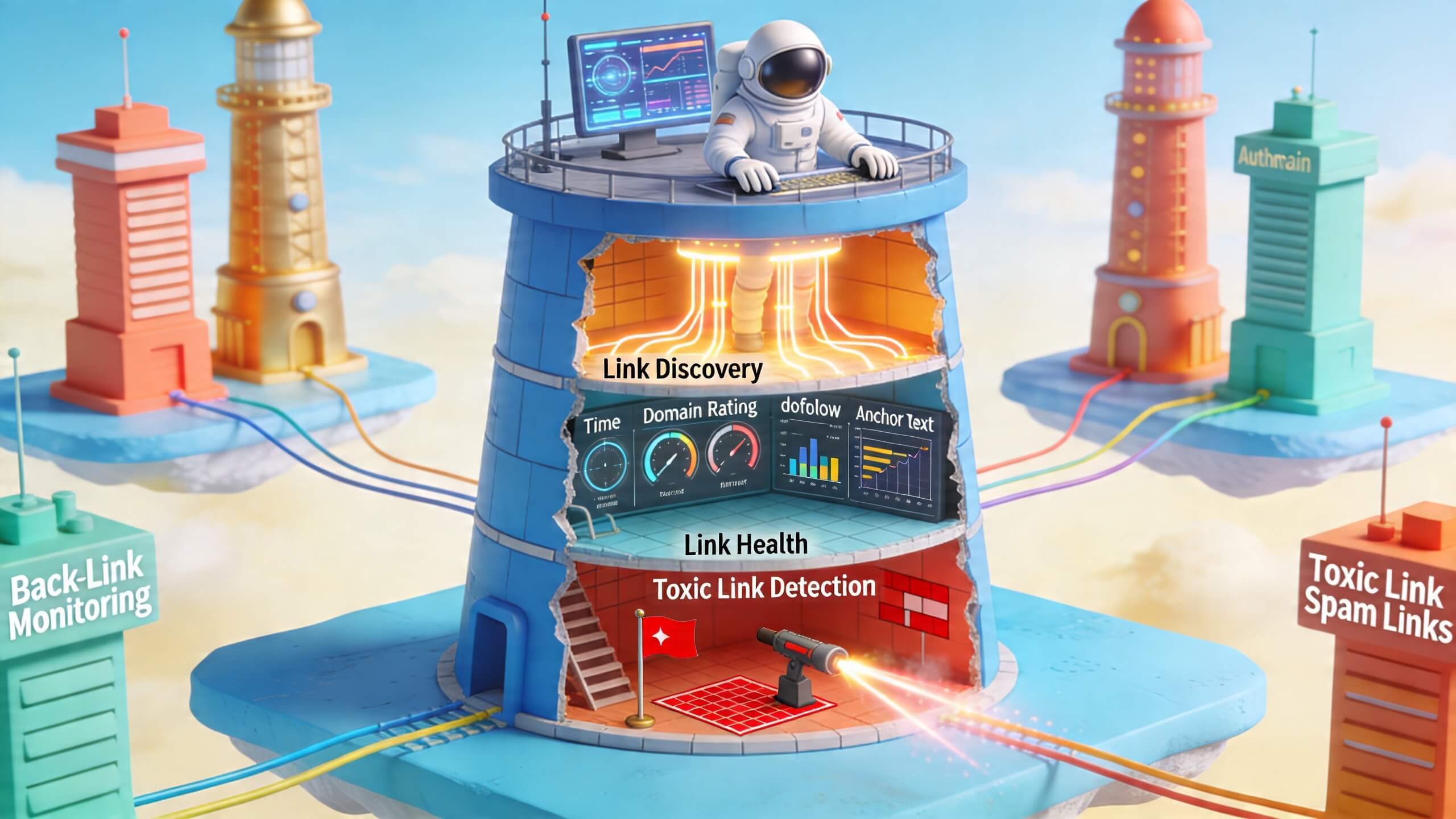
Toxic backlinks—links from spammy, irrelevant, or manipulative sources that violate Google’s quality guidelines—are one of the most serious threats to sustained SEO performance. They can arrive from multiple sources: automated spam campaigns that blast your URL across thousands of low-quality sites, negative SEO attacks where a competitor deliberately builds harmful links to your site to damage your rankings, or the residual footprint of past link-building practices that no longer meet current quality standards. Detecting them early and responding appropriately is one of the most critical functions of active backlink monitoring.
Warning signs that a backlink may be toxic include extremely low domain authority combined with no discernible organic traffic, sites that exist primarily to host links with minimal original content, pages surrounded by links to pharmaceutical, gambling, or adult content completely unrelated to your niche, foreign-language sites with no apparent topical connection to your website, link networks where the same IP addresses or ownership clusters appear repeatedly, and sudden spikes in new links from dozens of similar low-quality sources appearing within a short time window. The disavowal process outlined in Worldwide Backlinks’s guide to removing toxic links through Google’s disavow tool recommends first attempting to manually contact the webmaster of the linking domain to request removal—and only submitting a disavow file to Google for links that cannot be removed through outreach. The disavow file tells Google to ignore specific links when assessing your site, effectively neutralizing their potential negative impact without removing them from the web.
The decision of when to disavow requires judgment, not reflexive action. As the disavow analysis from Devrix’s 2025 guide to Google’s disavow tool advises, submitting a disavow file unnecessarily—disavowing legitimate links that you incorrectly flag as toxic—can actually reduce your rankings by stripping your profile of real authority. Reserve disavowal for clear cases: large volumes of obviously spammy links, confirmed negative SEO attacks, or links from sites that Google has manually penalized.
Best Backlink Monitoring Tools in 2025
The right backlink monitoring tool transforms what would otherwise be an unmanageable manual process into a streamlined, automated system that alerts you to important changes in your link profile and provides the analytical depth needed to make confident strategic decisions. In 2025, the leading tools combine massive link databases, real-time indexing, AI-powered toxicity detection, and competitive intelligence capabilities that go far beyond simple link counting.
| Tool | Best For | Starting Price | Key Capabilities |
|---|---|---|---|
| Ahrefs | Deep backlink intelligence and competitor research | $99/month | 16 trillion link index, live/lost link tracking, broken link checker, Link Intersect tool |
| Semrush | Enterprise link monitoring with toxicity scoring | $139/month | 43 trillion backlink database, Toxic Score system, Backlink Gap analysis, brand monitoring |
| Moz Pro | Beginners and SMBs focused on link quality | $99/month | Spam Score, Domain Authority metrics, lost link tracking, Link Explorer |
| Majestic | Forensic authority analysis | $49/month | Trust Flow and Citation Flow metrics, Historic Index, topical trust mapping |
| SE Ranking | Freelancers and agencies needing affordable monitoring | $39.20/month | Backlink monitoring, white-label reports, API access, link audit tools |
| Google Search Console | Free foundational monitoring and penalty alerts | Free | Google’s own link data, manual penalty notifications, top linking domains report |
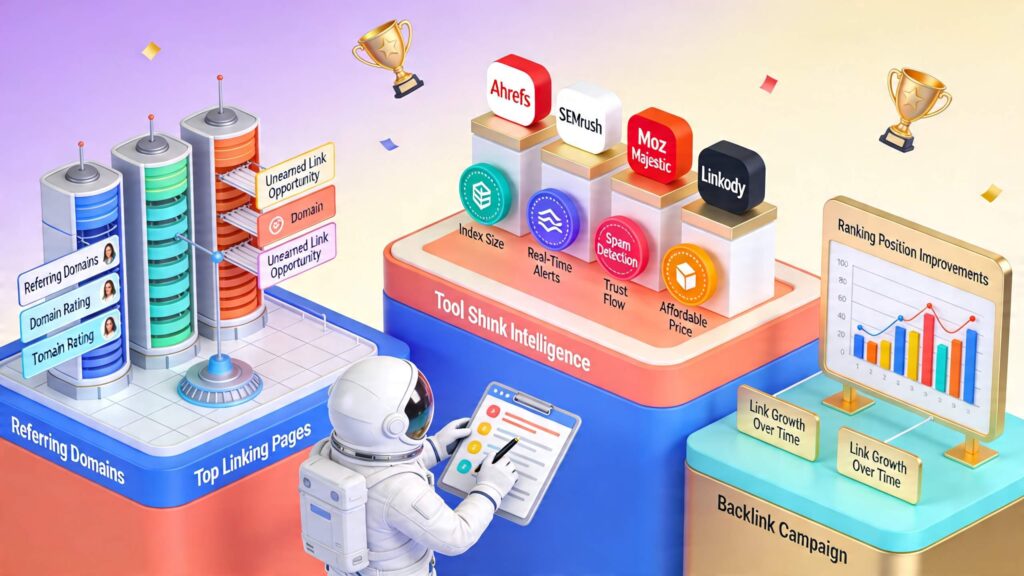
As the detailed tool comparison published by Adaptify’s 2025 top backlink monitoring tools review notes, modern backlink monitoring has evolved well beyond simple link counting. Today’s leading tools analyze link quality metrics including Domain Authority, Trust Flow, and Citation Flow; monitor anchor text distribution for over-optimization risk; detect toxic links using spam scores and machine learning algorithms; track indexing status to verify that links are actually discoverable by search engines; and provide competitor backlink profiles for strategic insights. Choosing the right tool depends on your budget, the size of your link profile, and whether your primary need is link quality analysis, competitive intelligence, or toxic link management.
How to Monitor Backlinks Effectively: A Step-by-Step Process
Having access to a powerful backlink monitoring tool is only valuable if you have a structured process for using the data it provides. The following step-by-step approach, adapted from the monitoring framework detailed in Linkbox’s guide to effectively monitoring and managing backlinks for optimal performance, creates a sustainable routine that keeps your link profile healthy and your strategy continuously improving.
Step 1 — Establish Your Baseline with a Full Audit
Before you can monitor changes meaningfully, you need a comprehensive snapshot of your current backlink profile. Run a full backlink audit using your chosen monitoring tool to inventory every linking domain, assess the authority and relevance of each referring domain, evaluate your current anchor text distribution, flag any links that display toxic characteristics, and identify your ten to twenty most valuable backlinks that you should protect and attempt to replicate. This baseline becomes the reference point against which all future changes are measured.
Step 2 — Set Up Real-Time Alerts
Configure your monitoring tool to send immediate alerts for high-priority changes: new backlinks from domains above a specific authority threshold, lost backlinks from your most valuable referring domains, and sudden spikes in new low-quality links that might indicate a negative SEO attack. Real-time alerts allow you to respond to both opportunities and threats within hours rather than discovering them weeks later during a scheduled audit. New high-authority links deserve acknowledgment and relationship nurturing; lost links from premium sources deserve recovery outreach; sudden spikes in spammy links deserve investigation and potential disavowal preparation.
Step 3 — Conduct Recurring Monthly Audits
Real-time alerts catch the most significant changes, but a monthly structured review provides the deeper pattern analysis that point-in-time alerts cannot. Each monthly audit should review new links acquired during the month and assess their quality, check for links that have been lost or changed from dofollow to nofollow, evaluate changes in your overall profile metrics (total referring domains, average DA, anchor text distribution), identify any new toxic link candidates requiring action, and compare your profile development against your primary competitors. Documenting these monthly reviews creates a historical record that helps you identify the content types and outreach approaches generating the highest-quality links over time.
Step 4 — Take Action on What You Find
Monitoring without action is overhead without return. Establish clear decision trees for the most common findings: new high-quality links trigger relationship nurturing with the linking site; lost high-value links trigger a recovery outreach email within two weeks of the loss; toxic link discoveries trigger a contact-then-disavow workflow; new competitor link sources trigger an outreach prospect list addition. As the actionable monitoring checklist from SEOZilla’s backlink monitoring checklist for 2025 recommends, the most effective programs choose tools with real-time updates, AI-driven link scoring, toxic link disavow integration, and competitor comparison dashboards—because these features make the action layer of your monitoring process faster, more accurate, and more consistently executed than manual analysis alone.

How to Perform Backlink Analysis: Extracting Actionable Insights
Backlink analysis goes beyond cataloging what links you have—it is the process of extracting strategic intelligence from your link data that directly improves your SEO and link-building outcomes. Effective analysis answers four key questions: Which of my backlinks are delivering the most ranking value? Which links are creating risk? Which content types attract the best links? And what are my competitors doing that I should replicate?
Identify Your Highest-Value Pages and Content
Sort your backlink data by the pages on your site that have attracted the most high-authority links. These pages represent your strongest link magnets—the content types and topics that your industry’s most authoritative sources find worth linking to. Understanding these pages helps you produce more content in the same format or on adjacent topics, with a reasonable expectation that the link-attracting pattern will repeat. It also helps you identify which pages to prioritize with internal links and promotional support, since their external link equity can be distributed to other pages through your internal linking architecture.
Analyze Referring Domain Diversity
A healthy backlink profile draws from a diverse range of independent root domains—not hundreds of links from a single source or a small cluster of related sites. Referring domain diversity is one of the clearest signals that your links have been earned organically through genuine editorial recognition rather than constructed through link schemes. The step-by-step analysis methodology from Boostability’s guide to monitoring backlinks with Ahrefs, Semrush, and Moz emphasizes filtering for low-authority domains recently discovered linking to your site as a primary quality check—manually vetting each flagged domain to confirm whether it represents genuine organic recognition or a manipulative placement that requires disavowal consideration.
Key Backlink Metrics to Track Over Time
| Metric | What It Measures | Target Direction |
|---|---|---|
| Total referring domains | Number of unique root domains linking to your site | Steady growth over time |
| Average Domain Authority / Rating | Mean authority score of all linking domains | Gradual improvement as low-quality links are disavowed |
| Toxic score / Spam score | Proportion of backlinks flagged as potentially harmful | As low as possible; below 5% is generally safe |
| Dofollow vs. nofollow ratio | Proportion of links passing ranking equity vs. those that do not | Healthy natural profiles typically show 70–80% dofollow |
| Branded vs. keyword anchor ratio | Distribution of anchor text types across your link profile | Branded and generic anchors should dominate; exact-match below 5% |
| Lost links by month | Number of previously active backlinks no longer pointing to your site | Track for recovery; sudden spikes need investigation |
Gaining a Competitive Edge by Monitoring Competitor Backlinks
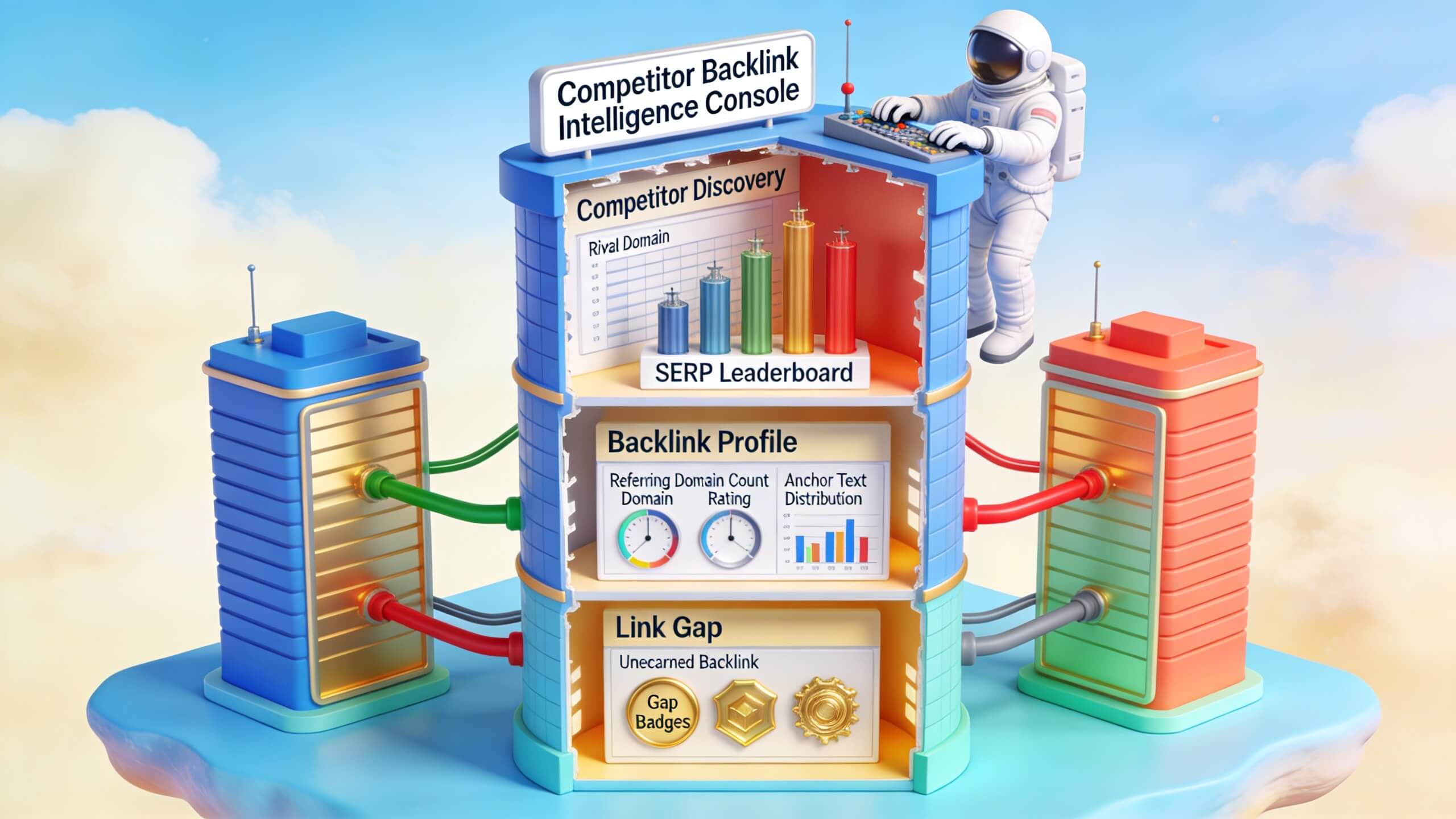
Monitoring your own backlinks tells you where you stand. Monitoring your competitors’ backlinks tells you where the opportunities are. Competitor backlink analysis is one of the highest-leverage activities in SEO because it gives you a pre-validated roadmap of link-building targets—websites that have already demonstrated a willingness to link to content in your niche, which you can approach with your own superior or complementary content.
Start by identifying your three to five most direct organic search competitors—those competing with you for the same target keywords, not necessarily your business competitors. Run each of their domains through your backlink monitoring tool and analyze their referring domain profiles. Look for patterns: which types of websites are linking to them most frequently? Are there industry publications, directories, association sites, or content hubs that link to multiple competitors but not yet to you? These are your priority outreach targets. Use Semrush’s Backlink Gap tool or Ahrefs’ Link Intersect feature to systematically identify domains that link to your competitors but not to you—this “link gap” represents the most actionable competitive intelligence your monitoring program can generate. As the competitive analysis best practices from ChexLinx’s top 10 backlink monitoring best practices for 2025 detail, regularly reviewing competitor link acquisition patterns and replicating their most successful link types is one of the most consistent methods for closing authority gaps with established competitors in competitive niches.
Building a Comprehensive Backlink Strategy Around Your Monitoring Data
The ultimate purpose of all backlink monitoring activity is to feed a continuously improving link-building strategy. Data collected from your monitoring tool, your backlink analysis, and your competitor research should directly inform the content you create, the websites you target for outreach, and the link-building tactics you prioritize.
Pages that attract the most high-quality links should become templates for future content creation. Competitors’ link sources should populate your outreach prospect list. Toxic link patterns should inform the types of sources you avoid or monitor more closely in future link-building campaigns. Lost link patterns—if you notice links consistently disappearing from a particular type of page—should trigger an investigation into whether content freshness, broken pages, or changing editorial policies are causing the losses. And anchor text data should guide how you ask linking partners to reference your content, keeping your overall distribution natural and penalty-safe.
The quality-first framework outlined in Smart Monkey Marketing’s 2025 guide to building quality backlinks emphasizes that the most sustainable link profiles are built around genuinely valuable content—resource pages, original research, comprehensive guides, and tools that serve the linking website’s audience as much as your own. The monitor backlinks process validates this approach by showing you, empirically, which content in your niche consistently earns the highest-authority links—giving you a data-driven foundation for your content strategy rather than relying on assumptions about what will perform.
Conclusion
To monitor backlinks effectively is to maintain active, intelligent stewardship of one of the most powerful ranking factors in your entire SEO program. Your backlink profile is not a static asset that you build and forget—it is a living, changing signal that requires continuous attention to protect its quality, recover lost value, neutralize emerging threats, and identify new growth opportunities before your competitors do. The right combination of a capable backlink monitoring tool, a structured monthly audit process, real-time alerting for significant profile changes, and competitive backlink intelligence gives you everything you need to keep your link profile growing in strength, diversity, and authority month over month—translating directly into the sustained organic visibility growth that is the ultimate goal of every SEO investment you make.