
Cart 0

Share
Table of Contents
Keyword Cannibalization: Overcoming Challenges in SEO
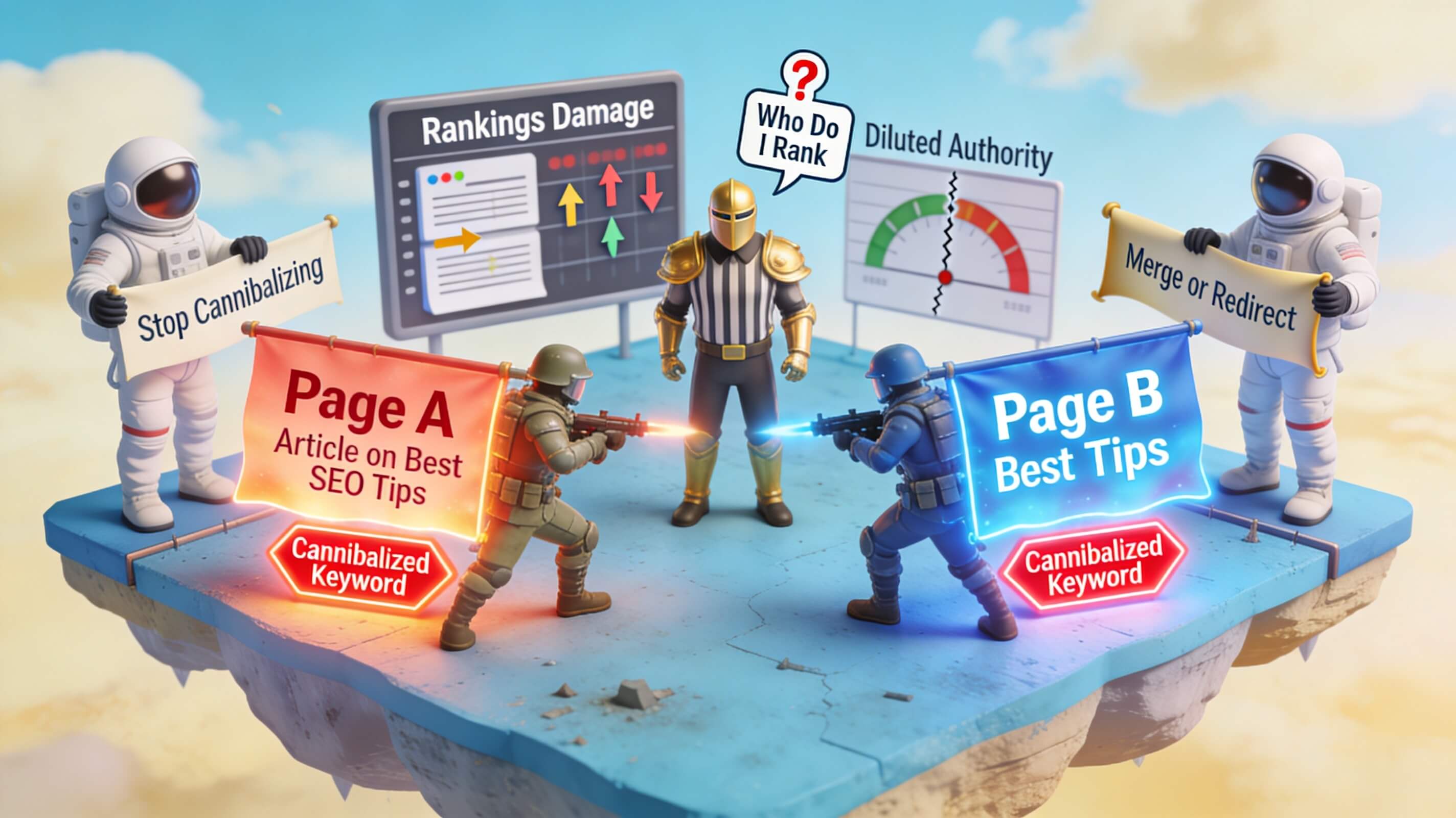
If you are investing significant time and resources into SEO yet watching your organic search rankings stagnate or decline, you are likely battling one of the most insidious yet overlooked issues in search engine optimization: keyword cannibalization. This phenomenon occurs when multiple pages on your website are optimized for the same or highly similar keywords, inadvertently forcing your own content to compete against itself. Instead of presenting a single, authoritative resource to search engines, you create internal confusion. Google’s algorithms struggle to determine which page is the most relevant, often choosing the wrong one or diluting the ranking potential of all involved pages. The result is a direct hit to your website’s visibility, traffic, and conversion rates. To achieve optimal website optimization and secure a top organic search ranking, understanding and eradicating keyword cannibalization is non-negotiable. This article will provide you with a comprehensive, expert-level blueprint to identify, fix, and prevent this issue, drawing on over two decades of hands-on SEO experience. We will move beyond surface-level advice and delve into granular onsite and offsite techniques, real-world case studies, and a long-term maintenance strategy that separates successful sites from those that struggle.
Understanding Keyword Cannibalization: More Than Just Duplicate Content
Keyword cannibalization is often mistakenly simplified as “duplicate content,” but its mechanics are more nuanced and damaging. It occurs when two or more pages on the same domain target the same primary keyword or a set of closely related semantic keywords, creating internal competition for search engine attention. This is not always about identical content; it can happen when you have a blog post and a product page both optimized for “best running shoes” or when you publish multiple articles covering the exact same topic from slightly different angles without a clear hierarchy.
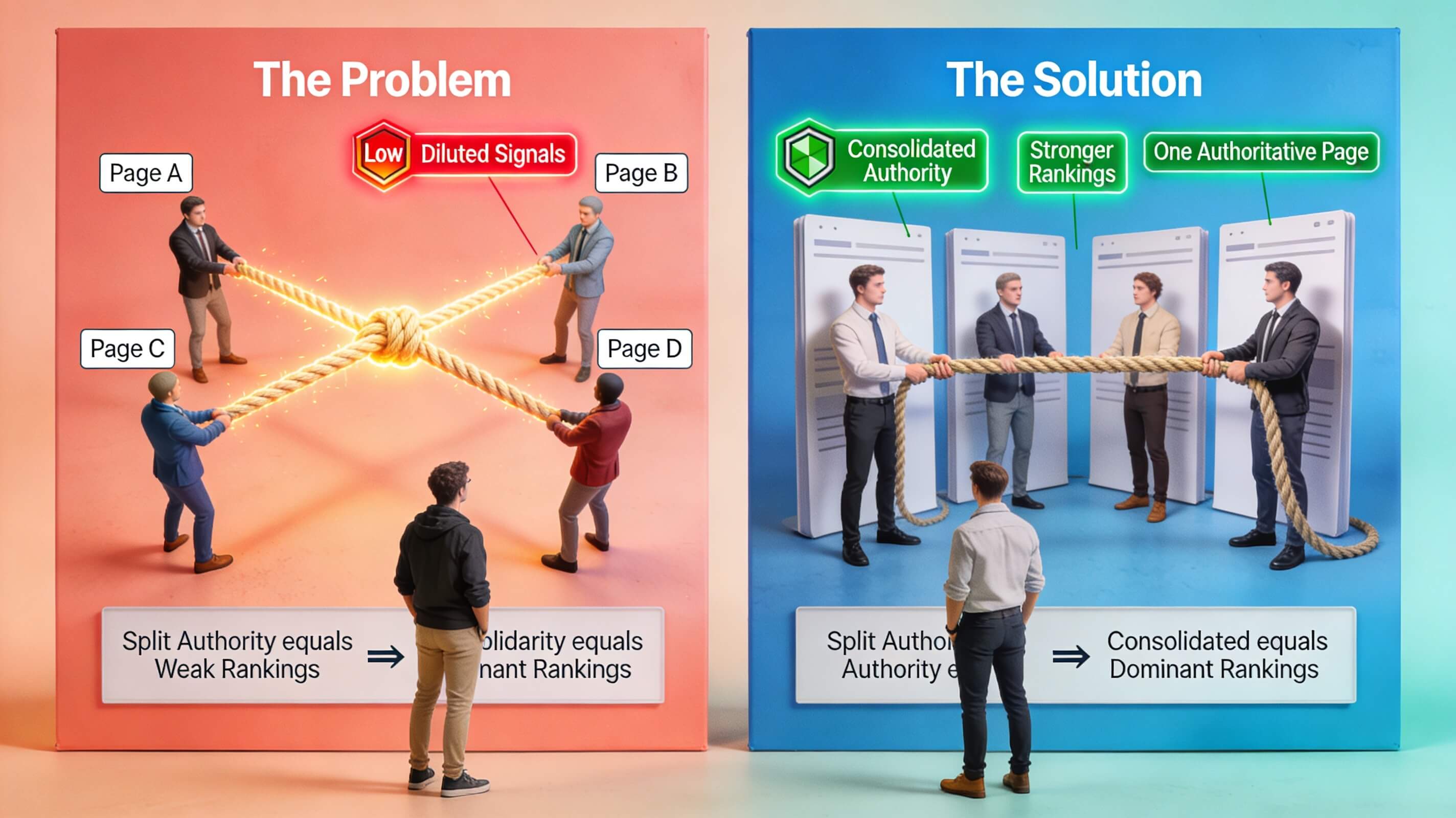
The core problem lies in how search engines allocate authority. When a single keyword is targeted by multiple pages, the ranking signals—backlinks, internal links, and user engagement metrics—are split across those pages. Instead of one page accumulating all the authority to rank at the top, you have two or three pages ranking at positions 5, 8, and 12. This fragmentation is far less effective than having one page ranking at position 2 or 3. For instance, consider a website selling organic skincare products. If they have a category page for “organic face moisturizer” and a blog post titled “Best Organic Face Moisturizer for Dry Skin,” they are cannibalizing themselves. Google may choose to rank the blog post for the commercial query, even though the category page is the intended conversion point. This confusion directly undermines your SEO strategy and wastes the potential of your content assets.
To truly grasp the impact, think of it as a political election where your own candidates are running against each other. Instead of uniting behind one strong candidate, you split the vote, ensuring that a weaker competitor (your rival’s page) wins. This internal conflict is a primary reason why many sites fail to achieve their desired organic search ranking despite having high-quality content and authoritative backlinks. Understanding this fundamental conflict is the first step toward a solution.
Identifying Keyword Cannibalization: A Systematic Approach
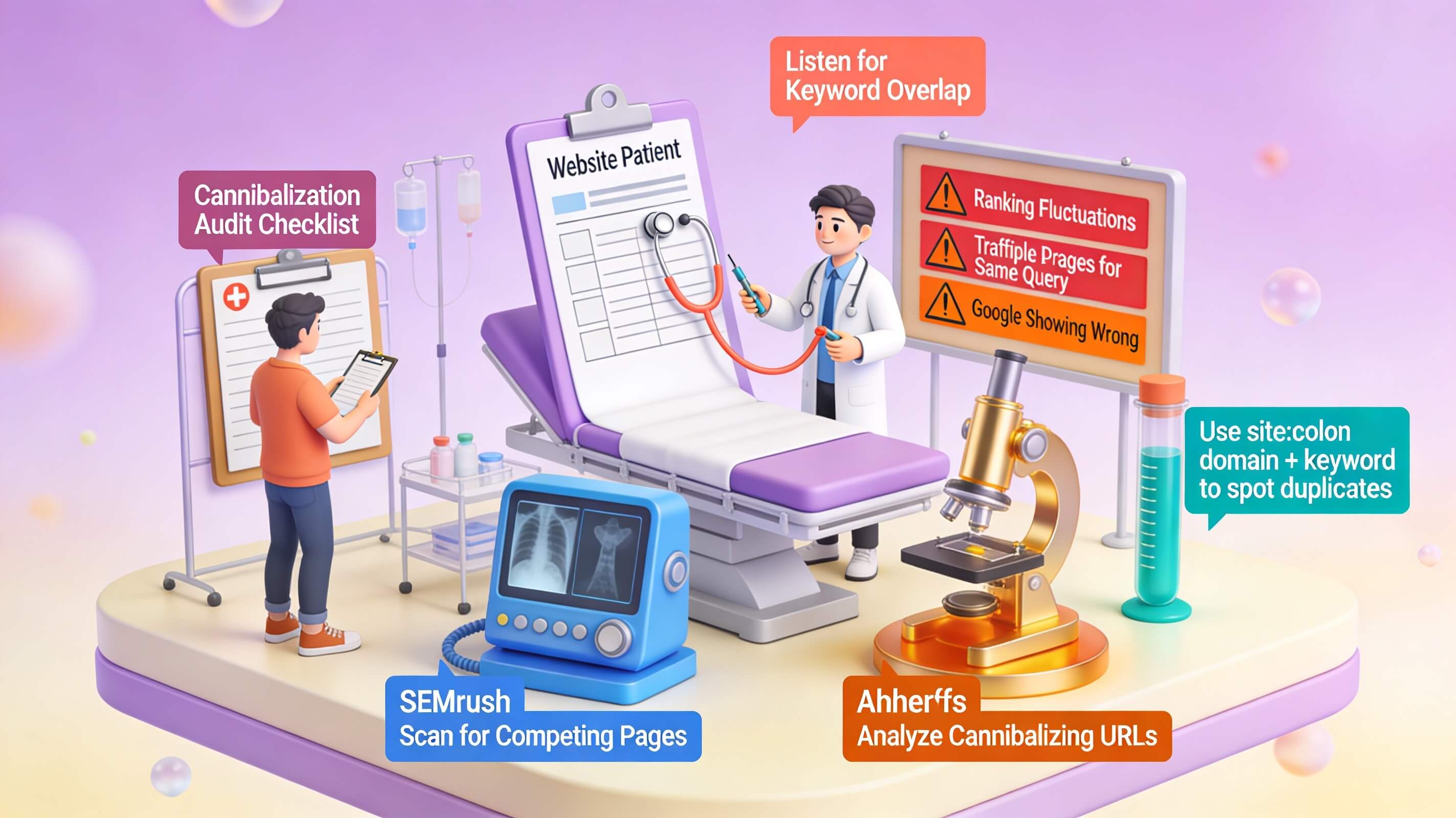
Before you can fix keyword cannibalization, you must first find it. This requires a methodical audit of your website’s content architecture. The most effective way to start is by using the site:domain.com search operator combined with your target keyword. For example, searching site:yourwebsite.com “organic face moisturizer” will reveal all pages indexed by Google that contain that phrase. If you see three or four pages, you have a cannibalization problem.
For a more comprehensive analysis, you need to leverage professional tools. Google Search Console is an invaluable free resource. Go to the “Performance” report, filter by a specific query, and examine which pages are appearing for that search term. If multiple URLs are generating impressions and clicks for the same query, you have confirmed cannibalization. Similarly, tools like SEMrush or Ahrefs have dedicated “Keyword Cannibalization” reports that automatically flag instances where multiple pages are competing for the same keyword cluster. These tools will show you the exact URLs and the keywords they are vying for, saving you hours of manual work.
Another powerful technique is to conduct a content inventory audit. Create a spreadsheet listing every page on your site, its target primary keyword, secondary keywords, and its current ranking position. Then, sort the list by primary keyword. Any duplicates or overlaps become immediately visible. This process also helps you identify “orphan” pages that may be targeting valuable keywords but are not properly linked or prioritized. I have personally used this method for clients with over 5,000 pages, and it consistently uncovers dozens of cannibalization instances that were silently eroding their rankings. The goal is not just to find the problem but to understand the scale of it. Once you have a clear picture, you can move on to the remediation phase.
Impact of Keyword Cannibalization on Organic Search Ranking and User Experience
The negative impact of keyword cannibalization on your organic search ranking is both direct and compounding. The most immediate effect is the dilution of ranking power. As mentioned earlier, instead of one page consolidating all backlinks and internal link equity, that value is distributed. This results in lower average positions for all competing pages. For example, a client in the financial services sector had two blog posts targeting the exact same long-tail keyword, “how to open an IRA account.” One post ranked at position 4, the other at position 7. After merging and redirecting the weaker page, the remaining consolidated page jumped to position 1, driving a 300% increase in organic traffic. This is a textbook example of the power of fixing cannibalization.
Beyond rankings, cannibalization damages your site’s authority signals. Search engines, particularly Google, are sophisticated enough to recognize when a site is struggling to decide which page is most important for a query. This can lead to a perception of poor site architecture and lower overall topical authority. Furthermore, it creates a poor user experience. A user searching for “best wireless headphones” might land on a comparison article because it ranks, but the page might lack a clear path to purchase, whereas a dedicated product category page would have been more appropriate. This friction increases bounce rates and reduces engagement metrics, which are now critical ranking factors. The confusion extends to your internal linking structure as well. If you are linking to both pages with similar anchor text, you are further confusing the signal you send to Google about which page is the definitive resource. The cumulative effect is a weaker domain that struggles to compete against more organized competitors.
Fixing Keyword Cannibalization: Onsite SEO Techniques
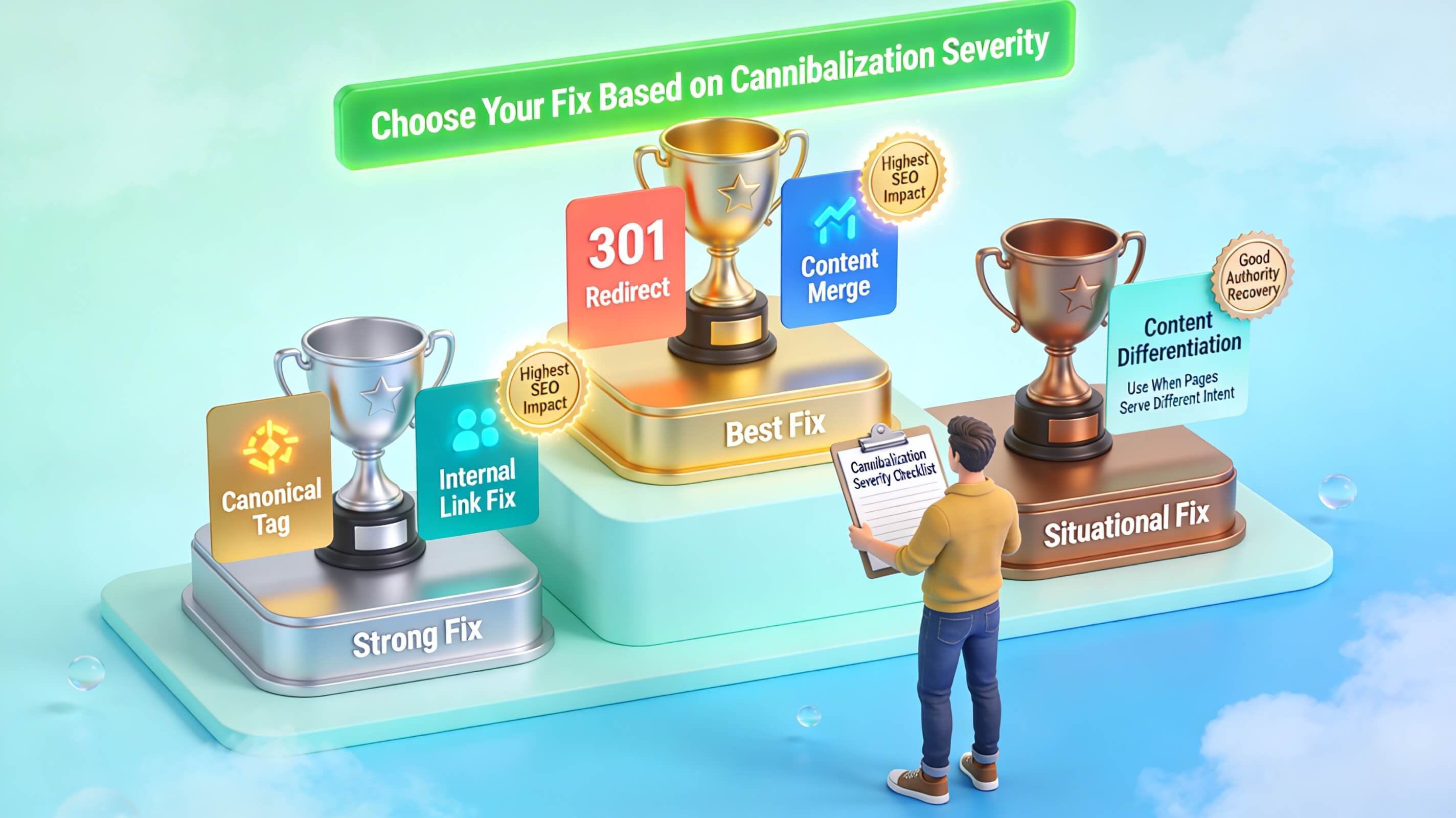
Once identified, the fix requires a strategic combination of onsite SEO techniques. The most common and effective solution is to consolidate and redirect. Choose the single strongest page to be the “winner.” This is usually the page with the most backlinks, the best internal link profile, the highest current ranking, or the most comprehensive content. Then, 301-redirect all other competing pages to this champion page. This passes the accumulated link equity and ranking signals to the single page, giving it a massive boost. For example, if you have three blog posts about “keto diet meal plan,” pick the most detailed and high-authority one, update it with the best information from all three, and redirect the other two to it.
If consolidation is not possible because the pages serve fundamentally different purposes (e.g., a product page vs. a blog post), you need to diversify the target keywords. Re-optimize the less important page for a different, long-tail variant. For instance, if a category page targets “blue running shoes,” you can re-optimize a blog post to target “how to clean blue running shoes” or “best blue running shoes for trail running.” This eliminates the direct competition. Another powerful onsite technique is to optimize internal linking. Ensure that the “winning” page receives the majority of internal links with descriptive anchor text. Use nofollow links for the pages you plan to phase out or de-emphasize. Additionally, consider using canonical tags. If you have two similar pages that you must keep both for user experience reasons, add a rel="canonical" tag from the duplicate page to the primary page. This tells search engines which version is the authoritative source. Finally, update meta tags (title and description) to be unique and specific to each page’s new, non-competing focus. This small detail is critical for signaling intent to both users and search engines.
Fixing Keyword Cannibalization: Offsite SEO Techniques
Offsite SEO strategies play a crucial supporting role in resolving cannibalization. The primary offsite technique is strategic backlink building. Once you have consolidated your pages, your link-building efforts should focus exclusively on the champion page. Acquiring new, high-authority backlinks to this single page will dramatically amplify its ranking power. Avoid building links to the pages you plan to redirect, as this will only create confusion later. Instead, actively seek out opportunities to have existing backlinks pointing to the cannibalized pages updated to point to the consolidated page. This can be done through a targeted outreach campaign. For example, if a blogger linked to your old, weaker article, politely ask them to update the link to your new, comprehensive guide.
External linking from your site to other authoritative resources also helps. By linking out to relevant, high-quality sources from your champion page, you signal to Google that your content is well-researched and part of a broader, credible ecosystem. This enhances the page’s topical authority. Furthermore, social media optimization plays an indirect but important role. When you share your consolidated, high-quality page across social platforms, you drive engagement signals like clicks, shares, and time-on-site. These user engagement metrics are increasingly used by Google as ranking signals. By focusing all your offsite promotion on a single, well-structured page, you create a concentrated signal of relevance and authority. This is far more effective than spreading your promotion efforts across multiple competing pages. The table below summarizes the key offsite techniques and their specific benefits in the context of fixing keyword cannibalization.
| Offsite Technique | Specific Benefit for Cannibalization |
|---|---|
| Strategic Backlink Building | Consolidates link equity to the champion page, boosting its authority. |
| Backlink Reclamation | Redirects existing link equity from cannibalized pages to the winner. |
| External Linking (Outbound) | Signals to Google that the champion page is part of a credible network. |
| Social Media Promotion | Concentrates engagement signals (clicks, shares) on the single page. |
Monitoring and Maintaining SEO Performance Post-Fix
Fixing keyword cannibalization is not a one-time task; it requires ongoing vigilance. After implementing your consolidation and redirection strategy, you must monitor the results closely. Use tools like Google Search Console and Ahrefs to track the ranking of your champion page for the target keyword. You should expect to see an initial ranking dip as Google re-evaluates the new structure, followed by a steady climb. This process can take 2-4 weeks. During this period, do not panic and undo your changes. Patience is key.
Establish a regular monthly content audit schedule. As you publish new content, the risk of accidentally creating new cannibalization instances is high. A best practice is to maintain a master keyword map that clearly assigns each primary keyword to a single page. Before publishing any new content, check this map to ensure you are not targeting an already-claimed keyword. Additionally, monitor your internal linking structure. As you add new pages, ensure you are not creating multiple internal links to different pages with the same anchor text. This can inadvertently re-introduce internal competition. Finally, set up automated alerts in your SEO tools to notify you when a new page starts ranking for a keyword that is already strongly associated with another page. This proactive approach allows you to catch and fix issues before they damage your rankings. I have seen many businesses undo months of progress by failing to maintain this discipline. A well-maintained site is a continuously successful site.
Best Practices to Avoid Keyword Cannibalization
Prevention is always superior to cure. The most effective way to avoid keyword cannibalization is to embed it into your content creation workflow from the start. First, conduct exhaustive keyword research before writing a single word. Use tools to identify not just head terms but also long-tail variants. Create a detailed content plan that maps each keyword to a specific page, ensuring no two pages share the same primary focus. For example, instead of having three pages targeting “digital marketing agency,” you could have one page for “digital marketing agency for startups,” another for “digital marketing agency for ecommerce,” and a third for “digital marketing agency pricing.” This creates clear, non-competing silos.
Second, structure your website with a clear hierarchy. Use a logical site architecture where pillar pages cover broad topics and cluster pages cover specific subtopics. This naturally prevents overlap. For instance, a pillar page about “content marketing” can link to cluster pages about “blogging,” “video marketing,” and “infographics.” Each cluster page targets its own unique keywords. Third, use canonical tags strategically from the beginning. If you have product variants or similar landing pages, always use a canonical tag to point search engines to the master page. Fourth, regularly audit your content quarterly. Set a recurring reminder to review your keyword map and identify any emerging overlaps. This is especially important after major site updates or content campaigns. Fifth, continuously optimize your website’s internal linking. As you add new content, update your internal links to ensure that the most authoritative page for each topic receives the most links. By making these practices a standard part of your SEO routine, you will dramatically reduce the risk of keyword cannibalization and build a more robust, scalable site.
Conclusion
Keyword cannibalization is a silent yet potent threat to your website’s organic search ranking and overall SEO health. It fragments your authority, confuses search engines, and undermines user experience. However, as we have explored, it is a challenge that can be systematically overcome. By conducting thorough audits, strategically consolidating competing pages, optimizing your internal linking, and maintaining a disciplined content strategy, you can turn a weakness into a strength. The techniques outlined here—from 301 redirects and canonical tags to backlink reclamation and regular content audits—are proven, battle-tested methods used by top SEO professionals. The key is to act decisively and consistently. Do not let your own content compete against itself. Unite your efforts behind your strongest pages, and you will see a direct and measurable improvement in your search visibility. Your next step is clear: perform a site audit today using the methods described, identify your cannibalization issues, and implement a consolidation plan. The results—higher rankings, more traffic, and better conversions—will speak for themselves. Your SEO success depends on it.


Comments are closed.