Cart 0

Share
Table of Contents
Backlink Management: Strategies for Organizing and Optimizing Links
If you are serious about improving your website’s search engine performance, mastering backlink management is non-negotiable. Backlinks remain one of the three most influential ranking factors, yet most site owners treat their link profile like an afterthought. This article provides a complete framework for organizing, auditing, and optimizing your backlinks to boost authority and organic traffic. You will learn how to conduct a thorough analysis, identify toxic links, monitor changes in real time, and build high-quality backlinks that actually move the needle. The strategies below come from two decades of hands-on SEO work, not theoretical fluff. Whether you are a digital marketing manager or a solo entrepreneur, these tactics will give you a clear, actionable plan.
Backlinks are external hyperlinks pointing to your domain. They act as votes of confidence, signaling to Google that your content is trustworthy and relevant. The higher the quality and relevance of the linking site, the stronger the signal. But here is the catch: not all backlinks are beneficial. A single toxic link from a spammy directory can undermine weeks of link-building work. That is why systematic management is essential.
Understanding Backlink Management and Its Core Concepts
Backlink management is the ongoing process of organizing, evaluating, and optimizing every inbound link to your website. It involves tracking new links, auditing existing ones for quality, disavowing harmful links, and strategically building new ones to align with your SEO goals. Effective management ensures your backlink profile remains clean, diverse, and authoritative.
**Featured Snippet Definition:** Backlink management is the practice of monitoring, analyzing, and refining all inbound links to a website to maximize their SEO value while minimizing risks from low-quality or spammy links.
The concept of backlinks is straightforward, but many misunderstand the nuances. Organic backlinks—those earned naturally without solicitation—carry the most weight. They reflect genuine editorial approval. Search engines prioritize these because they indicate real value. In contrast, paid or manipulated links can trigger penalties.
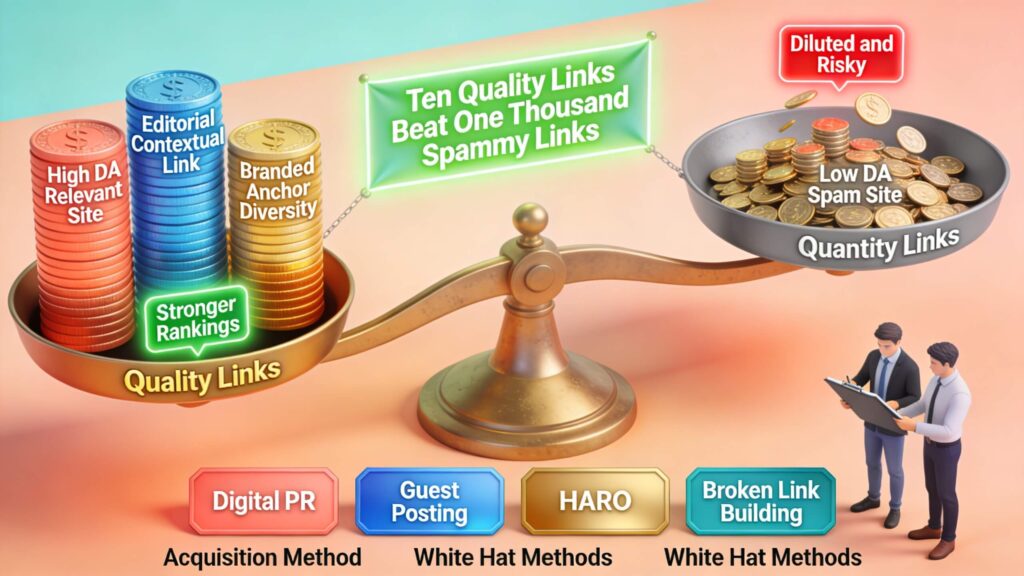
High-quality backlinks come from sites with strong domain authority (DA), topical relevance, and trustworthy link neighborhoods. For example, a link from a respected industry publication like Search Engine Land is far more valuable than dozens of links from generic article directories. Quality trumps quantity every time.
Here is where many beginners go wrong: they chase any link they can get. But one authoritative link can increase your ranking power more than fifty low-quality ones. Focus your efforts on earning links from domains that already rank well for terms related to your niche.
Conducting a Comprehensive Backlink Analysis
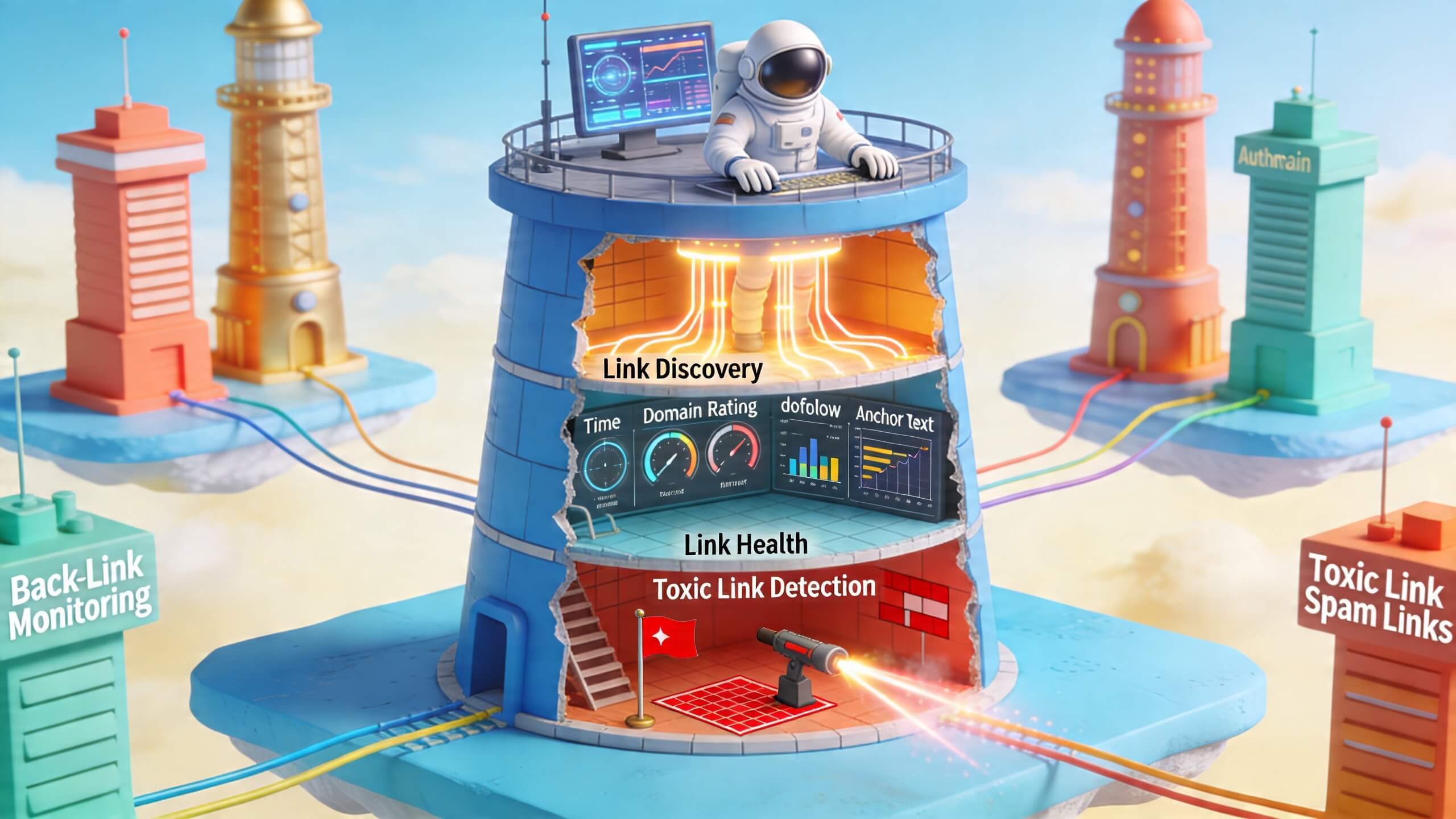
Before you can optimize your links, you need to know what you are working with. A thorough backlink analysis reveals the strengths, weaknesses, and opportunities within your current profile. It answers questions like: Which sites link to me most? What anchor text do they use? Are there any suspicious patterns?
Start by exporting your full backlink list from Google Search Console. GSC provides a free, reliable dataset of all indexed inbound links. While it lacks some metrics like DA, it is an excellent starting point. Next, use a professional tool like Ahrefs or SEMrush to enrich the data with authority scores, follow/nofollow status, and anchor text distribution.
When analyzing, pay special attention to the ratio of dofollow to nofollow links. A natural profile includes both. If every link is dofollow, it can appear manipulative. Also examine the geographic and language relevance of linking domains. A huge spike in links from foreign-language sites with low traffic is a red flag.
Competitive backlink analysis is equally critical. Identify your top three competitors and compare their profiles to yours. Which domains link to them but not to you? This reveals untapped opportunities. For instance, if a prominent industry blog has linked to your competitor but not to you, you can create better content and pitch it to the same editor.
Tracking Backlinks for Optimal Performance
Backlink tracking is not a one-time task. You must monitor the status and performance of your links continuously. Links can disappear, turn into 404 errors, or become nofollow without notice. Without tracking, you lose visibility into your profile’s health.
Set up weekly or bi-weekly checks using a dedicated tool. Most paid SEO suites offer automatic alerts when new backlinks are detected or when existing ones are lost. For a free alternative, use Google Alerts with your brand name and top keywords. This catches many new mentions, though it is less reliable for direct link tracking.
Another layer: monitor the traffic each backlink sends. In Google Analytics, go to Acquisition > All Traffic > Referrals to see which domains drive real visitors. A link that sends zero traffic might still provide SEO value through ranking signal, but a mix of both is ideal.
I often advise clients to track backlinks in a spreadsheet, noting date discovered, source domain, anchor text, link type, and current status. When combined with tool data, this becomes a powerful historical record. If a valuable link vanishes, you can quickly determine whether it was removed or the page redirected.
Performing a Detailed Backlink Audit
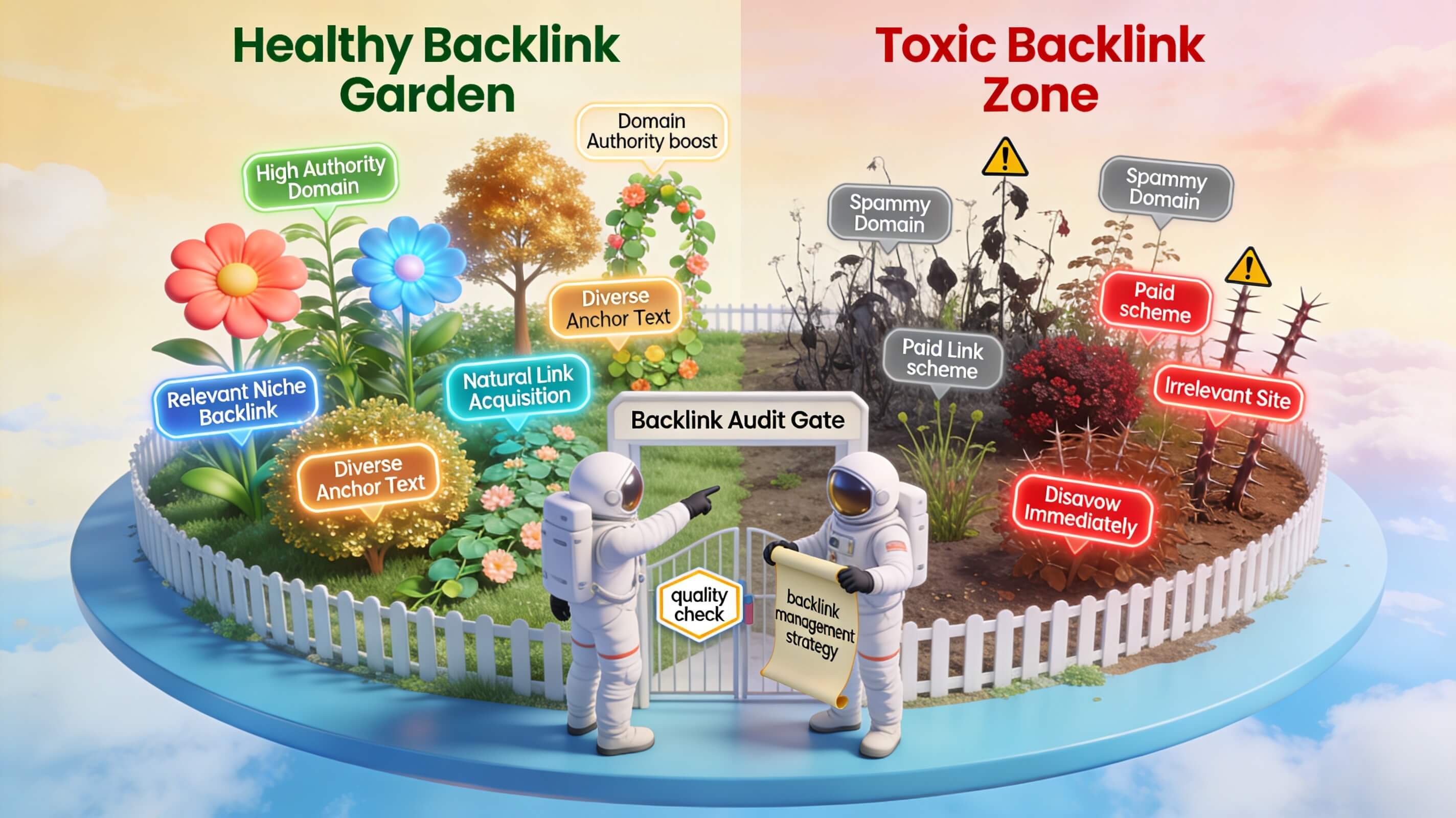
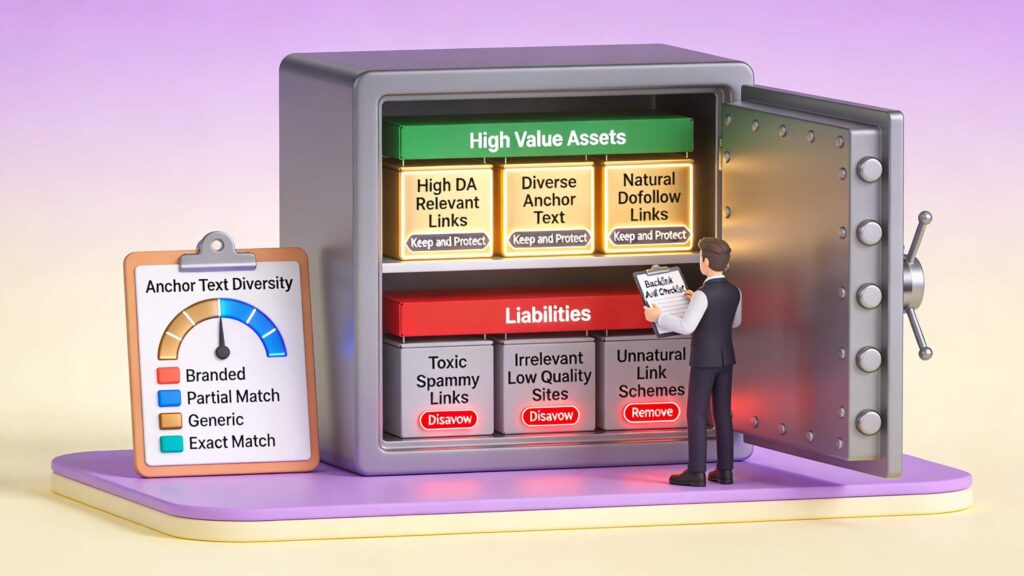
A backlink audit is a deep dive to identify and fix problematic links. Every site accumulates some low-quality links over time, especially if you have been online for years. The goal is not to eliminate every single weak link—that is impossible—but to remove or disavow the ones that clearly harm your credibility.
**Why most audits fail:** People run a report, see hundreds of links with low DA, and panic. But not every low-DA link is toxic. Context matters. A link from a small but legitimate blog in your niche is fine. A link from a site that sells links in bulk or hosts malware is dangerous.
Here is a table showing common types of problematic links and how to handle them:
| Type of Problematic Link | Indicator | Action |
|————————–|———–|——–|
| Links from known link farms | High volume, same IP cluster, spammy anchor text | Disavow immediately |
| Links from irrelevant sites | Topic unrelated, e.g., a casino site linking to a dentist | Request removal or disavow if ignored |
| Links with over-optimized anchor text | Exact-match commercial keywords across many links | Reduce anchor text diversity elsewhere |
| 404 links | Broken pages returning 404 error | Use tool to find redirect or request fix |
| Links from hacked or penalized domains | Low traffic, indexed with spam content | Disavow or remove |
To disavow links, use Google’s Disavow Links tool. But be careful: this should be a last resort. First, reach out to webmasters and ask for removal. Keep records of your outreach attempts. Only if the site owner does not respond or refuses should you submit a disavow file.
After cleaning, focus on improving your profile. Replace lost or disavowed links by building new ones from high-authority sources. A good target is to maintain a consistent growth rate—say, 5 to 10 new quality links per month for a small business site.
Monitoring Backlinks in Real Time
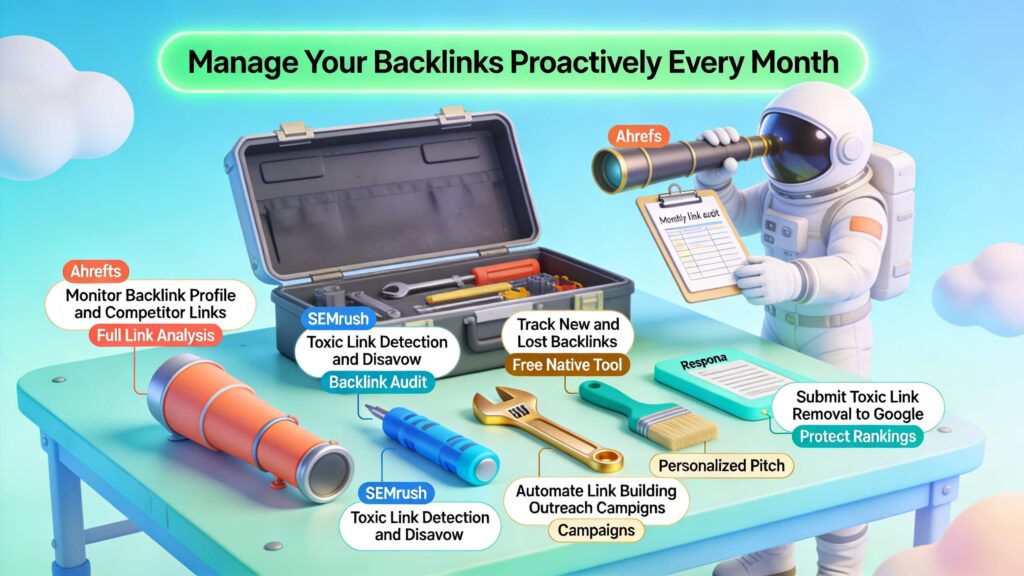
Real-time monitoring is the backbone of proactive backlink management. Instead of waiting for monthly reports to spot a sudden drop, you can catch issues within hours. This is especially important after a negative SEO attack, where competitors may spam your site with toxic links.
Use tools like Majestic or Moz’s Link Explorer with daily crawl tracking. These platforms update their indexes frequently and alert you to new or lost links. Set up email notifications for critical changes, such as a sudden spike in links from a suspicious domain or a drop in total backlink count.
The value of real-time monitoring extends beyond risk management. It also helps you capitalize on opportunities. For example, if a journalist links to a competitor after covering a trending topic, you can pivot quickly and pitch your own angle to the same journalist.
Another underused strategy: monitor link reclamation. Those are lost links you can recover. Use a tool to check if a previously linking page still contains your link. If it disappeared but the page is still relevant, reach out and ask to have it reinstated. Most webmasters will comply if you are polite and explain the value of your content.
Optimizing Existing Backlinks for Maximum Impact
Acquiring new backlinks is only half the battle. Optimizing the ones you already have can multiply their effectiveness without additional outreach. Here are five proven techniques:
**1. Anchor text optimization** — Review the anchor text of your top backlinks. Does it naturally include your target keywords? If not, you can sometimes request a change. But be subtle. Over-optimized anchor text is one of the fastest ways to trigger a manual action. A healthy mix of branded, generic (e.g., “click here”), and partial-match anchors is best.
**2. Purge low-quality links** — Use the audit data to systematically remove or disavow links that drag down your profile. Every toxic link you clean reduces the noise and helps your good links shine.
**3. Strengthen internal linking** — Internal links pass authority throughout your site. When you receive a strong backlink to one page, link from that page to other important pages on your site. This distributes the link equity and improves crawlability.
**4. Diversify link types** — Do not rely solely on guest post links. Add forum profile links, directory links, image links, and links from Q&A sites like Quora. Diversity signals natural growth.
**5. Refresh expired links** — Over time, some linking pages become outdated or removed. Use a backlink checker like Moz Link Explorer monthly to identify dead links. If the page still exists but your link broke due to a URL change, request a redirect.
Optimization is not a one-and-done task. I recommend a quarterly optimization cycle. Every three months, review your top 50 backlinks by authority and implement at least two of the above techniques on each.
Building High-Quality Backlinks the Right Way
Link building has evolved. Old tactics like mass commenting and Article Directory submissions are not just ineffective—they are dangerous. Today, quality comes from earning links through genuine value.
**Guest blogging** remains effective if you target authoritative sites and produce original research or actionable guides. Do not write generic fluff. Spend 80% of your effort on the content and only 20% on outreach.
**Broken link building** works especially well for resource pages. Find broken outbound links on relevant high-DA pages, then create a superior resource on the same topic and suggest it as a replacement. Tools like Check My Links (a Chrome extension) streamline this.
**Infographics and data visualization** attract natural links if the data is unique. Commission original surveys or compile industry statistics. Remember to include an embed code so others can share the graphic while linking back.
**Skyscraper technique** involves finding popular content in your niche, creating something more comprehensive, and contacting sites that linked to the original piece. I have seen this generate dozens of high-quality links in a single campaign.
**Strategic partnerships**—such as co-webinars, joint research, or cross-promotion—build mutually beneficial relationships that lead to organic links over time.
Avoid any tactic that promises “100 backlinks in one hour.” Those links are usually low quality and often penalized. Patience and persistence are the keys to a strong link profile.
Creating an Effective Backlink Strategy for Your Business
A strategy without context is just a checklist. Your backlink strategy must align with your broader marketing goals. Start by defining your target audience and the websites they trust. For a B2B company, industry publications and trade blogs matter more than general news outlets. For a local service business, links from city directories and local chambers of commerce can be gold.
Next, analyze your current link profile versus your competitors’. Use a tool like SEMrush’s Backlink Gap to find domains that link to multiple competitors but not to you. Prioritize those domains in your outreach.
Set measurable goals. Instead of “get more backlinks,” set a target like “acquire 10 links from sites with DA 50+ within six months.” Track progress weekly. Adjust tactics if you are not hitting milestones.
Incorporate a mix of link types—editorial links, guest posts, directory links, and mentions—to create a natural distribution. Also consider seasonal opportunities. For example, if you run an ecommerce site, pitch gift guide roundups in November.
Finally, budget time for link building like any other marketing activity. A common mistake is to treat it as a side project. Dedicate at least 5–10 hours per week to outreach, content creation, and follow-ups.
Best Practices for Long-Term Backlink Management
Consistency is the difference between an average and an exceptional backlink profile. Here are the practices I have refined over two decades:
**Create link-worthy content first.** No amount of outreach can compensate for mediocre content. Invest in original research, in-depth guides, and interactive tools that naturally attract references.
**Prioritize relevance over authority.** A link from a DA 30 blog in your industry is often more valuable than a link from a DA 70 general news site. Relevance tells Google your site belongs in conversations about your topic.
**Use diverse anchor text naturally.** As mentioned earlier, avoid over-optimization. A good rule of thumb: 60–70% branded or naked URLs, 20–30% generic, and only 10–20% exact-match keywords.
**Monitor consistently, not obsessively.** Check your profile weekly but avoid panicking over a single lost link. Focus on trends over time.
**Stay current with SEO trends.** Google updates its algorithms regularly. For instance, the helpful content update changed how Google evaluates link value. Follow authoritative blogs like Search Engine Land or Google Search Central Blog to stay informed.
**Document everything.** Keep records of your outreach, disavow files, and link changes. This documentation helps when you need to prove your actions during a manual review.
Conclusion
Backlink management is not a one-time project—it is an ongoing discipline that directly influences your site’s authority and search visibility. By understanding the core concepts, conducting rigorous audits, tracking in real time, and building high-quality links strategically, you create a resilient link profile that withstands algorithm changes and competitor pressure. The strategies outlined here have been tested across hundreds of sites in various niche, from local services to large publishers. Apply them systematically, measure your results, and refine over time.
If you are ready to take control of your link profile, start with a full audit using the free tools mentioned above. Then set a monthly schedule for tracking and outreach. With consistent effort, you will see measurable improvements in organic traffic and keyword rankings. Do not wait for your backlinks to manage themselves—take charge today.