Cart 0


Share
Table of Contents
Find Local Citations to Dominate Local Search Rankings
If you want to improve your local SEO visibility, learning how to find local citations should be your top priority. Local citations are mentions of your business name, address, and phone number on other websites, and they serve as powerful trust signals for search engines. When Google sees your business listed consistently across authoritative directories, it confirms your legitimacy and rewards you with higher rankings in local search results. In fact, local citations are one of the most effective ways to increase your online presence and attract more potential customers in your local area. Whether you run a restaurant, law firm, dental practice, or home service business, building accurate citations directly impacts your ability to appear in the coveted local pack—those top three results Google displays for local queries. Without a solid citation foundation, even the best website optimization efforts will fall short. This article will walk you through exactly how to find local citations that move the needle, audit your existing listings for errors, and leverage online directories to boost your local SEO performance. By the end, you will have a complete action plan to build a citation profile that drives real, measurable results for your business.
Understanding Local SEO and Its Connection to Local Citations
Before diving into the mechanics of finding citations, it is essential to understand how local SEO works and why citations matter so much. Local SEO is the practice of optimizing your online presence to attract more customers from relevant local searches. It encompasses everything from your Google Business Profile to your website content, review management, and of course, your citation profile. When a user searches for “plumber near me” or “best pizza in Chicago,” Google uses several factors to determine which businesses to show. Among the most important are proximity, relevance, and prominence. Prominence is heavily influenced by the quantity and quality of local citations your business has.
Local search behavior has exploded in recent years. According to Google, searches for “near me” have grown by over 500% in the past few years. Nearly half of all Google searches have local intent, meaning people are looking for products or services in their immediate area. For businesses, this represents an enormous opportunity—but only if you show up in those search results. A strong local SEO strategy ensures that when someone searches for what you offer, your business appears front and center.
Citations directly influence prominence because they provide external validation of your business information. Every time your name, address, and phone number appear on a reputable website, search engines gain confidence that your business is real, established, and trustworthy. This is especially important for new businesses that need to build authority quickly. Without citations, you are essentially asking Google to trust your business based solely on your own website—which is rarely enough to rank well.
The Power of Local Citations for Your Business
Local citations are far more than just directory listings. They are foundational elements of your local SEO strategy that impact rankings, customer trust, and overall online visibility. When a search engine finds your NAP (Name, Address, Phone number) on a trusted directory, it verifies the accuracy of your business information. This verification helps improve your local search rankings and increases your chances of being found by potential customers.
Beyond SEO, citations also serve as discovery tools for consumers. Many people still use directories like Yelp, Yellow Pages, and Angi to find and vet service providers. If your business is not listed on these platforms, you are missing out on direct traffic from highly motivated buyers. Additionally, consistent citations build credibility. When a potential customer sees your business listed on multiple authoritative websites with the same information, they are more likely to trust you and reach out.
The power of citations also extends to voice search. With the rise of virtual assistants like Siri, Alexa, and Google Assistant, local search results are frequently delivered based on citation data. If your NAP is inconsistent or missing from key directories, voice search devices may not find your business at all. This makes citation building an investment that pays dividends across multiple channels.
Why Finding Local Citations Is Critical for SEO Success
Many business owners underestimate how much citations affect their rankings. The truth is that Google uses citations as a key ranking signal for local search. When your business is mentioned on authoritative sites with consistent NAP data, it sends a strong signal that your business is legitimate and relevant to local searchers. Conversely, inaccurate or inconsistent citations can harm your rankings and confuse both search engines and customers.
Citations also contribute to your overall backlink profile. Many directories allow you to include a link back to your website, which can improve your domain authority over time. While not all directory links are high quality, links from authoritative, locally relevant sites carry significant weight. This dual benefit—both as a citation and a backlink—makes directory listings a cost-effective SEO tactic.
Another critical reason to focus on finding local citations is competitive advantage. Your competitors are likely already building citations. If they appear on more directories with better consistency, they will outrank you even if your website is stronger. Conducting a citation gap analysis against top competitors reveals opportunities you might be missing. By systematically finding and fixing citations, you level the playing field and often leapfrog competitors who are not paying attention to this detail.
Authoritative Business Directories: Where to Find Local Citations First
Not all directories are equal. When learning how to find local citations, focus on authoritative business directories that carry weight with search engines. These are sites with high domain authority, strong local relevance, and substantial traffic. Getting listed on these platforms provides the most SEO benefit.
Your first priority should always be Google Business Profile. This is the single most important local listing you can manage. It goes beyond a simple citation—it controls how your business appears in Google Maps, local search results, and the knowledge panel. Ensure your profile is fully verified, optimized with accurate categories, and updated regularly with posts and photos.
After Google, focus on other major directories like Yelp, Bing Places for Business, Apple Maps, Facebook Business Page, and Yellow Pages. These platforms have high authority and are frequently used by consumers. Next, move to industry-specific directories that are relevant to your niche. For example, if you run a restaurant, prioritize OpenTable and Zomato. If you are a dentist, look at Healthgrades and Zocdoc. Industry-specific directories often have higher conversion rates because visitors are actively searching for your type of service.
Local chambers of commerce and local business associations also deserve attention. These directories are highly trusted by search engines because they are curated and rooted in the community. A listing on your city’s chamber of commerce website is a strong local relevance signal.
Table: Top Authoritative Directories for Local Citations
| Directory | Domain Authority | Best For | Key Benefit |
|---|---|---|---|
| Google Business Profile | 100 | All businesses | Controls local pack and Maps visibility |
| Yelp | 92 | Service businesses, restaurants | High consumer trust and traffic |
| Bing Places | 90 | All businesses | Impacts Bing and Alexa search results |
| Yellow Pages | 88 | Local service providers | Long-standing authority in local search |
| Facebook Business | 96 | All businesses | Social proof and local discovery |
| Chamber of Commerce | 70-80 | Local businesses | Strong local relevance signal |
How to Find Local Citations for Your Specific Niche
Finding the right directories for your business requires research and strategy. Here is a systematic approach to discover authoritative business directories that will have the greatest impact on your local SEO.
Start by analyzing your competitors. Use tools like Moz Local or Whitespark to audit the citation profiles of top-ranking competitors in your area. Look for directories where they are listed but you are not. This immediately reveals opportunities. Pay attention to industry-specific directories, as these often provide the most relevant citations.
Next, search for “best [your industry] in [your city]” and note which directories appear in the top results. These are the platforms Google trusts for your niche. Also search for “[your city] business directory” or “[your industry] association directory.” Local business associations often maintain member directories that are valuable for citation building.
Do not overlook smaller, local directories. Community blogs, local news sites, and event websites often list participating businesses. These citations may have lower domain authority but high local relevance, which can be extremely powerful for location-specific rankings.
Finally, consider using a citation building service like Yext or BrightLocal to streamline the process. These platforms can automatically submit your business to a network of directories and monitor your listings for accuracy. While there is a cost, they save significant time and reduce the risk of errors.
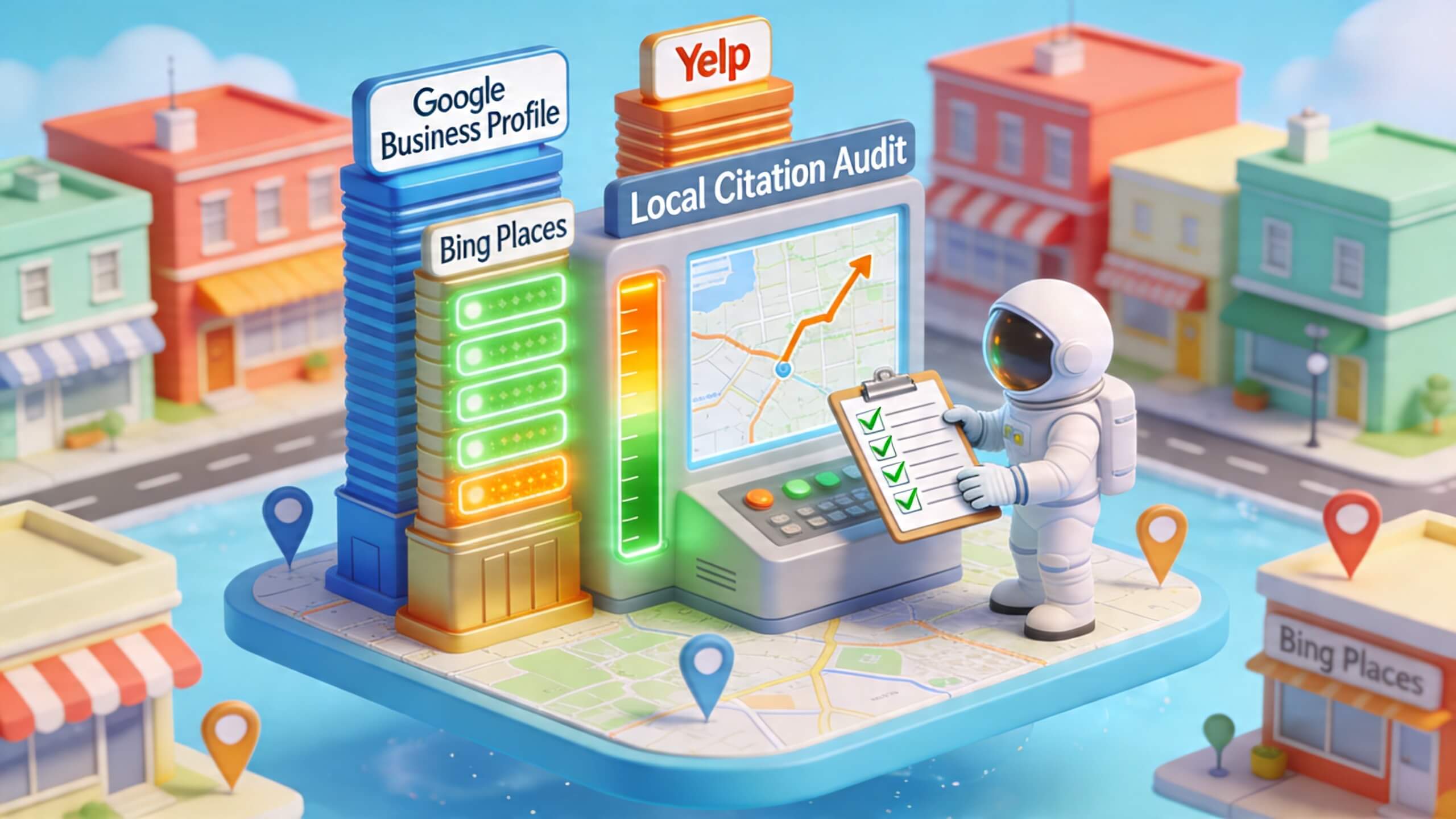
Conducting a Local Citation Audit: Finding and Fixing Problems
Before building new citations, audit your existing ones. Many businesses have inconsistent or duplicate listings that hurt their rankings. A comprehensive local citation audit helps you identify these problems and fix them.
Start by listing every website where your business currently appears. This includes social media profiles, review sites, directories, and any other platform that displays your NAP. Use a spreadsheet to track each listing along with the exact name, address, and phone number displayed.
Check for accuracy at each listing. Common issues include misspelled street names, incorrect suite numbers, different phone numbers, and variations in business name (e.g., “Bob’s Plumbing” vs. “Bob’s Plumbing Services”). Even minor inconsistencies can confuse search engines.
Next, identify duplicate listings. Search for your business name in Google and look for multiple entries. Duplicate Google Business Profiles are particularly damaging. Claim or request removal of duplicates to consolidate your online presence.
After fixing inconsistencies, prioritize ongoing monitoring. Tools like Semrush and Moz Local can alert you to new changes or errors. Set a quarterly schedule to review your citation profile and make updates as needed.
Optimizing Your Local Business Listings for Maximum Impact
Having accurate citations is only half the battle. To truly benefit from local SEO, you must optimize each listing for visibility and conversion. Start by claiming and verifying every listing. Unverified listings are less trusted by search engines and cannot be fully optimized.
Fill in every available field. Many business owners skip categories, business hours, or service descriptions, missing valuable ranking opportunities. Add high-quality photos, as listings with images receive significantly more engagement. Use relevant keywords naturally in your business description, but avoid keyword stuffing.
Ensure NAP consistency across all platforms. Your business name should be exactly the same everywhere. If you include “LLC” in your official name, include it consistently. Choose one format for your address—for example, “Street” vs. “St.”—and stick with it. The phone number should be a local number, not a toll-free one, if you want to maximize local relevance.
Finally, encourage and respond to reviews. Positive reviews improve your reputation and influence search rankings. Responding to reviews—both positive and negative—shows that you are engaged and customer-focused. This interaction can improve your local SEO performance over time.
Leveraging Online Directories for Local SEO Success
Online directories are a powerful tool for building local citations, but only if you use them correctly. Choose directories that are relevant to your industry and location. Avoid spammy or low-quality directories, as they can actually harm your SEO.
Complete your profiles carefully. Include your business name, address, phone number, website, hours of operation, and a compelling description. Use the same NAP format across all directories to reinforce consistency. Add your business to the appropriate categories and include relevant attributes, such as “wheelchair accessible” or “free Wi-Fi.”
Consistency is paramount. Before submitting to a new directory, double-check your NAP data. Even one character difference can dilute your citation authority. Use a NAP consistency tool or manual spreadsheet to track variations.
Encourage customers to leave reviews on key directories like Google and Yelp. Reviews serve as fresh content and social proof. More importantly, review signals are a known ranking factor for local search. Proactively ask satisfied customers to share their experience.
Measuring the Impact of Local Citations on Your Rankings
To understand whether your citation efforts are working, track key performance metrics. Start monitoring your local search rankings for target keywords before and after building citations. Use tools like Ahrefs or BrightLocal to track position changes over time.
Pay attention to your Google Business Profile insights. Metrics like profile views, direction requests, and phone calls reveal how well your local listing is performing. Increases in these metrics often correlate with improved citation profiles.
Track referral traffic from directory websites. If you see a steady stream of visitors from Yelp or Yellow Pages, those directories are providing direct value beyond SEO. Conversely, if a directory sends no traffic and has low authority, consider removing your listing.
Finally, monitor your citation consistency score. Tools like Moz Local provide a score that reflects how uniform your NAP data is across the web. Aim for a score above 90 percent. Fix any flagged inconsistencies immediately.
Enhancing Your Local SEO Visibility Beyond Citations
While local citations are critical, they work best as part of a broader local SEO strategy. Optimize your website for local search by including location-specific keywords in your title tags, meta descriptions, and content. Create localized landing pages for each area you serve.
Leverage Google Business Profile fully. Post updates, offers, and events regularly. Use Google Posts to engage potential customers directly in search results. Respond to every question and review promptly.
Implement schema markup, especially LocalBusiness schema, on your website. This structured data helps search engines understand your business details and can enable rich snippets in search results. Use schema to mark your NAP, business hours, reviews, and service areas.
Build high-quality backlinks from local sources. Sponsor a local event, guest post on a local blog, or partner with complementary businesses for link exchanges. These links strengthen your local authority and amplify your citation efforts.
Monitor your local SEO performance using Google Analytics, Google Search Console, and local SEO tools. Track organic traffic from local queries, keyword rankings, and conversion rates. Adjust your strategy based on data rather than assumptions.
Conclusion
Finding local citations is not a one-time task—it is an ongoing process that directly impacts your local SEO visibility and business growth. By systematically discovering authoritative business directories, auditing your existing listings for accuracy, and optimizing every profile, you build a citation foundation that search engines trust. This trust translates into higher rankings, more traffic, and ultimately more customers walking through your door or calling your phone.
The most successful local businesses treat citations as a core component of their digital marketing strategy. They prioritize consistency, monitor their profiles regularly, and expand their presence into new directories over time. They also integrate citations with other local SEO tactics like Google Business Profile optimization, localized content, review management, and schema markup.
If you are serious about dominating local search in your market, start by conducting a thorough citation audit today. Identify gaps, fix inconsistencies, and build new citations on relevant, authoritative directories. Use tools to track your progress and make data-driven decisions. The effort you invest now will compound over time, creating a durable competitive advantage that is difficult for rivals to replicate.
Ready to take action? Begin by researching your top three competitors’ citation profiles using the strategies outlined in this article. Find the directories they use that you are missing, and prioritize getting listed on those first. Combine this with a full Google Business Profile optimization, and watch your local search rankings climb. Your next customer is searching right now—make sure they find you.