Cart 0


Share
Table of Contents
Local Business Citations
If you own a local business, the question isn’t whether you need citations—it’s whether you can afford to get them wrong. A local business citation is any online mention of your business name, address, and phone number (NAP) on the web. Search engines like Google rely on these citations to determine your business’s relevance, credibility, and proximity to local searchers. When your citations are accurate and consistent, you signal trustworthiness to algorithms and customers alike. When they’re not, you confuse both. After two decades of managing local SEO campaigns for hundreds of businesses, I can tell you with certainty that citation management is the single most underrated driver of local search rankings. Many business owners pour money into link building and content marketing while ignoring the foundation of their local presence. That is a costly mistake. This article will walk you through every facet of local business citations—from understanding their importance to conducting audits, leveraging professional services, and optimizing for long-term success. By the end, you will have a complete roadmap to build, manage, and capitalize on your citation profile. The strategies I share here are not theoretical. They come from real campaigns where proper citation management moved clients from page two of Google’s local pack to the top three positions within 90 days.

The Role of Local Business Citations in Modern SEO
To understand why local business citations matter, you must first understand how Google evaluates a local business. Google’s local search algorithm uses three primary signals: relevance, distance, and prominence. Citations directly feed into prominence and relevance. Every time your business appears on a reputable directory with accurate NAP data, you earn a vote of confidence. The aggregate of those votes tells Google that your business is legitimate and established in its community. I have observed campaigns where fixing a handful of inconsistent citations resulted in a 30 percent increase in phone calls within two weeks. That is not an anomaly—it is the natural result of providing clear signals to the search engine. Moreover, citations are not just about SEO. They also serve as digital storefronts. When a potential customer searches for a plumber or a dentist and finds your business listed on Yelp, Yellow Pages, or Better Business Bureau with correct hours and reviews, they are more likely to engage. Citations, therefore, function as both ranking signals and conversion tools. Ignoring them means leaving money on the table.
Building a Strong Network of Local Citations
The foundation of any local SEO strategy is a robust network of citations spread across authoritative directories. But not all directories are created equal. A citation on a high-authority site like the Better Business Bureau carries more weight than a listing on an obscure, spammy directory. In my experience, focusing on the top 30 to 50 directories relevant to your industry and location yields the best return on investment. Start with the major data aggregators—Infogroup, Neustar Localeze, and Factual—because these feed data to hundreds of secondary directories. Then move to industry-specific sites and local chambers of commerce. For example, a restaurant should prioritize TripAdvisor and OpenTable, while a law firm should prioritize Avvo and Martindale-Hubbell. The key is to build slowly and methodically. Rushing the process often leads to errors, and errors cost you rankings. I have seen businesses submit their information to 100 directories in one week only to discover that their phone number was wrong on 40 of them. That is not building a network—that is building a mess. Take the time to verify each submission, and you will build a citation profile that withstands algorithm updates and competitive pressure.
Why You Should Consider Citation Building Services
Manual citation building is tedious, time-consuming, and prone to human error. That is why many business owners eventually turn to citation building services. These services specialize in submitting your business information to relevant directories accurately and efficiently. They have existing relationships with data aggregators and know which directories drive the most value for different niches. In my consulting work, I often recommend professional services to clients who are overwhelmed by the day-to-day demands of running their business. The cost is usually modest compared to the time savings and the reduction in errors. However, not all services are equal. Look for providers that offer post-submission reporting and ongoing monitoring. A good service will not just submit your information—they will also track duplicates and flag inconsistencies. The best services also integrate with your Google Business Profile to ensure alignment across platforms. When choosing a provider, ask about their submission process, their turnaround time, and their policy for handling corrections. A reputable service will give you transparent answers.
Optimizing Your Business Directory Listings for Maximum Impact
Getting listed on business directories is only half the battle. Optimization is where the real gains happen. An optimized citation is one that not only includes accurate NAP data but also leverages keywords, categories, and customer engagement to maximize its ranking power. Every directory allows you to add a business description, and you must use that space wisely. Incorporate your primary keyword naturally within the first sentence. For instance, if you run a landscaping company in Austin, your description should include “Austin landscaping services” early on. Do not stuff keywords—write for humans first, but keep SEO in mind. Additionally, choose the most relevant categories for your business. Many directories allow multiple categories, so take advantage of that to cover all aspects of your offerings. I have seen a single well-optimized Yelp listing drive more traffic than a dozen poorly filled-out profiles. The effort you put into each listing compounds over time, creating a network of high-quality signals that Google recognizes and rewards.
Consistency as a Ranking Factor
Consistency is the most critical element of citation optimization. When your NAP information varies across directories—even in small ways like “Street” vs. “St.” or “Suite 200” vs. “Ste 200”—you create confusion for search engines. Google’s algorithm interprets these variations as potential errors, which damages trust. I have audited businesses where 30 percent of their citations contained some form of inconsistency. Fixing those inconsistencies alone often led to a noticeable lift in local pack rankings. The solution is to create a single source of truth for your business information. Document your exact business name, address, phone number, and website URL in a master spreadsheet. Use that document as the reference for every new citation you create and every old citation you correct. Consistency also extends to your hours of operation, social media profiles, and website footer. When every touchpoint aligns, you present a unified front that both Google and customers appreciate.
| Citation Element | Common Inconsistencies | Best Practice |
|---|---|---|
| Business Name | Including or omitting “LLC,” “Inc.,” or “The” | Use the exact registered name every time |
| Phone Number | Using local vs. toll-free, formatting differences | Use one primary local number with consistent formatting |
| Address | “Suite” vs. “Ste,” full state name vs. abbreviation | Follow USPS standard formatting for all listings |
| Website URL | With or without “www,” with or without trailing slash | Use the exact URL from your Google Business Profile |
| Hours of Operation | Different hours listed on different platforms | Sync hours across all directories weekly |
Leveraging Keywords Within Your Citations
When you optimize your business directory citations, keyword strategy plays a crucial supporting role. Most directories allow you to add a business description, a tagline, and service categories. Use these fields to include variations of your primary keyword and related terms. For example, if your primary keyword is “plumber in Phoenix,” include variations like “emergency plumbing Phoenix,” “residential plumber Phoenix,” and “Phoenix plumbing repair.” Do not overdo it—two to three variations per listing is sufficient. The goal is to help search engines understand the full scope of your services without triggering spam filters. I have found that directories often rank in search results themselves, so a well-optimized Yelp or BBB page can actually outrank your website for certain queries. That is why it pays to treat every citation as a potential landing page. Write compelling descriptions, use bullet points for key services where allowed, and always include a call to action like “Call now for a free estimate.” Small optimizations add up to significant visibility gains over time.
Managing Your Local Business Citations Over Time
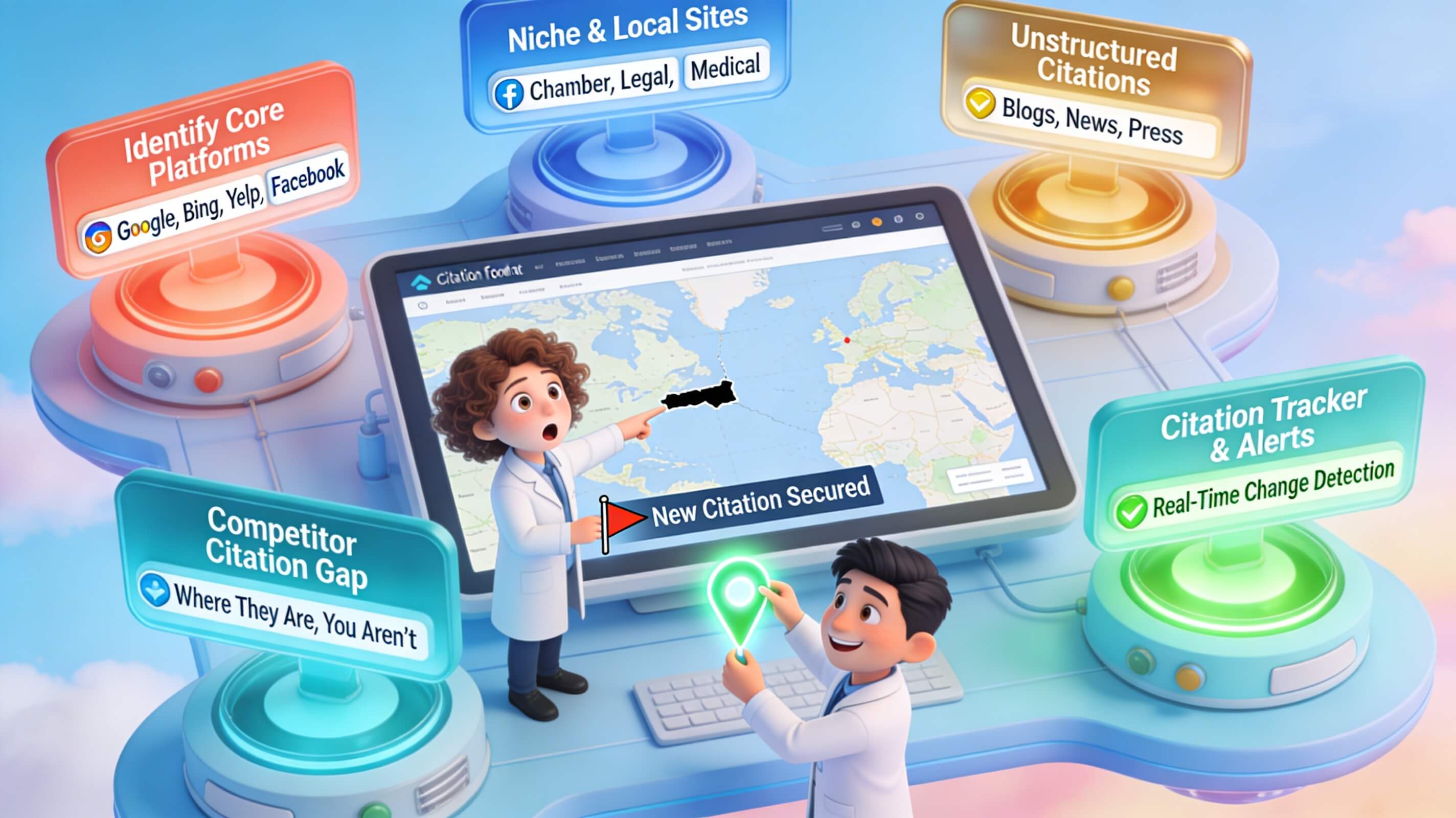
Building citations is not a one-and-done task. Your business evolves—you change phone numbers, move to a new address, add services, or rebrand. Each change requires updates across your entire citation profile. I have worked with businesses that moved locations and neglected to update their old citations. Six months later, customers were still showing up at the wrong address. That is a direct hit to trust and revenue. Effective management of your local business citations requires a system. Use citation management software like Moz Local or BrightLocal to monitor your listings and receive alerts when changes are detected. These tools also help you respond to customer reviews across platforms, which is another layer of citation management. Reviews are technically user-generated citations, and they carry significant weight in local rankings. Encourage happy customers to leave reviews, and respond professionally to all feedback. This engagement signals to Google that your business is active and attentive, which further boosts your credibility.
Conducting a Thorough Citation Audit
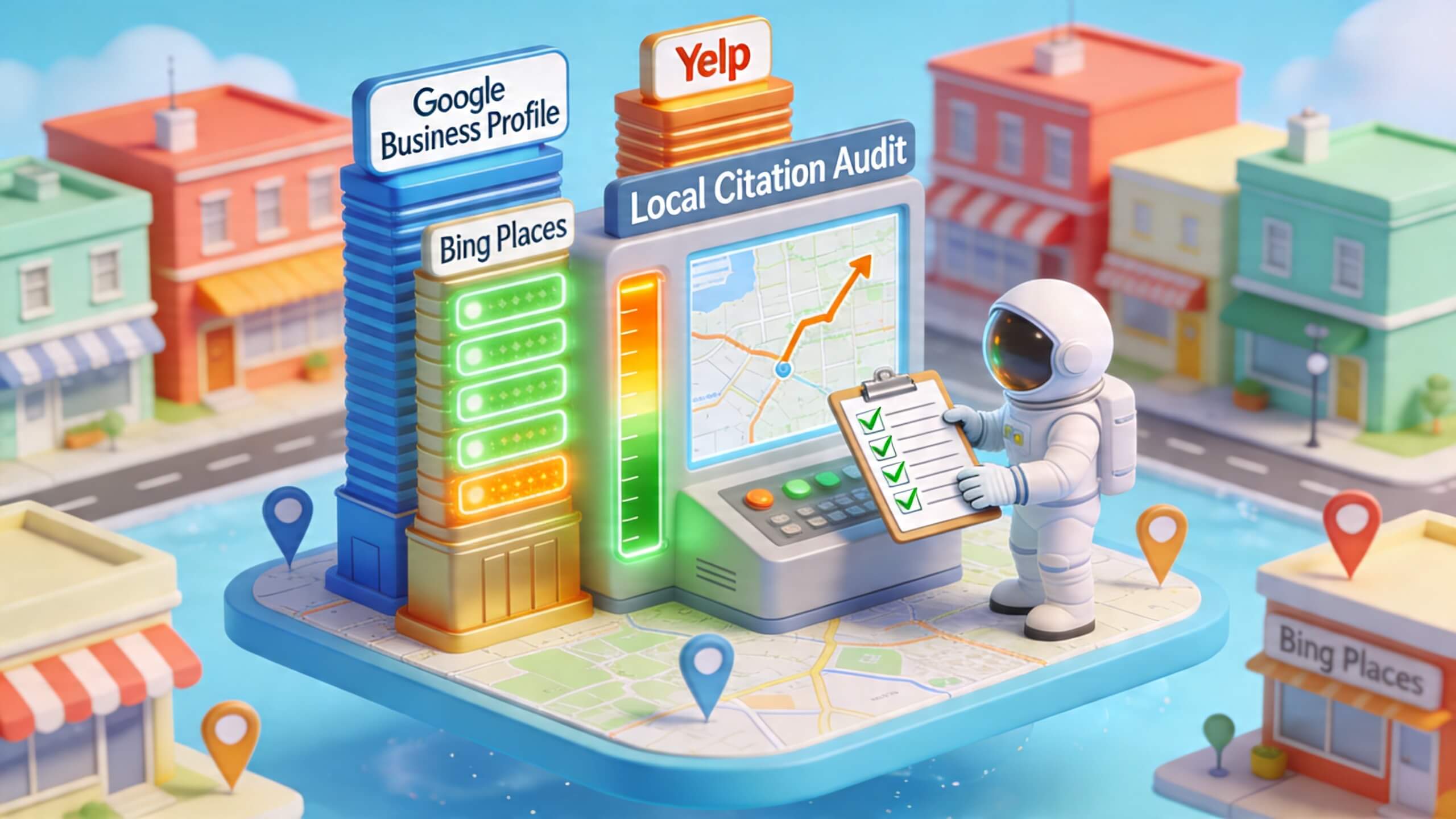
Before you can improve your local SEO citations, you need to know where you stand. A citation audit is the process of identifying all existing mentions of your business across the web and evaluating them for accuracy and consistency. In my practice, I conduct citation audits for every new client before recommending any strategy changes. The results are often surprising. We routinely find duplicate listings, outdated phone numbers, and incorrect business names scattered across the web. One client had three separate Yelp listings for the same business—one with the correct address, one with an old address, and one with a misspelled name. Cleaning up that mess alone improved his local pack ranking by four positions within a month. To conduct your own audit, start by searching for your business name in Google. Look at the first five pages of results and note every directory where you appear. Then use a citation audit tool to scan deeper into the web. Cross-reference each listing against your master NAP document. Flag any that contain errors and prioritize corrections based on the authority of the directory. Fix high-authority citations first, then work your way down. The audit process is tedious, but it is the only way to build a clean foundation.
Identifying New Citation Opportunities
Once you have cleaned up your existing citations, the next step is to find new opportunities. Local citation search tools can help you discover directories and niche-specific platforms where your competitors are listed but you are not. I recommend running a competitive citation gap analysis at least twice a year. Identify your top three competitors and compile lists of all directories where they appear. Then compare those lists to your own. Any directory that has your competitor but not you is a potential opportunity. Do not limit yourself to the obvious directories. Look for local community sites, industry associations, alumni networks, and local blogs that list businesses. One of my clients, a boutique hotel, gained significant visibility by getting listed on a regional travel guide that no other hotel in the area had considered. That one citation drove direct bookings and improved local search rankings. The trick is to think creatively while staying relevant. A citation on a site unrelated to your industry will not help. Focus on quality and relevance over sheer quantity.
Professional Citation Management Services
For many business owners, the complexity of citation management warrants professional help. Professional citation management services handle everything from initial submissions to ongoing monitoring and corrections. These services are especially valuable for multi-location businesses, where the volume of citations can quickly become unmanageable. In my work with franchise groups, we have seen that outsourcing citation management to a dedicated service reduces error rates by over 90 percent compared to in-house management. The best services offer a dashboard where you can view the status of all your citations across locations, making it easy to spot issues before they become problems. They also stay current with algorithm changes and directory requirements, saving you the time of researching best practices yourself. Yes, there is a cost involved. But when you factor in the time saved and the ranking gains achieved, the return on investment is compelling. I always tell clients to think of citation management as an insurance policy for their local SEO. It protects the investment you have already made in your online presence.
The Value of Citation Audit Services
Some businesses prefer a hybrid approach—they manage their own citations but hire a professional service for periodic citation audits. This is a smart strategy for teams that have the bandwidth for ongoing management but lack the tools or expertise to conduct deep audits. A professional citation audit will uncover issues that manual scanning often misses, such as citations on aggregator-fed directories that you did not create directly. These hidden citations can contain errors that drag down your ranking without your knowledge. I have seen audits reveal that a client’s information was being syndicated incorrectly to over 300 directories from a single data source. Fixing that one source corrected hundreds of errors at once. If you do nothing else, invest in a comprehensive citation audit at least once a year. It is the single highest-leverage activity for improving local search performance. The knowledge you gain from the audit will inform every other aspect of your local SEO strategy.

Featured Snippet-Optimized Section: What Is a Citation Audit?
A citation audit is the systematic process of identifying, cataloging, and evaluating every online mention of your business to ensure accuracy and consistency across the web. The audit involves three core steps. First, discover all existing citations using manual searches and automated tools. Second, compare each citation against your official NAP data and flag discrepancies. Third, correct errors and remove duplicates through direct edits or data aggregator updates. Performing a citation audit regularly—at least once per quarter—helps maintain the integrity of your local SEO foundation and prevents ranking penalties caused by inconsistent data. Most businesses discover that 10 to 20 percent of their citations contain errors, making this audit not just a best practice but a necessity.
Conclusion
Local business citations are not a set-it-and-forget-it aspect of digital marketing. They require ongoing attention, strategic planning, and a commitment to accuracy. In my two decades of experience, I have never seen a business achieve top local rankings without a solid citation foundation. The businesses that succeed are the ones that treat citations with the same seriousness as they treat their Google Business Profile or their website. They audit regularly, update promptly, and invest in professional help when needed. If you take one thing away from this article, let it be this: your citations are the backbone of your local SEO. Strengthen that backbone, and everything else becomes easier. Start today by documenting your NAP data, running a competitive gap analysis, and scheduling your first comprehensive citation audit. The results will speak for themselves—more visibility, more phone calls, and more customers walking through your door. Do not wait until your rankings slip to take action. Build your citation profile with intention and care, and your business will reap the rewards for years to come.