
Cart 0
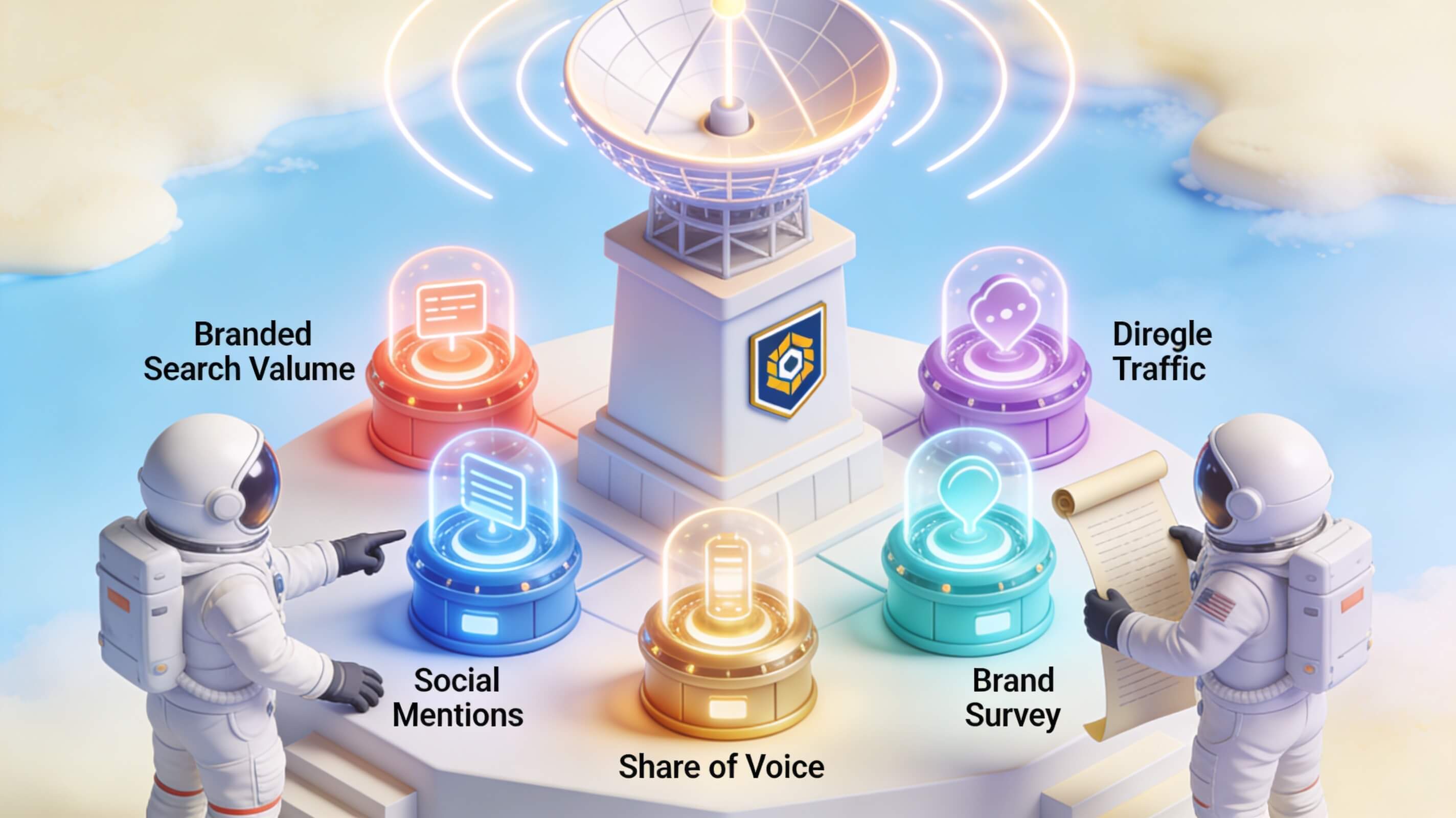

Share
Table of Contents
How to Measure Brand Awareness
Mastering how to measure brand awareness is the cornerstone of modern marketing strategy, enabling businesses to transform abstract perceptions into concrete, actionable data. In 2024’s hyper-competitive landscape, understanding whether your target audience recognizes, recalls, and positively associates with your brand is not optional—it is essential for survival and growth. Without precise measurement, marketing budgets risk being wasted on campaigns that fail to build meaningful visibility. This guide provides a comprehensive, data-driven framework for evaluating brand awareness, moving beyond vanity metrics to uncover true brand health. You will learn to deploy quantitative surveys, analyze social listening data, calculate ROI from awareness initiatives, and interpret results to refine your strategy. Whether you are a CMO overseeing global campaigns or a founder scaling a startup, the methodologies outlined here will empower you to make informed decisions that maximize marketing impact and drive sustainable business outcomes.
Understanding Brand Awareness Metrics and Their Strategic Importance
Brand awareness is consistently ranked as the most critical marketing metric. According to Nielsen’s annual marketing report, 63% of marketers identify it as vital to measuring success, with 27% rating it as extremely important and 36% as very important. This prioritization is logical: consumers cannot purchase from brands they do not recognize or recall. However, measuring brand awareness requires a structured framework that translates abstract concepts like recognition and recall into quantifiable data points. Effective measurement relies on tracking multiple complementary metrics rather than a single indicator, creating a comprehensive picture of brand health. These metrics allow for comparisons across time periods, campaigns, and competitors, revealing whether your visibility is growing, stagnating, or eroding.
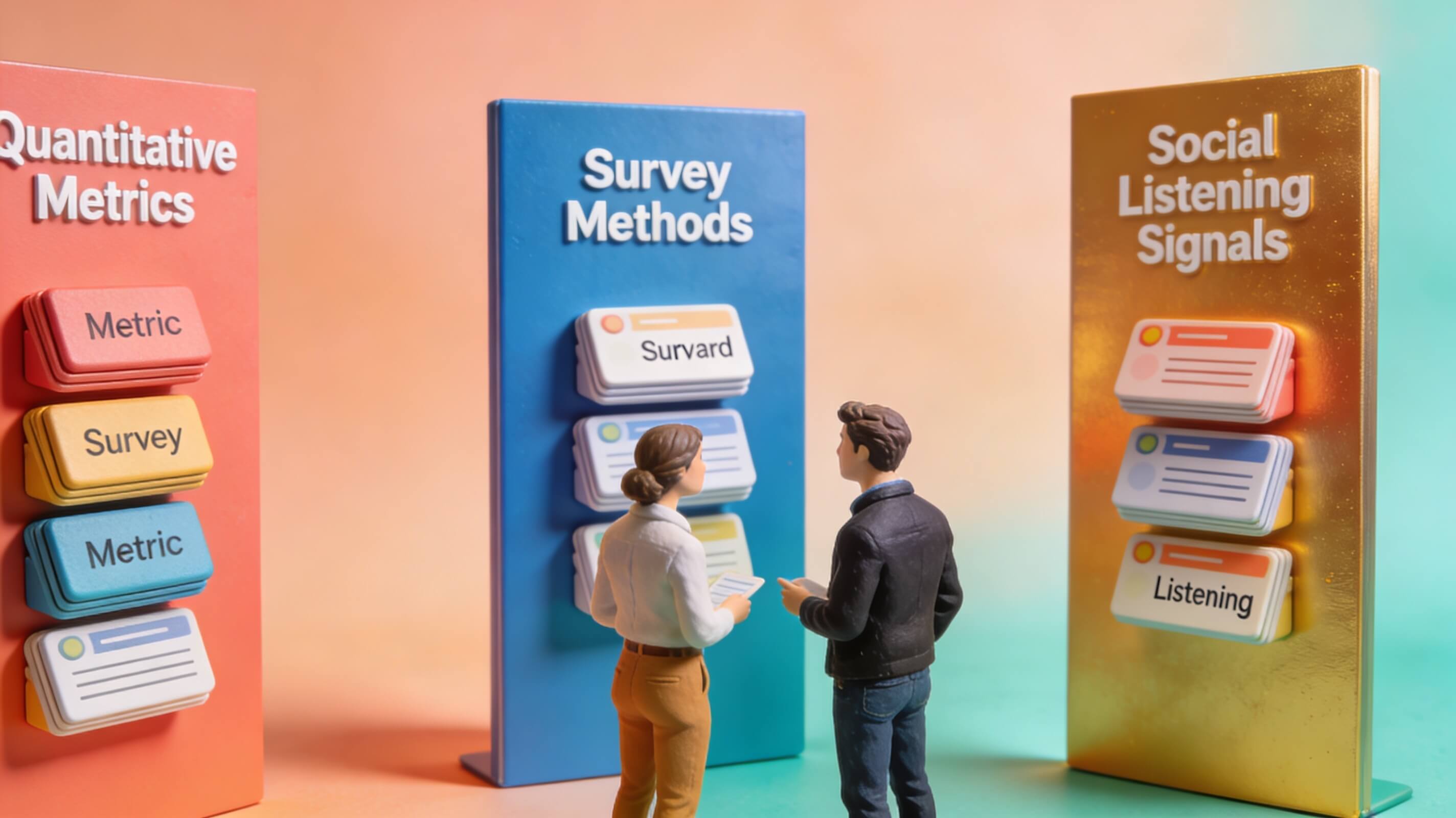
To build a robust measurement system, you must first understand the core components of brand awareness. Brand recognition measures the percentage of consumers who correctly identify your brand when presented with visual or verbal cues, such as a logo, tagline, or product packaging. This indicates passive awareness—consumers know your brand when they see it, even if they cannot spontaneously recall it. High recognition rates provide a shelf advantage in retail environments and improve advertising effectiveness by reinforcing existing familiarity rather than introducing a new concept. In contrast, brand recall assesses spontaneous memory. It represents top-of-mind awareness—when consumers name your brand first in response to a category question without any prompting. Superior recall drives purchase decisions, as consumers default to brands they remember. Brand association examines the attributes, values, and emotions consumers connect with your brand. These associations shape differentiation and positioning. For instance, luxury brands cultivate prestige, while value brands emphasize affordability. Measuring associations reveals whether your intended positioning aligns with consumer perception.
Quantitative Measurement Techniques for Data-Driven Brand Awareness
Quantitative techniques provide numerical data that enables statistical analysis, trend identification, and performance benchmarking. These methodologies answer how to measure brand awareness through objective metrics rather than subjective impressions, supporting evidence-based decision-making. The most direct approach is deploying brand awareness surveys and research studies. Well-designed surveys ask target audiences specific questions about brand knowledge, recognition, and recall. Aided awareness questions present brand names and ask respondents to identify familiar options, while unaided awareness questions require respondents to name brands in a category without prompts. Brand attribute mapping asks respondents to associate specific characteristics with brands. Effective surveys use representative samples, consistent question formats for longitudinal tracking, and a balance of closed-ended questions for quantifiable data with open-ended questions for nuanced insights. Tools like SurveyMonkey and Qualtrics facilitate this process, allowing you to embed images for recognition testing and randomize question order to avoid bias.
Social media monitoring and measurement generate vast quantitative data revealing awareness through measurable interactions and mentions. Tracking brand mentions, follower growth rates, share of voice (your mentions relative to competitors), and engagement rates provides real-time indicators. Social listening tools like Sprinklr, Brandwatch, and Brand24 aggregate data across platforms, enabling comprehensive measurement without manual tracking. These platforms analyze conversations, detect sentiment, and generate reports showing visibility trends over time. Website traffic and search analytics offer indirect awareness insights through metrics like direct traffic (visitors arriving without a referral source, indicating intentional brand searches), branded search volume (queries containing your brand name), and referral traffic from external mentions. Increases in these metrics correlate with growing awareness. Tools like Google Trends, SEMrush, and Ahrefs reveal search query frequency trends, allowing you to compare your branded search volume against competitors. Advertising and media measurement generates quantifiable metrics through impression tracking, reach analysis, and frequency monitoring. Impressions count ad views, reach measures unique individuals exposed, and frequency calculates average exposures per person. Brand lift studies, which compare awareness levels before and after campaigns, quantify advertising effectiveness. Nielsen’s Brand Impact Norms database, analyzing over 1,000 podcast and influencer ads, shows median brand recall exceeding 70% among exposed consumers, demonstrating measurable impact from emerging media investments.
Brand Recognition Analysis: Measuring Visual and Verbal Identification
Brand recognition analysis specifically assesses consumers’ ability to identify your brand when presented with brand elements. This provides critical insights into visual identity effectiveness and advertising campaign success. Recognition testing reveals whether your brand assets—logos, colors, taglines, or packaging—actually register with target audiences. Recognition surveys present your brand elements alongside competitors or decoys, asking respondents to identify which they recognize. For example, you might show a logo and ask, “Which of these brands do you recognize?” or display product images and request brand identification. You can also test audio clips of jingles or taglines. Results quantify recognition rates across different elements, revealing which assets perform strongest and which need refinement. This is particularly valuable for rebranding efforts or when launching new visual identities.
Tools and platforms for recognition analysis include Google Analytics, which tracks visitors arriving through brand-related searches, indicating recognition-driven traffic. Social listening platforms monitor visual brand mentions, including logo appearances in user-generated content and images. Eye-tracking studies provide advanced insights by measuring where consumers look when viewing advertisements or retail displays, revealing whether brand elements capture attention effectively. Heat mapping tools visualize attention patterns, identifying which assets receive focus versus being overlooked. For example, a beverage company might use eye-tracking to test a new can design, discovering that consumers focus on the flavor label but miss the brand logo entirely. This data-driven insight allows for immediate design adjustments to improve recognition. For a practical application, consider using SurveyMonkey to run a simple recognition test with your target audience, presenting your logo alongside competitors and measuring identification rates.
Brand Sentiment Analysis: Understanding Emotional Associations
Brand sentiment analysis examines the emotional tones and attitudes accompanying brand awareness. Awareness without favorable sentiment provides limited value—consumers may recognize your brand while harboring negative perceptions that prevent purchase consideration. Social listening for sentiment measurement uses AI and Natural Language Processing (NLP) to detect customer sentiment in real-time across online channels. Advanced tools like Sprinklr accurately identify nuanced emotions, including sarcasm and complex feelings, while offering customizable sentiment models for industry-specific terminology. These tools categorize mentions as positive, negative, or neutral, generating sentiment scores that reveal overall brand perception. Monitoring conversations across Twitter, Facebook, Instagram, Reddit, forums, blogs, and review sites provides comprehensive coverage. Platforms track sentiment trends over time, alerting you to sudden negative spikes that require immediate response. Competitive sentiment comparison reveals whether your brand sentiment surpasses or trails competitors.
Review and feedback analysis provides rich sentiment data directly from customers. Online reviews on Google, Yelp, Amazon, and industry-specific platforms offer both average ratings and text analysis that reveals specific attributes driving sentiment. Customer feedback surveys, support interactions, and Net Promoter Score (NPS) measurements supplement public review sentiment. NPS asks customers how likely they are to recommend your brand on a 0-10 scale, categorizing them as promoters (9-10), passives (7-8), or detractors (0-6). NPS scores indicate sentiment strength and predict growth potential based on customer advocacy. Sentiment analysis tools like Brandwatch offer tracking across 44 languages with improved accuracy, including visual sentiment analysis that detects logos in images. Brand24 provides real-time monitoring with alert systems for negative sentiment spikes. Talkwalker delivers multi-channel analysis spanning social media, news, blogs, and forums with customizable dashboards and crisis detection. For a deeper dive, explore Brandwatch to see how their NLP capabilities can uncover hidden sentiment patterns in your mentions.
Brand Recall Measurement: Assessing Top-of-Mind Awareness
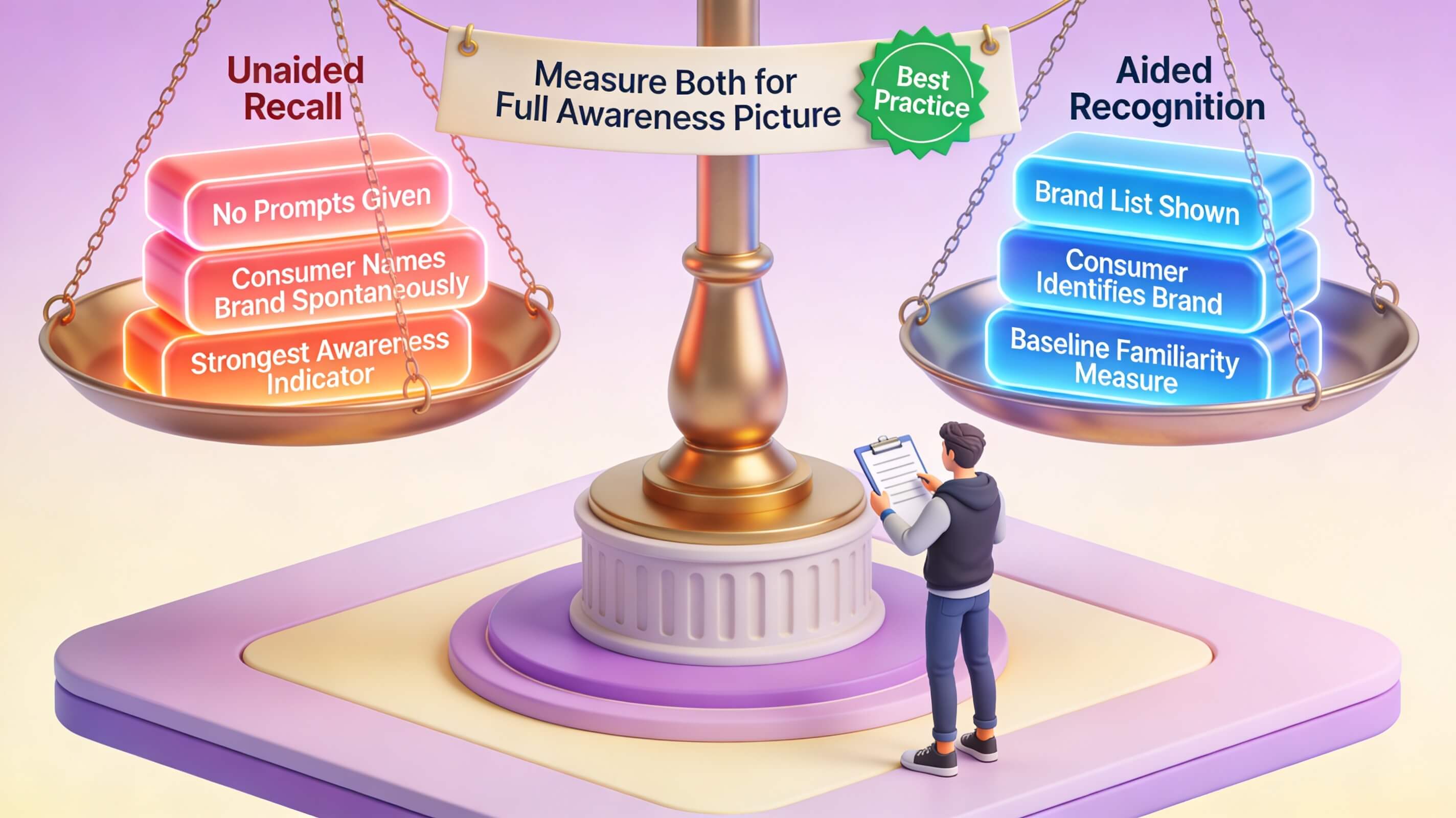
Brand recall measurement evaluates consumers’ ability to remember your brand spontaneously without prompting. This represents the strongest form of brand awareness, indicating deep mental associations that position your brand for consideration during purchase decisions. Aided versus unaided recall testing distinguishes between different levels of memory strength. Aided recall tests provide category context or competitor lists, asking respondents which brands they recognize. For example: “Which of the following soft drink brands have you heard of: Coca-Cola, Pepsi, Dr. Pepper, Sprite?” This measures recognition within context, revealing awareness when memory receives support. Unaided recall tests ask open-ended questions without brand suggestions: “Name all the soft drink brands you can think of.” Responses reveal spontaneous brand memory—brands named first demonstrate strongest recall (top-of-mind awareness), while brands requiring longer retrieval time show weaker associations. Unaided recall better predicts purchase behavior because real shopping decisions rarely present all options simultaneously.
Top-of-mind awareness analysis measures which brand consumers name first in response to category questions. Only one brand per respondent achieves top-of-mind status, making it the most competitive awareness metric. Tracking top-of-mind percentages over time reveals whether your brand strengthens or loses category leadership. Category leadership correlates strongly with top-of-mind awareness. Brands like Kleenex for tissues or Google for search dominate category conversations, translating into market share advantages. Building top-of-mind awareness requires consistent messaging, distinctive positioning, and sustained visibility investments. For instance, a startup entering the meal kit delivery market might run unaided recall surveys quarterly. If only 5% of respondents name the brand spontaneously versus 40% for the market leader, the startup knows it needs aggressive awareness-building campaigns focused on category association. Using a tool like Qualtrics can streamline the deployment of these surveys and provide statistical rigor for your findings.
Brand Perception Assessment: Understanding Consumer Viewpoints
Brand perception assessment examines how consumers view your brand beyond simple awareness. It explores the attributes, personality traits, value propositions, and competitive positioning consumers associate with your brand. Perception shapes preference—brands may achieve high awareness while suffering poor perception that prevents consideration. Perception surveys and questionnaires provide direct customer insights through questions exploring feelings, associations, and experiences. Effective perception questions include: “How would you describe our brand in three words?” “On a scale of 1-10, how likely are you to recommend us?” “What emotions come to mind when you think of our brand?” and “How does our brand compare to competitors?” Semantic differential scales measure perception across attribute continuums (innovative/traditional, expensive/affordable, friendly/distant), revealing nuanced positioning perceptions. Likert scales assess agreement levels with perception statements like “This brand understands people like me.” Combining quantitative scales with qualitative open-ended questions provides both measurable data and contextual understanding.
Focus groups and qualitative research enable in-depth perception exploration through guided discussions with 6-10 participants representing target audiences. Moderators probe perceptions, encouraging participants to articulate feelings and associations they might not express in surveys. Focus groups reveal why consumers hold specific perceptions, uncovering motivations behind preferences and objections. In-depth interviews provide one-on-one discussions, allowing deeper individual exploration without group dynamics influencing responses. These work particularly well for B2B perception research or sensitive topics. Online reputation monitoring captures digital conversations that shape brand perception. Monitoring review sites, social media, forums, and news coverage reveals public perception in real-time. Reputation management platforms aggregate mentions, analyze sentiment, and track perception trends. Responding to online feedback actively shapes perception—addressing negative reviews demonstrates customer care, potentially converting detractors into advocates. Amplifying positive mentions reinforces favorable perceptions. For a comprehensive platform, consider Brand24 to monitor online conversations and track perception shifts in real-time.
Brand Engagement Evaluation: Measuring Active Interactions
Brand engagement evaluation measures how actively consumers interact with your brand beyond passive awareness. Engagement indicates stronger connections than awareness alone—engaged consumers invest time and attention, signaling genuine interest likely to convert into purchases and loyalty. Social media engagement metrics provide extensive data revealing how audiences interact with brand content. Key metrics include likes and reactions (showing approval), comments (indicating willingness to participate in conversations), shares (extending brand reach to new audiences), saves (demonstrating content value), clicks (measuring call-to-action effectiveness), and video views (revealing content consumption rates). Engagement rates normalize raw engagement numbers by audience size, enabling fair comparisons across brands and time periods. Calculate this by dividing total engagements by total followers, then multiplying by 100. High engagement rates indicate strong audience connections, while low rates suggest content misalignment with audience interests.
Website interaction analysis reveals engagement through behavior metrics including time on site (longer visits indicate engagement), pages per session (more page views show exploratory interest), bounce rate (high bounces suggest low engagement), scroll depth (how far users read content), conversion events (newsletter signups, downloads, purchases), and return visitor rates (repeat visits indicate ongoing interest). Engagement analysis identifies which content types, topics, and formats generate the strongest audience responses. High-engagement content deserves amplification through social promotion and email campaigns, while low-engagement content requires optimization or replacement. Customer loyalty programs and community participation provide direct engagement measurement. Tracking enrollment rates, active user percentages, reward redemptions, and program-driven purchases quantifies engagement strength. High-performing loyalty programs can drive 12-18% revenue increases through repeat purchases and increased customer lifetime value. Brand communities, whether online forums, social media groups, or in-person events, cultivate engaged super-fans who advocate for your brand. Community metrics include membership growth, active participation rates, user-generated content volume, and member-to-member interactions. Thriving communities indicate the deepest engagement levels, transforming customers into brand ambassadors. For advanced analytics on user behavior, Google Analytics remains an indispensable free tool for tracking website engagement patterns.
Calculating Brand Awareness ROI and Business Impact
Calculating brand awareness ROI requires shifting from revenue-focused formulas to impact-based calculations. Use proxy metrics including reach (people exposed to content), impressions (content display frequency), engagement rates (interaction levels), website traffic from social media (new visitor acquisition), and share of voice (brand mention frequency versus competitors). For example, a campaign reaching 500,000 users and generating a 10% increase in branded search queries worth $10,000 in projected revenue for a $5,000 spend achieves a 200% brand awareness ROI. Connecting awareness to business outcomes demonstrates value even when campaigns prioritize reach over immediate conversions. Track awareness campaign impact on customer acquisition costs (awareness-driven leads cost less to convert), sales cycle length (aware prospects convert faster than cold leads), customer lifetime value (brand-aware customers demonstrate higher loyalty), and market share growth (awareness correlates with category share gains). Attribution modeling traces customer journeys from initial awareness touchpoints through conversions, revealing awareness campaign contributions. Multi-touch attribution assigns partial credit to awareness exposures alongside consideration and conversion touchpoints, providing a fuller ROI picture than last-click attribution models.
Brand lift studies for awareness measurement quantify changes resulting from specific campaigns by comparing pre-campaign and post-campaign survey results. Surveys ask the same awareness, recall, perception, and intent questions before and after campaigns, with differences revealing campaign impact. Metrics tracked include ad recall (campaign recognition), brand awareness increases, brand favorability shifts, purchase intent changes, and message association (campaign-brand connection strength). Control group methodologies strengthen these studies by comparing exposed groups against unexposed control groups, isolating campaign effects from general market trends. Significant lifts among exposed groups versus controls confirm campaign effectiveness. For instance, a tech company running a brand awareness campaign on LinkedIn might use a brand lift study to find that exposed users show a 15% increase in brand recall and a 10% increase in purchase intent compared to the control group. This data justifies continued investment in the channel. To set up such studies, platforms like Facebook Brand Lift Studies offer integrated tools for measuring campaign impact directly within the ad platform.
Interpreting and Acting on Brand Awareness Data
Collecting brand awareness data provides value only when effectively interpreted and translated into strategic actions. Benchmarking and competitive analysis provide context to determine whether your metrics represent success or concern. Compare your awareness data against industry benchmarks revealing how your performance stacks against category averages, competitor awareness levels showing relative market position, historical performance tracking progress over time, and campaign-specific goals assessing whether initiatives meet objectives. Share of voice analysis—your brand mentions divided by total category mentions—provides competitive awareness context. Higher share of voice typically correlates with market leadership and awareness advantages. Tracking these trends reveals whether your brand gains or loses awareness ground versus competitors. Segmentation analysis for targeted insights reveals important variations across audience segments that aggregate metrics mask. Segment data by demographics (age, gender, location, income), psychographics (values, interests, lifestyles), customer journey stages (prospects, customers, advocates), and acquisition channels (organic, paid, referral). This reveals which segments demonstrate strong awareness versus requiring attention.
Segment-specific insights enable targeted strategies addressing awareness gaps. Low awareness among high-value segments justifies focused campaigns, while strong awareness in low-value segments suggests targeting refinements. Understanding where awareness exists versus where it lacks guides efficient resource allocation. Trend identification and pattern recognition through longitudinal tracking reveals awareness trends and patterns informing strategic decisions. Rising awareness trends validate current strategies deserving continued investment. Declining trends signal problems requiring intervention—perhaps competitor activities erode share of voice or messaging loses relevance. Seasonal patterns reveal optimal campaign timing maximizing awareness impact. Correlation analysis identifies relationships between awareness and other metrics. Does increased awareness correlate with sales growth? Do certain channels drive both awareness and conversions more effectively? Understanding correlations helps optimize marketing mix allocation for maximum business impact. For comprehensive competitive benchmarking, tools like
Conclusion
Measuring brand awareness is not a one-time task but an ongoing strategic imperative for any business seeking sustainable growth. As we’ve explored, effective measurement requires a multi-faceted approach that combines quantitative metrics—such as aided and unaided recall, share of voice, and search volume data—with qualitative insights from surveys and social listening. The key lies not in tracking a single number, but in building a composite view that reveals how your brand occupies space in your audience’s mind.
Remember that raw awareness data only becomes valuable when segmented and contextualized. By analyzing awareness across different demographics, psychographics, and customer journey stages, you can identify where your brand resonates and where gaps exist. Trend analysis over time transforms static snapshots into actionable intelligence, helping you validate successful strategies and course-correct when awareness wanes. Correlation with business outcomes—such as lead generation, conversion rates, and revenue—proves that awareness is not a vanity metric but a driver of tangible results.
Ultimately, the goal of measuring brand awareness is to inform smarter decisions. Whether you are a startup building initial recognition or an established brand defending market share, consistent measurement empowers you to allocate resources efficiently, sharpen your messaging, and outmaneuver competitors. Start small, track what matters most to your business, and let the data guide your brand’s journey from being known to being preferred. In a crowded marketplace, awareness is the first step toward loyalty—and measuring it is the compass that keeps you moving in the right direction.
Comments are closed.