Cart 0

Share
Table of Contents
Social Media Services: Crafting a Digital Presence through Social Platforms
Building a brand in 2025 without a strategic presence on social platforms is like opening a store with no signage—you might have something worth buying, but the right people will never find you. Professional social media services exist to solve exactly that problem, giving businesses of every size the strategic direction, content creation capabilities, paid advertising expertise, and performance analytics needed to turn social platforms into consistent, measurable engines of growth. Whether you are trying to build brand awareness, generate qualified leads, increase direct sales, or deepen customer loyalty, the right social media services partner translates those goals into a coordinated plan that produces real results across the channels your audience actually uses.
This guide covers the full scope of what expert social media services involve—from management and marketing to advertising, engagement, content strategy, and analytics—and explains what businesses need to understand to get the most from their social media investment.
What Social Media Services Actually Include
The term “social media services” covers a broad range of activities that, when executed together, create a coherent and effective digital presence. Understanding the full scope prevents the common mistake of investing in one component—say, posting content—while neglecting others that are equally critical, like community management or paid promotion.
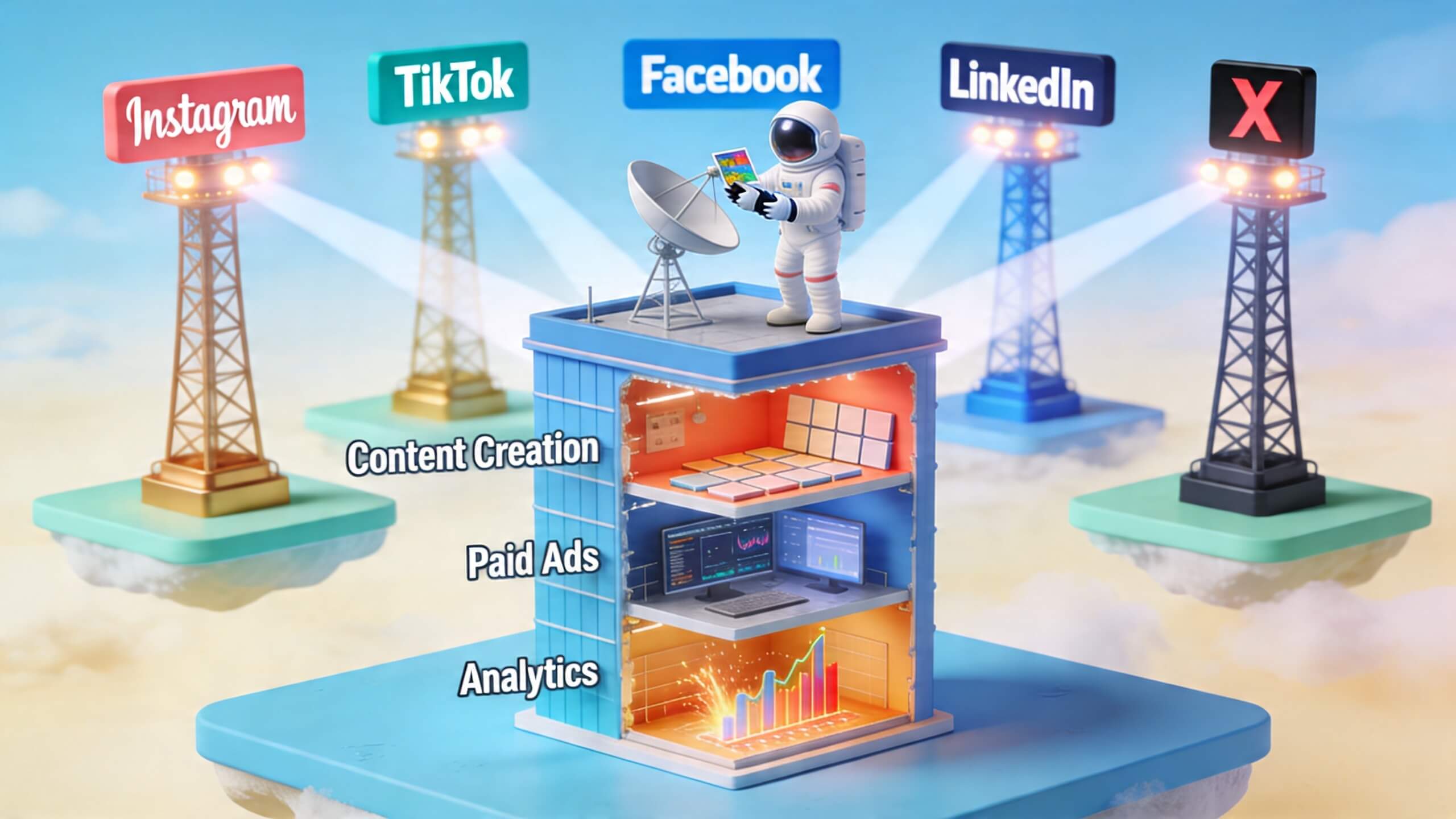
A comprehensive social media services package from a professional agency or specialist team typically includes:
- Social media strategy development – Defining goals, identifying the right platforms for your audience, setting KPIs, mapping out content themes, and creating a distribution plan aligned with your business objectives.
- Content creation and publishing – Producing original graphics, short-form video, photography, copy, and other format-specific assets, then scheduling and publishing them on a consistent cadence.
- Community management – Monitoring mentions, comments, messages, and tags across platforms; responding to follower interactions; and managing brand reputation in real time.
- Social media advertising – Planning, building, launching, and optimizing paid campaigns across Meta, LinkedIn, TikTok, X, Pinterest, and other relevant ad platforms to extend reach and drive specific conversion outcomes.
- Influencer and creator partnerships – Identifying, vetting, and managing relationships with creators whose audiences align with your brand, from nano-influencers to major content creators.
- Social media analytics and reporting – Tracking key performance metrics, interpreting the data, and providing actionable recommendations that continuously improve strategy and execution.
As the research framework published by Sprout Social’s social media marketing strategy guide outlines, the most effective programs integrate all of these components into a unified strategy rather than treating them as independent activities—because each one amplifies the others when aligned around common goals.

Elevating Your Brand with Social Media Management
Consistent, professional social media management is what separates brands that grow their following and influence over time from those that post sporadically and wonder why nothing happens. At its core, effective management creates a reliable, recognizable presence that audiences come to associate with value, personality, and trustworthiness—the three qualities that convert followers into customers.
| Management Component | What It Involves |
|---|---|
| Content planning and calendar | Mapping out content themes, formats, and publishing dates weeks in advance to ensure consistency and strategic coherence across all channels. |
| Visual brand consistency | Maintaining consistent color palettes, typography, logo usage, and image style so that every post is instantly recognizable as belonging to your brand. |
| Community engagement | Responding to comments and messages promptly, acknowledging user-generated content, and proactively engaging with relevant conversations in your niche. |
| Platform-specific optimization | Adapting content format, length, tone, and posting time to the specific algorithm and audience behavior norms of each individual platform. |
| Performance monitoring | Tracking reach, engagement, follower growth, and click-through rates to identify what is working and adjust the strategy accordingly. |
One of the most undervalued aspects of social media management is response time. Research highlighted in HubSpot’s marketing statistics report shows that consumers expect brands to respond to social media messages within hours, not days—and businesses that meet that expectation see significantly higher customer satisfaction and brand loyalty scores than those that treat social interactions as a low-priority task. This is why professional social media services typically include dedicated community management as a core deliverable, not an afterthought.
Driving Growth Through Social Media Marketing
Social media marketing encompasses all the strategies and tactics used to grow your audience, generate leads, and drive revenue through social platforms. It is both an art and a science: creative enough to produce content that genuinely resonates with real people, and analytical enough to measure what works and optimize relentlessly based on data.
The most effective social media marketing programs in 2025 integrate several tactics working simultaneously:
Organic Content Marketing
Organic content builds the foundation of your brand’s social presence by demonstrating consistent value to your audience without paid distribution. The key is variety—alternating between educational posts that answer your audience’s real questions, entertaining content that showcases personality, behind-the-scenes material that humanizes the brand, and customer story content that provides social proof. As the editorial team at Social Media Examiner’s marketing strategy hub documents extensively, brands that maintain a clearly defined content mix and post it on a consistent schedule build meaningfully larger and more engaged audiences than those that post reactively whenever inspiration strikes.
Influencer and Creator Partnerships
Influencer marketing has matured considerably since its early days of celebrity endorsements and vanity metrics. Today’s most effective creator partnerships focus on genuine alignment between a brand’s values and a creator’s authentic niche audience. Micro-influencers—those with between 10,000 and 100,000 highly engaged followers in a specific vertical—consistently deliver higher engagement rates and more meaningful conversions than macro influencers with massive but less targeted audiences. Structuring these partnerships around specific campaign goals, providing creative freedom within clear brand guardrails, and measuring outcomes at the lead or conversion level are the markers of a professional approach to influencer marketing within a broader social media services program.
Social Listening and Competitive Intelligence
Social listening—monitoring what your audience, industry, and competitors are saying across social platforms—is one of the highest-value but most frequently overlooked components of social media marketing. Tools like those described in Buffer’s comprehensive social media marketing guide enable brands to identify emerging trends before they peak, catch product feedback and complaints before they escalate, discover unmet customer needs that represent content or product opportunities, and monitor competitor positioning in real time. This intelligence feeds directly back into strategy, making every subsequent piece of content and every campaign sharper and more relevant.
Maximizing Impact with Social Media Advertising
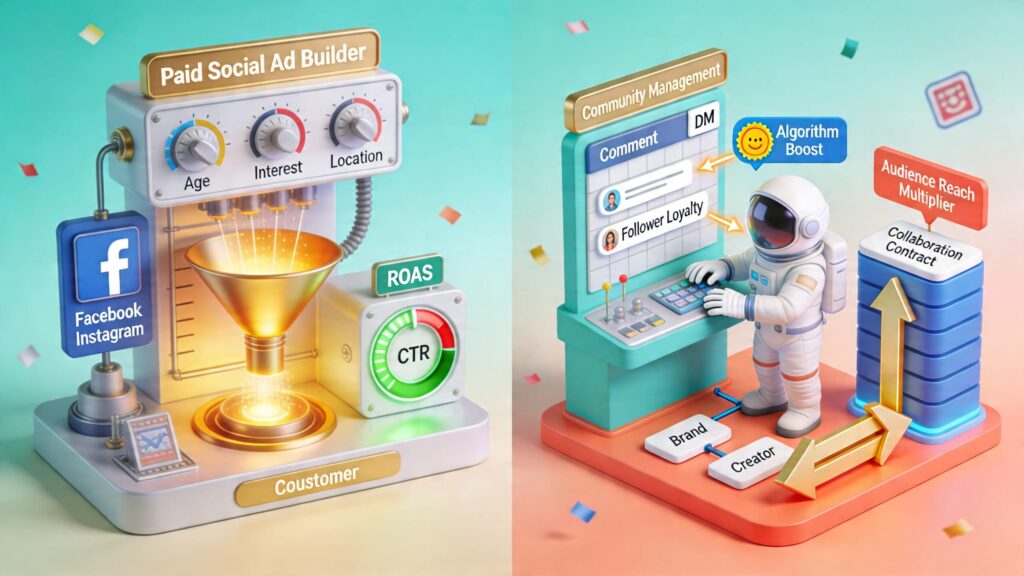
Organic reach on most major social platforms has declined substantially over the past several years as platform algorithms increasingly favor paid content in the feed. This makes strategic social media advertising not merely an optional addition to organic activity, but a necessary component of any program that aims to reach meaningful audience scale and drive measurable business outcomes. Done well, paid social is one of the most efficient forms of digital advertising available—offering granular audience targeting, multiple ad formats, real-time performance data, and the ability to reach audiences that have never heard of your brand as well as re-engage those who have.
Targeting Capabilities That Reach the Right Audience
What distinguishes social media advertising from traditional media buying is the precision of its targeting. Meta’s ad platform, for example, enables targeting by demographics, interests, behaviors, life events, job titles, income brackets, purchase history, and dozens of other dimensions—as well as custom audience targeting based on your own customer data and lookalike audiences modeled on your best existing customers. LinkedIn offers unmatched professional targeting by company, job function, seniority, and skills. TikTok’s algorithm-driven targeting surfaces ads to users based on content engagement patterns rather than declared attributes, making it particularly effective for reaching younger demographics with authentic content. Understanding which platform’s targeting capabilities best match your audience is one of the most important strategic decisions in building a paid social program.
Key Advertising Metrics to Track
| Metric | Definition | Why It Matters |
|---|---|---|
| Impressions | Total number of times your ad was displayed | Measures raw reach and campaign visibility |
| Click-Through Rate (CTR) | Percentage of users who clicked after seeing the ad | Indicates creative and messaging relevance to the target audience |
| Cost Per Click (CPC) | Average cost paid for each ad click | Benchmarks campaign efficiency and informs budget allocation |
| Conversion Rate | Percentage of clicks that result in a desired action | Directly ties ad spend to business outcomes |
| Return on Ad Spend (ROAS) | Revenue generated per dollar spent on advertising | The ultimate measure of paid campaign profitability |
| Cost Per Acquisition (CPA) | Total ad spend divided by the number of conversions | Helps evaluate whether campaign performance is economically sustainable |
Tracking these metrics consistently, interpreting them in context, and using them to drive creative and targeting adjustments is what professional social media services teams do that most in-house marketing teams struggle to find time for. As the paid social playbook documented by WordStream’s social media advertising guide emphasizes, campaigns that are reviewed and optimized at least weekly consistently outperform those left to run without active management—with even small adjustments to bid strategy, creative rotation, and audience exclusions producing meaningful improvements in ROAS over time.
Enhancing Engagement Through Smart Engagement Strategies
Follower count is a vanity metric. Engagement—the quality and frequency of real interactions between your brand and your audience—is what actually drives the business value of your social presence. High engagement rates signal to platform algorithms that your content is worth distributing widely, reduce your paid distribution costs, and create the kind of genuine community that converts followers into loyal customers and brand advocates.
Content Formats That Drive Engagement
Certain content formats consistently generate higher engagement than others, and the hierarchy shifts as platforms evolve. In 2025, short-form video dominates engagement on virtually every major platform—Instagram Reels, TikTok, and YouTube Shorts all receive preferential algorithmic treatment and generate comment, share, and save rates that static image posts typically cannot match. Interactive formats—polls, question stickers, quizzes, and live streams—drive particularly high engagement because they invite active participation rather than passive consumption. As analyzed in Later’s social media engagement strategy breakdown, brands that build interactive formats into at least 20 to 30 percent of their content mix see meaningfully higher engagement rates than those publishing exclusively static content.
User-Generated Content as an Engagement Engine
User-generated content (UGC)—photos, videos, reviews, and testimonials created by your customers and followers—is one of the most powerful engagement tools available to brands. When you share a customer’s photo using your product, respond to their post publicly, or feature their story in your content, you create a powerful social signal that says your brand values its community. This recognition motivates other followers to create and share content of their own, creating a self-reinforcing cycle that generates authentic social proof while simultaneously reducing your content production workload. Brands that actively cultivate UGC programs typically see three to five times higher engagement on UGC-featuring posts compared to brand-produced content alone.
Real-Time Engagement and Response Standards
The brands that build the strongest social communities treat every comment, question, and mention as an opportunity—not an obligation. Setting clear response time standards (ideally under two hours during business hours), training community managers to respond with genuine personality rather than scripted templates, and proactively joining relevant conversations in your niche all signal to both followers and platform algorithms that your presence is active, authentic, and worth engaging with. This investment in real-time engagement compounds over time: each positive interaction increases the likelihood that the person involved will engage again, recommend your brand, or make a purchase.
Crafting an Effective Social Media Strategy
Every element of successful social media services flows from a well-constructed strategy. Without a clear strategic foundation, even excellent content and well-funded advertising will underperform because they are not aligned toward specific, measurable outcomes. Building a social media strategy that actually works requires four foundational elements.
Goal Setting with SMART Criteria
Social media goals must be specific, measurable, achievable, relevant, and time-bound to be actionable. “Increase brand awareness” is not a goal—”increase Instagram reach by 40% within 90 days” is. Mapping each social media goal to a corresponding business objective (more followers → more website traffic → more leads → more revenue) creates a clear chain of accountability that allows you to evaluate whether your social media services investment is generating genuine business value rather than just accumulating metrics that look good in a dashboard but do not translate to growth.
Platform Selection Based on Audience Research
Not every platform deserves equal investment, and spreading resources thinly across every social network is a common and costly mistake. Platform selection should be driven by where your target audience actually spends time and how they use each platform—not by which platform is currently most popular in general. A B2B software company’s audience lives on LinkedIn and possibly X; a fashion brand’s audience is on Instagram, Pinterest, and TikTok; a home services business benefits most from Facebook and Nextdoor. Audience demographic data published in Hootsuite’s annual social media trends report provides a reliable reference for understanding which age groups, income brackets, and professional categories are most active on each platform—critical input for any strategic platform prioritization decision.
Content Planning and Editorial Calendars
A comprehensive content plan defines not just what you will publish but why, for whom, and through which distribution channels. It includes a content calendar that maps specific pieces of content to publishing dates, a content mix framework that balances educational, entertaining, promotional, and community-focused posts, and a production workflow that ensures assets are created, reviewed, and approved in time to publish consistently. Planning content four to six weeks ahead gives you flexibility to respond to real-time opportunities and trending topics without sacrificing strategic coherence.
Leveraging Social Media Analytics for Continuous Improvement
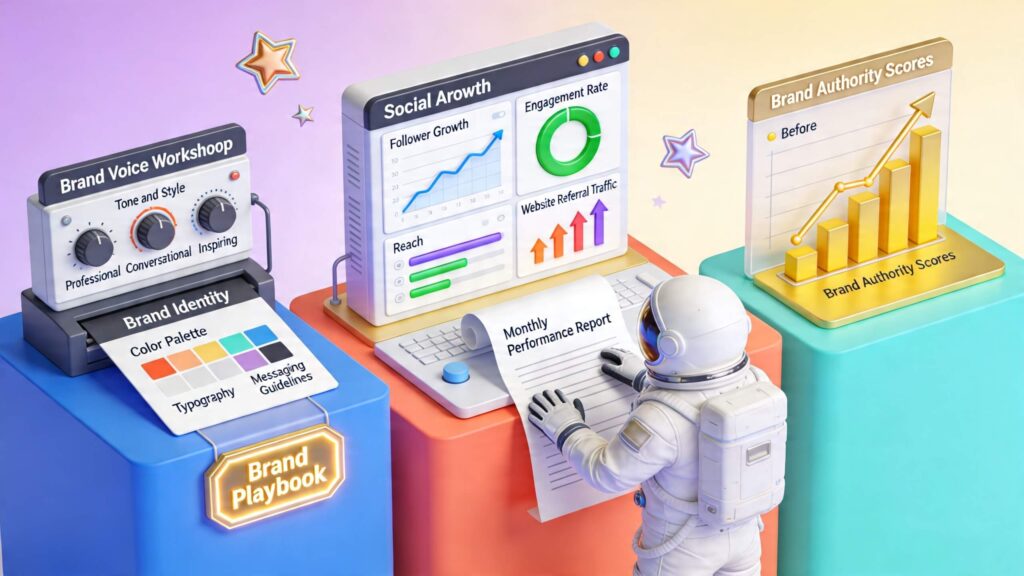
The data generated by your social media activity is one of the most valuable assets your program produces—but only if you actually use it to make decisions. Social media analytics transforms raw performance numbers into actionable intelligence that makes every subsequent piece of content, every campaign, and every strategic decision sharper and more effective than the last.
Native platform analytics—Meta Business Suite, LinkedIn Analytics, TikTok Analytics, and similar tools—provide granular data on content performance, audience demographics, reach, engagement rates, and post timing. Third-party management platforms like Sprout Social, Hootsuite, and Semrush’s Social Media Toolkit consolidate analytics from multiple platforms into unified dashboards, enable competitive benchmarking, and automate regular reporting.
The combination gives both a macro view of overall program health and micro-level visibility into what specific content formats and topics perform best with specific audience segments. As the analytics methodology described in Semrush’s social media analytics guide recommends, effective analytics practice involves reviewing content performance weekly, conducting deeper strategic analysis monthly, and using quarterly reviews to make larger structural adjustments to platform prioritization, content mix, and budget allocation.
The metrics that matter most depend on your goals. For brand awareness campaigns, reach, impressions, and follower growth are primary. For engagement programs, comment rate, share rate, and save rate are more meaningful than raw like counts. For revenue-focused campaigns, conversion rate, cost per acquisition, and ROAS are the numbers that determine whether the investment is justified.
Creating Compelling Social Media Content That Converts
Content is the fuel that powers every other element of your social media program—and the difference between content that drives real results and content that generates indifference is almost always a matter of how well it is rooted in genuine audience understanding. The best social media content does not feel like marketing. It feels like a conversation, a recommendation from a trusted friend, or a piece of genuinely useful information that arrived at exactly the right moment.
Storytelling That Resonates
Narrative is the oldest and most effective form of human communication, and it translates directly to social media. Brands that tell authentic stories—about their founding, their team, their customers, the problems they solve, and the impact they make—build emotional connections that purely promotional content never achieves. Effective social media storytelling does not require cinematic production values; a founder talking candidly to a phone camera about why they started their business, or a customer sharing an unscripted testimonial about how a product changed their daily routine, can outperform polished brand videos because authenticity, not production value, is what audiences respond to.
The content marketing principles documented by Content Marketing Institute’s social media content strategy resource consistently show that story-driven content achieves higher share rates and deeper audience connections than content focused primarily on product features or promotional offers.
Visual Quality and Brand Consistency
On visually dominated platforms like Instagram, Pinterest, and TikTok, the aesthetic quality of your content directly influences whether users stop scrolling or keep moving. This does not mean every post requires a professional photoshoot—it means maintaining a consistent visual language across your content so that your brand is immediately recognizable at a glance. Define and document your brand’s visual standards: the color palette, typography, photography style, graphic template systems, and video aesthetic that collectively create a coherent visual identity. Consistency in these elements builds the kind of brand recognition that makes organic growth compound over time.
Platform-Native Content Formats
Content that is clearly designed for one platform and then cross-posted unchanged to several others typically underperforms on every platform it is posted to. Each social network has its own native formats, audience expectations, and algorithm preferences. TikTok rewards raw authenticity and trend participation. LinkedIn rewards professional insight and data-backed commentary. Instagram rewards polished aesthetics and save-worthy carousels. Twitter and X reward sharp, opinionated takes and rapid response to breaking news. Adapting your core content concepts into platform-native executions—rather than simply repurposing the same asset everywhere—is one of the clearest markers of sophisticated, professional social media services.
Why Professional Social Media Services Deliver Better Results
Many businesses attempt to manage social media in-house, often assigning the responsibility to a team member who already has a full workload. The result is typically inconsistent publishing, reactive rather than strategic content, minimal paid advertising sophistication, and no systematic use of analytics to improve performance over time. These are not failures of effort—they are failures of bandwidth and specialization.
Professional social media services teams bring dedicated capacity, cross-industry experience, up-to-date platform knowledge, and established creative and analytical workflows that produce better results faster. They have seen what works and what does not across hundreds of brand accounts and campaign types, which means they can make better strategic recommendations and avoid costly trial-and-error experimentation. They stay current with platform algorithm updates, new ad formats, emerging content trends, and evolving best practices in a way that part-time in-house management simply cannot. And they provide accountability structures—regular reporting, performance benchmarks, and strategic reviews—that keep the program improving continuously rather than drifting.
The key is choosing the right partner. The best social media services providers are transparent about their methods, honest about timelines and realistic outcomes, structured in their reporting, and genuinely invested in understanding your business well enough to represent it authentically across the platforms that matter most to your growth.
Conclusion
Social platforms are where your audience discovers, evaluates, and decides whether to trust your brand—and the quality of your presence on those platforms shapes those decisions every single day. Professional social media services give businesses the strategic direction, creative execution, paid amplification, and analytical rigor needed to build a social presence that does real work: generating awareness, nurturing engagement, driving conversions, and building the long-term brand equity that compounds into sustainable competitive advantage.
Whether you are starting from scratch or looking to professionalize an existing social media program that has plateaued, investing in the right social media services partner is one of the most impactful decisions a growth-focused brand can make in today’s digital environment.