
Cart 0


Share
Table of Contents
Local Citation Audit: Evaluating Your Local SEO Footprint
If you want more local customers to find and choose your business, strengthening your local search presence has to be deliberate—not accidental. A strategic Local Citation Audit is one of the fastest ways to uncover invisible problems in your local SEO footprint, from outdated addresses to duplicate listings scattered across the web. By cleaning up those issues and filling in the gaps, you make it easier for both people and search engines to trust your business information.
At its core, a Local Citation Audit is an organized review of every place your business appears online: major platforms like Google Business Profile, maps and navigation apps, review sites such as Yelp, and industry‑specific directories. When your Name, Address, and Phone (NAP) line up cleanly across all of these sources, search engines can confidently associate those signals with one real‑world business—which directly supports higher local rankings and stronger click‑through rates.
What is a Local Citation Audit?
A Local Citation Audit is a structured process for discovering, checking, and improving every citation your business has across the web. “Citations” here includes structured listings on platforms like Bing Places and Apple Maps, as well as unstructured mentions on blogs, news articles, and social profiles. The goal is to make sure each mention is accurate, consistent, and complete so that it reinforces your local authority instead of undermining it.
During a typical audit, you will:
- Compile a list of all the sites where your business is mentioned, starting with high‑value platforms and industry directories.
- Check NAP details and other key fields—website URL, hours, categories, and descriptions—for accuracy and consistency.
- Identify duplicate or conflicting profiles that could split reviews and confuse search engines.
- Spot missing listings on high‑authority sites recommended by resources like the Whitespark citations list.
You can carry out this work manually with spreadsheets and search operators, or use dedicated citation audit services to speed up discovery and reporting. Either way, the outcome should be a clear picture of where your local presence is strong, where it is weak, and what needs to be fixed first.

The Importance of NAP Consistency
NAP consistency—having the same Name, Address, and Phone number everywhere online—is a fundamental local SEO signal. When Google and other search engines crawl your profiles on Google Business Profile, Apple Maps, Yelp, Facebook, and dozens of directories, they look for repeated patterns. Consistent NAP details across trusted sources make it easy to connect those mentions to one business.
Inconsistent NAP information creates the opposite effect. If your address has minor variations, your business name appears with and without legal suffixes, or your phone number changes from listing to listing, search engines may not be sure which version is correct. That uncertainty can make it harder to earn top spots in map packs and can lead to wrong directions, misdialed calls, or customers arriving at old locations.
Maintaining NAP consistency starts with choosing one canonical version of your data and committing to it everywhere: your website, Google Business Profile, major directories, and social profiles. Guides such as the BrightLocal guide to NAP recommend using the exact same formatting for street names, suite numbers, and phone formatting across platforms to avoid subtle mismatches.
A regular Local Citation Audit is your safety net. By periodically scanning your listings and correcting any drift in your NAP, you preserve the trust signals you have worked hard to build and reduce the risk of confusion for nearby customers searching on their phones.
Analyzing Your Local SEO Performance
A Local Citation Audit becomes much more valuable when you connect it to your overall local SEO performance. Instead of treating listings as an isolated project, use your audit to explain why certain keywords, pages, or locations perform better or worse than others—and to decide where to focus your time first.
A practical local SEO analysis usually covers three core areas: your website, your citations and reviews, and your tracking systems. Together, these give you a full picture of how visible you are today and how your changes affect results over time.
Your Website
Your website is the hub that most citations point to, so it has to send clear local signals. Start by checking that your footer and contact pages display the same NAP information you are using in your listings. Then, review how well your content and structure support local visibility:
- Make sure titles, meta descriptions, and headings for key pages include your city or service area alongside your primary keywords.
- Create focused location pages for major areas you serve instead of trying to rank a single generic homepage for everything.
- Add local business schema markup so search engines can easily parse your address, phone, and opening hours.
- Test your site speed and mobile experience, because slow or clunky pages push local searchers back to the results to choose a competitor.
When your website clearly reinforces the same information your citations show, it gives Google a strong reason to trust and reward your local presence.
Citations and Reviews
Your citations and reviews tell a story about your reputation and relevance in your area. Profiles on platforms like Google Business Profile, Yelp, and Facebook double as both citations and customer touchpoints, so they deserve regular attention.
- Check that each listing is fully completed: correct categories, detailed descriptions, current hours, and high‑quality photos.
- Audit your review profile to see where you have strong ratings and where you might need to encourage more feedback.
- Respond to reviews—especially critical ones—in a calm, helpful tone that shows you take customer experience seriously.
Healthy, active review profiles strengthen the authority your Local Citation Audit is designed to build and can significantly improve click‑through rates when customers compare options in local search results.
Track Your Progress
Local SEO is dynamic: rankings shift, new competitors appear, and directories change their layouts. To understand which parts of your Local Citation Audit are making a difference, set up tracking that captures both search visibility and real‑world engagement.
- Monitor local keyword rankings for key terms using your preferred SEO platform or manual checks.
- Use Google Business Profile insights to track calls, website visits, and direction requests from your listing.
- Review organic traffic to important location pages in analytics tools and annotate significant citation changes.
By tying audit milestones to measurable outcomes, you can prioritize the improvements that generate the most leads and avoid spending time on low‑impact tweaks.
Assessing Your Business Listings
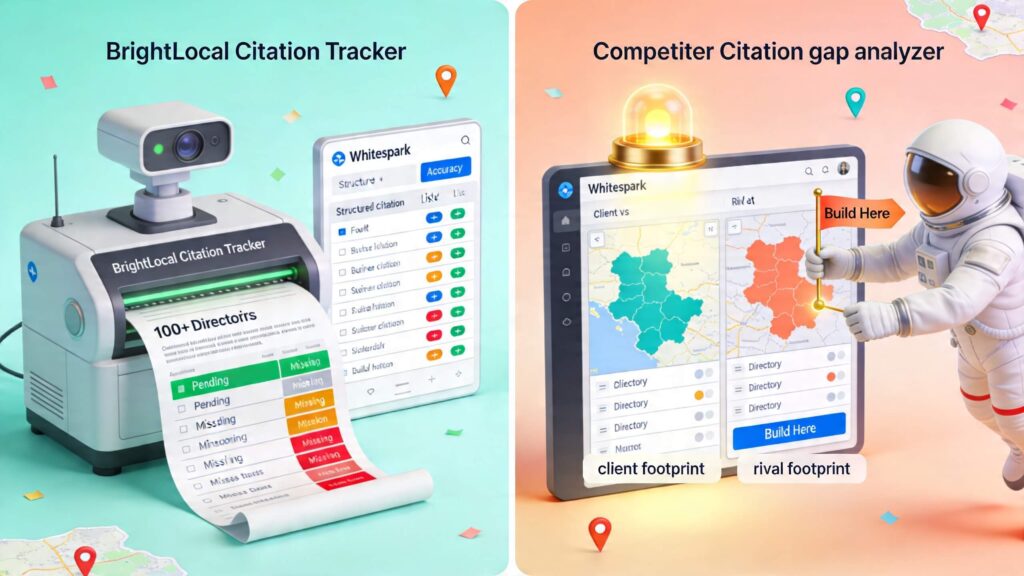
Accurate, complete business listings across key platforms are the backbone of your local search presence. A focused business listing assessment is where your Local Citation Audit gets very practical: you move line by line through your profiles to fix errors, fill in missing details, and make each listing a strong representation of your brand.
1. Check Your NAP Information
Begin by confirming NAP accuracy on your highest‑impact listings: Google Business Profile, Bing Places, Apple Maps, Yelp, and major industry directories. Make sure your legal business name, street address (including suite numbers), and primary phone number are identical on each platform.
Consistent NAP across these sources reduces confusion for both customers and algorithms and lays a solid foundation before you start fixing smaller directories or niche sites.
2. Verify Your Business Information
Next, review all supporting details within your listings: website URLs, email addresses, business categories, hours of operation, and short descriptions. Outdated hours or broken website links can cost you real‑world visits even if your rankings look strong, so treat this step as a customer experience check as well as an SEO task.
3. Remove Duplicate Listings
Duplicate listings are a common issue uncovered during a Local Citation Audit. On each major platform, search for variations of your business name and address to find extra profiles created by past staff, old agencies, or data aggregators. Use the platform’s merge, close, or report tools to remove or consolidate duplicates so you end up with one authoritative listing per site.
4. Optimize Your Listings
Once the data is correct and duplicates are handled, optimize each profile for maximum impact. Choose the most accurate primary and secondary categories, upload sharp photos, and add service menus or product highlights where available. Many local SEO guides, including the Semrush checklist, emphasize that fully built‑out listings tend to earn more clicks and convert better than bare‑bones profiles.
By systematically improving your listings during a business listing assessment, you strengthen the foundation your local rankings rest on and make every citation work harder for you.
Evaluating Online Directories
Your business does not need to be listed everywhere—it needs to be listed in the right places. Part of a sophisticated Local Citation Audit is deciding which directories truly matter and which provide little or no value. High‑authority, relevant directories send stronger signals than low‑quality sites with thin content and outdated data.
To evaluate a directory, consider:
- Authority: Well‑known platforms (Google, Yelp, Apple Maps, Facebook) and respected business directories carry more SEO weight and often bring direct referral traffic.
- Relevance: Niche directories tailored to your industry or location—such as legal, medical, home services, or restaurant portals—can deliver highly qualified visitors.
- Data integrity: Directories that keep listings updated and review spam under control are more likely to be trusted by both users and search engines.
Sample Online Directory Evaluation
| Directory Name | Authority | Relevance to Business | Consistency of Business Information |
|---|---|---|---|
| Google Business Profile | Very high | Critical for most local searches | Consistent NAP and categories |
| Yelp | High | Strong for consumer services and restaurants | Minor phone number variation |
| Yellow Pages | Medium | Useful for some local service sectors | Outdated address details |
This kind of evaluation helps you prioritize where to fix data first and where to invest time in new listings. It also prevents you from spreading your efforts too thin across low‑impact platforms that do little to strengthen your local SEO footprint.
Reviewing Citation Accuracy
Accuracy is the thread that connects every part of your Local Citation Audit. Even when your NAP is consistent, other errors—like incorrect URLs, wrong business categories, or missing hours—can weaken your visibility and frustrate potential customers.
As you review citations, make sure each profile:
- Uses the correct website URL (preferably the canonical HTTPS version instead of old or tracking links).
- Lists accurate, current hours for regular days and holidays.
- Includes categories that match your core services instead of generic or outdated labels.
- Shows a map pin that actually points to your entrance or service area.
Many businesses also use tools from providers like Moz citations to scan large numbers of listings for common data errors. Whether you rely on software or manual checks, the goal remains the same: ensure every citation is complete, accurate, and ready to help customers find you without guesswork.

Cleaning Up Your Local Citations
After you have mapped out your citation landscape and flagged issues, the cleanup phase turns those insights into concrete improvements. This is where your Local Citation Audit delivers real SEO and customer‑experience gains.
1. Start with a Comprehensive Local Citation Audit
Begin by organizing everything you discovered into a master list. Group citations by priority (critical platforms first), note the type of issue (NAP mismatch, duplicate, incomplete profile), and assign status fields so you can track progress as you fix each one. This structure prevents you from repeating work and makes it easier to delegate tasks if you have a team or agency helping you.
2. Update Your NAP Information
With your master list in place, systematically correct NAP information on each platform. Claim any unverified profiles so you retain long‑term control, then update names, addresses, and phone numbers to the canonical version you chose earlier. Always start with the platforms that have the most visibility and influence—Google Business Profile, Apple Maps, Yelp, and top industry directories—before you move to smaller sites.
3. Remove Duplicate Listings
Next, clear out duplicates. Search each major directory for variations of your name and address, identify extra profiles, and follow the site’s procedure to remove or merge them. Fewer, stronger listings are better than many weak or conflicting ones, both for algorithms and for human users who might otherwise click the wrong profile.
4. Monitor Your Citations
Once your cleanup is complete, put a simple monitoring routine in place so you do not slip back into chaos. Set reminders a few times per year to spot‑check your top listings and to search for new or unauthorized profiles. Consider using a citation management platform that alerts you when third‑party data providers create new listings based on old information, so you can correct them quickly.
By treating citation cleanup as an ongoing habit rather than a one‑off project, you protect the gains from your Local Citation Audit and keep your local presence aligned with your real‑world business.
Analyzing Citation Building Opportunities
After you fix the problems in your existing listings, the next stage of a Local Citation Audit is growth: finding new, high‑quality places to list your business. These citation building opportunities help you reach new audiences and reinforce your authority in the eyes of search engines.
To uncover the best opportunities:
- Review curated lists of top local directories and niche platforms relevant to your industry and region.
- Use competitor research tools to see where your top local rivals are listed but you are not.
- Look for local chambers of commerce, trade associations, and event directories that feature business members.
- Leverage partnerships and sponsorships that include directory listings as part of the package.
Each time you add your business to a new, reputable site with consistent NAP details, you strengthen your overall citation profile. Over months and years, this deliberate expansion of high‑quality citations can significantly improve your local visibility.
Enhancing Your Local SEO Footprint
Your Local Citation Audit has two types of outputs: a cleaner, more accurate citation profile and a prioritized list of next steps for your broader local SEO strategy. Use what you learned to systematically enhance how you appear in local search across all touchpoints.
Practical ways to put your audit findings to work include:
- Bringing all key listings up to 100% completeness with robust descriptions, photos, and attributes.
- Aligning your on‑site content, local landing pages, and schema markup with the categories and services you feature in directories.
- Focusing your outreach and PR efforts on publications and directories that offer both coverage and high‑quality citations.
- Building a simple local SEO checklist based on resources like the Trust Signals checklist so that citation health is reviewed alongside content, reviews, and technical items.
Local SEO Analysis
| Category | Assessment | Action Item |
|---|---|---|
| Business Listings | Some profiles incomplete or missing | Claim, complete, and standardize listings on all priority platforms |
| NAP Consistency | Variations in address formatting | Update all listings to match canonical NAP format |
| Online Directories | Mix of strong and low‑quality directories | Focus efforts on authoritative, relevant sites; de‑emphasize low‑value platforms |
| Citation Accuracy | Outdated hours and URLs on a few listings | Correct critical fields and add missing details |
| Citation Building Opportunities | Limited presence on niche and association directories | Identify and pursue targeted listing opportunities to strengthen authority |
By acting on these insights, you move from simply “having citations” to using them strategically as a core part of your local marketing system.
Conclusion
A Local Citation Audit is one of the most valuable diagnostics you can run for your local SEO. By thoroughly reviewing your business listings, checking NAP consistency, evaluating directory quality, and fixing inaccurate or duplicate citations, you create a cleaner, more trustworthy online footprint.
That improved footprint helps search engines connect all of your signals—website, reviews, and listings—to one strong local entity. It also reduces friction for real customers, who are far more likely to visit, call, or buy when your details are correct everywhere they look. When you repeat this process regularly and combine it with ongoing citation building, content improvements, and reputation management, you give your business a durable advantage in local search.
Make Local Citation Audits a recurring habit, not a one‑time fix, and your visibility, traffic, and local customer base can grow steadily year after year.