Cart 0

Share
Table of Contents
Cons of Social Media: Risks You Should Not Ignore
Social networks make it easy to stay in touch, discover news, and share your life, but the cons of social media are often less visible than the benefits. Behind the constant stream of posts and notifications, research links heavy social media use to poorer mental health, privacy risks, misinformation, strained relationships, and reduced productivity. Understanding these downsides is the first step toward using platforms more intentionally instead of letting them quietly erode your well-being.
This guide breaks down the major cons of social media—from anxiety and loneliness to cyberbullying, data harvesting, and addiction—using current evidence and real‑world examples. Along the way you will find practical strategies to protect your mental health, your privacy, and your time so you can stay connected without feeling overwhelmed or exploited.
Cons of Social Media for Mental Health
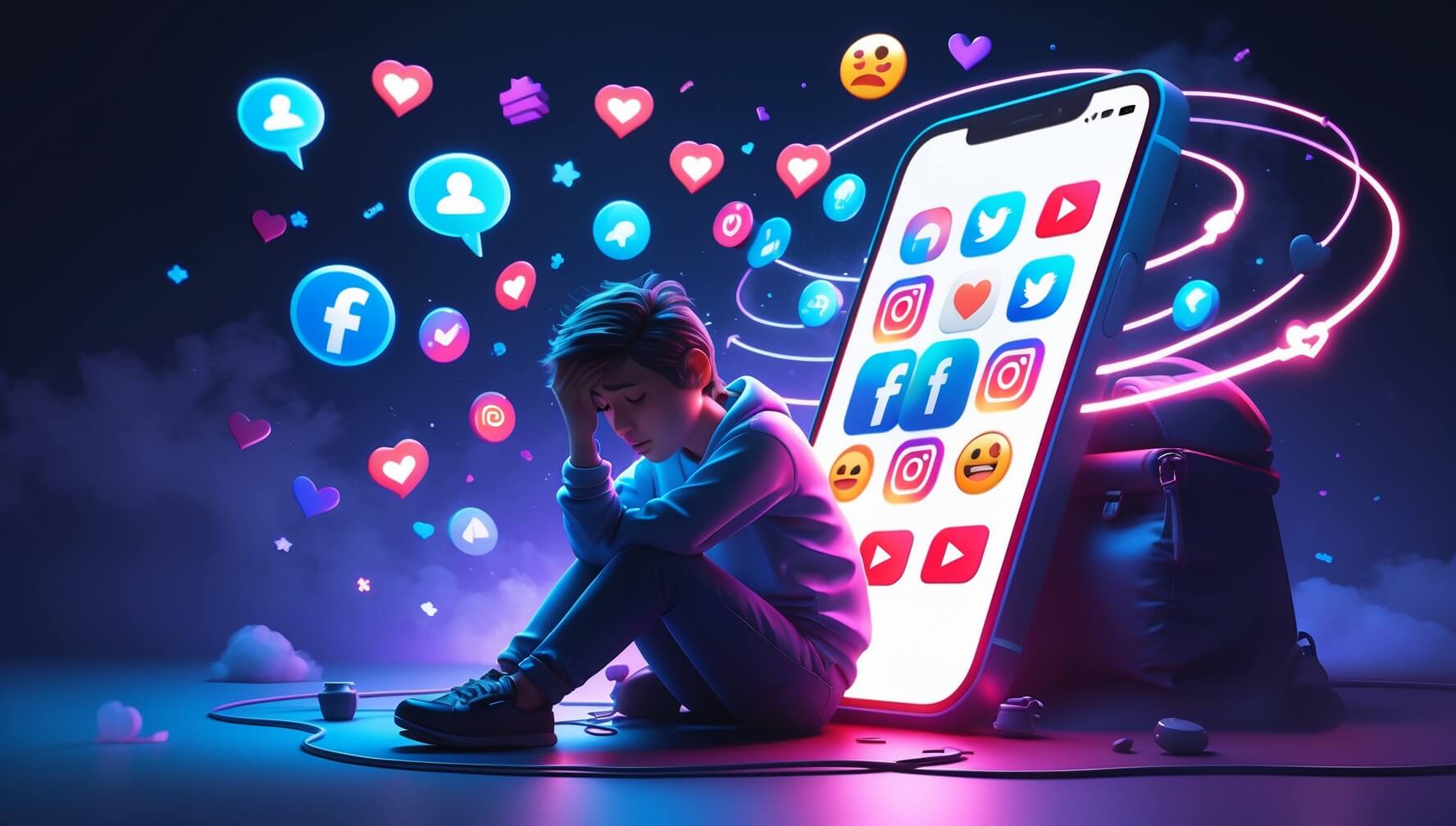
One of the most serious cons of social media is its impact on mental health. Large studies have found associations between heavy social media use and higher levels of depression, anxiety, loneliness, and psychological distress, especially among teens and young adults. Health organizations and researchers increasingly warn that endless scrolling, constant comparison, and exposure to conflict can worsen existing vulnerabilities instead of helping people feel supported.
These effects are not identical for everyone—some people benefit from online communities—but the overall pattern is clear enough that many clinicians now screen for social media habits when assessing mood and anxiety issues. Guides from mental health providers such as the HelpGuide article on social media use and hospital resources like the UC Davis guide highlight how quickly online habits can influence sleep, self‑esteem, and stress.
Loneliness, Depression, and Anxiety
Paradoxically, one of the major cons of social media is that tools designed to connect us can leave people feeling more alone. When online interactions replace in‑person contact, or when someone passively watches others socialize without participating, feelings of isolation and exclusion can grow. Several longitudinal studies have reported that higher levels of social media use are associated with more depressive symptoms and greater risk of self‑harm among young people.
Anxiety can also increase when people feel they must always be “on,” respond quickly, or maintain a perfectly curated online identity. The pressure to collect likes and positive comments turns normal social evaluation into a public scorecard. Over time, this can contribute to social anxiety, performance worries, and a fragile sense of self‑worth that rises and falls with notifications.
What Helps Protect Your Mental Health
To reduce the mental health‑related cons of social media, try setting time limits for apps, turning off nonessential notifications, and scheduling regular offline activities that nourish you, such as exercise, hobbies, or time outdoors. Evidence‑based tips from organizations like the WHO report on teens and screens emphasize creating device‑free times (for example, during meals and before bed) and keeping phones out of the bedroom to protect sleep.
If you notice that certain accounts or topics consistently make you feel worse, unfollow or mute them. You can also seek mental health support—online or offline—if social media use feels compulsive or clearly worsens your mood. Therapy, support groups, and digital well‑being programs can all help you set healthier boundaries.
Privacy Risks and Data Exploitation
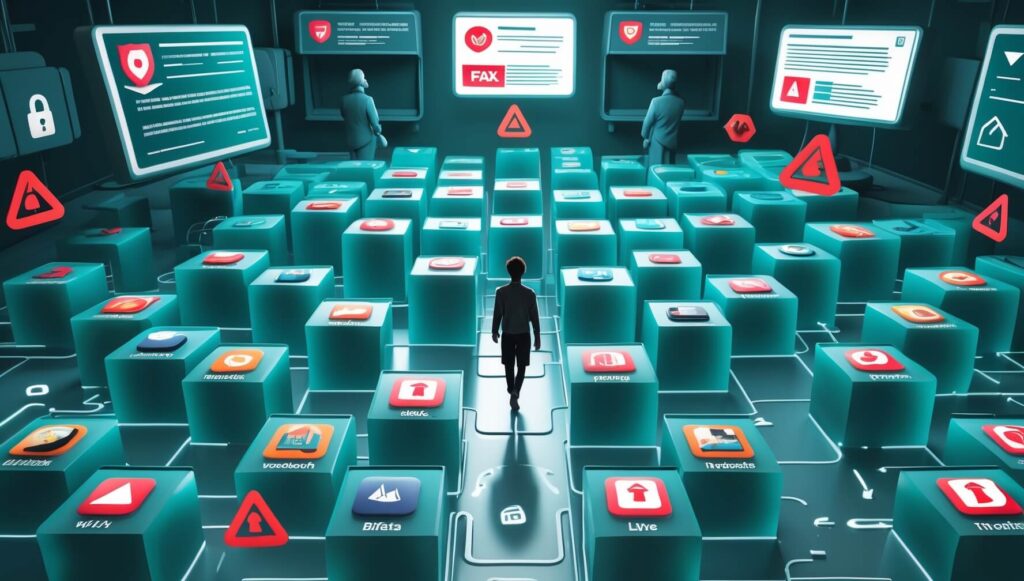
Another major category in the cons of social media is privacy. When you create a profile, post updates, or even just scroll, platforms collect large amounts of data about your behavior, location, interests, and social connections. That information feeds targeted advertising systems and can be shared with third parties, sometimes in ways that are difficult for users to understand or control.
Digital rights groups stress that online advertising and tracking now rely on extensive profiling across apps and websites, building detailed dossiers on individuals. Overviews from organizations such as the EPIC report on online tracking and technical analyses from IEEE’s privacy overview describe how this ecosystem exposes users to surveillance, manipulation, and security breaches.
Data Breaches and Identity Theft
When social platforms or connected services suffer a data breach, personal information such as email addresses, phone numbers, and sometimes even private messages can leak. Attackers may combine this data with other sources to commit identity theft, open fraudulent accounts, or run targeted phishing campaigns. The more information you share publicly or with apps that connect to your social profiles, the more damage a single breach can cause.
Security and privacy researchers also point out that even “anonymous” aggregate advertising systems can reveal sensitive traits through the kinds of ads people see. Studies on web advertising, such as the privacy risks study of ad content, show that ad delivery patterns can indirectly expose attributes like political views or health concerns.
Targeted Advertising and Manipulation
Targeted advertising itself is one of the less obvious cons of social media. On the surface, personalized ads look like a harmless way to see more relevant products. But the same profiling systems can also be used to target vulnerable groups with predatory financial offers, discriminatory housing or job ads, or political content that exploits fears and biases. Reports from privacy advocates outline how data profiles can be repurposed in ways users never anticipated when they clicked “accept” on terms of service.
To reduce these risks, regularly review your privacy settings, limit access for third‑party apps, and avoid sharing sensitive details (like your home address, financial struggles, or health information) on public profiles. Browser extensions and privacy tools can also help block trackers and reduce how much data advertisers can collect as you move around the web.
Cyberbullying and Online Harassment
Cyberbullying and online harassment are among the most painful cons of social media, especially for children, teens, and marginalized groups. Anonymity, large audiences, and the speed of sharing can turn a single cruel comment or rumor into a sustained, public attack that reaches far beyond a person’s immediate circle.
Targets of cyberbullying may face insults, threats, doxxing (publishing private information), or relentless mockery. The emotional consequences often include fear, shame, sleep problems, and long‑lasting anxiety or depression. Because harmful content can be captured and reshared, it may feel impossible to escape, even after the original posts are deleted.
How to Respond and Protect Yourself
While you cannot control other people’s behavior, you can take steps to limit its impact. Use blocking and reporting tools whenever someone crosses your boundaries. Most major platforms allow you to block users, filter comments with specific words, and report abuse for review. Adjust your privacy settings so only approved followers can see your posts, particularly if you have previously been targeted.
It also helps to document harassment (through screenshots or saved links) and share what is happening with trusted friends, family, or professionals. In serious cases—especially threats or non‑consensual image sharing—contact local authorities or legal aid resources. Safety organizations and mental health charities often publish detailed guides for dealing with online harassment, which can be reassuring when you feel overwhelmed.
Social Comparison and Self‑Esteem
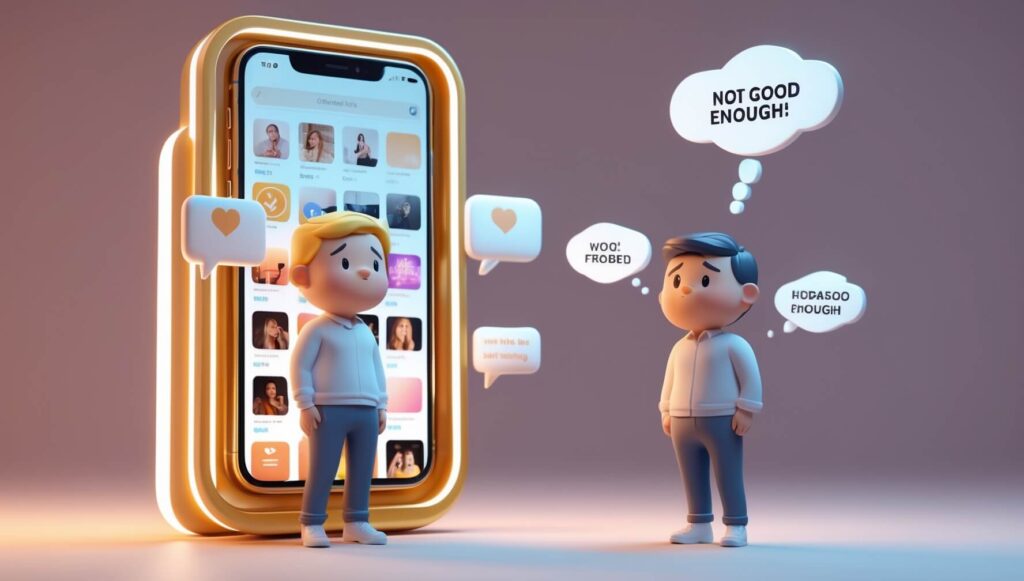
Endless comparison is another of the subtle but powerful cons of social media. Feeds are filled with carefully edited snapshots of other people’s lives: vacations, promotions, parties, fitness journeys, and milestones. Because we rarely see the unfiltered struggles behind those images, it is easy to assume everyone else is happier, more successful, or more attractive.
Research shows that frequent social comparison online is linked to higher body image concerns, more self‑criticism, and lower self‑esteem, particularly in young adults. Studies of social media addiction, fear of missing out (FoMO), and body image concerns report that those who are more intensely engaged with platforms tend to experience more dissatisfaction and lower self‑worth overall.
Building Healthier Viewing Habits
You can reduce these comparison‑driven cons of social media by curating your feed more actively. Unfollow or mute accounts that consistently trigger envy, insecurity, or negative self‑talk. Follow creators who promote realistic, diverse representations of success and appearance instead of heavily filtered or extreme ideals.
It can also help to remind yourself that posts are highlights, not complete stories. Setting daily time limits and taking regular breaks from appearance‑focused content (such as certain image‑centric platforms) can lower the pressure to measure up and make it easier to reconnect with your own values and goals.

Time Drain, Distraction, and Productivity Loss
Many people underestimate how much time they spend on social media each day. What starts as a quick check of notifications easily turns into an hour of scrolling, often repeated multiple times. Over weeks and months, this habit becomes one of the most practical cons of social media: lost time that could have gone toward work, study, sleep, or relationships.
Because platforms are designed to keep you engaged—through infinite scroll, autoplay, and intermittent rewards—it can be difficult to stop once you have started. This constant distraction fragments your attention, making it harder to focus deeply on important tasks and contributing to procrastination and missed deadlines.
Regaining Control of Your Time
To counter these productivity‑related cons of social media, experiment with simple rules such as “no social media before lunch” or “no phones on the desk while working.” Use tools that track and limit your daily app usage, and consider removing social apps from your home screen so opening them requires more intention.
Scheduling specific “check‑in” windows—say, 15 minutes mid‑afternoon and 15 minutes in the evening—helps contain social media within defined boundaries instead of letting it fill every gap in your day. Over time, many people find they do not miss the extra scrolling and enjoy the extra focus and free time.
FOMO and Constant Social Pressure
Fear of missing out (FoMO) is both a cause and a consequence of heavy social media use, and one of the emotionally draining cons of social media. Seeing real‑time updates of events, achievements, and gatherings can make you feel left out, even if your own life is going relatively well. This sense that something better is happening elsewhere can fuel anxiety, restlessness, and compulsive checking.
Psychologists note that FoMO can drive people to say yes to activities they do not really enjoy, overspend to keep up appearances, or continuously refresh feeds instead of engaging with the present moment. Studies have linked higher FoMO scores with more social media addiction, greater body dissatisfaction, and lower life satisfaction.
Reducing FoMO and Re‑Centering Your Attention
To lessen this particular con of social media, practice intentionally focusing on your own experiences rather than comparing them to others’ highlight reels. Try setting “offline hours” when you put your phone away during meals, outings, or time with loved ones. When you notice FoMO rising, gently ask yourself whether seeing more posts will genuinely help or just intensify the feeling.
Some people find “social media detox” periods helpful—taking a full day, weekend, or week off to reset. Research on digital detox suggests that even short breaks can improve mood and reduce compulsive checking, especially when replaced with enjoyable offline activities like reading, hobbies, or time in nature.
Disinformation, Polarization, and Fake News
The spread of misinformation and fake news is one of the most far‑reaching cons of social media. Rumors, conspiracy theories, and misleading headlines can travel faster than verified information, especially when they provoke strong emotions. Platforms often reward engagement—clicks, shares, comments—regardless of accuracy, which means sensational or divisive content can easily go viral.
Experts in media literacy and democracy warn that these dynamics contribute to polarized echo chambers, undermine trust in institutions, and make it harder for people to agree on basic facts. Algorithm‑driven feeds often show more of what keeps users on the platform, even if that means surfacing increasingly extreme or niche viewpoints rather than balanced reporting.
Practical Steps for Responsible Consumption
You cannot fix the entire information ecosystem, but you can limit this category of cons of social media in your own life by fact‑checking before sharing, especially if a story triggers outrage or fear. Look for confirmation from established news outlets, cross‑check dates and sources, and be cautious with screenshots or posts that lack context.
Following a variety of reputable sources—including public health agencies, quality journalism, and nonpartisan research groups—can help you avoid getting stuck in a single ideological bubble. Media literacy resources from universities and nonprofit organizations are also useful for learning how to recognize common patterns in misinformation and manipulative content.
Strained Relationships and Weakened Social Skills
Another social‑level entry in the cons of social media is its impact on relationships and communication skills. When conversations shift from in‑person to online messages, it becomes easier to misinterpret tone, ignore difficult discussions, or avoid vulnerability. People may substitute quick emoji reactions for deeper check‑ins, gradually weakening closeness with friends and family.
Heavy reliance on digital interactions can also make real‑world encounters feel more awkward, especially for younger users who have grown up with smartphones. Some studies suggest that those who spend more time online and less time in face‑to‑face activities report more social anxiety and less confidence in their offline social skills.
Re‑Investing in Offline Connections
To counter these relational cons of social media, make a point of scheduling regular in‑person time with people who matter to you, even if it is as simple as a weekly coffee or walk. During these meetings, try putting phones away or silencing them so you can focus on the conversation without constant interruptions.
Joining local clubs, classes, volunteer groups, or sports teams can also help expand your offline network and strengthen communication skills. Over time, many people find that in‑person interactions feel more rewarding and grounding than even the most active group chat.
Body Image Pressures and Self‑Worth
Social media often amplifies unrealistic appearance standards, making body image one of the most personal cons of social media. Filters, editing tools, and selective posting make it easy to present an idealized version of oneself that few people can match in everyday life. Constant exposure to such images can intensify body dissatisfaction and unhealthy comparisons, especially among adolescents and young adults.
Research connecting social media addiction, FoMO, body image concerns, and self‑esteem consistently finds that higher engagement with appearance‑focused content is associated with greater dissatisfaction and lower self‑worth. These effects can feed into disordered eating, excessive exercise, or other harmful attempts to “fix” perceived flaws.
Fostering a Healthier Body Image Online
To soften these body‑related cons of social media, curate your feed to include creators who promote body diversity, self‑acceptance, and realistic standards. Unfollow accounts that leave you feeling worse about your appearance, even if they are popular or widely recommended.
Remind yourself that your value is not measured in likes, comments, or follower counts. If you notice that body comparisons are consuming your thoughts or driving extreme behaviors, consider speaking with a mental health professional or body image specialist who can offer tailored support.
Addiction‑Like Use and Overall Well‑Being
Finally, one of the most concerning cons of social media is its addictive potential. Platforms are built around reward loops—likes, comments, fresh content—that trigger dopamine release in the brain’s reward system. Over time, these small bursts of pleasure can create strong habits that are difficult to break, even when users know their screen time is too high.
Clinicians and neuroscientists have compared compulsive social media use to behavioral addictions such as gambling, noting similar patterns of craving, tolerance, withdrawal, and continued use despite negative consequences. Explanations from psychiatrists and health writers, including the Stanford addiction explainer and overviews from public health centers, describe how frequent checking can disrupt sleep, concentration, and emotional regulation.
Recognizing and Addressing Problematic Use
Signs that social media use is tipping into addiction include constant preoccupation with apps, feeling restless or irritable when you cannot check them, lying about your usage, or neglecting responsibilities, relationships, or hobbies in favor of scrolling. If this sounds familiar, it may be time to set firmer limits or seek help.
Strategies to reduce this particular con of social media include removing apps from your phone for a period, using website blockers during work or study hours, keeping devices out of the bedroom, and replacing some online time with fulfilling offline activities. Articles on digital detox, such as academic discussions of social media detox programs, suggest that structured breaks can help reset habits and allow you to experience life without constant digital stimulation.
Conclusion: Balancing Benefits with the Cons of Social Media
Social media is not inherently good or bad; it is a powerful tool whose impact depends on how, why, and how much you use it. Still, the cons of social media—from mental health strains and privacy risks to cyberbullying, misinformation, and addiction‑like behaviors—are serious enough that they deserve thoughtful attention.
By learning about these risks, setting clear boundaries, and making more deliberate choices about what you post, follow, and consume, you can reduce harm while preserving the parts of social media that genuinely add value to your life. That might mean limiting daily screen time, unfollowing harmful accounts, tightening privacy settings, or scheduling regular offline time with people you care about.
The goal is not to disappear from digital spaces, but to use them in ways that support your well‑being instead of quietly undermining it. When you actively manage your habits and stay informed about the cons of social media, you are far better equipped to navigate the online world with confidence, clarity, and care.