
Cart 0

Share
Table of Contents
What Are the Key Benefits of Using the Google Display Network
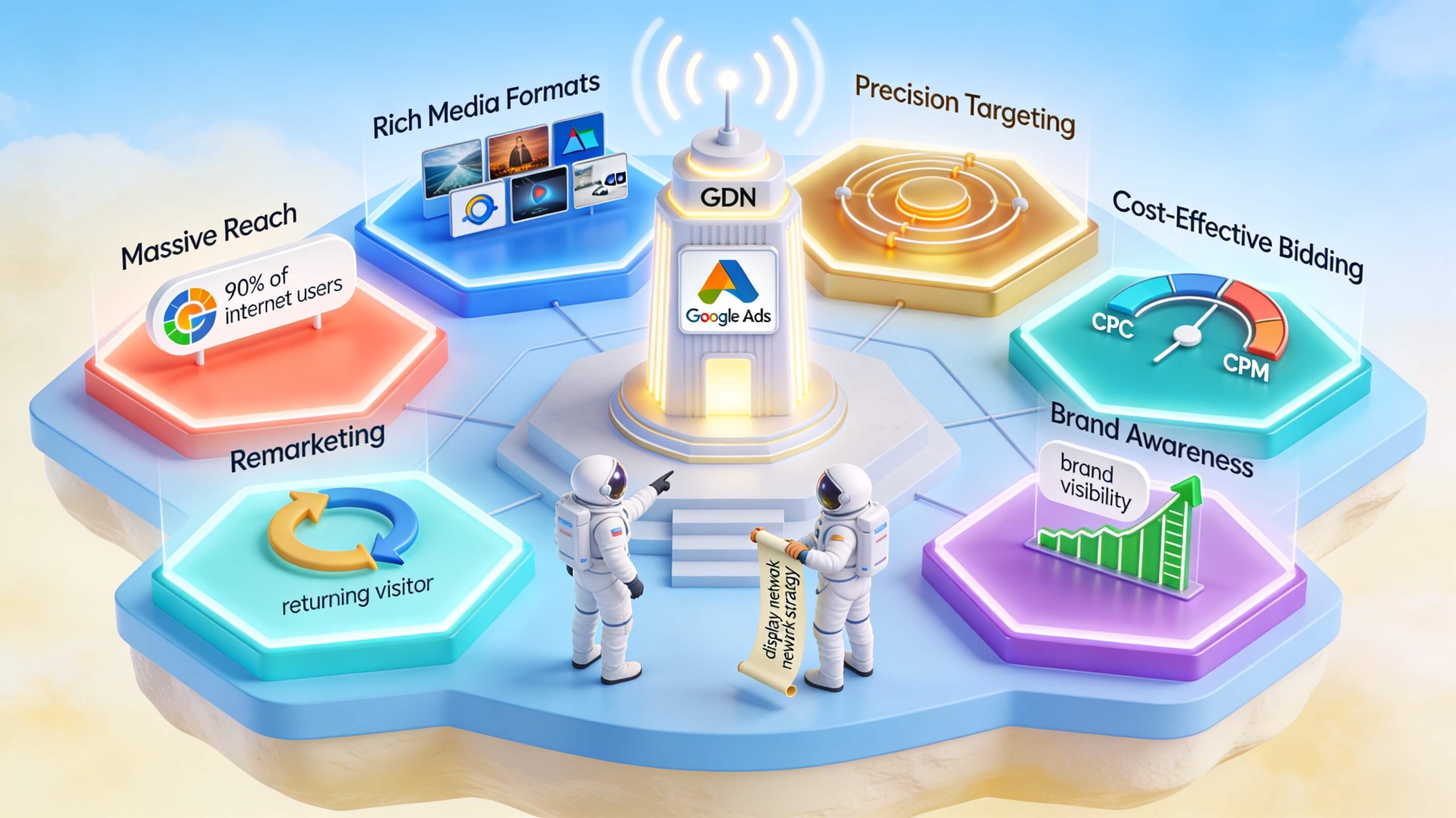
For seasoned marketers and business owners alike, the digital landscape is a battlefield for consumer attention. While search advertising captures users actively seeking solutions, it misses the vast majority of potential customers who are simply browsing, researching, or entertaining themselves online. This is where the Google Display Network (GDN) becomes indispensable. Understanding what are the key benefits of using the Google Display Network is not just about knowing its features; it is about leveraging a strategic asset that can transform your brand’s visibility, efficiency, and return on investment. With access to over 90% of global internet users across more than two million websites and apps, the GDN allows you to place your message in front of the right people at the right time, even when they are not actively searching for you. This article provides a deep, expert-level analysis of the GDN’s core advantages, from its unparalleled reach and sophisticated targeting to its cost-effective models and powerful AI-driven innovations. Whether you are a startup with a lean budget or a multinational corporation, mastering the GDN can be the linchpin of a successful, integrated digital advertising strategy.
Massive Reach and Brand Visibility: The Foundation of GDN Success
The most immediate and compelling benefit of the Google Display Network is its sheer scale. The network’s footprint is staggering, encompassing over two million websites, mobile applications, and video content platforms like YouTube. This means your ads can appear on premium publisher sites, niche blogs, and popular apps, giving your brand a constant, pervasive presence across the digital ecosystem. According to recent data, the GDN reaches approximately 90% of all internet users worldwide, a figure that no single publication, social platform, or other ad network can match. This isn’t just about raw numbers; it is about creating a foundation for brand awareness that is both broad and deep.
This massive reach directly solves one of marketing’s oldest problems: the visibility barrier. In crowded markets, getting your product or service noticed is the first and often hardest step. The GDN bypasses this by placing your brand in high-traffic environments where your target audience naturally spends their time. For a new product launch, this means rapidly building awareness among a vast pool of potential customers who may never have heard of you. For established brands, it offers a way to maintain top-of-mind presence and capture new customer segments. Consider the practical implication: every 24 hours, the GDN reaches nearly 65% of its total audience. This daily, consistent exposure is invaluable for imprinting your brand message into the consciousness of potential buyers. The scale advantage is not just about quantity; it is about the quality of consistent, broad-spectrum exposure that creates a halo effect around your brand, making it more recognizable and trustworthy over time.
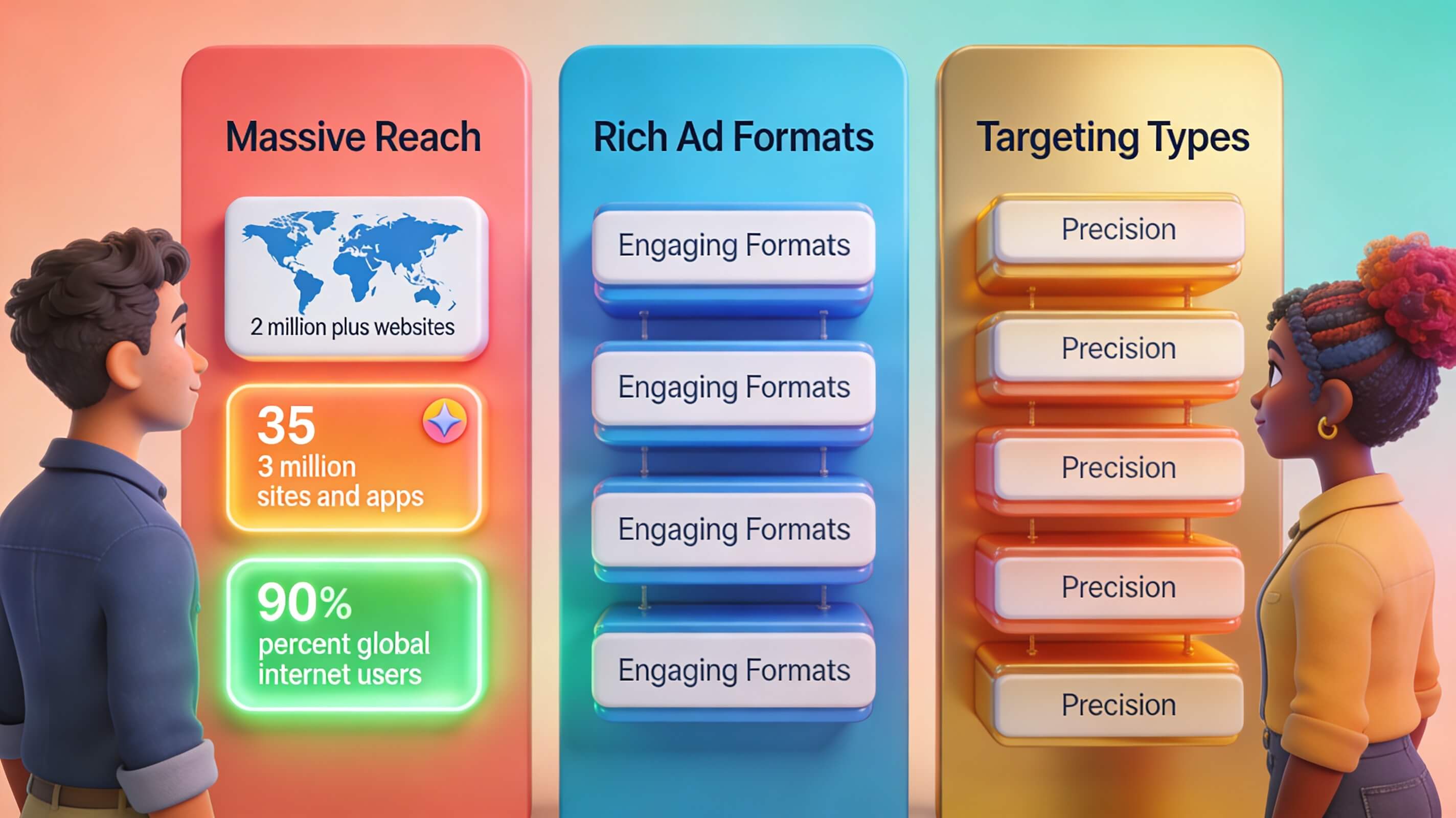
Furthermore, this expansive reach is not a blunt instrument. It provides the critical mass needed to make advanced targeting and personalization strategies effective. Without a large audience pool, sophisticated audience segmentation becomes meaningless because the sample sizes are too small. The GDN’s scale provides the necessary data and user base to power features like custom affinity audiences and in-market segments, ensuring that your massive reach is also highly relevant. For businesses looking to expand geographically, the GDN is a powerful tool. A regional business can instantly become a national or international player by running display campaigns that target users far beyond their local market, all without the prohibitive costs of traditional media buys.
Advanced Targeting Precision: Reaching the Right Audience at the Right Time
Massive reach alone is a double-edged sword; without precision, it leads to wasted impressions and budget drain. The Google Display Network’s true genius lies in its sophisticated targeting architecture, which transforms a broad audience into a highly relevant one. This is where the question of “what are the key benefits of using the Google Display Network” moves from simple reach to strategic efficiency. The targeting options are multi-layered, allowing you to combine demographic, geographic, behavioral, and contextual signals to pinpoint your ideal customer with surgical accuracy. You are no longer shouting into the void; you are having a targeted conversation.
Let’s break down the key targeting pillars. First, demographic and geographic targeting is the baseline, allowing you to filter by age, gender, income, parental status, and location. This is essential for any campaign. The real power, however, comes from affinity and in-market audiences. Affinity audiences reach users who have a demonstrated, long-term interest in a topic, like “Travel Buffs” or “Fitness Enthusiasts.” In-market audiences go a step further, targeting users who are actively researching or planning to purchase a product or service in a specific category, such as “In-market for SUVs” or “In-market for Business Software.” These are high-intent audiences who are much closer to a conversion.
Perhaps the most unique and powerful targeting method is contextual targeting. Google’s AI scans the content of a webpage in real-time and serves an ad that is contextually relevant to that content. For example, an ad for a high-end camera will appear on a photography review blog, while an ad for a travel agency will show up on a travel planning article. This creates an immediate and natural relevance that boosts engagement and click-through rates. A recent study from a leading marketing analytics firm showed that contextual targeting can increase brand recall by over 40% compared to non-contextual placements. This method is also privacy-safe, as it relies on the content of the page, not the user’s personal browsing history. By combining these layers—demographics, interests, purchase intent, and context—you create a hyper-targeted campaign that maximizes the value of every ad dollar spent.
Cost-Effective Advertising Model: Maximizing Budget Efficiency
For any business, especially those with limited marketing budgets, the cost of advertising is a primary concern. The Google Display Network offers a highly cost-effective model that democratizes access to large-scale advertising. The core of this efficiency is the pay-per-click (PPC) pricing model. Unlike traditional cost-per-thousand-impressions (CPM) models where you pay for every view regardless of engagement, with GDN, you only pay when a user clicks on your ad. This performance-based pricing aligns your costs directly with user interest, ensuring you are not wasting money on impressions that lead nowhere.
The cost-per-click (CPC) on the Display Network is typically much lower than on the Google Search Network. While search CPCs can be high due to intense competition for commercial keywords, display CPCs are often a fraction of that cost. This makes the GDN an incredibly attractive option for building brand awareness and driving traffic without burning through your budget. For a small business, this is a game-changer. You can launch a campaign with a modest daily budget and still achieve significant reach and visibility. You can test different ad creatives, target audiences, and landing pages without committing a massive upfront investment. This iterative, data-driven approach is the hallmark of modern, efficient marketing.
Furthermore, the GDN provides robust budget control features. You can set a strict daily budget to prevent overspending, and you can adjust your bids at a granular level. For instance, you can set a higher bid for audiences that are closer to conversion, like in-market audiences, and a lower bid for broader awareness audiences. You can also exclude underperforming placements, websites, or topics, ensuring your budget is concentrated on the most effective inventory. This combination of low CPCs, PPC pricing, and granular budget controls makes the GDN one of the most financially accessible and efficient advertising platforms available. It allows businesses of all sizes to compete for premium audience attention without the prohibitive costs of traditional media or search-only strategies.
Rich Media and Interactive Ad Formats: Driving Engagement
In a world saturated with content, static text or simple image ads are often ignored. To capture attention, you need to engage users in a more dynamic way. The Google Display Network excels here by offering a wide array of rich media and interactive ad formats that go far beyond the standard banner. These formats are designed to stop the scroll, tell a story, and encourage direct interaction, leading to higher engagement rates and better campaign performance. Understanding this diversity is a key part of understanding what are the key benefits of using the Google Display Network.
The most versatile format is the responsive display ad. You upload your assets (headlines, descriptions, images, logos, videos) and Google’s AI automatically tests different combinations and formats to find the best-performing version for each ad space. This eliminates the need to create dozens of individual ad sizes and significantly improves performance. For visual products, image and video ads are essential. A high-quality image or a short, compelling video can convey emotion and product benefits far more effectively than text. Google’s AI-powered video creation tools now allow you to generate video ads from product feeds, making this powerful format accessible to businesses without a video production team.
Beyond these, there are truly interactive formats. Carousel ads allow users to swipe through a gallery of products or services, creating a mini-browsing experience directly within the ad. App promotion ads can include a playable demo, letting users try a game or app before downloading. Gmail ads expand from the promotions tab into a full, branded email-like experience, offering a unique way to reach users in their inbox. These interactive formats dramatically outperform standard display ads. They provide an element of entertainment and discovery, turning a passive viewing experience into an active one. This not only improves click-through rates but also builds a stronger, more positive association with your brand.
Remarketing and Audience Re-engagement: Converting Lost Opportunities
One of the most powerful and profitable features of the Google Display Network is its remarketing capability. The vast majority of first-time visitors to a website do not convert. They browse, consider, and leave. Remarketing allows you to re-engage these users as they browse other sites on the GDN, serving them targeted ads that bring them back to your site to complete a purchase or desired action. This is not just about chasing lost traffic; it is about capitalizing on an investment you have already made. When you analyze what are the key benefits of using the Google Display Network, remarketing often stands out as the highest-ROI tactic.
The logic is simple but powerful. A user who has visited your site has already demonstrated a higher level of interest than a cold audience. They are a “warm lead.” Remarketing to these users is significantly more efficient than trying to acquire new users from scratch. The conversion rates for remarketing campaigns are typically 5 to 10 times higher than for standard display campaigns. This is because you are reminding users of a product or service they have already considered, reducing friction and shortening the path to purchase. For example, a user who added an item to their cart but didn’t check out can be shown an ad with a special discount code or a reminder of the product’s benefits.
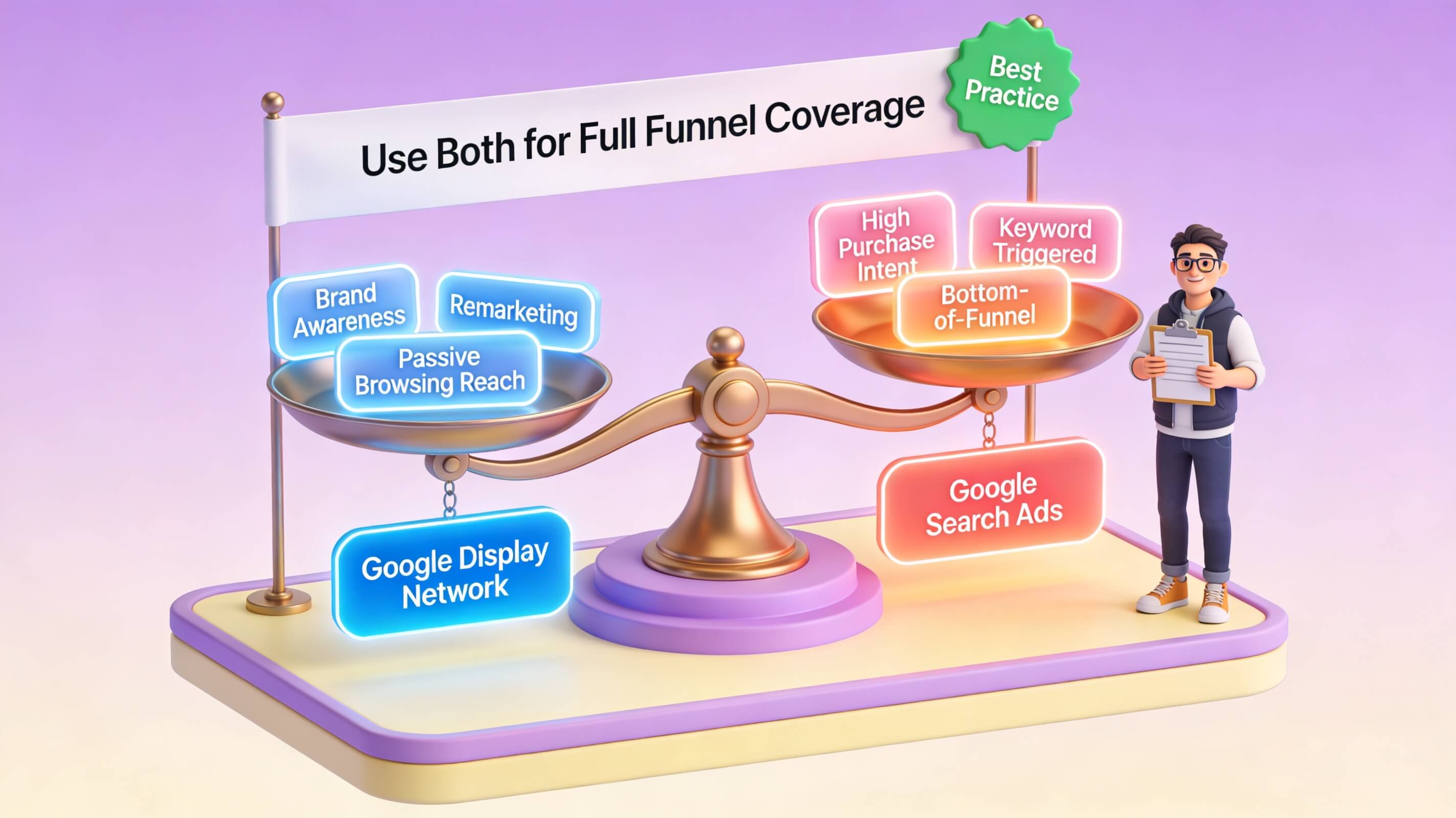
The true power of remarketing lies in its segmentation. You can create highly specific audience lists based on user behavior on your site. For instance, you can create a list of users who viewed a specific product page but didn’t buy, and then show them a dynamic ad featuring that exact product. You can create a list of users who visited your pricing page and show them a testimonial ad. You can create a list of past customers and show them cross-sell or upsell offers. This level of personalization makes your ads incredibly relevant and effective. As third-party cookies are phased out, Google is investing in first-party data remarketing and enhanced conversions to ensure this powerful strategy remains viable. Remarketing is not just a tactic; it is a core strategy for maximizing the lifetime value of every visitor to your site.
Cross-Device Targeting and Seamless User Journeys
Today’s consumer does not live on a single device. They might research a product on their smartphone during a commute, read reviews on a tablet at home, and finally make a purchase on a desktop at work. This multi-device behavior creates a fragmented user journey that is difficult to track and influence with traditional advertising. The Google Display Network solves this with its robust cross-device targeting capabilities, allowing you to follow your audience seamlessly across their smartphones, tablets, desktops, and even connected TVs. This ensures a consistent and cohesive brand experience, no matter where or how a user is browsing.
The key benefit here is continuity. A user who sees your ad on their mobile phone in the morning and then sees the same ad (or a related one) on their desktop later that day is much more likely to remember your brand and take action. This is critical for building trust and moving users through the sales funnel. For remarketing, cross-device capability is essential. If a user abandons a cart on their mobile device, you can show them a remarketing ad on their tablet or desktop. Without cross-device targeting, you would be showing that same ad to a different user, wasting your budget and missing a critical opportunity to re-engage a qualified lead.
Google’s cross-device data is powered by users who are signed into their Google accounts. This allows the platform to connect a single user’s behavior across multiple devices. For advertisers, this means you can set frequency caps that apply across all devices, preventing ad fatigue. You can also optimize your campaigns for cross-device conversions, understanding that a click on mobile might lead to a purchase on desktop. This unified view of the customer journey is invaluable for accurate attribution and for creating advertising strategies that reflect how people actually behave in the real world. By ensuring your message is consistent and persistent across every screen, you dramatically increase the likelihood of conversion.
Detailed Performance Analytics and Data-Driven Optimization
You cannot improve what you cannot measure. The Google Display Network is deeply integrated with Google Analytics and Google Ads reporting tools, providing an unparalleled level of performance data. This data is the fuel for continuous optimization, allowing you to move from guesswork to a systematic, evidence-based approach to advertising. For any serious marketer, this measurement capability is one of the most valuable aspects of the GDN. It allows you to answer the critical question: “What are the key benefits of using the Google Display Network for my specific business?”
The data you can access is granular and actionable. You can see performance at the campaign level, the ad group level, the individual ad level, and even the placement level (the specific website or app where your ad appeared). This allows you to identify which placements are driving the most conversions and which are wasting your budget. You can see which audience segments are most responsive, which ad formats are most engaging, and which creative elements are performing best. This data can be broken down by device, location, time of day, and hundreds of other dimensions. The Google Analytics 4 integration adds even deeper insights, including cross-device path analysis and predictive metrics like purchase probability.
This data empowers you to make smart, rapid optimizations. If you see that a particular website is generating a high cost-per-conversion, you can exclude it. If you see that a certain audience segment has a low click-through rate, you can adjust your creative or targeting. If you see that a specific headline is driving the most conversions, you can allocate more budget to that ad. You can set up automated rules to adjust bids based on performance thresholds. This cycle of test, measure, and optimize is the core of a successful GDN strategy. The platform provides the tools to do this at scale, turning a simple ad campaign into a constantly improving, data-driven engine for growth.
User-Friendly Campaign Management and AI-Powered Innovation
Despite its immense power, the Google Display Network is surprisingly accessible. Google has invested heavily in making the platform user-friendly, with intuitive interfaces, guided campaign creation wizards, and powerful automation features. This democratizes access to sophisticated advertising, allowing small businesses and marketing teams without deep technical expertise to launch and manage effective campaigns. This ease of use is a significant benefit, reducing the learning curve and time-to-market.
The cornerstone of this user-friendliness is the responsive display ad format, which automates the most tedious part of display advertising: creating ads in dozens of different sizes. Beyond that, features like Smart Bidding use machine learning to automatically set bids to maximize conversions or conversion value. You simply set your goal and budget, and Google’s AI handles the complex bidding decisions across millions of placements. Performance Max campaigns take this a step further, combining all of Google’s ad inventory (Search, Display, YouTube, Discovery, Gmail, Maps) into a single campaign, with AI optimizing for performance across all channels. This is a powerful tool for advertisers who want a hands-off, results-driven approach.
Furthermore, Google is at the forefront of AI-powered advertising innovation. In 2025, we are seeing the widespread adoption of tools like auto-generated video, which creates video ads from product feeds, and natural language processing for ad copy optimization. The platform is also pioneering privacy-compliant personalization using first-party data and predictive models to deliver relevant ads without relying on third-party cookies. This forward-thinking approach ensures that the GDN remains a powerful and effective platform even as the digital advertising landscape evolves. For the modern marketer, the combination of user-friendly tools and cutting-edge AI makes the GDN an indispensable part of the marketing technology stack.
Complementary Positioning with Search Advertising
To fully understand what are the key benefits of using the Google Display Network, you must see it not as a replacement for search advertising, but as its powerful complement. Search and Display serve different but equally important roles in the customer journey. Search advertising captures users with high purchase intent who are actively looking for a solution. Display advertising builds awareness and consideration among users who are not yet in a buying mindset. Together, they create a comprehensive, full-funnel strategy that is far more effective than relying on either channel alone.
Search ads are like a storefront on a busy street, ready to serve customers who are already looking for you. Display ads are like billboards, flyers, and TV commercials that make people aware of your store in the first place. A balanced strategy uses search to capture the bottom-of-funnel demand and display to create top-of-funnel demand. The strategic allocation of budget between the two depends on your goals. For a brand awareness campaign, you might allocate 70% to Display and 30% to Search. For a direct response campaign, the split might be reversed, with Search getting the lion’s share of the budget for its high conversion rates.
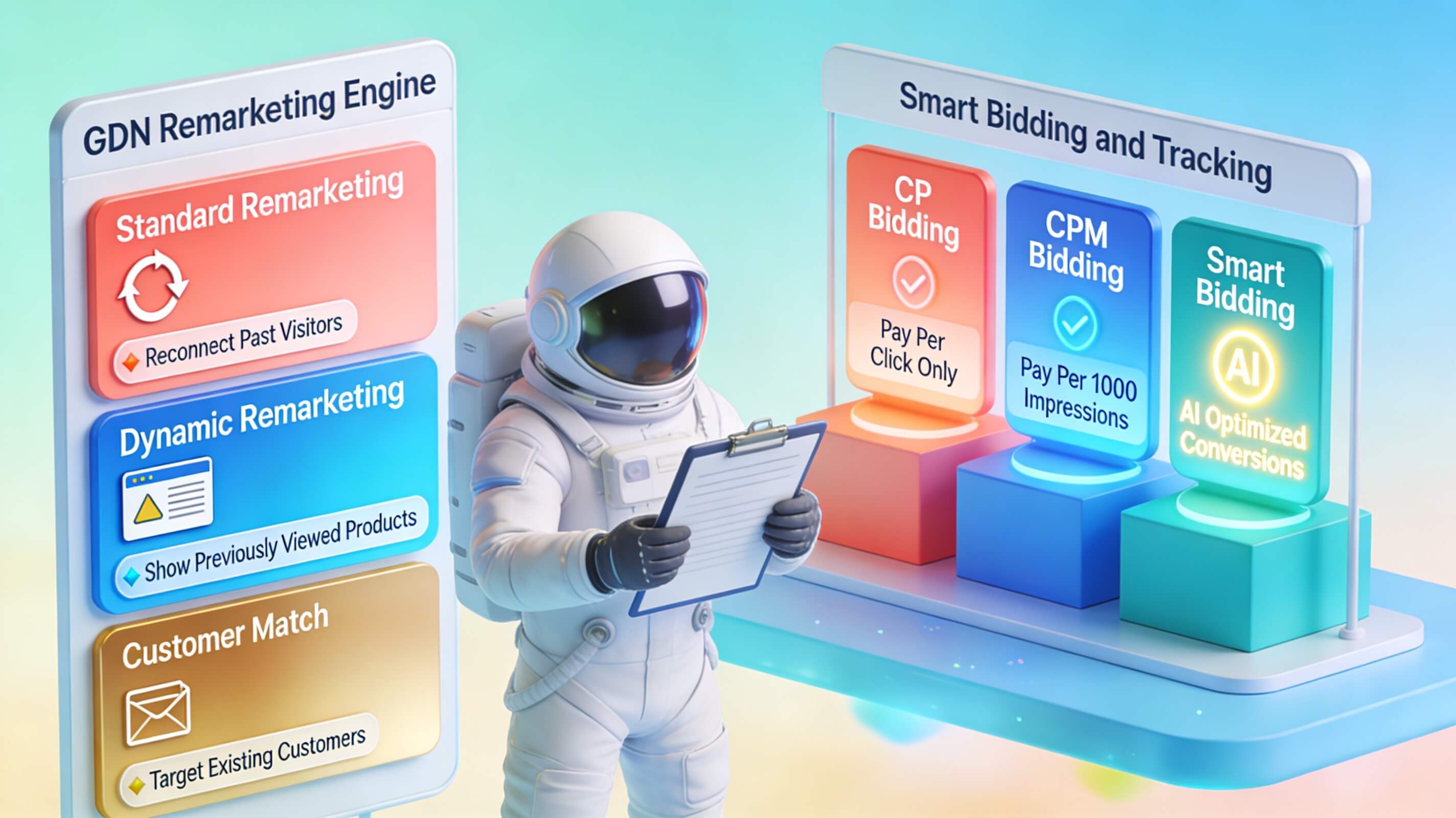
The synergy between the two is powerful. A user who sees a compelling display ad may later search for your brand by name, where your search ad will appear. This is known as the “halo effect” of display advertising. By running both types of campaigns, you can capture users at every stage of their journey, from initial awareness to final purchase. This integrated approach maximizes your total addressable market and ensures that you are not leaving any potential customer behind. A sophisticated marketer views the Google Ads platform as a single, powerful ecosystem where Search and Display work in harmony to drive growth.
Conclusion
The Google Display Network is far more than just a place to run banner ads. It is a sophisticated, data-driven advertising ecosystem that offers a unique combination of massive reach, precision targeting, cost efficiency, and powerful measurement. When you fully grasp what are the key benefits of using the Google Display Network, you see it as a strategic imperative for any business serious about digital growth. From building brand awareness at an unprecedented scale to re-engaging lost visitors with high-ROI remarketing, the GDN provides the tools to connect with your ideal customers wherever they are online. Its user-friendly interface and AI-powered innovations make this power accessible to businesses of all sizes, leveling the playing field against larger competitors.
The key to success is not just knowing about these benefits, but implementing them strategically. It requires defining clear objectives, building a robust audience strategy, crafting compelling creative, and committing to a cycle of continuous testing and optimization based on data. The platform rewards those who are thoughtful and disciplined. As the digital landscape continues to evolve with privacy regulations and new technologies, the GDN is adapting, investing in first-party data solutions and AI to remain a cornerstone of effective advertising.
Now is the time to move beyond theory and into action. Start by auditing your current digital advertising efforts. Are you leaving money on the table by not using display? Are you missing the opportunity to build brand awareness at scale? The GDN is a powerful engine waiting to be harnessed. To truly unlock its potential and build a comprehensive, data-driven advertising strategy that drives measurable results, we invite you to schedule a free consultation with our team of certified Google Ads experts. Let us help you design a custom GDN strategy that turns your advertising budget into a powerful growth engine for your business. Your next wave of customers is just a click away.

Comments are closed.