Cart 0

Share
Discover how SEO alternative methods can transform your website traffic strategy beyond traditional optimization techniques. While conventional SEO remains foundational, exploring complementary approaches enables you to reach untapped audiences, amplify engagement, and achieve measurable business growth. The most successful digital strategies integrate multiple channels and tactics working synergistically to maximize visibility across search engines and alternative discovery platforms in 2024.
Table of Contents
Exploring Off-Page SEO Tactics and Backlink Building Strategies
In the realm of search engine optimization, SEO alternative methods extend far beyond on-page optimization into strategic off-page techniques that fundamentally reshape how search engines perceive your website’s authority. Off-page SEO tactics play a crucial role in improving website visibility, with high-quality backlinks from authoritative sources serving as primary endorsements that signal content value to search algorithms. The most effective SEO alternative methods prioritize link quality over quantity, recognizing that a single link from a domain authority 60+ website delivers substantially more value than dozens of links from low-authority sources.
Strategic backlink acquisition remains one of the most powerful SEO alternative methods available. Guest blogging on industry-relevant publications establishes your expertise while generating contextual backlinks that drive both direct traffic and search engine credibility. Social media engagement creates natural linking opportunities as your content gains visibility and shareability. Influencer partnerships expose your website to established audiences while generating authoritative backlinks from high-traffic domains. Content promotion across communities like Reddit and Quora attracts attention from users actively seeking solutions, many of whom become linkers when they discover valuable information.
| Backlink Strategy | Authority Impact | Traffic Benefit | Implementation Timeline |
|---|---|---|---|
| Guest blogging | High-quality backlinks from niche authorities | Direct referral traffic + SEO boost | 3-6 months |
| Social media engagement | Indirect authority through amplification | Viral reach + social referrals | Immediate to 2 weeks |
| Influencer partnerships | High-authority domain backlinks | Audience exposure + quality traffic | 2-4 weeks |
| Content promotion | Natural backlinks from community sites | Targeted audience discovery | 1-2 weeks |
 Optimizing On-Page SEO Elements for Maximum Visibility
 Optimizing On-Page SEO Elements for Maximum Visibility
SEO alternative methods complement traditional on-page optimization by expanding how search engines and users discover your content. Beyond basic keyword insertion, effective on-page optimization requires understanding search intent and structuring content to satisfy user needs comprehensively. Thorough keyword research enables marketers to identify high-intent search queries where users demonstrate explicit purchase or information-seeking behavior, increasing the likelihood that your content reaches ready-to-convert audiences.
Meta tags, header hierarchies, and strategic keyword placement remain essential foundations of SEO alternative methods. Meta descriptions appearing in search results influence click-through rates significantly—compelling descriptions can boost CTR by 20-30% compared to generic alternatives. Headers (H1, H2, H3) organize content for both user readability and search engine comprehension, with keyword-rich headers signaling topic relevance. Alt text for images serves dual purposes: helping search engines understand visual content while improving accessibility for users with visual impairments, creating a win-win optimization scenario.
Content depth distinguishes high-ranking pages from competitors. Comprehensive articles covering topics from multiple angles, addressing related questions, and providing thorough explanations signal topical authority to search engines. Long-form content (2,500-3,500 words) consistently outperforms shorter alternatives for competitive keywords, likely because it provides more opportunity to demonstrate expertise and answer diverse user queries within a single resource.
Harnessing Technical SEO to Improve Crawlability and Indexing
Technical SEO forms the infrastructure enabling search engines to discover, crawl, and index your content efficiently, with website speed, mobile optimization, and proper site structure serving as fundamental requirements for competitive rankings in 2024. Many SEO alternative methods fail without solid technical foundations—brilliant content becomes invisible if search engines cannot access or properly index it.
Website speed optimization directly impacts both user experience and search rankings. Page speed influences bounce rate, with sites loading in 3+ seconds experiencing bounce rates exceeding 40%. Google now considers Core Web Vitals (LCP, FID, CLS) as ranking factors, making performance optimization non-negotiable. Image optimization, CSS/JavaScript minification, browser caching, and CDN implementation collectively reduce load times significantly. Mobile optimization extends beyond responsive design to ensure touch-friendly navigation, readable fonts, and appropriate spacing for smaller screens.
Structured data markup using schema.org vocabulary helps search engines understand content context and relationships. Product markup enables rich snippets in search results, potentially boosting CTR. FAQ schema addresses multiple variations of common questions. Article schema signals content publication date and author authority. XML sitemaps guide search engines through site architecture, particularly valuable for large websites with complex structures.
| Technical Element | SEO Impact | User Experience Effect |
|---|---|---|
| Page speed optimization | Improves Core Web Vitals, boosts rankings | Reduces bounce rate, increases engagement |
| Mobile-first design | Essential for mobile search rankings | Seamless experience across all devices |
| Structured data markup | Enables rich snippets and enhanced visibility | Better search result presentation |
| XML sitemaps | Improves crawlability and indexing | Faster content discovery and updates |
Leveraging Content Marketing as a Primary Traffic Driver
Content marketing represents perhaps the most sustainable SEO alternative methods approach, transforming how businesses attract and retain audiences. Strategic content creation addressing audience pain points, answering frequently asked questions, and providing genuine value builds trust while naturally incorporating target keywords and generating engagement signals that boost search visibility. Unlike promotional messaging, valuable content earns sharing, linking, and engagement through merit rather than paid amplification.
Effective content marketing integrates keyword research with audience psychology. Understanding not just what keywords people search but why they search reveals opportunities to create content serving genuine needs. A fitness enthusiast searching “best HIIT workouts for runners” needs different content than someone searching “HIIT definition”—the first seeks practical guidance while the second seeks foundational knowledge. Tailoring content to search intent increases relevance and engagement.
Content formats multiply distribution and reach. Blog articles establish authority for informational queries. Videos capture visual learners and feature prominently in search results. Infographics enable rapid knowledge absorption and encourage social sharing. Podcasts serve audiences consuming content during commutes or workouts. Webinars demonstrate expertise while generating leads. Interactive tools like calculators provide immediate utility while gathering user data.
Maximizing Social Media Marketing for SEO Benefits
 Maximizing Social Media Marketing for SEO Benefits
Social media’s indirect SEO influence through SEO alternative methods has grown substantially as platforms evolve into discovery and search channels. While social signals don’t directly influence Google rankings, social media amplification increases content visibility, generates backlinks through sharing and discovery, drives branded search volume, and provides signals of content quality and audience interest that correlate strongly with improved organic performance.
Platform-specific optimization distinguishes effective social strategies. LinkedIn’s professional audience responds to thought leadership and industry insights. Instagram’s visual focus requires high-quality imagery and video content. TikTok’s algorithm rewards watch time and completion rates, making engaging hooks and retention critical. Twitter thrives on real-time commentary and conversation. Each platform requires tailored content and engagement approaches while amplifying your overall SEO alternative methods strategy.
User-generated content deserves special emphasis. Customer reviews, testimonials, and shared experiences provide authentic social proof while generating keyword-rich content that search engines index. Hashtag campaigns create organizing structures for branded conversations while enabling discoverability. Influencer collaborations extend reach beyond your immediate audience to established communities with demonstrated interest in related topics.
Implementing Local SEO Optimization for Geographic Visibility
Local SEO alternative methods serve businesses targeting geographic markets through strategies optimizing visibility in local search results and maps. Google My Business optimization remains foundational for local visibility, with complete profiles including accurate business information, photos, customer reviews, and posts appearing prominently in local search results and map packs for location-based queries.
Online reviews significantly influence local search rankings while building credibility with potential customers. Positive reviews improve local search visibility, reduce bounce rates from local search results, and increase conversion likelihood. Review generation should balance volume with authenticity—genuine customer experiences matter more than manufactured review counts. Responding to reviews, both positive and negative, demonstrates customer commitment and provides opportunities to address concerns publicly.
Local directory listings—Yelp, Yellow Pages, TripAdvisor, industry-specific directories—provide valuable backlinks while increasing local visibility. Maintaining consistent business information (name, address, phone) across directories prevents confusion and supports local ranking algorithms. Schema markup for local businesses enhances local search results with ratings, opening hours, and service areas.
Integrating SEO Alternative Methods Across Digital Marketing Channels
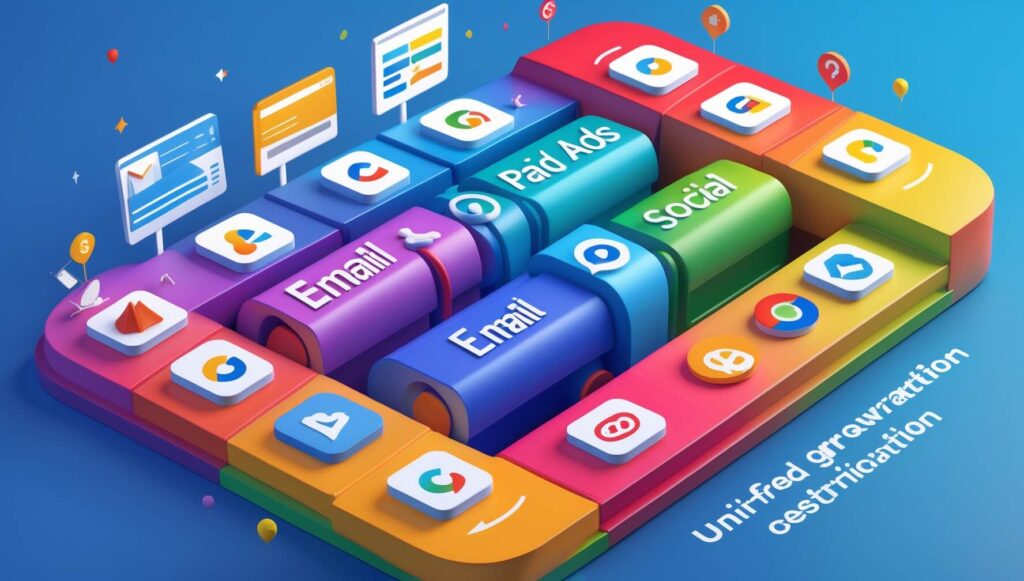
The most effective SEO alternative methods operate not in isolation but integrated across complementary channels. Email marketing complements organic search by nurturing audiences who discovered your content through search results. Paid search advertising accelerates visibility for competitive keywords while you build organic rankings. Social media drives traffic while amplifying content that earns backlinks and branded searches. Content syndication reaches new audiences while signaling content authority to search engines.
Cross-channel integration requires consistent messaging and strategic keyword alignment. An email campaign promoting a comprehensive guide should link to that guide’s highest-performing page, directing traffic to content optimized for target keywords. Paid ads should direct to pages supporting keyword intent, providing smooth transitions from ad messaging to landing page content. Social posts should highlight content answering frequently asked questions, capturing search volume around those queries.
Analytics integration enables measurement of cross-channel attribution. UTM parameters distinguish traffic sources, revealing which channels drive highest-quality visitors and conversions. Audience segmentation identifies which channels attract which customer types, enabling budget allocation optimization. Funnel analysis reveals where users drop off, highlighting opportunities for improvement across channels.
Using Analytics to Optimize Website Traffic and Performance
 Using Analytics to Optimize Website Traffic and Performance
Data-driven optimization transforms SEO alternative methods from guesswork into strategic decision-making. Google Analytics 4 provides detailed visitor behavior insights revealing which content attracts engaged audiences versus high-bounce-rate visitors. Search Console data shows search impression volumes, click-through rates, and average ranking positions for target keywords, exposing optimization opportunities and performance changes.
High-performing pages merit further optimization through expanded content, updated information, and internal linking to related resources. Underperforming pages warrant investigation—do they target low-intent keywords, answer questions superficially, load slowly, or rank below high-authority competitors? Understanding underperformance enables targeted fixes. Some pages benefit from expansion; others require repositioning or consolidation with stronger performers.
User engagement metrics reveal content quality perception. Long average session duration and low bounce rates indicate content relevance and quality. Pages with high bounce rates but significant traffic often represent entry points where content fails to meet visitor expectations—misaligned keyword targeting, poor usability, or insufficient depth warrant investigation. Time-on-page metrics identify particularly engaging content worth expanding or creating variations of.
| Metric | Insight Value | Optimization Action |
|---|---|---|
| Average session duration | Indicates content relevance and engagement | Expand high-engagement content formats |
| Bounce rate | Reveals keyword-content mismatch | Adjust targeting or improve content relevance |
| Pages per session | Shows content interlinking effectiveness | Improve internal navigation and linking |
| Conversion rate by source | Identifies highest-quality traffic sources | Prioritize high-converting channels |
Staying Ahead with Emerging SEO Alternative Methods
The SEO landscape evolves continuously as search engines refine algorithms and user behavior shifts. Emerging trends including voice search optimization, AI-driven search result generation, and zero-click searches require adaptive strategies positioning content for discovery across diverse search paradigms. Voice search optimization emphasizes natural language, question-based queries, and featured snippet eligibility. AI-generated search results demand content establishing clear expertise and authority. Zero-click strategies focus on capturing search results themselves rather than clicks through to websites.
Entity optimization represents an emerging SEO alternative methods approach gaining importance as search engines move beyond keyword matching toward semantic understanding. Structuring content around entities (distinct things, concepts, organizations) and their relationships enables search engines to understand content context comprehensively. Knowledge graphs reward brands establishing clear entity definitions and relationships to related concepts.
Experience signals increasingly influence rankings as Google emphasizes satisfying user intent comprehensively. Pages demonstrating extensive experience with topics, created by recognized experts, published on authoritative sites, and earning positive user engagement receive ranking boosts. Building demonstrable experience through original research, case studies, and expert interviews strengthens content authority.
Conclusion: Implementing Comprehensive SEO Alternative Methods
Success with SEO alternative methods in 2024 requires moving beyond single-tactic approaches toward integrated strategies combining off-page optimization, technical excellence, content quality, social amplification, local targeting, and analytics-driven refinement. The highest-performing SEO alternative methods recognize that search has evolved beyond keyword matching into holistic user satisfaction assessment encompassing content quality, site performance, authority signals, and user experience.
Implementing these approaches systematically—beginning with technical foundations, proceeding to content quality optimization, expanding to authority building through links and brand signals, amplifying through multiple channels, and measuring results through comprehensive analytics—creates sustainable competitive advantages. Organizations investing in comprehensive SEO alternative methods rather than isolated tactics position themselves for long-term visibility, traffic growth, and business success as search engines continue evolving and user behavior shifts in unpredictable directions.