
Cart 0


Share
Table of Contents
How to Get Quality Backlinks
For more than two decades, I have observed the SEO landscape transform from a chaotic free-for-all of directory submissions and reciprocal link exchanges into a refined ecosystem where trust, relevance, and genuine authority dictate success. If you want to improve your website’s visibility and secure lasting organic rankings, you must master how to get quality backlinks. This is not just a tactical goal; it is the central challenge of modern search engine optimization. The days of chasing hundreds of low-authority links are over. Today, a single, well-earned backlink from a highly trusted publication can move the needle more than a thousand spammy ones. In this comprehensive guide, I will share the exact strategies I have used across hundreds of campaigns, from identifying authoritative sources to executing outreach that builds real relationships. By the end, you will have a clear, actionable framework for elevating your site’s authority.
Understanding the Importance of Backlinks in Modern SEO
Backlinks remain one of Google’s top three ranking signals, alongside content and RankBrain. However, their role has evolved dramatically. Initially, links were a simple popularity vote. Now, they are a measure of trust and credibility. When a reputable site links to yours, it signals to Google that your content is a valuable resource worthy of citation. This contributes directly to your site’s E-E-A-T (Experience, Expertise, Authoritativeness, and Trustworthiness), a framework Google’s quality raters use to evaluate overall page quality. A strong backlink profile does not just help with rankings; it drives targeted referral traffic, builds your brand’s reputation, and creates lasting relationships within your industry.

To truly master this discipline, you must shift your mindset from link quantity to link value. I have seen businesses with just 20 high-authority links outrank competitors with 2,000 low-quality links. The correlation between the number of referring domains and top search positions is strong, but only when those domains are contextually relevant and authoritative. Low-quality links from link farms or unrelated sites can trigger manual penalties or algorithmic devaluations, such as those from Google’s Penguin update. Therefore, understanding how to get quality backlinks is fundamentally about understanding quality itself.
Quality vs Quantity: The Hallmark of a Strong Link Profile
Not all links are created equal. A link from a major university (.edu) or a government site (.gov) carries immense weight because those domains are inherently trusted by search engines. Similarly, a contextual link from a leading industry publication or a niche expert blogger provides far more value than a directory listing or a comment spam link. The primary characteristics that define a high-quality backlink include domain authority, topical relevance, editorial placement, and the inability to be easily bought or manipulated.
Let me break down the key differences in a practical comparison table that you can use as a quick reference guide when evaluating potential link opportunities.
| Attribute | High-Quality Backlink | Low-Quality Backlink |
|---|---|---|
| Domain Authority | High (DA 50+) with organic traffic | Low (DA < 20) or artificially boosted |
| Relevance | Topically related to your niche | Unrelated or spammy industry |
| Placement | Editorial, within main body content | Sidebar, footer, or comment section |
| Anchor Text | Branded, natural, or long-tail | Exact-match, over-optimized, or generic |
| Acquisition Method | Earned via merit or relationship | Bought, exchanged, or automated |
| Trust Flow | High trust flow from clean neighbors | Low trust flow, surrounded by spam |
When your primary goal is learning how to get quality backlinks, this table should serve as your benchmark. If a potential link fails to meet most of these high-quality criteria, it is often better to pass on it. One toxic link can drag down the performance of dozens of good ones.
Identifying Authoritative Sources for High-Quality Backlinks
The first step in any successful link building campaign is identifying the right targets. You cannot simply blast out generic emails to every website with a high Domain Authority. You must vet potential sources meticulously. I recommend starting with a competitive analysis. Use tools like Ahrefs or Moz to analyze the backlink profiles of your top competitors. Look for patterns. What types of sites are linking to them? Are those sites blogs, news outlets, or resource pages?
Next, evaluate the relevance and authority of each prospect. Do not just look at Domain Authority (DA) or Domain Rating (DR) in isolation. Check the site’s overall organic traffic trajectory. A site with a high DA but declining traffic may have lost its editorial edge and could be a risky partner. Also, examine the site’s outbound link profile. If a page links out to dozens of irrelevant or low-quality sites, its editorial value is low. I often use Moz’s Domain Authority as a starting filter but always dig deeper into the quality of the referring page itself. The goal is to secure a link from a page that is itself well-ranked and trusted.
Prioritise source types that are notoriously difficult to get links from, such as:
- Government and Educational Domains: These remain the gold standard for trust.
- Major Media Publications: Forbes, The Guardian, TechCrunch, etc., offer massive reach.
- Industry-Specific Trade Journals: Highly relevant and trusted by niche audiences.
- Established Blogs with Engaged Communities: These often drive significant referral traffic.
Creating Link-Worthy Content That Attracts Natural Links
You cannot build a skyscraper on a weak foundation. The most effective tactic for how to get quality backlinks is to create content that naturally attracts them. This is the “linkerati” approach—creating resources so valuable that people *have* to link to them. The most linkable content formats include original research and data studies, comprehensive ultimate guides, visual assets (infographics, interactive maps), tools and calculators, and thought leadership pieces like expert roundups.
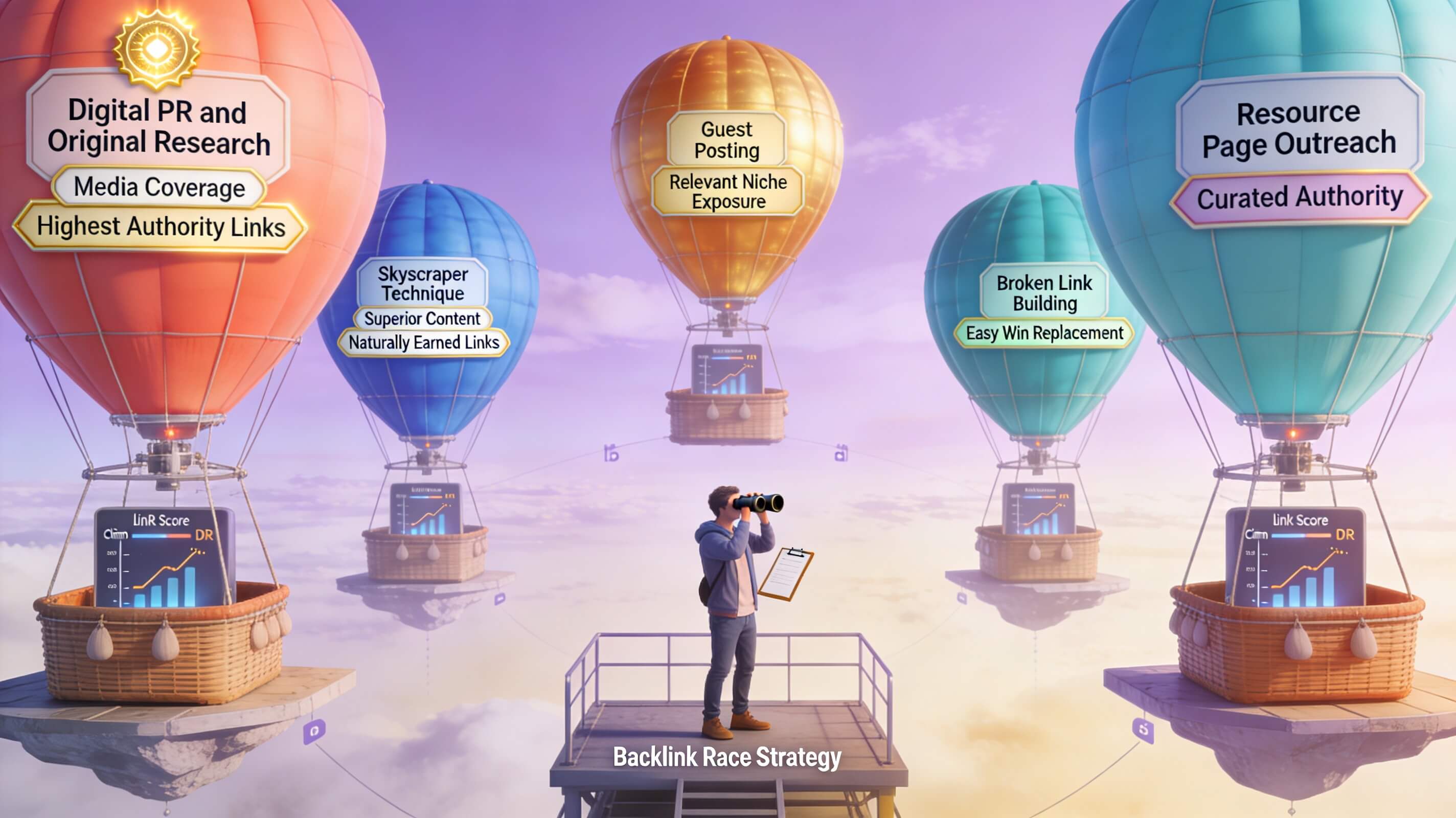
For example, I once worked with a client in the fitness niche. Instead of writing another “best exercises” article, we conducted a survey of 5,000 gym-goers and published the results as an “Industry Fitness Report.” Within three months, it had earned links from over 40 different publications, including major health blogs and local news stations. This is the power of original data. It provides a unique value that cannot be found elsewhere.
Another proven technique is the Skyscraper Technique, popularized by Brian Dean. Find a piece of content in your niche that has many backlinks. Create something significantly better—more thorough, more current, better designed. Then, reach out to the people linking to the original piece and show them your improved version. This strategy combines great content with smart outreach, two pillars of sustainable link building.
Advanced Outreach: The Key to Unlocking Quality Backlinks
Creating great content is only half the battle. You must actively promote it. Effective outreach is a skill that requires empathy, personalization, and persistence. When I train teams on how to get quality backlinks, I emphasize that outreach is not a sales pitch; it is a relationship-building exercise. Your first email should never be about asking for a link. Instead, begin by providing value. Compliment their work, share their content on your social channels, or engage thoughtfully with their blog posts.
When you do send a link request, it must be highly personalized. Generic templates are easily ignored. Reference a specific article they published. Explain why your resource would genuinely benefit their audience. Use a clear, concise subject line. I have found that mentioning how your content complements theirs, rather than replaces it, significantly increases response rates. For instance, “Loved your guide on email marketing. I created a free calculator that helps your readers measure their ROI directly from your advice.”
Broken link building is another excellent white hat approach. Find broken links on relevant resource pages using tools like Check My Links. Then, create a piece of content that perfectly serves the same purpose as the broken link. Reach out to the site owner and politely inform them of the broken link while offering your content as a replacement. This is a win-win situation and teaches you a lot about how to get quality backlinks through pure utility.
Leveraging Digital PR and Social Media for Link Acquisition
While social media links are typically nofollow, they are indispensable for amplification and relationship building. A strong social presence can lead journalists and bloggers to discover your content organically. Furthermore, digital public relations (PR) is one of the most powerful, scalable ways to earn high-authority editorial links. Platforms like Connectively (formerly HARO) connect journalists directly with expert sources. By responding to relevant queries, you can earn a backlink from major outlets like The New York Times or The Wall Street Journal.
To succeed in digital PR, you must be reactive and proactive. Reactively, monitor journalist requests and provide genuinely helpful, quotable insights. Proactively, create news-worthy stories, surveys, or events that journalists would want to cover. This is where high-quality data visualization comes into play. A compelling infographic summarizing a new trend can be syndicated across dozens of news sites, each providing a powerful backlink.
I have consistently found that combining social media promotion with targeted PR outreach creates a compounding effect. When you share your content on LinkedIn or Twitter and tag the journalists or influencers you want to notice it
Conclusion
Earning quality backlinks is not a game of numbers; it is a strategic pursuit rooted in value, relevance, and genuine relationship building. As we have explored, the most effective link-building strategies revolve around creating exceptional content that others naturally want to reference, whether through original research, comprehensive guides, or compelling visual assets. The era of spammy directories and automated link exchanges is long over—search engines now reward authority and trust, which can only be earned through authentic endorsements from reputable sources.

Throughout this guide, we examined several proven methods for acquiring high-quality backlinks. Starting with guest posting, we learned that strategic contributions to authoritative publications not only secure valuable contextual links but also establish your expertise and expand your audience reach. Broken link building emerged as a win-win tactic: you help site owners improve their user experience while earning a link to your superior resource. Skyscraper content teaches us that by improving upon existing popular content, you can attract links that were previously pointing to lesser resources.
We also underscored the critical role of digital PR and social media in modern link acquisition. Platforms like Connectively allow you to connect directly with journalists, while proactive PR campaigns built around original data or newsworthy angles can secure links from major editorial outlets. Social media, though often providing nofollow links, serves as an essential amplifier—it helps your content gain visibility, builds relationships with influencers, and ultimately encourages organic citation from trusted domains.
Remember that link building is a long-term investment. Consistency, patience, and a focus on delivering genuine value will yield the best results. Avoid shortcuts that could lead to penalties; instead, prioritize earning links by being a helpful, authoritative presence in your niche. Start by auditing your current backlink profile, then gradually implement the techniques discussed here—one quality link at a time. The effort you invest today will compound over months and years, strengthening your site’s authority and driving sustainable organic traffic. Go forth and build your reputation, one meaningful connection at a time.

Permalink