Cart 0

Share
Table of Contents
Natural Language Processing Software
Every organization today sits on a mountain of unstructured text—customer emails, support transcripts, product reviews, social media mentions, and internal reports. The challenge has never been about collecting data; it has always been about extracting meaningful, actionable insights from it. Natural language processing software solves this problem by giving machines the ability to read, interpret, and derive intent from human language at a scale no human team could match. Natural language processing software, often called NLP software, combines computational linguistics with machine learning to analyze text with context-aware precision. It moves beyond simple keyword spotting to understand tone, sentiment, named entities, and even sarcasm. For any business that deals with customer communication or market intelligence, NLP has shifted from experimental technology to operational necessity. This article will explore how NLP software works, the algorithms that power it, real-world applications across major industries, the obstacles companies face during implementation, and what the future holds for this rapidly evolving field. By the end, you will have a clear understanding of how to leverage NLP solutions to gain a measurable competitive advantage.
What Is Natural Language Processing Software?
At its core, natural language processing software is a branch of artificial intelligence designed to bridge the gap between human communication and computer understanding. It enables machines to process, analyze, and generate human language in a way that is both meaningful and useful. Unlike traditional data processing, which relies on structured formats like spreadsheets or databases, NLP handles the messy, ambiguous, and context-rich nature of natural language. This includes everything from grammatical variations and slang to cultural nuances and domain-specific jargon.
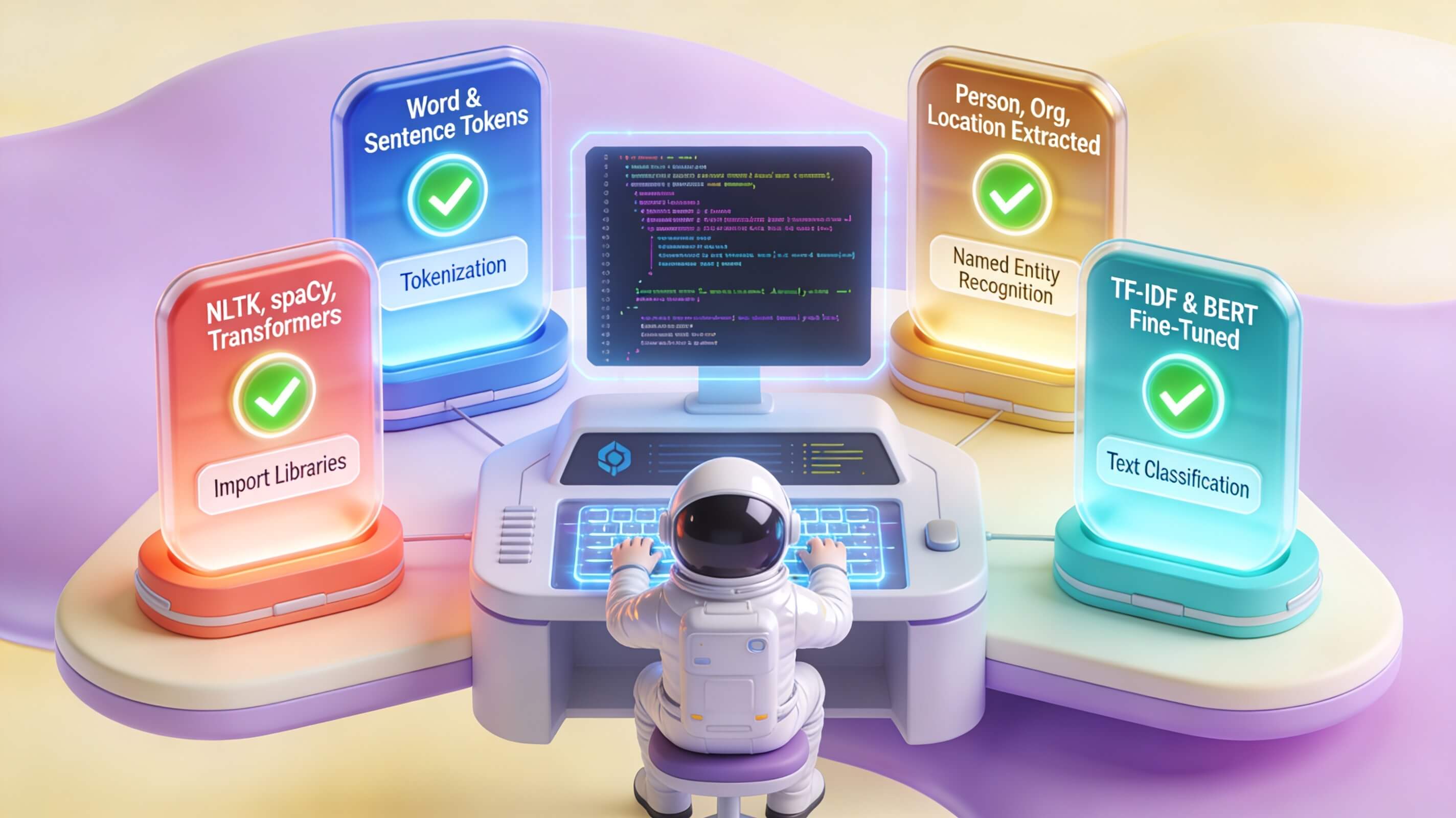
To achieve this, NLP software relies on a layered pipeline. The first step is tokenization—breaking text into individual words or phrases. Next comes part-of-speech tagging, which identifies whether a word is a noun, verb, adjective, and so on. Then syntactic parsing builds a grammatical structure of the sentence. Finally, semantic analysis assigns meaning based on context. Advanced NLP systems now incorporate deep learning models that learn these patterns automatically from vast amounts of text data, eliminating the need for hand-crafted linguistic rules. This shift has dramatically improved accuracy and made NLP accessible to organizations without deep linguistic expertise.
It is important to distinguish NLP from its subfields. Natural language understanding focuses on comprehension and meaning extraction, while natural language generation focuses on producing coherent text. Most commercial NLP software today integrates both—reading input, interpreting it, and then generating a response or a report. This combination powers chatbots, virtual assistants, and automated content analysis tools. Whether you are analyzing customer feedback or building an intelligent search system, NLP software provides the foundational layer that makes these applications possible.
The Core Algorithms That Power NLP Solutions
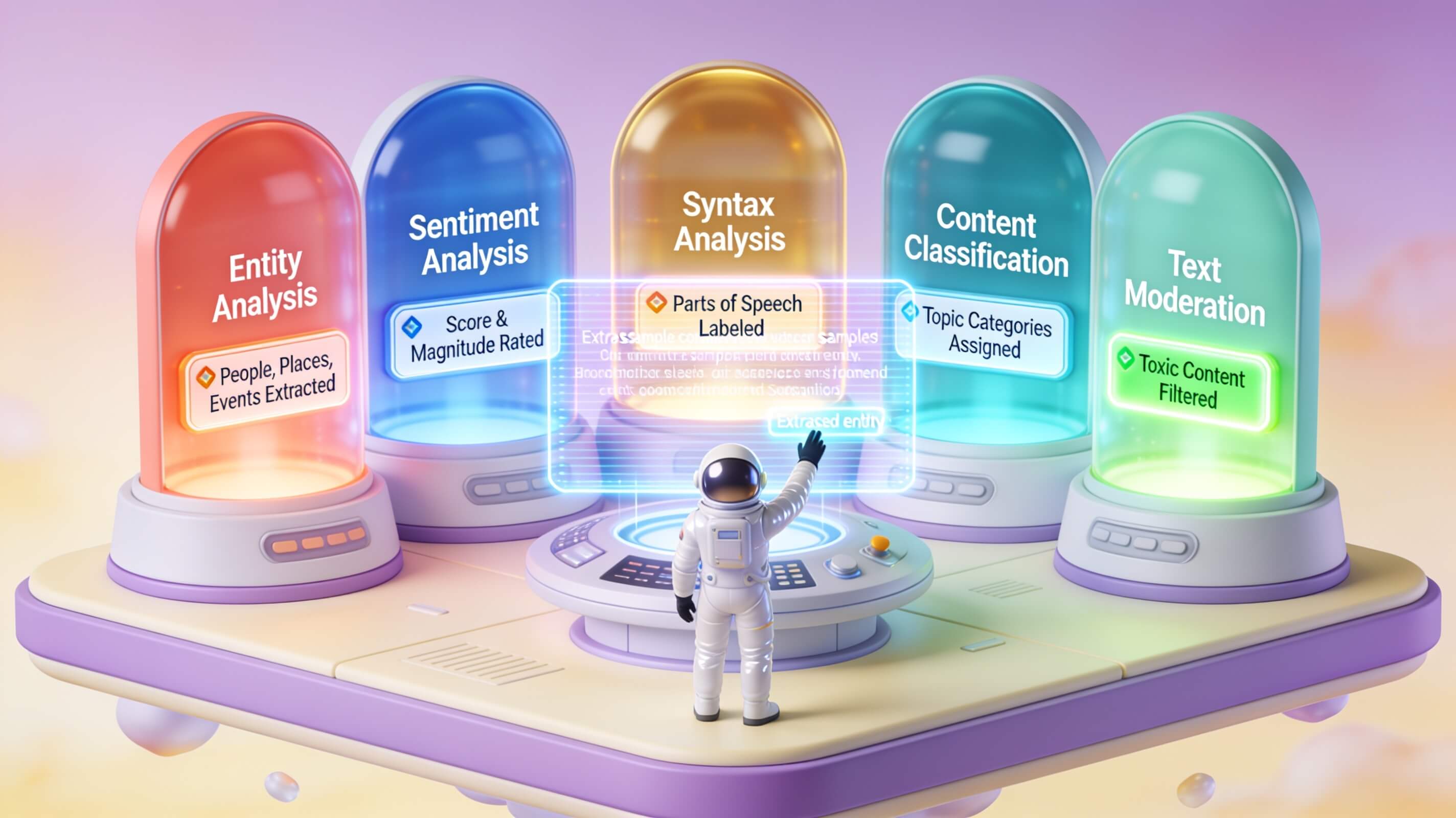
Understanding the algorithms behind natural language processing software is essential for selecting the right tool for your use case. These algorithms are not monolithic; they serve specific functions within the broader analysis pipeline. The most impactful ones include named entity recognition, sentiment analysis, part-of-speech tagging, topic modeling, and dependency parsing. Each brings a distinct capability to text analysis.
Named Entity Recognition (NER)
Named entity recognition is the algorithm that identifies and classifies named entities within text—people, organizations, locations, dates, monetary values, and more. For example, in the sentence “Apple acquired Shazam for $400 million in 2018,” NER would tag “Apple” as an organization, “Shazam” as another organization, “$400 million” as a monetary value, and “2018” as a date. This capability is invaluable for tasks like extracting key information from legal documents, processing news articles, or categorizing customer inquiries. Without NER, much of the context-rich data in unstructured text remains hidden. Modern NER models, built on transformer architectures like BERT, achieve near-human accuracy, especially when fine-tuned on domain-specific corpora such as medical records or financial filings. For businesses that need to automatically extract structured data from free-form text, NER is the workhorse algorithm.
Sentiment Analysis
Sentiment analysis evaluates the emotional tone behind a piece of text—positive, negative, or neutral. More advanced implementations go further, detecting specific emotions like anger, joy, or disappointment, and even identifying the target of the sentiment. This is one of the most widely deployed NLP techniques in business. Companies use it to monitor brand perception on social media, analyze customer feedback, and assess employee morale from internal surveys. The underlying models learn from labeled datasets where human annotators have tagged text with its emotional valence. These models then generalize to new, unseen text. The key challenge is handling sarcasm, irony, and cultural context. For this reason, the best sentiment analysis solutions incorporate domain-specific training data relevant to the industry in which they are deployed. In my experience, organizations that fine-tune generic sentiment models outperform those that rely entirely on off-the-shelf tools.
Part-of-Speech Tagging (POS)
Part-of-speech tagging assigns a grammatical label to every word in a sentence—noun, verb, adjective, adverb, preposition, and so on. While it may seem basic, POS tagging is foundational for any deeper linguistic analysis. It helps disambiguate words with multiple meanings. For instance, “run” can be a verb in “I run every morning” or a noun in “She went for a run.” POS tagging resolves this ambiguity based on the word’s position and context in the sentence. This algorithm also feeds directly into named entity recognition and dependency parsing. Without accurate POS tagging, higher-level tasks like relation extraction and coreference resolution become unreliable. Modern NLP software achieves POS tagging accuracy above 97 percent, thanks to deep learning models trained on massive annotated corpora like the Penn Treebank. For practitioners, POS tagging is rarely a standalone output but acts as a critical building block for more sophisticated analysis pipelines.
Topic Modeling and Dependency Parsing
Topic modeling is an unsupervised algorithm that discovers latent themes across a collection of documents. Techniques like Latent Dirichlet Allocation and more recent neural topic models identify clusters of words that frequently co-occur, revealing the underlying topics without any prior labeling. This is particularly useful for analyzing large corpora such as customer support tickets, legal case files, or academic literature. It enables businesses to surface trends and patterns that would be impossible to detect manually. Dependency parsing, on the other hand, maps the grammatical relationships between words in a sentence. It answers questions like “who did what to whom?” by linking verbs to their subjects and objects. This is essential for information extraction tasks such as identifying the relationship between a drug and its side effect in medical texts or linking a complaint to a specific product feature in customer reviews. These algorithms, combined with NER and sentiment analysis, form a comprehensive toolkit for unlocking the full value of textual data.
How AI and Machine Learning Supercharge NLP Capabilities
The integration of artificial intelligence with natural language processing software has been the single most transformative development in the field. Historically, early NLP systems relied on hand-crafted rules created by linguists. These rule-based systems were brittle—they worked well on carefully written text but failed on the messy, informal language found in emails, social media, or transcribed speech. The shift to machine learning changed everything. Instead of programming rules, developers began training models on large datasets, allowing the algorithms to learn linguistic patterns on their own.
Machine learning for NLP typically falls into three categories. Supervised learning uses labeled data—text annotated with the correct tags or classifications—to train models for tasks like sentiment analysis or NER. Unsupervised learning, like topic modeling, discovers patterns without labeled data. Semi-supervised and transfer learning combine both approaches. The latter has become especially powerful with the advent of transformer models like BERT, GPT, and their derivatives. These models are pre-trained on enormous text corpora, learning general language understanding, and then fine-tuned on a smaller, task-specific dataset. This approach dramatically reduces the amount of labeled data a business needs to generate, lowering the barrier to entry for NLP adoption.
The practical benefit is substantial. AI-powered NLP software can now handle complex language phenomena such as pronoun resolution, anaphora, and long-range dependencies. It can understand that in the sentence “The board rejected the proposal because it was too risky,” the word “it” refers to “the proposal,” not “the board.” This kind of contextual reasoning was nearly impossible with earlier methods. As a result, the accuracy of text analysis has improved to the point where many organizations trust NLP outputs for critical decisions—from flagging fraudulent financial transactions to triaging medical diagnoses. Continuing advances in reinforcement learning and few-shot learning promise to make these systems even more capable, requiring less human supervision and adapting more quickly to new domains.
| Industry | NLP Application | Business Impact |
|---|---|---|
| Banking & Finance | Automated transaction monitoring, document extraction, regulatory compliance checks | Faster fraud detection, reduced manual review costs, improved audit accuracy |
| Healthcare | Clinical note analysis, patient feedback sentiment, drug interaction extraction | Higher diagnosis accuracy, better patient outcomes, streamlined administrative workflows |
| E-commerce & Retail | Product review analysis, chatbot customer support, inventory classification | Increased sales conversion, improved customer satisfaction, reduced returns |
| Legal | Contract analysis, due diligence document review, e-discovery | Significant time savings, lower legal costs, fewer oversight errors |
| Human Resources | Resume screening, employee sentiment surveys, automated interview scheduling | Faster hiring cycles, better cultural fit matching, improved retention |
This table illustrates just how broadly natural language processing software has been adopted across sectors. In banking, NLP has reduced manual document review by over 60 percent in many implementations. In healthcare, it has enabled clinicians to spend more time with patients by automating note-taking and coding. For e-commerce, sentiment-driven insights have directly informed product development and marketing strategy. These are not hypothetical benefits; they represent measurable gains achieved by real organizations that have moved beyond pilot projects to full-scale production deployment.
Real-World Applications of NLP Across Industries
The theoretical capabilities of NLP software mean little without evidence of practical value. Over the past decade, I have observed dozens of implementations across industries, and the patterns of success are remarkably consistent. Let me share three anonymized case studies that illustrate the breadth of NLP’s impact.
Case study one: Banking and finance. A mid-sized regional bank was struggling with the volume of customer inquiries about loan applications and account closures. Their manual review process created bottlenecks—customers waited days for answers, and staff turnover was high due to repetitive work. The bank deployed an NLP-powered email classification and routing system. The software automatically identified the intent of each email, extracted key details like account numbers and request types, and directed the message to the appropriate department. Within three months, response times dropped by 70 percent, customer satisfaction scores rose by 22 points, and the bank reallocated five full-time employees to higher-value tasks. The NLP model was fine-tuned on the bank’s historical email corpus, so it understood the specific language and abbreviations used in banking communications. This specificity was critical—off-the-shelf models would have failed to capture domain nuances like “ACH reversal” or “wire transfer exception.”
Case study two: Healthcare. A hospital network with multiple facilities wanted to improve its patient experience by analyzing feedback from discharge surveys. The surveys were rich in unstructured comments, but manually coding the responses was time-consuming and inconsistent across locations. The hospital implemented a sentiment analysis and topic modeling pipeline. The software categorized feedback into themes—wait times, staff communication, cleanliness, billing transparency—and flagged negative sentiment for immediate follow-up. Over six months, the hospital identified that a specific wing was receiving consistently poor feedback about discharge instructions. By addressing this issue with clear written materials and a streamlined process, the hospital saw a 15 percent improvement in its overall patient satisfaction score. The NLP system also surfaced an unexpected insight: positive mentions of “compassionate care” were highly correlated with patients recommending the hospital to others. This finding shaped the hospital’s staff training programs.
Case study three: E-commerce. A direct-to-consumer brand selling personal care products used an NLP-driven chatbot to handle pre-sales questions. Prior to the NLP upgrade, their chatbot relied on rigid decision trees that frustrated customers who phrased questions even slightly differently. The brand replaced it with a natural language understanding system that could parse complex queries like “Do you have a moisturizer for sensitive skin that doesn’t contain fragrance or parabens?” The chatbot could identify the product category, the skin type, and the banned ingredients, then return a targeted recommendation. The conversion rate from chatbot interactions to purchase increased by 34 percent. Additionally, the chatbot was programmed to escalate angry or frustrated customers to human agents, ensuring that negative experiences were handled with empathy. The brand saw a 12 percent reduction in product returns because customers were being matched to the right products earlier in their journey.
These cases demonstrate that natural language processing software is not a one-size-fits-all solution. Success requires careful domain adaptation, iterative model improvement, and alignment with specific business metrics. The technology is mature enough to deliver significant ROI, but only when implemented with a clear understanding of the problem it is solving.
Overcoming Implementation Hurdles in NLP Adoption
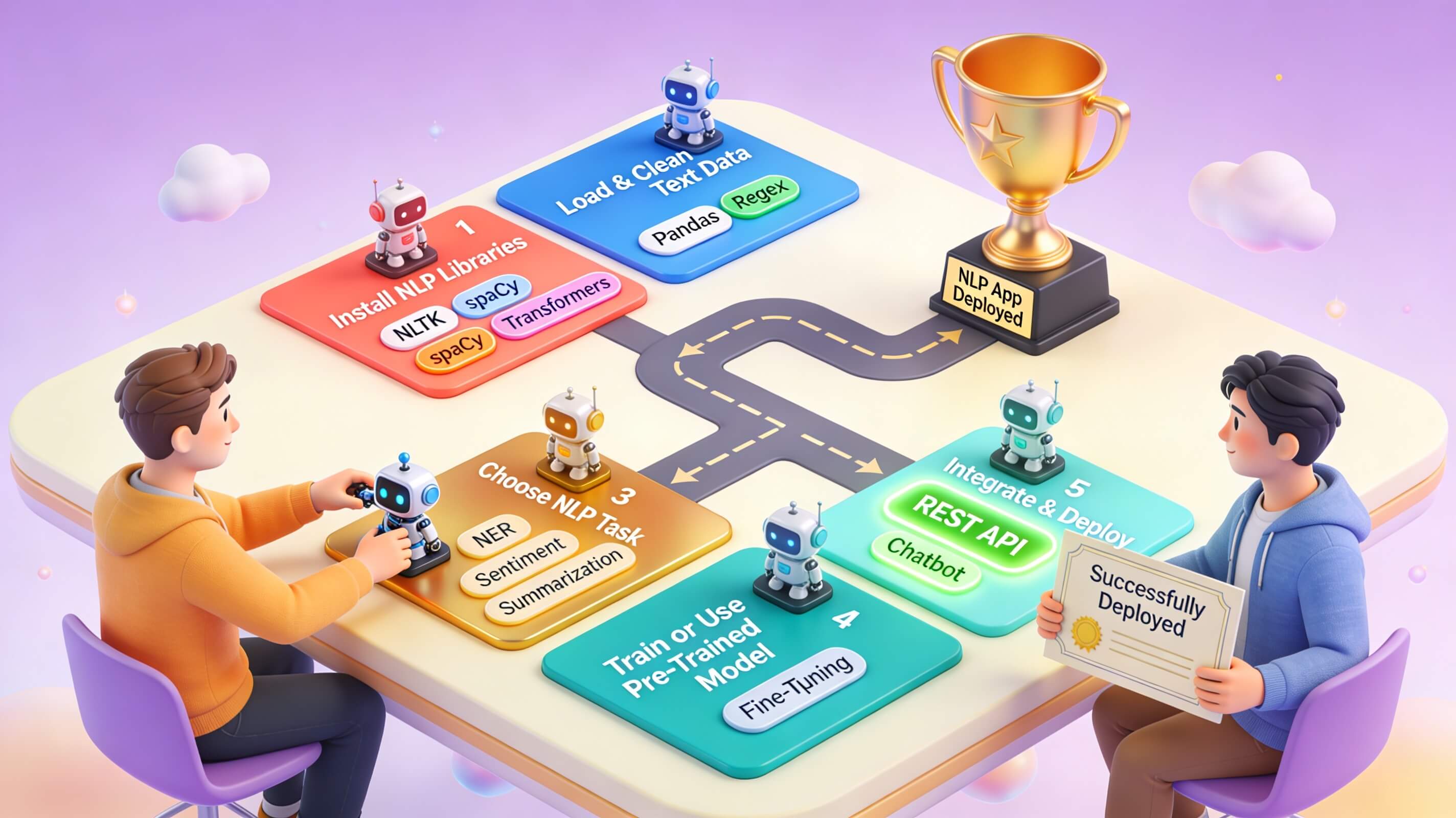
Despite the clear benefits, adopting NLP software comes with real challenges that, if ignored, can derail even the most well-funded projects. The most common issue I encounter is data quality. NLP models are only as good as the data they learn from. Inconsistent formatting, missing punctuation, OCR errors in scanned documents, and multilingual data all degrade performance. Before any model training begins, invest in preprocessing—normalize text, correct spelling errors, and standardize encoding. This step alone can improve accuracy by 10 to 20 percent.
Another frequent obstacle is domain mismatch. A sentiment model trained on movie reviews will perform poorly on financial analyst reports or medical patient notes. The vocabulary, sentence structure, and emotional expression are fundamentally different. The solution is fine-tuning—taking a general-purpose model and training it further on a representative sample of your own data. This requires labeled data, which brings its own cost and effort. Active learning techniques can help: the model identifies the most uncertain examples, and human annotators label only those, reducing the annotation burden by up to 50 percent.
Integration with human decision-making is a third challenge. NLP software should augment, not replace, human judgment. I have seen organizations fail when they expect perfection from the model and dismiss it when it makes an error. The better approach is to design workflows where the NLP system handles straightforward cases and flags ambiguous or high-stakes ones for human review. This creates a feedback loop—humans correct the model’s mistakes, and the model improves over time. Establishing clear confidence thresholds is critical. For instance, only route a customer complaint to a human agent when the model’s sentiment confidence falls below 85 percent. This balance between automation and oversight maximizes efficiency while maintaining accuracy and trust.
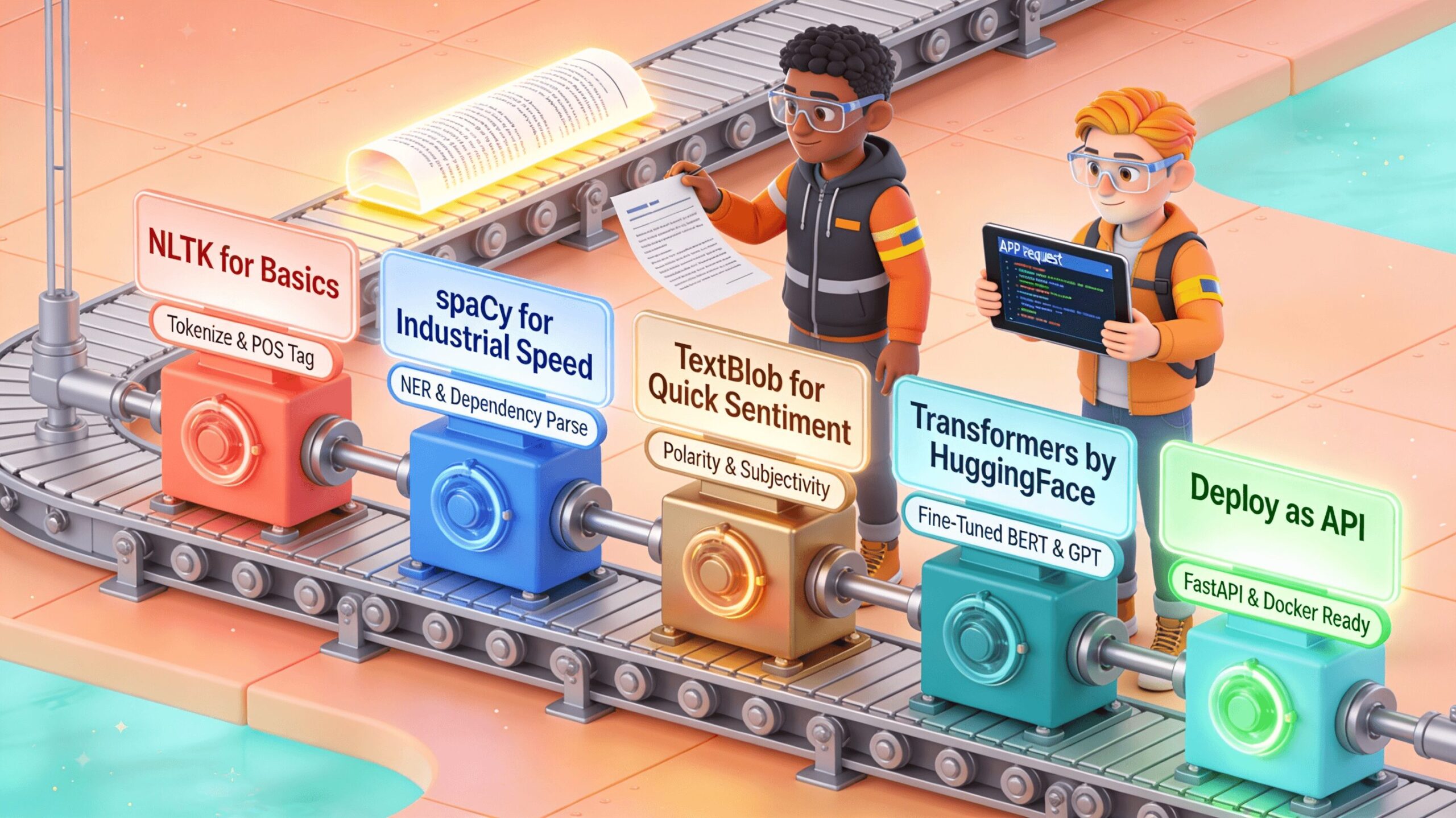
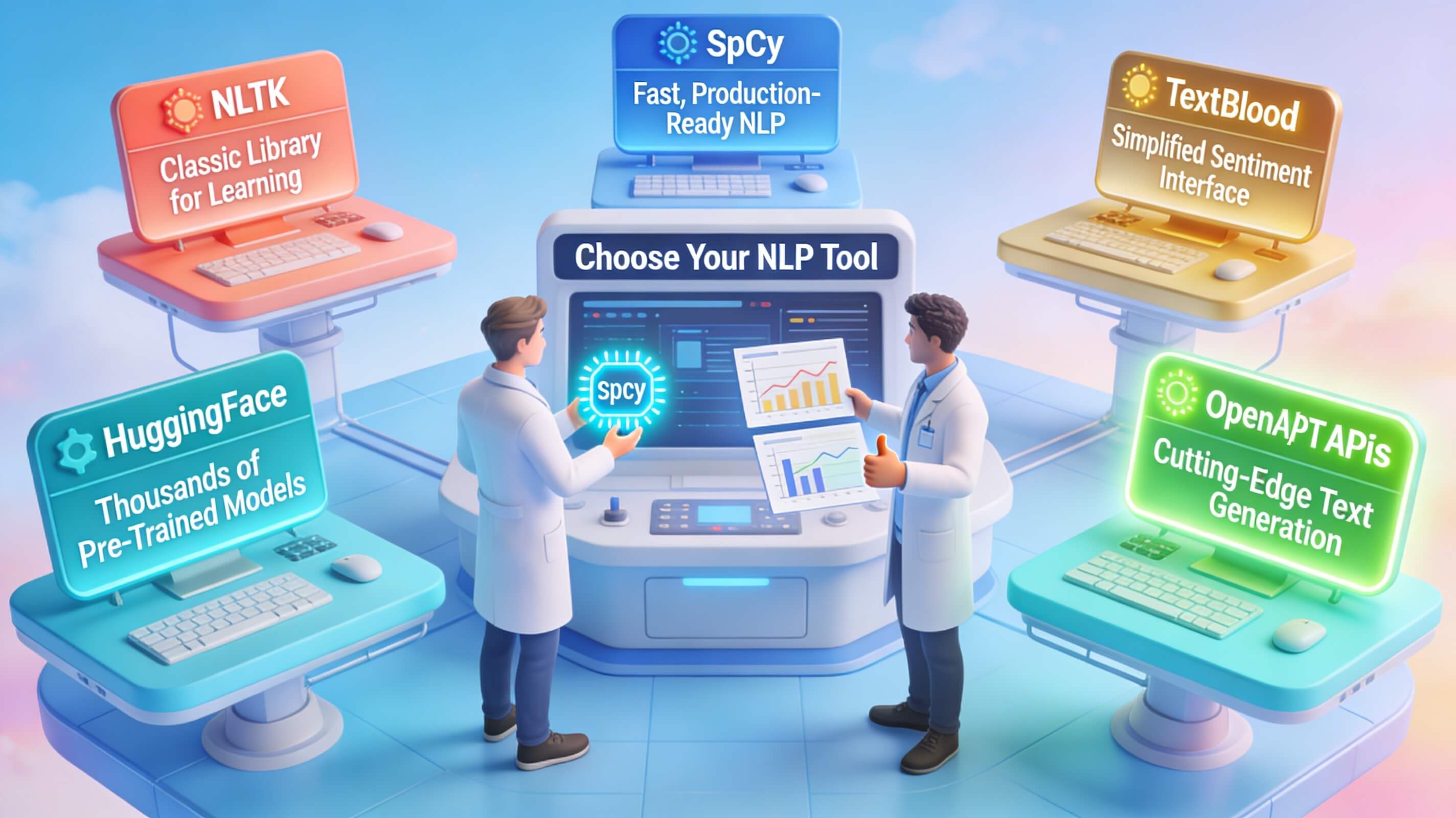
Finally, consider scalability. Many organizations start with a proof of concept that works well on a small dataset but fails when deployed on millions of records. Cloud-based NLP services from providers like AWS Comprehend, Google Cloud Natural Language, or Azure Cognitive Services can handle scale but may not offer the customization needed for specialized domains. Open-source frameworks like spaCy and Hugging Face Transformers offer flexibility but require infrastructure and DevOps expertise. The right choice depends on your organization’s technical capacity, budget, and long-term goals. Start small, measure rigorously, and expand only after validating performance at production scale.
The Future Trajectory of Natural Language Processing
Natural language processing software is evolving at a pace that few other technologies can match. The most significant driver is the emergence of large language models that can perform multiple tasks with minimal fine-tuning. These models, such as GPT-4 and open-source alternatives like Llama and Mistral, are demonstrating emergent abilities—reasoning, translation, code generation, and even basic planning—that were not explicitly trained for. This trend toward generalization means that businesses will soon be able to deploy a single model for a wide range of language tasks, rather than maintaining a separate model for each application.
The convergence of NLP with the Internet of Things is another frontier. Smart devices are increasingly voice-controlled, and the quality of speech recognition combined with natural language understanding is approaching the point where hands-free interaction feels natural. In manufacturing, warehouse workers are using voice commands to query inventory systems. In healthcare, clinicians are dictating notes that are immediately parsed and coded into electronic health records. As edge computing improves, more of this processing will happen on the device itself, reducing latency and addressing privacy concerns.
Big data analysis is also being reshaped by NLP. Traditional data lakes are filled with text data that has been largely inaccessible to quantitative analysis. NLP pipelines are now being integrated directly into data engineering workflows, enabling organizations to enrich structured data with insights from unstructured text. Consider a retailer analyzing customer reviews: they can now connect the sentiment score of each review to transactional data, identifying which product features drive loyalty and which drive returns. This level of integration requires coordination between data engineers, data scientists, and business stakeholders, but the payoff is a single, unified view of the customer.
Ethical considerations will increasingly shape NLP development. Bias in training data, privacy violations from text mining, and the environmental cost of training massive models are all active areas of concern. Responsible NLP practitioners are implementing bias auditing, differential privacy, and smaller, more efficient model architectures. Organizations that ignore these issues risk reputational damage and regulatory penalties. The future of NLP is not just about more powerful models—it is about more trustworthy, transparent, and equitable use of those models.
Conclusion
Natural language processing software has moved from academic curiosity to a core business tool in less than a decade. It enables organizations to extract meaning from the unstructured text that makes up the vast majority of the data they generate and collect. From automating customer support and monitoring brand sentiment to accelerating medical research and streamlining legal review, NLP touches nearly every function of the modern enterprise. The algorithms at its foundation—named entity recognition, sentiment analysis, part-of-speech tagging, topic modeling, dependency parsing—each contribute a specific capability that, when combined, creates a powerful analytical engine. The integration of machine learning, particularly deep learning and transformer models, has elevated the accuracy and adaptability of these systems to the point where they can be trusted for high-stakes decisions.
Implementing NLP successfully requires attention to data quality, domain adaptation, human oversight, and scalability. The organizations that invest in these areas consistently outperform those that treat NLP as a plug-and-play solution. The future holds even greater promise, with general-purpose language models, IoT integration, and deeper big data synergy on the horizon. For digital marketing businesses specifically, NLP offers an unprecedented ability to understand audience sentiment, personalize content at scale, and optimize campaigns based on real-time language cues. If your organization has not yet explored how natural language processing software can transform your text analysis and customer understanding, now is the time to start. Evaluate one use case, run a controlled pilot, measure the results rigorously, and build from there. The competitive window is open, and it will not stay open forever.