Cart 0

Share
Table of Contents
Conversion Rate Optimization Tools: Essential Resources for Success
Your website traffic means nothing if visitors are leaving without taking action. That gap between visits and transactions is exactly what conversion rate optimization tools are designed to close—by helping you understand why users behave the way they do, test improvements systematically, and make data-driven changes that turn more browsers into buyers, leads, or subscribers. In 2024, with competition intensifying across virtually every digital market, the right CRO technology stack is no longer a luxury for large enterprises. It is a practical necessity for any business serious about getting measurable results from its website investment.
This guide covers the full landscape of conversion rate optimization tools: how to choose software that fits your goals, which categories of tools exist and what each one does, the leading platforms worth considering, and how to build a complete CRO stack that drives sustained growth without unnecessary complexity.
What Is Conversion Rate Optimization and Why Do the Right Tools Matter?
Conversion rate optimization (CRO) is the discipline of increasing the percentage of website visitors who complete a desired action—whether that is making a purchase, filling out a lead form, signing up for a newsletter, or starting a free trial. The core process involves collecting behavioral data, forming hypotheses about what is preventing conversions, running controlled experiments to test changes, and rolling out the improvements that work.
Without the right conversion rate optimization tools, this process is guesswork. You might redesign a page because it looks outdated, only to discover the new version converts at half the rate of the original. Tools replace that guesswork with evidence—showing you exactly where users drop off, which headlines drive more clicks, where frustration peaks, and which checkout flows lead to more completed purchases. As the comprehensive roundup on Unbounce’s guide to CRO tools and software notes, the best CRO programs combine multiple tool categories—analytics, testing, heatmapping, and feedback—into an integrated stack where each piece of data informs the others.
The practical result is a compounding improvement cycle: every winning test raises your baseline conversion rate, making subsequent tests even more impactful. Businesses that build and consistently use a good conversion rate optimization tools stack see results that accumulate meaningfully over months and years, producing revenue growth that would be impossible through ad spend alone.
Key Features to Look for in Conversion Rate Optimization Tools
Not all conversion rate optimization tools are created equal, and selecting the wrong ones wastes both budget and time. Before committing to any platform, evaluate it against the features that determine whether it will actually support your optimization goals.
| Feature | Why It Matters |
|---|---|
| A/B and multivariate testing | Allows you to run controlled experiments that isolate which changes actually improve conversions, rather than relying on assumptions. |
| Visual editor (no-code) | Enables marketers to build test variations and make page changes without relying on developer resources for every experiment. |
| Heatmaps and session recordings | Provides qualitative insight into user behavior—where they click, scroll, and hesitate—that quantitative data alone cannot reveal. |
| Conversion tracking and funnel analysis | Shows where users drop off in the conversion path, making it possible to prioritize optimization effort at the highest-impact stages. |
| Personalization capabilities | Lets you deliver different experiences to different audience segments, improving relevance and conversion rates for each group. |
| Analytics integration | Connects test results with broader traffic and revenue data so winning variations can be evaluated in full business context. |
| Statistical significance reporting | Ensures that test results are reliable before you make permanent changes, preventing premature decisions based on noisy data. |
The most effective CRO tools tend to combine several of these capabilities within a single platform, reducing the complexity of managing multiple disconnected tools. However, even purpose-built single-function tools can be valuable additions to a stack if they provide specialized depth that general platforms lack. The key is ensuring your tools work together—either through native integrations or via a tag management solution—so data flows cleanly across your stack.
Conversion Rate Optimization Tools: A/B Testing Platforms
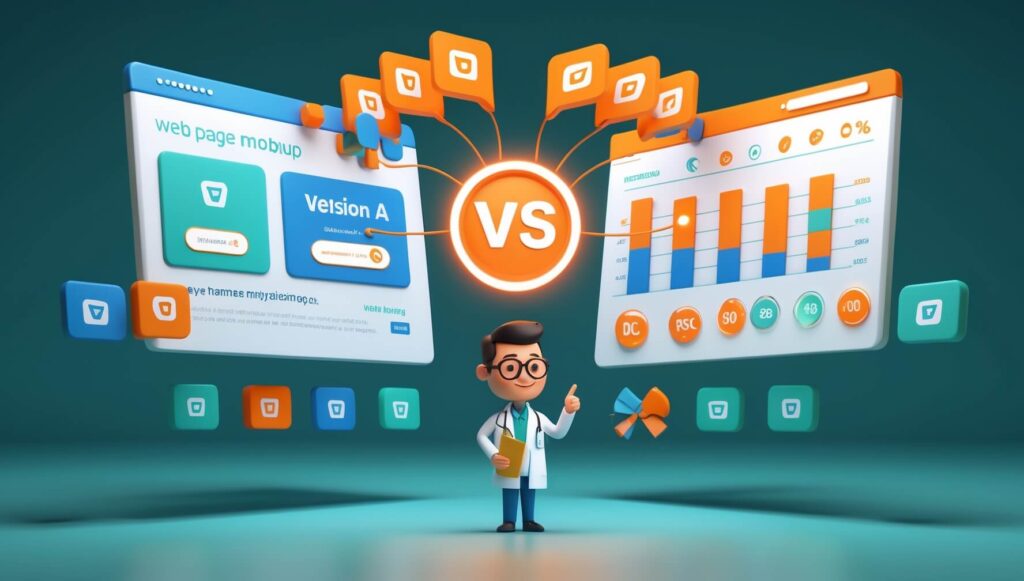
A/B testing is the cornerstone of any evidence-based CRO program, and the tools that power this process have become remarkably sophisticated. Modern A/B testing tools go far beyond simple headline swaps, enabling server-side experiments, feature flagging, multivariate testing, and personalization campaigns that run simultaneously without conflicting with each other.
Optimizely
Optimizely is one of the most widely recognized enterprise-grade conversion rate optimization tools for A/B and multivariate experimentation. Its Web Experimentation product offers a no-code visual editor for building page variations, as well as a full-featured stats engine for analyzing results with statistical confidence. As compared in detail on Crazy Egg’s Optimizely versus VWO comparison, Optimizely is best suited to high-traffic enterprises that need complex experimentation capabilities—server-side testing, feature flags, and programmatic experiment management—while VWO provides a more accessible, analytics-rich experience at a lower price point for mid-market businesses.
VWO (Visual Website Optimizer)
VWO is an all-in-one optimization platform that stands out for combining A/B testing, heatmaps, session recordings, surveys, and conversion funnels under one roof. This integration makes it particularly valuable as a central hub for a CRO program—insights from heatmaps can directly inform test hypotheses, and test results feed back into audience segmentation for future experiments. Detailed analysis from ConversionRate.Store’s best CRO software guide highlights VWO as one of the strongest choices for teams that want a comprehensive optimization suite without stitching together five separate tools. Its no-code editor, behavioral analytics, and robust reporting make it accessible to marketing teams that do not have dedicated engineering support for every experiment.
Convert.com and AB Tasty
For teams looking for strong testing capabilities with particular attention to data privacy and GDPR compliance, Convert.com is a frequently recommended alternative. It offers A/B testing, split URL testing, and multivariate testing with an emphasis on privacy-first architecture. AB Tasty differentiates itself with AI-powered personalization and a strong visual editor that makes it easier for non-technical users to build and launch experiments quickly. Both tools are covered in roundups like the e-Cens top CRO tools for 2024 as strong mid-market choices that balance sophistication with usability.

Heatmap and Session Recording Tools
Heatmaps and session recordings are the qualitative layer of your CRO stack—they show you the human reality behind your numbers. Where analytics tells you that 68% of users leave a landing page without converting, heatmaps and session recordings show you exactly where they were clicking, where they stopped scrolling, and where they hesitated or expressed frustration. This visibility is what transforms abstract data into actionable hypotheses for your next round of tests.
Hotjar
Hotjar is one of the most widely adopted user experience optimization tools available, combining click maps, scroll maps, move maps, session recordings, and feedback surveys in a single interface. Its user-friendly design makes it accessible even to teams without dedicated analytics engineers. The combination of visual data and user feedback in one platform means you can quickly identify a page element that is confusing users and gather direct survey responses explaining why—a powerful one-two punch for hypothesis generation. The practical setup guide published by LMG on using heatmaps and session recordings for CRO recommends Hotjar as a starting point for most small to mid-sized businesses due to its balance of capability and ease of use.
Microsoft Clarity
For businesses seeking powerful heatmap and session recording functionality without the subscription cost, Microsoft Clarity offers a genuinely impressive free option. It provides unlimited session recordings, real-time heatmaps, scroll maps, and rage-click detection—with no session limits and no cost. Clarity is particularly notable for its “Dead Clicks” and “Rage Clicks” reports, which automatically flag elements that are frustrating users by registering clicks that trigger no response. For early-stage businesses or teams that want to add behavioral analytics to their conversion rate optimization tools stack without adding budget, Clarity is often the first recommendation, as highlighted in the heatmap tool comparison published by 100x Elevate’s top heatmap tools review.
Crazy Egg
Crazy Egg has been a staple in the CRO toolkit for over a decade, offering heatmaps, scrollmaps, confetti reports (which segment clicks by traffic source), and overlay maps that show the exact click percentage on individual page elements. Its more recent addition of a built-in A/B testing editor means teams can go from identifying a problem with heatmap data to launching a fix test within the same platform. The tool is particularly popular for content-heavy pages and landing pages where understanding how far users read and which sections drive engagement most directly impacts optimization decisions.
Conversion Tracking Tools and Analytics Platforms
You cannot optimize what you cannot measure. Conversion tracking tools create the quantitative foundation on which all other CRO work is built. They identify which traffic sources drive the most valuable visitors, which pages funnel users most effectively toward conversion, and which user segments convert at dramatically different rates—insights that make every other tool in your stack more powerful.
Google Analytics 4
Google Analytics 4 (GA4) is the essential free conversion tracking tool for virtually every website. Its event-based data model tracks user interactions with granular specificity—scroll depth, video engagement, file downloads, and custom conversion events—giving you a complete picture of how users navigate your site and where they exit the conversion funnel. GA4’s funnel exploration reports allow you to visualize conversion paths step by step, identify the exact stage where the largest proportion of users abandon, and segment that data by device type, traffic source, or audience cohort. For ecommerce businesses, enhanced ecommerce tracking in GA4 surfaces product-level performance data that is directly actionable for product page optimization.
Mixpanel
For SaaS products and mobile applications where the conversion journey involves multiple in-product steps rather than a single checkout, Mixpanel provides event-level behavioral analytics that goes well beyond what GA4 offers out of the box. As noted in ConversionRate.Store’s CRO tools breakdown, Mixpanel’s event-based tracking and behavioral cohort analysis make it particularly powerful for identifying which sequences of user actions correlate with conversion, retention, or churn—insights that enable product-led CRO strategies not possible with traditional web analytics alone.
Funnels and Form Analytics
Dedicated funnel analysis tools complement general analytics platforms by providing a more visual and actionable view of multi-step conversion paths. Tools like Lucky Orange combine heatmaps, session recordings, and funnel analysis with form analytics that reveal exactly which fields users abandon or struggle with—critical data for checkout and lead generation optimization. As reviewed in the Maddyness roundup of CRO tools for small businesses, Lucky Orange is a particularly strong choice for smaller operations that need comprehensive behavioral data at an affordable price, consolidating multiple tool functions into a single monthly subscription.
Conversion Rate Optimization Platforms: All-in-One Solutions
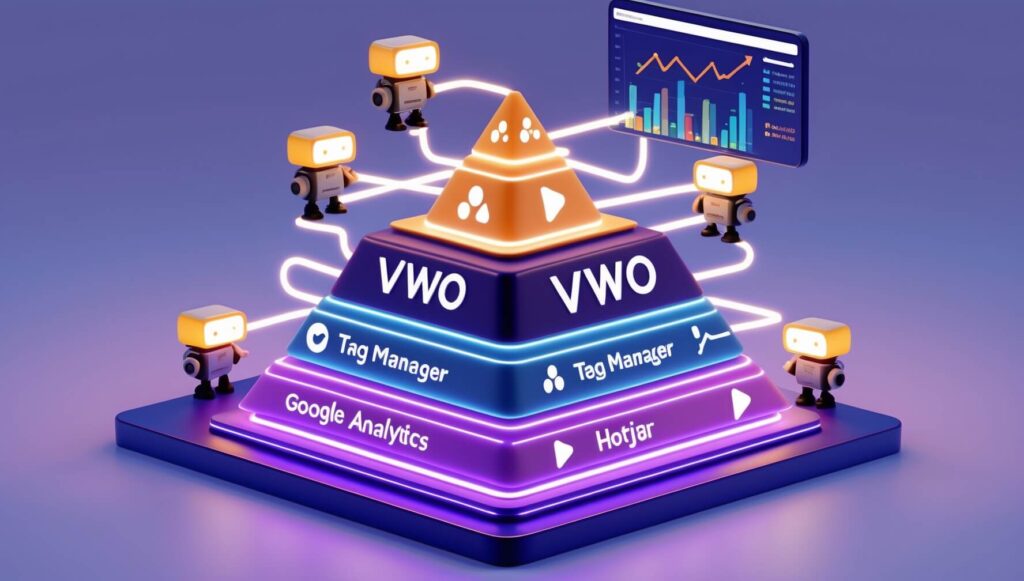
For teams that want to consolidate their conversion rate optimization tools into a single unified platform rather than managing a stack of separate products, all-in-one CRO platforms offer integrated suites where testing, analytics, heatmapping, and personalization share a common data layer. This integration eliminates the data reconciliation problem that arises when you are trying to correlate results across four disconnected tools, and makes it easier for smaller teams to run sophisticated programs without specialist knowledge in multiple platforms.
| Platform | Best For | Core Strengths |
|---|---|---|
| VWO | Mid-market to enterprise teams | Integrated A/B testing, heatmaps, session recordings, surveys, and personalization in one platform |
| Optimizely | Large enterprises with complex experimentation needs | Advanced server-side testing, feature flagging, multi-page experiment management, and deep statistical engine |
| Hotjar | Small to mid-sized businesses focused on UX insights | User-friendly heatmaps, session recordings, surveys, and feedback widgets with minimal setup |
| Crazy Egg | Content-heavy sites and landing pages | Detailed heatmaps, scrollmaps, confetti reports, and built-in A/B testing in a single interface |
| Lucky Orange | Small businesses and ecommerce stores | Heatmaps, session recordings, form analytics, and conversion funnels at a competitive price point |
Choosing between these platforms largely comes down to traffic volume, team size, technical resources, and budget. A company generating 50,000 monthly visits has very different needs—and very different statistical requirements for running valid tests—than one generating 5 million. Carefully match the platform’s minimum traffic requirements and pricing tiers to your actual situation before committing to a subscription.
User Experience Optimization Tools
Conversion rates and user experience are inseparable. A website that confuses, frustrates, or fails to earn trust will convert poorly no matter how well-crafted its headlines are. User experience optimization tools give you the data to identify exactly where experience breaks down and what kind of changes improve it, making them a critical component of any serious conversion rate optimization tools stack.
On-Site Feedback and Survey Tools
Understanding why users leave—not just that they leave—is one of the most valuable insights a CRO program can generate. On-site survey tools like those built into Hotjar, or standalone platforms like Qualaroo and Typeform, let you ask visitors targeted questions at critical moments in their journey: “What stopped you from completing your purchase?” or “Was there anything confusing about this page?” These micro-surveys generate qualitative data that quantitative analytics simply cannot provide, and they regularly surface issues—payment method gaps, unclear return policies, confusing product descriptions—that no heatmap or session recording would ever reveal on its own.
Landing Page Builders with Built-in CRO Features
For paid traffic campaigns, dedicated landing page builders like Unbounce and Instapage function as both website conversion tools and testing platforms. They allow you to build and deploy high-converting landing pages without developer support, run A/B tests natively, and connect results directly to your ad platform data. This tight integration between ad performance and landing page performance is particularly valuable for PPC campaigns where small improvements in post-click conversion rate dramatically reduce cost per acquisition. Unbounce’s platform, for example, incorporates Smart Traffic—an AI feature that automatically routes visitors to the landing page variant most likely to convert based on their attributes—making it one of the more innovative conversion rate optimization tools for teams running paid campaigns at scale.
Building a Complete CRO Tools Stack
The most successful CRO programs do not rely on a single tool—they build a layered stack where each type of conversion rate optimization tool serves a specific function and the outputs from each tool feed into the next. A well-designed stack typically includes:
- Web analytics platform (e.g., Google Analytics 4) – provides the quantitative foundation: traffic sources, funnel drop-offs, conversion rates by segment, and revenue attribution.
- Heatmap and session recording tool (e.g., Microsoft Clarity or Hotjar) – adds qualitative behavioral context that explains what the numbers are showing, revealing exactly where and how users struggle.
- A/B testing platform (e.g., VWO or Optimizely) – enables controlled experiments so that changes are validated with statistical evidence before being permanently applied.
- User feedback tool (e.g., on-site surveys or Qualaroo) – captures direct user input at critical moments, surfacing motivations and objections that behavioral data cannot reveal.
- Conversion tracking integration (e.g., Google Tag Manager) – ensures that conversion events flow cleanly between all your platforms, maintaining consistent data definitions across the stack.
Not every business needs all five layers from day one. A small ecommerce store might start with GA4 and Microsoft Clarity, adding VWO once traffic volume is sufficient to run statistically valid tests. A SaaS company might prioritize Mixpanel and Hotjar before layering in a dedicated testing platform. The key principle, as outlined in the broader strategy discussion on Matomo’s CRO tools comparison, is that each tool in your stack should answer a specific question—and those questions should collectively tell the complete story of why users do or do not convert.
How to Evaluate and Choose the Right CRO Tools for Your Business
With dozens of platforms competing for budget in this category, narrowing your choices requires a structured evaluation process. Start by defining your primary optimization challenge. If you do not know why users are abandoning your checkout, behavioral analytics and session recording tools should come first. If you know the problem but cannot determine which fix works best, A/B testing is the priority. If you are running paid campaigns with poor post-click conversion rates, a dedicated landing page platform may deliver faster ROI than a general-purpose CRO suite.
Consider your traffic volume carefully. A/B tests require sufficient traffic to reach statistical significance within a reasonable timeframe—a landing page receiving 500 visits per month simply cannot produce valid test results in a sensible period, making qualitative tools more immediately valuable than testing platforms at that scale. The detailed comparison published in Ancorrd’s best CRO tools for ecommerce roundup recommends starting with heatmapping and session recording to build a clear optimization backlog before investing in testing platforms—a practical sequencing that matches tool investment to where actual value can be generated given your traffic reality.
Finally, evaluate integration quality. Your conversion rate optimization tools need to connect cleanly with your CMS, your ecommerce platform, your email marketing stack, and your paid advertising accounts. A tool that generates excellent insights but cannot pass data to your other systems creates information silos that slow down your optimization program. Prioritize platforms with native integrations to the tools you already use, and verify those integrations actually work the way you need them to before committing to an annual subscription.
Conclusion
The right conversion rate optimization tools transform a website from a passive digital presence into an active, continuously improving revenue engine. By combining quantitative analytics, behavioral insights, structured testing, and direct user feedback into a coherent stack, businesses of all sizes can make data-driven improvements that compound into significant, measurable growth over time.
Start by identifying the biggest gap in your current understanding—whether that is why users leave, which page changes improve conversion, or what objections stop hesitant buyers from committing—and choose the tools that close that specific gap first. Build your stack iteratively, and let data from each tool inform how you use the others. That disciplined, evidence-based approach to conversion rate optimization tools is what separates businesses that consistently improve their performance from those that keep making the same guesses and getting the same mediocre results.